How to Bloom Spices and Why It Changes Everything
By the QuiteRecipes team (Jamy & Kaïna)
Thirty seconds of spice in warm oil unlocks flavor that powders never deliver dry. Blooming is the pro move hiding in plain sight.
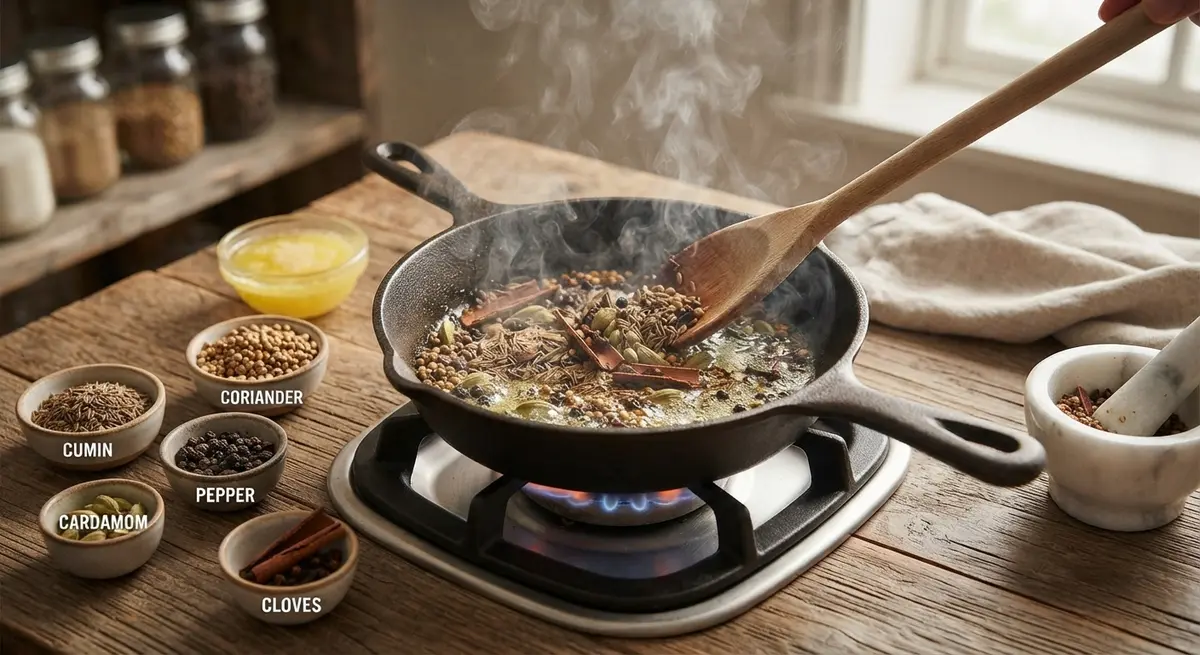
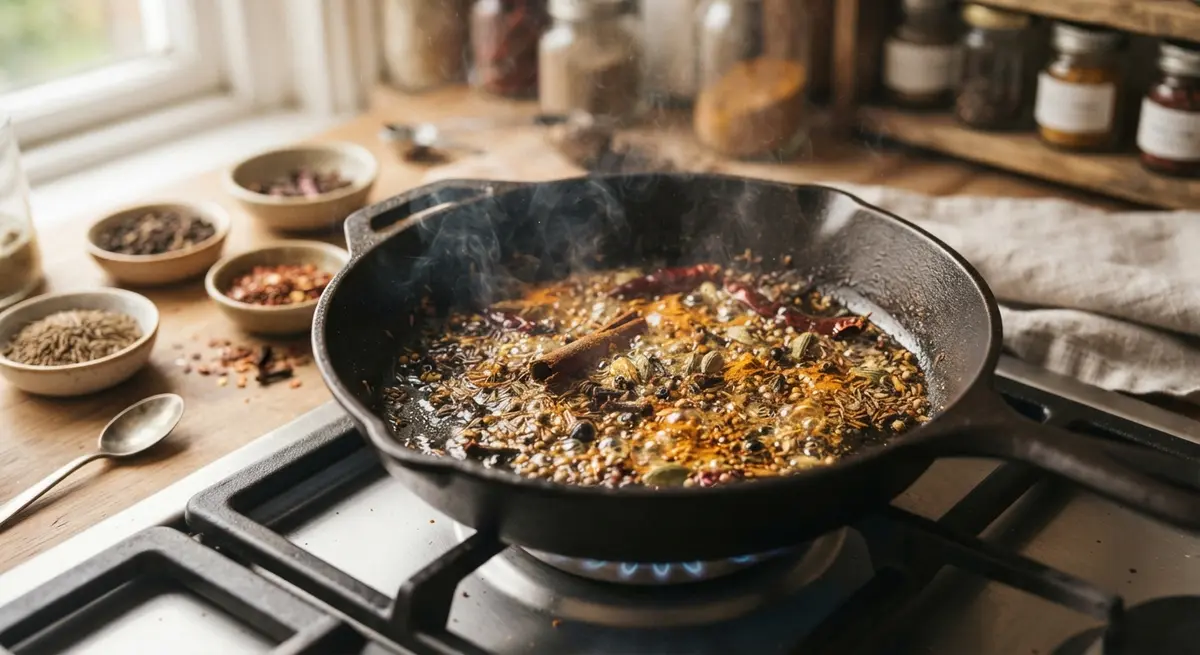
The single best flavor trick in cooking is almost embarrassingly simple: put your spices in warm fat before the rest of the food. It is called blooming, or tempering, and for years the recipes I followed quietly assumed I already knew it. The first time I bloomed cumin and mustard seeds in hot oil, the whole kitchen smelled like a curry house, and the dish tasted twice as alive. That is because fat carries flavor like water never can. This guide is the thirty-second habit that changed my entire cooking.
Why It Matters
Many spice flavors are fat-soluble, which means warm oil accepts and carries their aromatic compounds far better than water. When you bloom spices for a short burst in oil, you unlock oil-soluble aromas that dry dumping can never reach. It also toasts the spices slightly, sweetening them and removing their raw, dusty edge. The whole process takes thirty seconds at the start of a meal. Do it once, and you will taste the difference between a dish that had spices and one that wore them.
The Technique, Step by Step
- Heat a good fat in the pan: oil, ghee, or butter, enough to coat the base of the pan.
- Add the spices the moment the fat shimmers but before it smokes.
- Stir constantly for twenty to thirty seconds, or until the fragrance hits your nose.
- Watch for where the seeds start to pop, ground spice darkens a shade, do not let it burn.
- Add your aromatics, onion, garlic, ginger, next while the fat is still fragrant.
- Build the dish on that fragrant foundation, and experience the difference in the spoon.
Common Mistakes to Avoid
- Blooming over roaring heat: spices go from fragrant to bitter in one blink.
- Adding spices to cold oil: they just sit there, and the release never happens properly.
- Blooming after the liquid goes in: without the fat, the oils have no carrier and the magic is lost.
- Walking away mid-bloom: thirty seconds is the whole window, and the pan does not wait.
- Crowding the pan with too much spice: it steams instead of frying and turns dust-dull.
Quick Wins & Variations
- Bloom whole seeds in ghee for dal, rice, and vegetables for a classic tempering finish.
- Bloom ground cumin and coriander for soups and stews for instant depth.
- Bloom chiles and garlic in oil at the start of any sauce for a scorching start.
- Bloom spices in butter to spoon over corn, fish, or finishing vegetables.
- Add a final bloom of spices to yogurt sauces for a second layer of flavor.
FAQ / Quick Facts
- What does bloomed mean in cooking? Heating spices briefly in hot fat to release and carry their flavor.
- How long do I bloom spices? Twenty to thirty seconds, until fragrant, before they risk burning in the oil.
- Can I bloom ground spices too? Yes, even faster, a quick sizzle before they scorch.
- Why fat and not water? Most spice aromatics dissolve in fat, so warm oil is the better delivery vehicle.
Related Articles
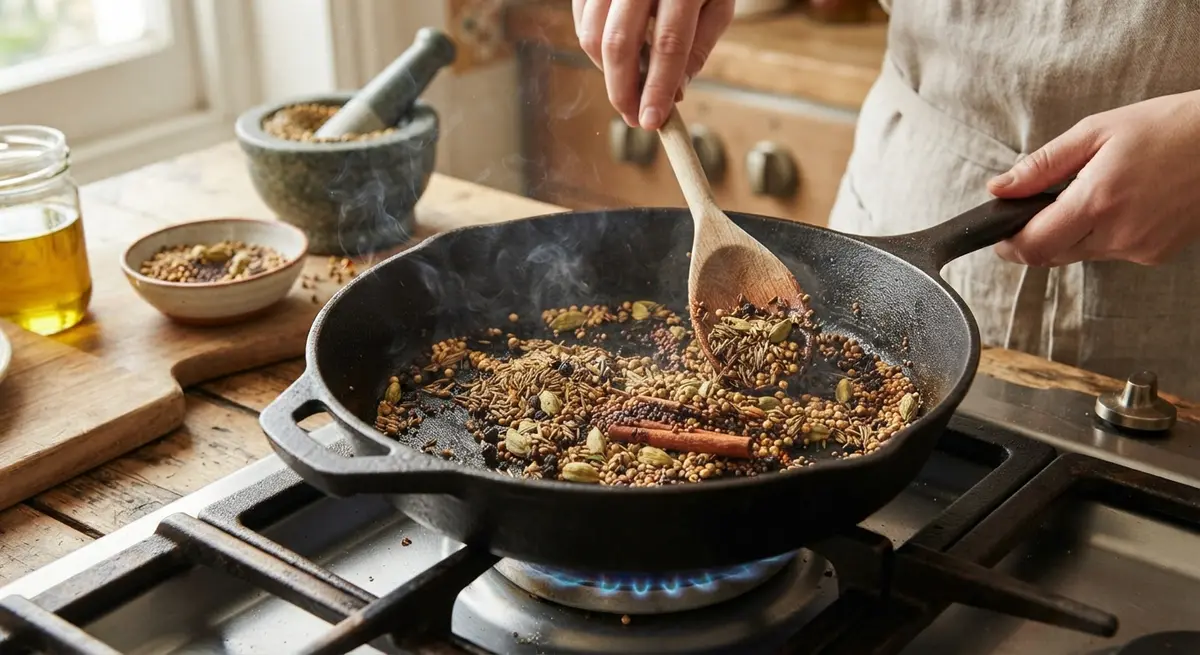
Why You Should Toast Spices Before Cooking, Every Time
Toasting is the fastest way to make any spice taste twice as alive. Dry heat unlocks the oils, sweetens the bite, and perfumes the kitchen.
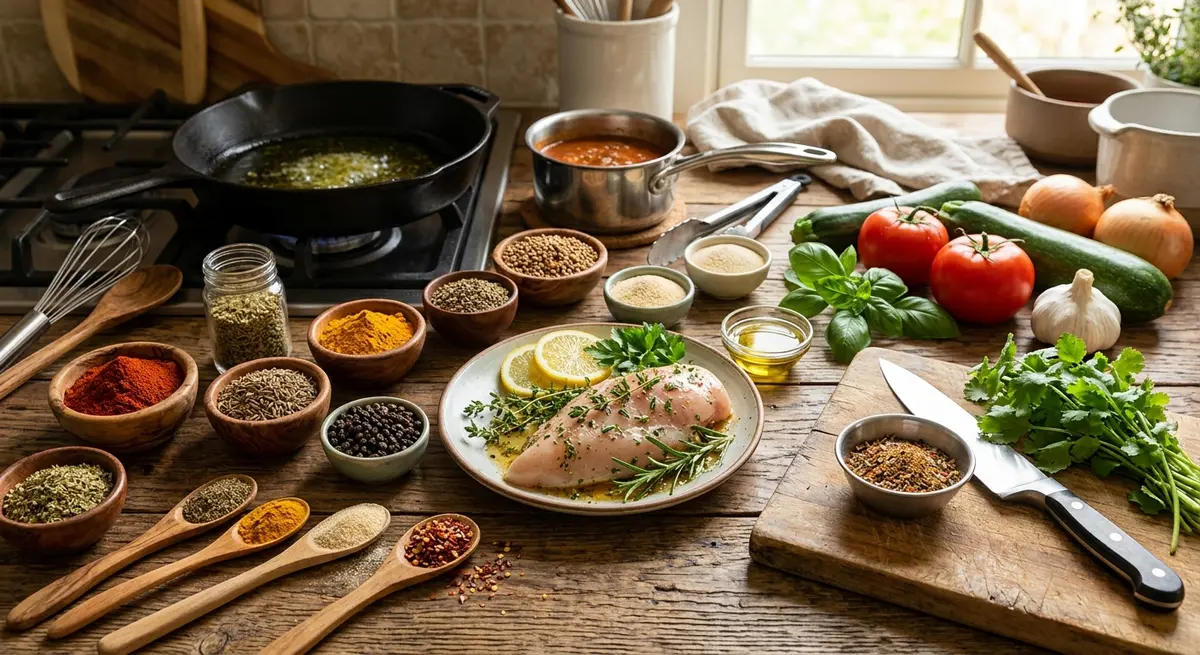
Cooking Low-Sodium With Spices That Carry the Flavor
Cutting sodium is easier when spice, acid, and umami do the heavy lifting. Build low-salt flavor in layers and no one misses the salt.
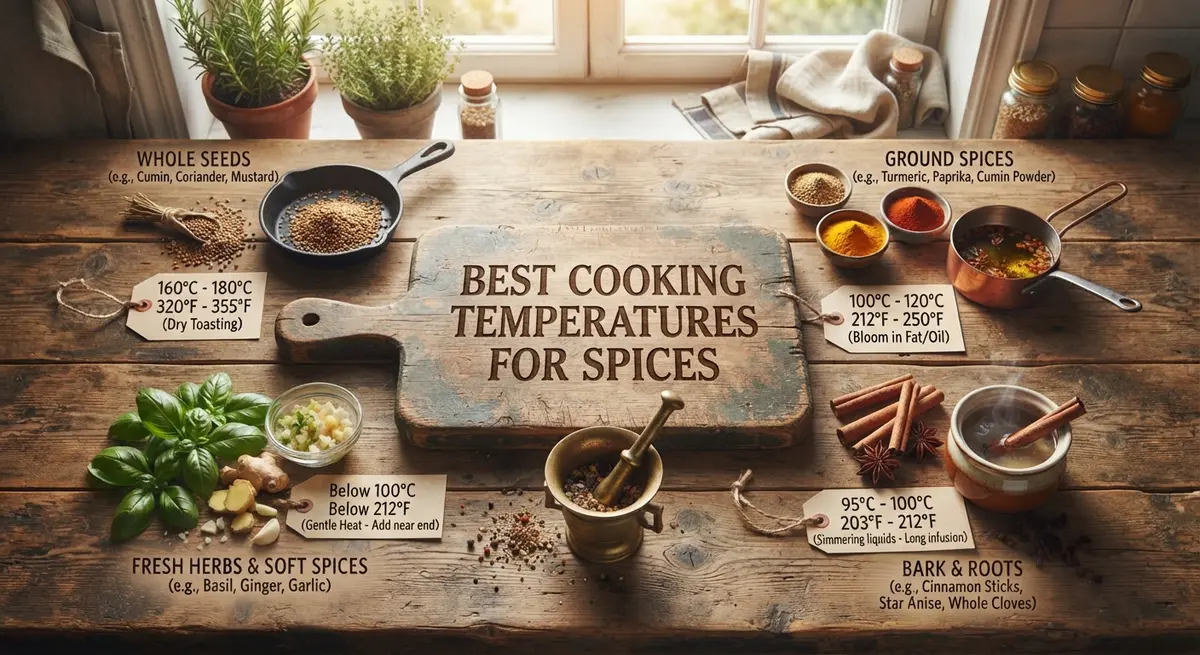
The Best Cooking Temperatures for Every Spice
Heat is a spice's best friend and worst enemy. Learn which spices bloom low, which need a blast, and the burnout marks that ruin a pot.
The Science of Blooming Spices: Why Fat Beats Water
Most of a spice's aroma dissolves in fat, not water. That is the science behind blooming, and knowing it turns recipes into instincts.
About the Authors
This recipe and guide was developed, tested, and approved in our home kitchen and daily life. Jamy is a retired Food Service District Manager and Early Childhood Program Manager who spent his career overseeing multi-site restaurant operations, large-scale culinary production, and daycare menu management. Kaïna brings the ultimate real-world test: making sure it brings ease and joy to our kids on a busy weeknight.
Read more about our professional background and philosophy →