Cooking Low-Sodium With Spices That Carry the Flavor
By the QuiteRecipes team (Jamy & Kaïna)
Cutting sodium is easier when spice, acid, and umami do the heavy lifting. Build low-salt flavor in layers and no one misses the salt.
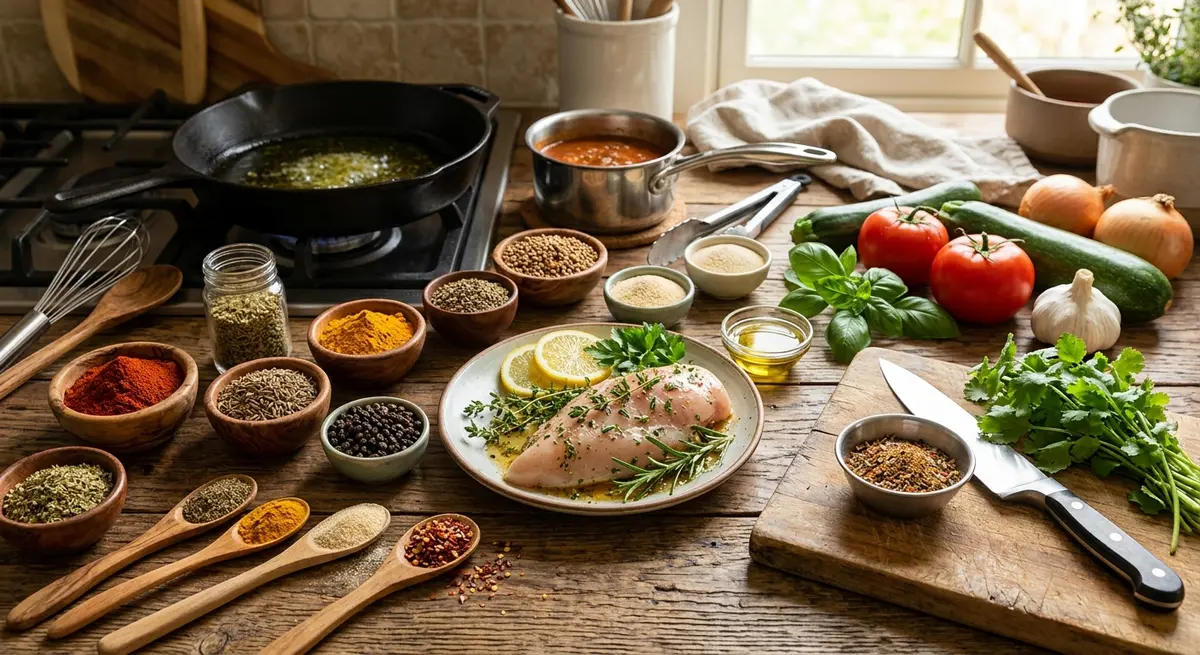
When the cardiologist said "less salt," I expected life to go flavorless. It did not, because I replaced one loud ingredient with a whole coalition: warm spices, sharp acids, and quiet umami. The secret is that salt is a flavor amplifier, not a flavor itself, and there are other amplifiers in the kitchen. This guide is the low-sodium playbook I built by cooking side by side with my husband: spices for depth, acid for brightness, and a few pantry staples for savory roundness.
Why It Matters
Salt does two jobs: it seasons and it carries other flavors forward. When you lower it, the dish can go flat, but that is an invitation to build flavor in layers instead. Spices supply warmth and depth, acid like lemon and vinegar supplies lift, and umami sources like mushrooms, tomato, and miso supply the savory center salt used to fake. The result is a plate that is not "low-salt" in the punishing sense; it is simply cooked more interestingly.
The Technique, Step by Step
- Season by components: spice the protein, spice the sauce, spice the garnish, not one big salt-pile.
- Build a dry rub of cumin, coriander, paprika, and pepper instead of baseline salt.
- Finish bright with citrus zest, lemon, lime, or a fresh acid splash.
- Add umami knobs: mushrooms, tomato paste, roasted garlic, a little miso or fish sauce.
- Use alliums freely: onion, garlic, and chives create roundness that reduces the salt need.
- Taste early and often, and combine salt with one other seasoning so the dish sings.
Common Mistakes to Avoid
- Guessing that "no salt" means "no seasoning at all", it is a spice-lean moment, not a standoff.
- Relying on salt only at the cook and then the table: layer both, and the flavor rides the plate.
- Adding acid only at the end to fix a bland, low-salt dish: brighten early and finish bright.
- Forgetting that salts hide in stocks, soy, and cheese: low-sodium means accounting, not just the shaker.
- Overcorrecting with sugar for everything, sweets mask, they do not replace.
Quick Wins & Variations
- Bloom spices in oil first, the aroma reads as seasoning even before salt arrives.
- Keep a lemon, lime, and vinegar trio at the table for the bright finish.
- Grind fresh pepper over everything, its prickle substitutes for a little salt-flick.
- Make a no-salt rub for chicken and fish that out-performs the old shaker method.
- Use toasted seeds and a seasoned butter to carry depth without salt.
FAQ / Quick Facts
- Can spices really replace salt? Not one-for-one, but they replace the flavor layer salt once amplified.
- What is the best salt-free seasoning strategy? Spice in layers, acid for lift, and umami for the savory center.
- Does salt hide in unexpected places? Yes, stocks, condiments, cheese, and cured things, low-sodium is total awareness.
- Will my family notice less salt? When spice, acid, and umami are doing the work, they notice a more interesting plate, not a saltless one.
Related Articles
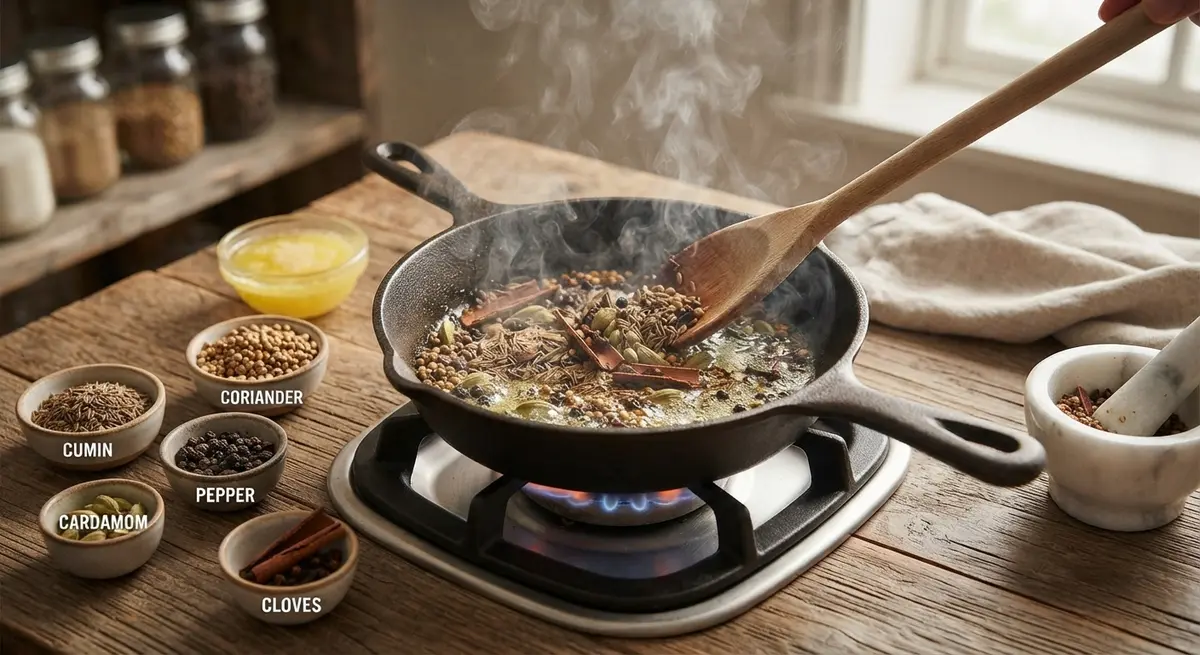
How to Bloom Spices and Why It Changes Everything
Thirty seconds of spice in warm oil unlocks flavor that powders never deliver dry. Blooming is the pro move hiding in plain sight.
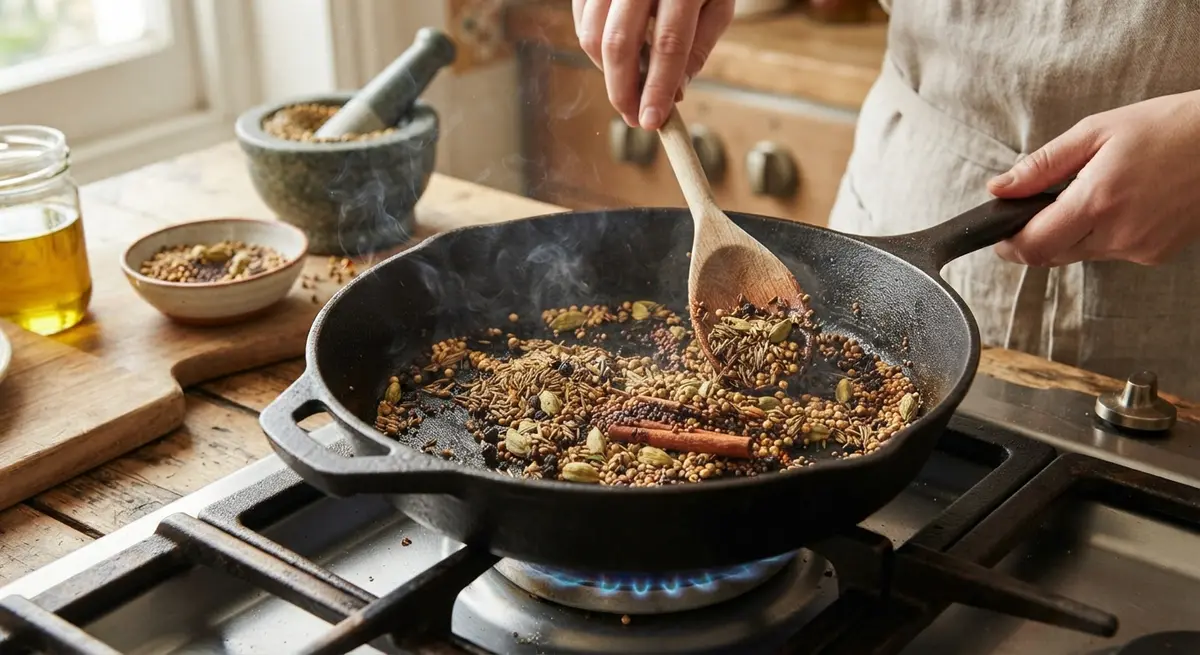
Why You Should Toast Spices Before Cooking, Every Time
Toasting is the fastest way to make any spice taste twice as alive. Dry heat unlocks the oils, sweetens the bite, and perfumes the kitchen.
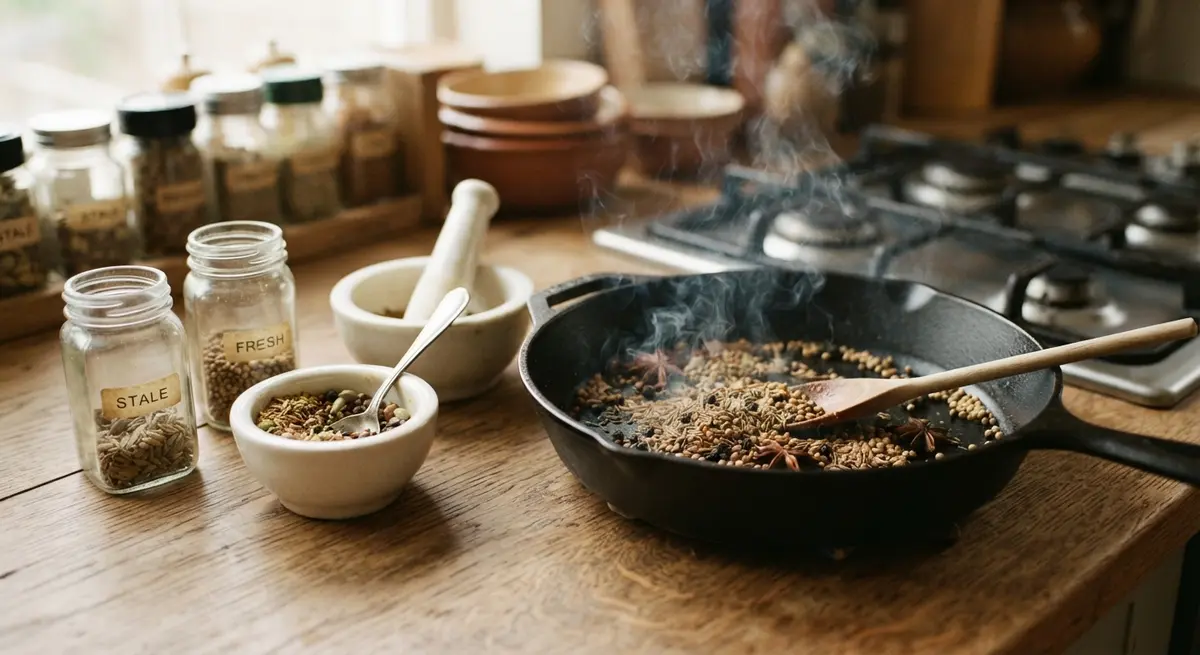
Can You Revive Stale Spices? Mostly No, and Here Is the Fix
Stale spice can be nudged back a little, never fully. Toast, blend, and refresh what you can with restraint; some jars just deserve retirement.
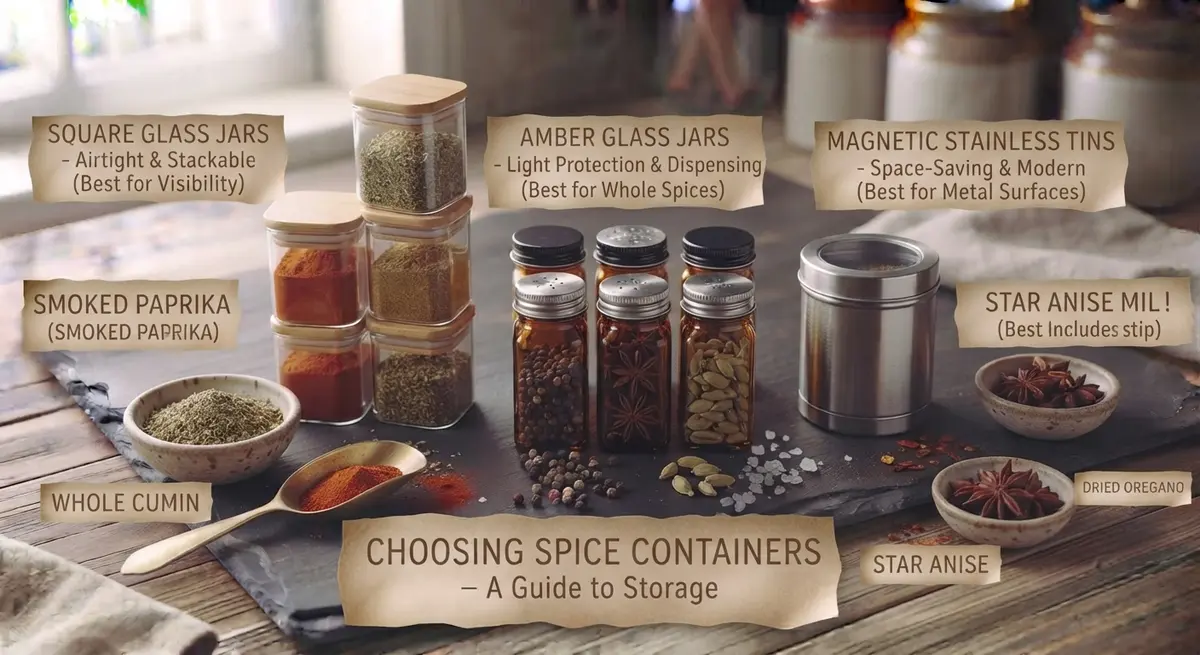
Choosing the Right Containers for Your Spice Stash
Glass, tin, and plastic each suit a different spice job. Match container to use, with little brown jars winning for the everyday shelf.
About the Authors
This recipe and guide was developed, tested, and approved in our home kitchen and daily life. Jamy is a retired Food Service District Manager and Early Childhood Program Manager who spent his career overseeing multi-site restaurant operations, large-scale culinary production, and daycare menu management. Kaïna brings the ultimate real-world test: making sure it brings ease and joy to our kids on a busy weeknight.
Read more about our professional background and philosophy →