Water-Soluble vs. Fat-Soluble Flavor: How Spice Foods Respond
By the QuiteRecipes team (Jamy & Kaïna)
Flavor rides carriers: water carries some notes, fat carries others. Match the spice to the medium and unlock the flavor it was born with.
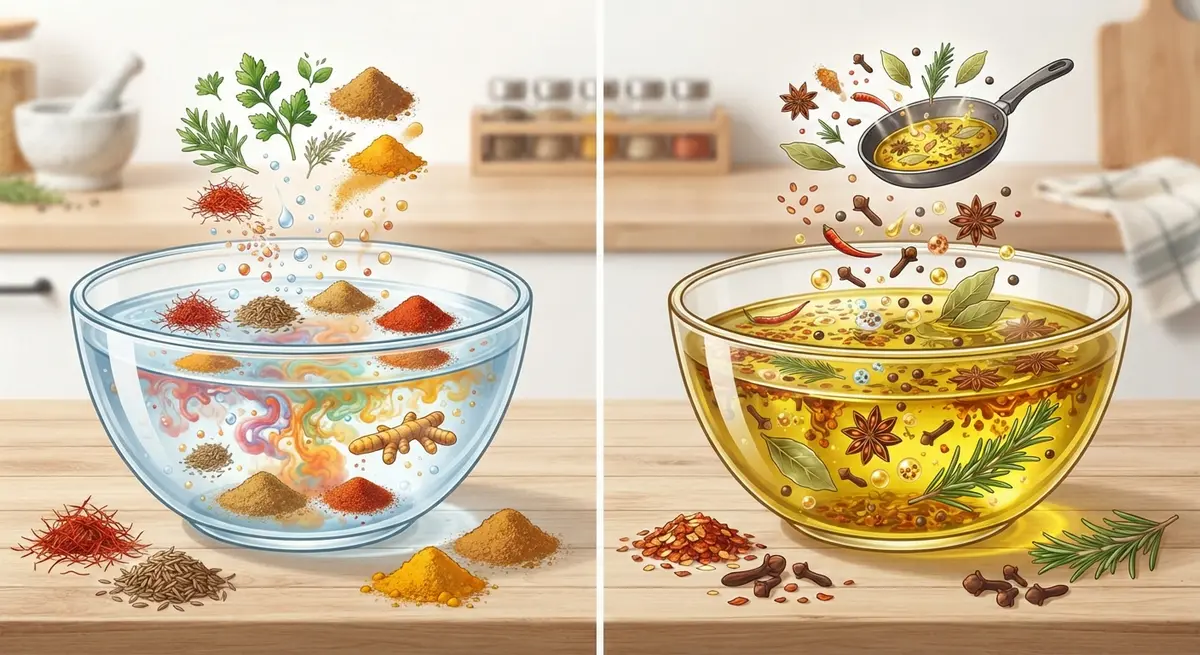
There is a reason chili is always made with oil and tea, oddly, does not taste like a spice shelf. Flavor molecules ride carriers: some dissolve in water and some only bloom in fat, and knowing which is which changes everything you cook. The basic fact behind it: water-soluble flavors appear in broths and juices, while fat-soluble ones stay invisible unless oil, butter, or cream is present. This guide is the practical side of that chemistry, the simple rules that make every dish louder.
Why It Matters
Most spice warmth and perfume belongs to the fat-soluble team: cumin, paprika, chiles, cinnamon, cloves, and seeds bloom in oil and stay faint in water. The water-soluble side holds bright, fresh notes: citrus, some herbs, salt, acid, and a few green spices. That difference explains why a spice added directly to boiling broth can taste weaker than the same pinch bloomed in oil first. It also explains which cooking method suits which flavor. Match the medium and the flavor arrives fully.
The Technique, Step by Step
- For oil-born flavors like cumin and paprika: warm them in fat first, then add liquid.
- For water-born freshness like herbs and citrus zest: add them late to broth, or steep in water.
- In broths: bloom the oil-loving spices in a spoon of fat before the liquid goes in.
- In cold dressings: a few drops of oil carry the spice where a watery base cannot.
- Combine both worlds: oil early, a bright water-touch finish at the end.
- Taste and adjust, the carriers decide how much of the spice speaks.
Common Mistakes to Avoid
- Expecting spices to teleport their aroma straight into water: the fat-soluble crew needs oil.
- Drowning a bloomed spice in a cold, watery prep without balance: the flavor vanishes.
- Adding herbs early to a boiling pot: water-soluble freshness evaporates with the simmer.
- Skipping fat in a low-fat recipe then wondering why chili fizzles: it needs a carrier.
- Fighting the medium instead of matching it: use oil for depth, water endnotes for lift.
Quick Wins & Variations
- Bloom paprika and cumin in ghee for veggies, then watch the taste spark.
- Finish a broth soup with herbs and lemon zest at the end for the bright layer.
- Let oil carry whole seeds in a tempering before the water follows.
- Dress salads with a whisk of oil and spice before the vinegar bath.
- Steep bay, star anise, or cinnamon in warm water until the scent transfers.
FAQ / Quick Facts
- Which spices are fat-soluble? Most warm aromatics, cumin, paprika, chiles, cinnamon, cloves, and seeds, bloom in oil.
- Which are water-soluble? Salt, acid, citrus notes, fresh herbs, and some green spices respond to water.
- Why does oil matter in a curry? The oil-born flavor molecules need fat to release their aroma into the pot.
- Should I still use oil in a low-sodium recipe? Yes, fat is the delivery vehicle for depth, salt is a separate question.
Related Articles
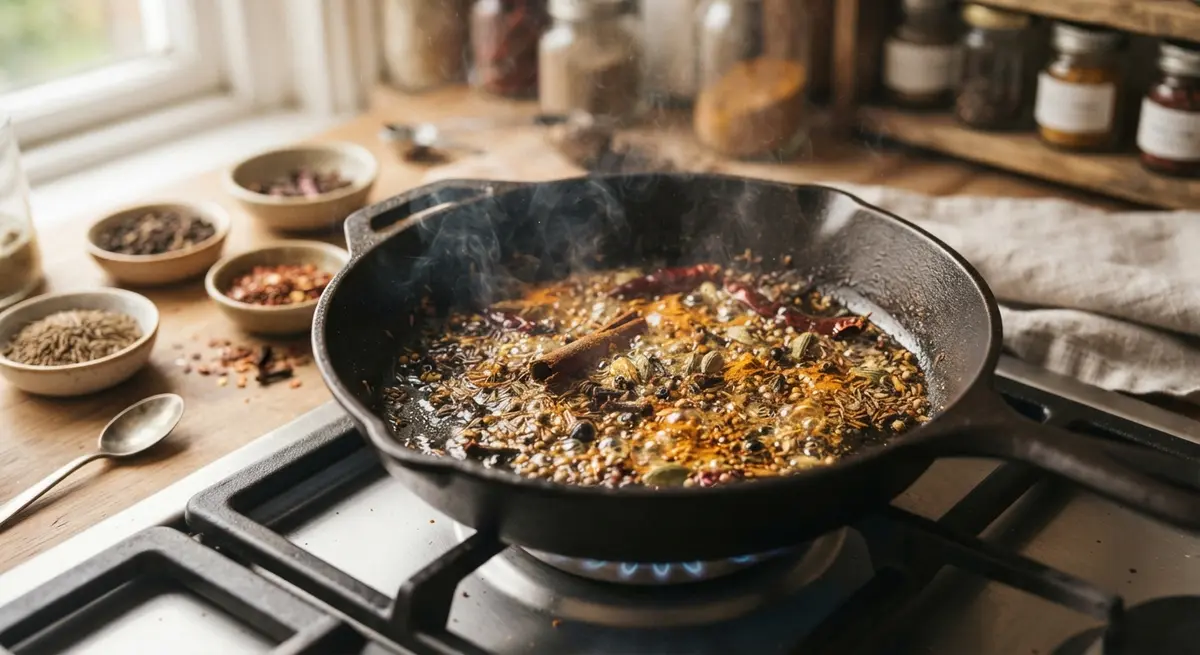
The Science of Blooming Spices: Why Fat Beats Water
Most of a spice's aroma dissolves in fat, not water. That is the science behind blooming, and knowing it turns recipes into instincts.
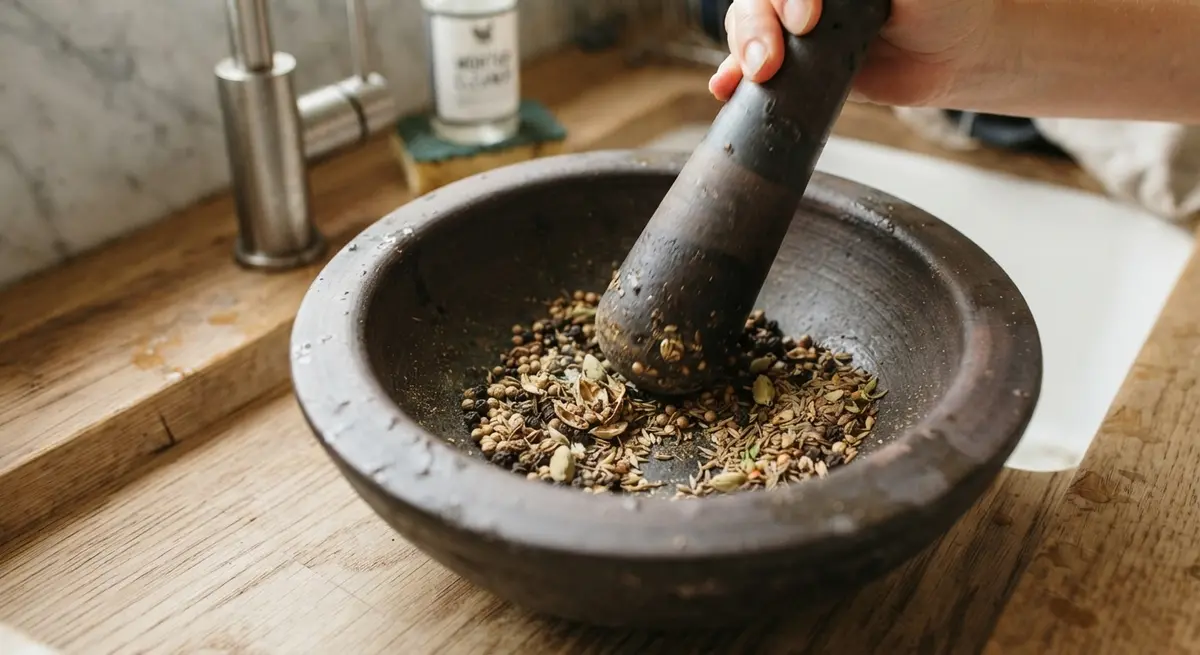
How to Crack Spices Without Making a Mess
Cracking opens a spice's oils without making powder. A few twists, a pan, a towel, and your stews will taste freshly live.
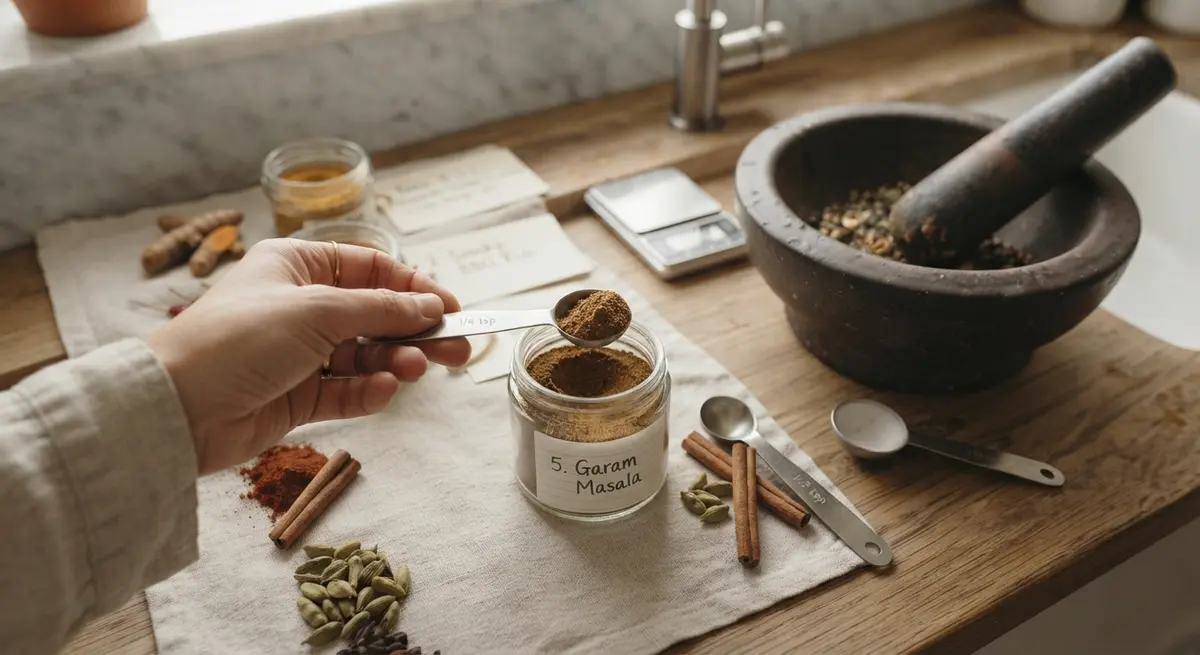
How to Measure Spices So the Batch Comes Out Right
A heaping spoon changes the dish; a level spoon repeats it. Master the level measure and weigh for baking batches that come out right.
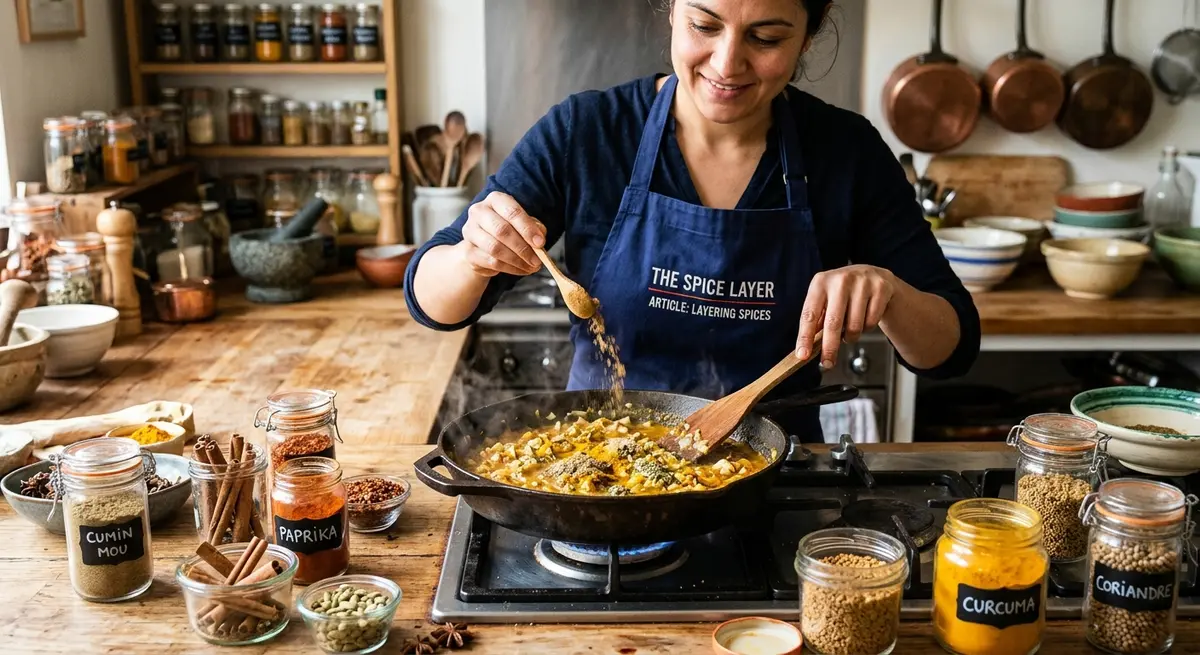
Layering Spices: Why a Dish Tastes Better in Waves
Spices change as they cook. Add some early for depth and some late for brightness, and the same jar gives the dish two voices.
About the Authors
This recipe and guide was developed, tested, and approved in our home kitchen and daily life. Jamy is a retired Food Service District Manager and Early Childhood Program Manager who spent his career overseeing multi-site restaurant operations, large-scale culinary production, and daycare menu management. Kaïna brings the ultimate real-world test: making sure it brings ease and joy to our kids on a busy weeknight.
Read more about our professional background and philosophy →