Layering Spices: Why a Dish Tastes Better in Waves
By the QuiteRecipes team (Jamy & Kaïna)
Spices change as they cook. Add some early for depth and some late for brightness, and the same jar gives the dish two voices.
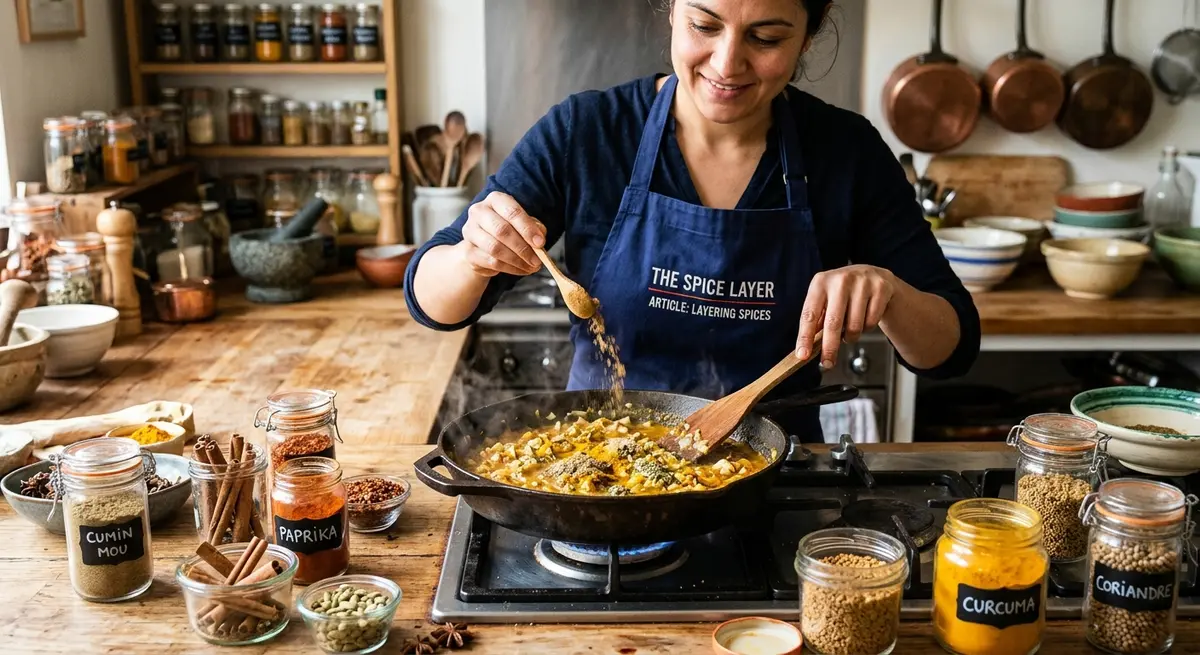
The difference between a dish that tastes like it simmered all day and one that tastes like a spice dump is often just timing. I used to add every spice at the start and hope for the best; then I watched a chef cook greens and noticed he added chile at the start and more at the end. That is layering: the early spice deepens and mellows into the dish, while the late spice stays bright and hits the nose. This guide is the two-voice method that turned my stews from okay to memorable.
Why It Matters
Spices behave differently over time. Ground spice simmered for an hour loses its edge and melts into background warmth, while the same spice added in the last minutes stays sharp and alive. That earlier version gives depth, the later version gives lift, and together they make a rounded flavor with two registers. Layering also protects against burning, because you never add the whole load to a hot pan. It is a single habit that upgrades soups, curries, rice, and roasts without extra ingredients.
The Technique, Step by Step
- Plan in two passes: choose a base spice for depth and the same or another for the bright finish.
- Bloom the base spices in fat first, so they sink into the dish's foundation.
- Simmer the base long, thirty minutes or more for soups and stews, so it mellows.
- Near the end, add a fresh pinch of the bright spice, tasting until the aroma rises.
- Finish with a final scatter of the brightest notes, herbs, zest, or pepper, at the very last second.
- Taste between the layers, and adjust toward the balance the whole dish wants.
Common Mistakes to Avoid
- Dumping the entire spice load at the start: you get only depth, and the brightness never arrives.
- Adding the finishing spice too early: it simmers into the mellow zone and the pop is lost.
- Layering the same measure twice by accident: two pinches of a strong spice can out-shout the meal.
- Skip the bloom and simmer lonely ground spice in water: it never takes off.
- Judging the dish during the simmer, before the layered spices have settled.
Quick Wins & Variations
- Ground cumin early, whole toasted cumin seeds at the end, for dual texture.
- Chile flakes in the oil, then a final fresh pinch over the finished bowl.
- Curry powder in the base and a last-minute garam masala finish, classic dual grain.
- A bay leaf in the simmer and a bay leaf of fresh thyme scatt at the end.
- Oregano early with the building meat, oregano to the finish with the tomatoes.
FAQ / Quick Facts
- What does layering spices do? It gives a dish both depth and brightness by letting the early spice mellow and the late spice stay fresh.
- How much should I use per layer? About two thirds early and one third at the end is a safe, workable split.
- Do all spices take layering well? Seeds and sturdy ground spices do, the most delicate herbs belong mostly in the finish.
- Will layering make every dish better? It sharpens most soups, stews, and sauces, try it on your favorite curry once.
Related Articles
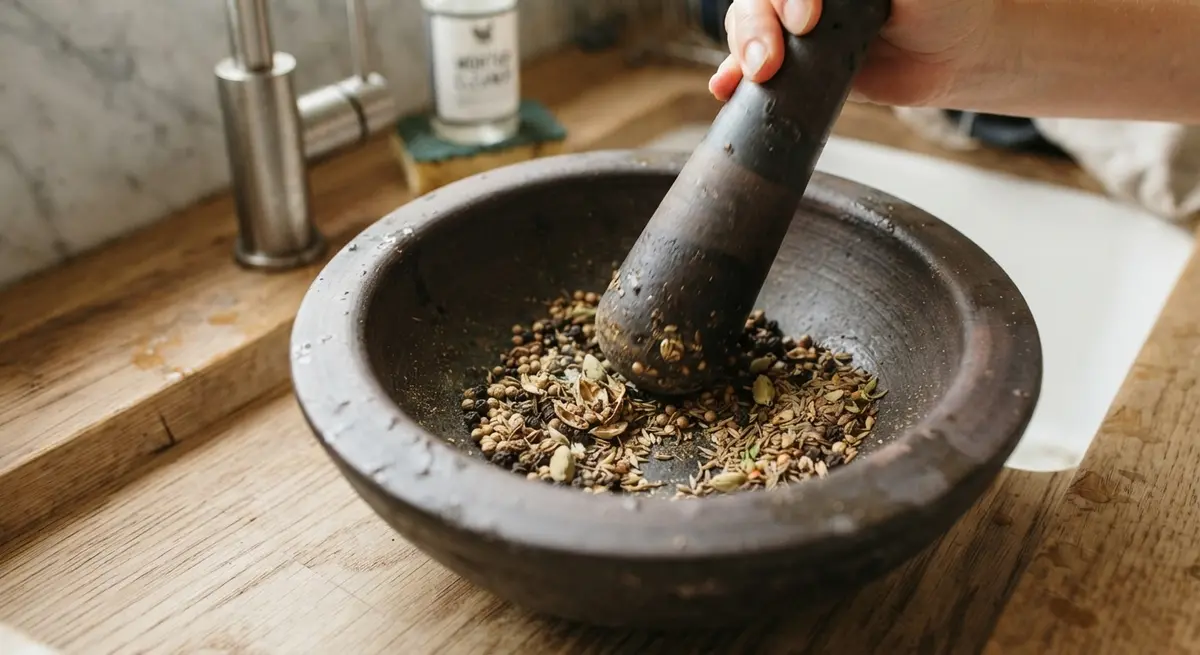
How to Crack Spices Without Making a Mess
Cracking opens a spice's oils without making powder. A few twists, a pan, a towel, and your stews will taste freshly live.
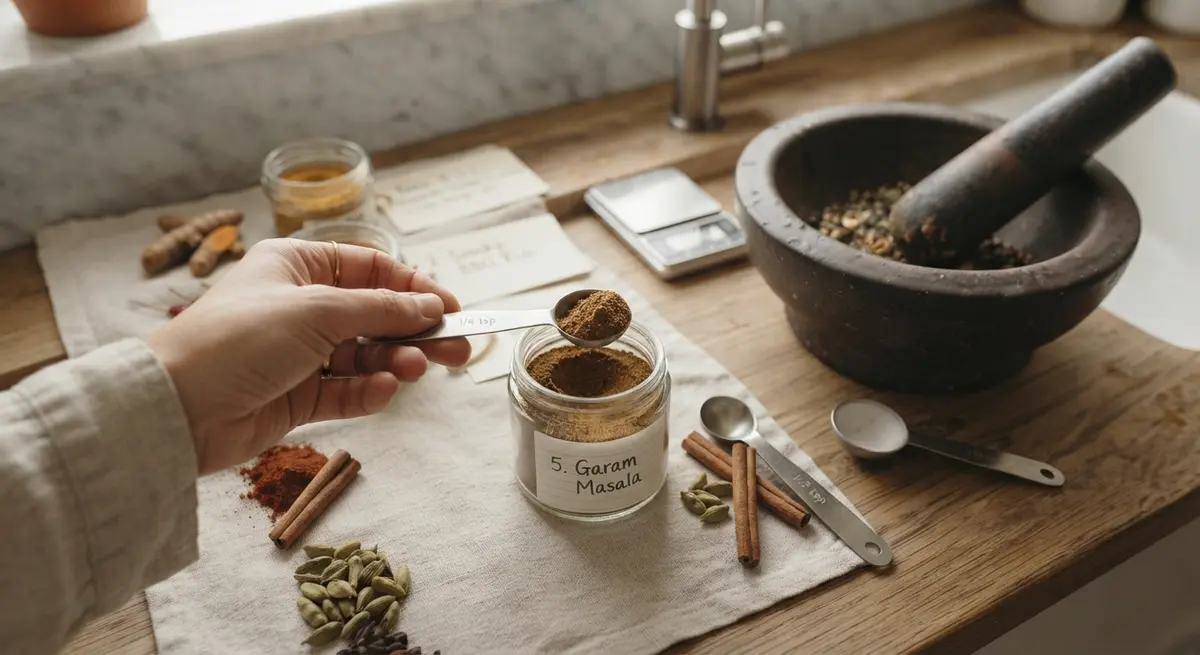
How to Measure Spices So the Batch Comes Out Right
A heaping spoon changes the dish; a level spoon repeats it. Master the level measure and weigh for baking batches that come out right.
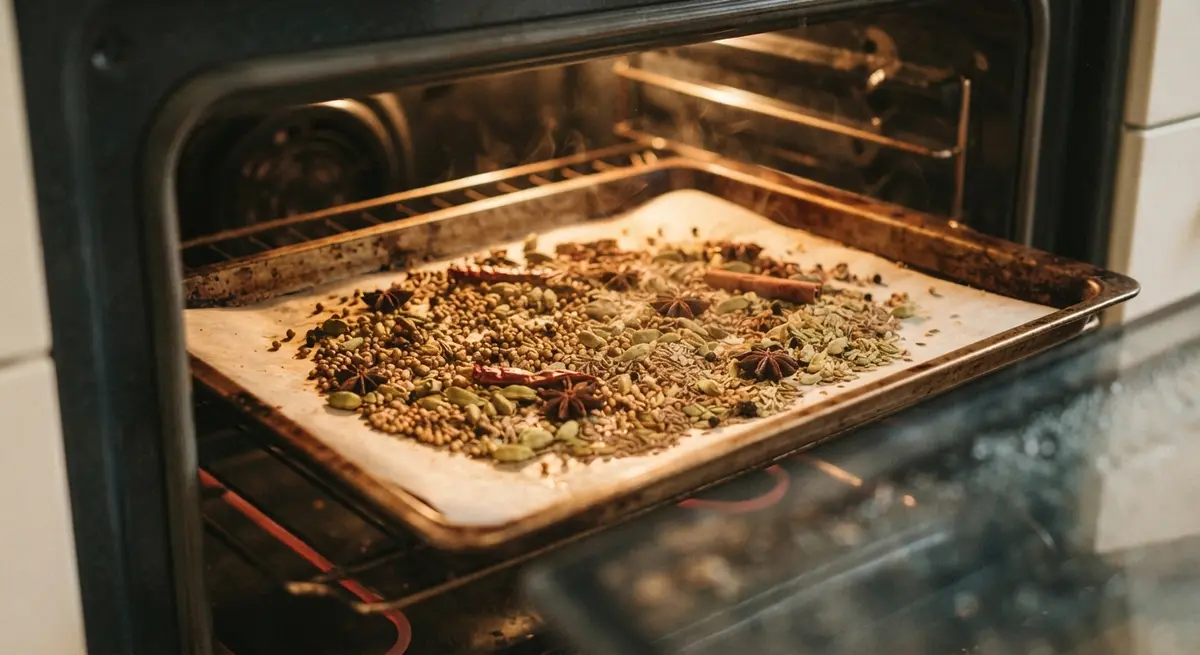
Oven-Roasting Spices for Steady, Gentle Depth
A low oven turns whole spices toasty and even, no shaking required. Perfect for big batches when your wrist and stovetop need a break.
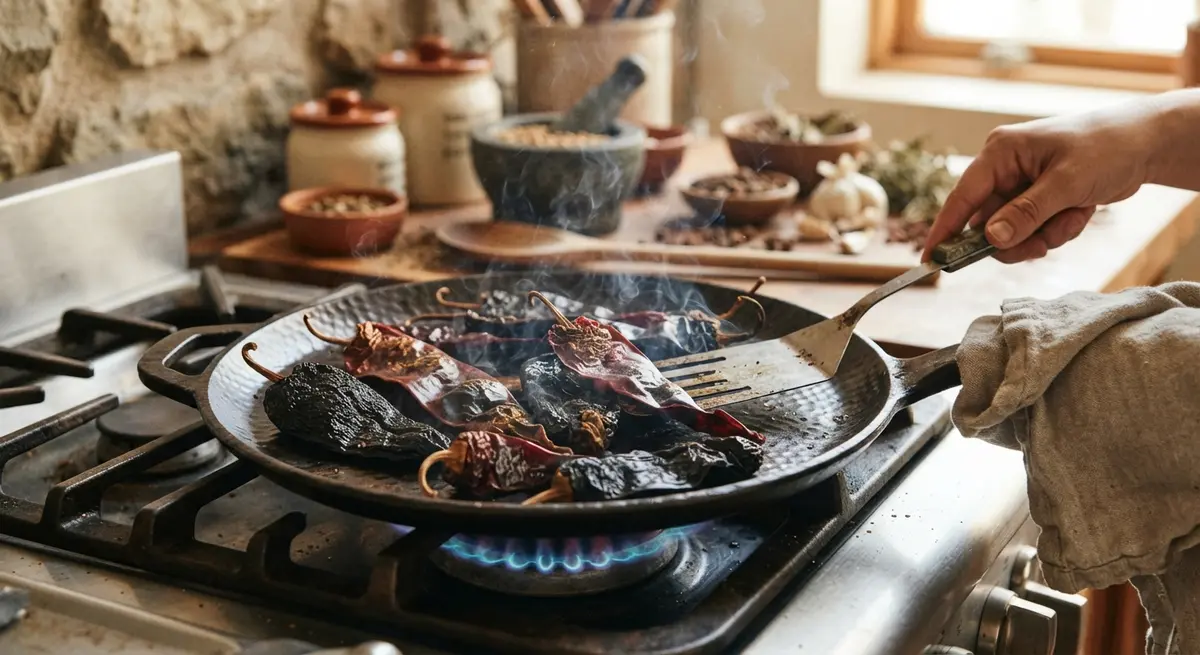
Roasting Chiles for Deep, Smoky Flavor
Roasting turns chiles dark, sweet, and earthy. Dry heat, even blistering, and a steam rest make the most complex pepper flavor at home.
About the Authors
This recipe and guide was developed, tested, and approved in our home kitchen and daily life. Jamy is a retired Food Service District Manager and Early Childhood Program Manager who spent his career overseeing multi-site restaurant operations, large-scale culinary production, and daycare menu management. Kaïna brings the ultimate real-world test: making sure it brings ease and joy to our kids on a busy weeknight.
Read more about our professional background and philosophy →