Roasting Chiles for Deep, Smoky Flavor
By the QuiteRecipes team (Jamy & Kaïna)
Roasting turns chiles dark, sweet, and earthy. Dry heat, even blistering, and a steam rest make the most complex pepper flavor at home.
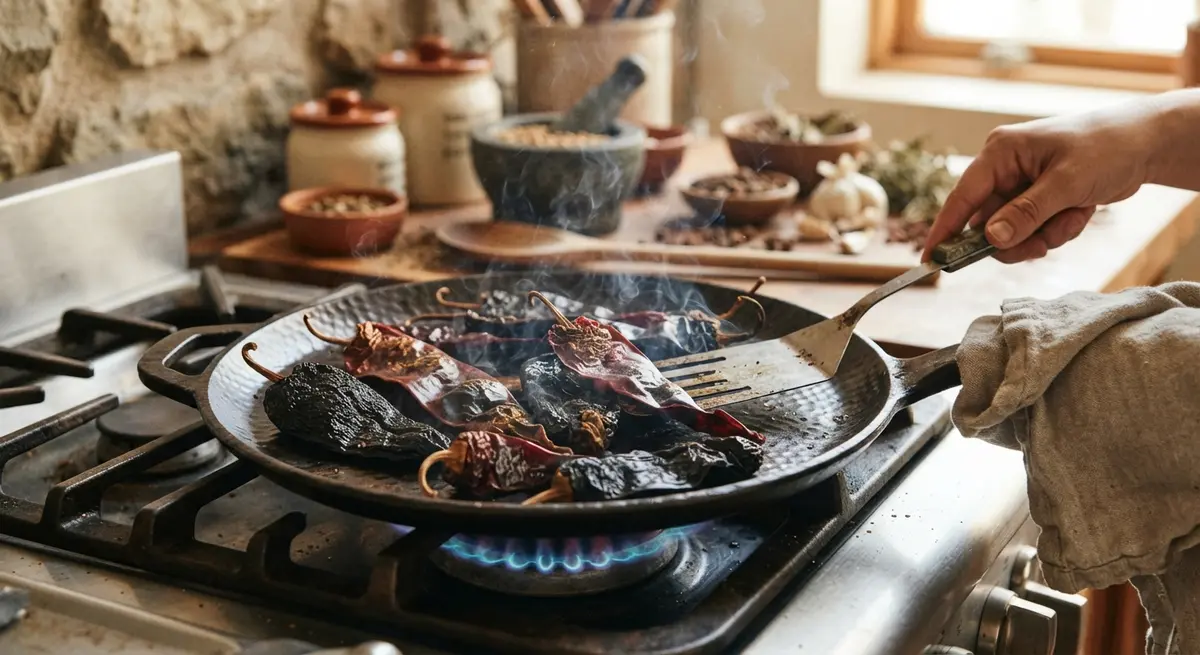
There is one transformation in the kitchen I never get tired of: a raw chile going into a hot pan and coming out blistered, dark, and impossibly fragrant. Roasting changes a pepper's personality completely, caramelizing its sugars and unlocking a smoky, earthy depth no raw chile can touch. It is the difference between a plain pepper salsa and the kind that tastes like the fire cooked it. The method is short on steps and long on forgiveness. This guide is the roast I use for salsas, sauces, and spice mixtures.
Why It Matters
Roasting accomplishes two things at once: it chars the skin, adding smoke and char, and it sweetens the flesh by caramelizing the sugars. That dual effect makes roasted chiles the backbone of adobos, moles, salsas, and rubs, giving them range from mild and fruity to deeply earthy. Dry heat, a blistering pan, or a hot oven, then a short steam, finishes the job. Once you have roasted chiles on the counter, you have the most complex single ingredient in the kitchen ready to improve dinner.
The Technique, Step by Step
- Heat a cast-iron or heavy pan dry over high heat, or set the broiler on high.
- Add whole chiles, dried or fresh, in a single layer, and let them blister.
- Turn them as the skins char, using tongs, until blackened in patches but not incinerated.
- For dried chiles, press them flat into the hot pan until they puff and toast for seconds.
- Transfer to a bowl, cover tightly, and let them steam for a few minutes.
- Peel the charred skins from fresh chiles, or use dried chiles whole with stems removed.
Common Mistakes to Avoid
- Roasting over fumes in a sealed kitchen: open a window, the smoke is part of the charm and the annoyance.
- Burning to ash: charred-char is flavor, ash is regret, pull them at patchy-black, not full-black.
- Rushing the pan: one flat layer and patience beats a crowded pile and uneven station.
- Skipping the steam: the rest in a covered bowl loosens skins and deepens the flavor.
- Tasting too soon: roasted chiles finish a good while off the heat, patient tasting pays.
Quick Wins & Variations
- Roast dried guajillo or ancho chiles for a quick homemade adobo base.
- Char fresh poblanos for a salsa that needs no stove afterward.
- Roast jalapenos and blend with lime, garlic, and tomatillo for a garden salsa.
- Crush roasted dried chiles into flakes for a smoky finishing shake.
- Fold chopped roasted peppers into mayo or cream for an instant spread.
FAQ / Quick Facts
- How long does it take to roast chiles? A few minutes per side over high heat, or until blistered char in patches.
- Should I peel roasted chiles? Fresh chiles, yes, the charred skin is bitter; dried chiles are used whole after toasting.
- Why does roasting sweeten chiles? Heat caramelizes their sugars and unlocks smoky, earthy notes.
- Can I store roasted chiles? Yes, sealed in the fridge for a few days, or frozen, after cooling completely.
Related Articles
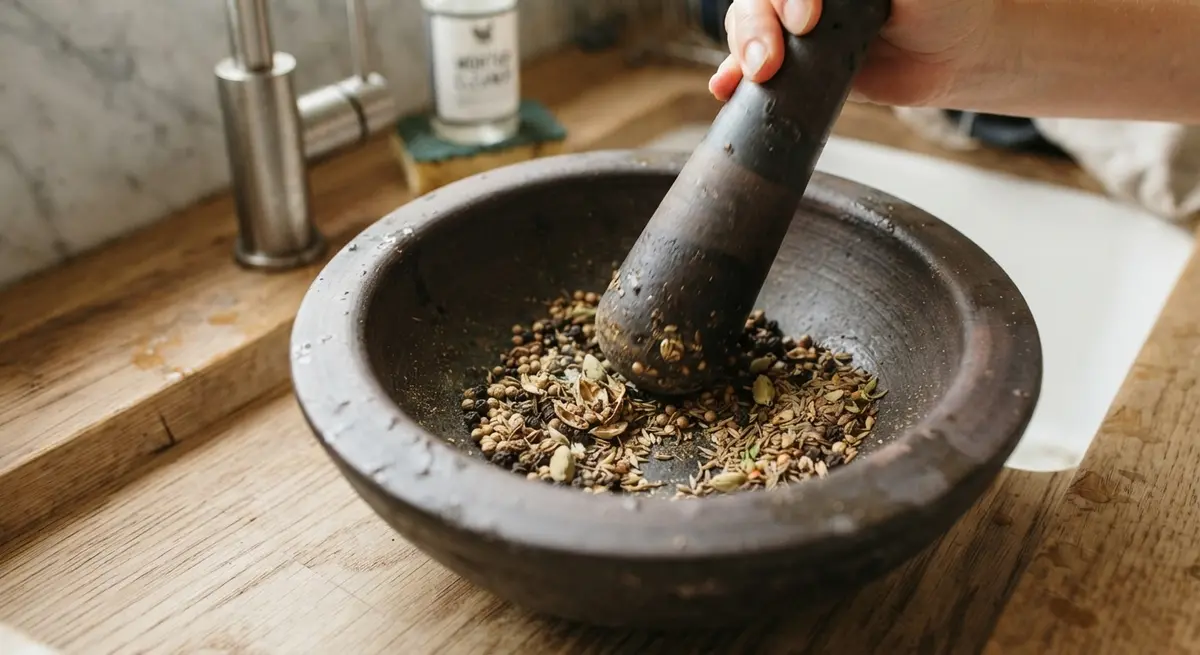
How to Crack Spices Without Making a Mess
Cracking opens a spice's oils without making powder. A few twists, a pan, a towel, and your stews will taste freshly live.
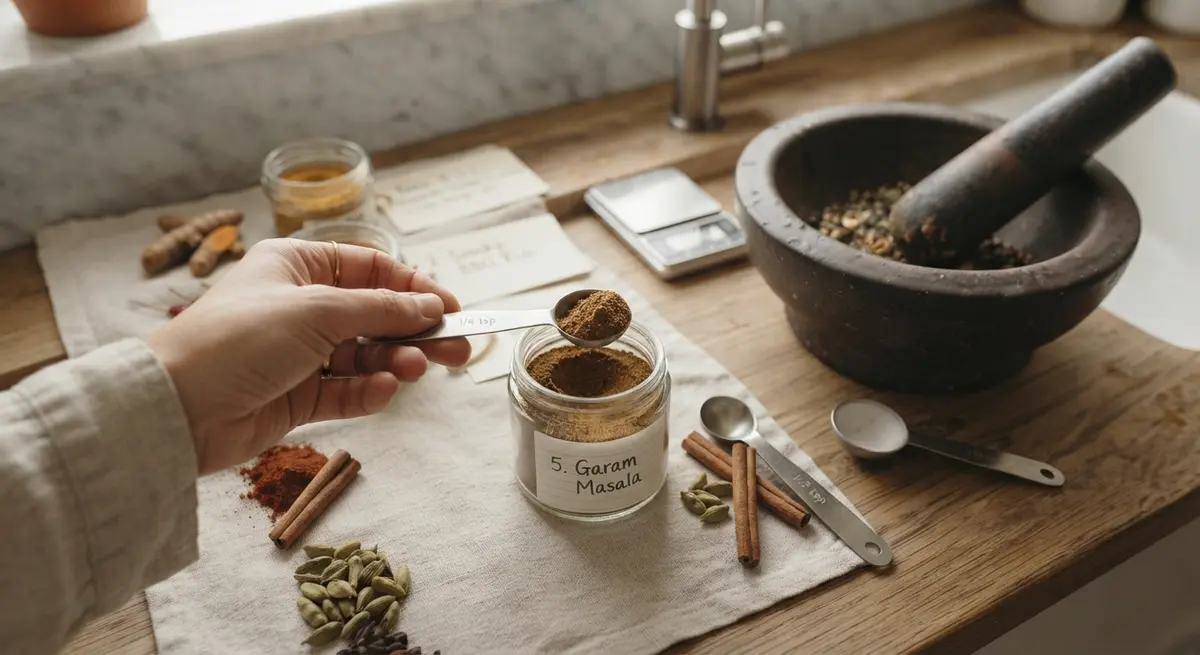
How to Measure Spices So the Batch Comes Out Right
A heaping spoon changes the dish; a level spoon repeats it. Master the level measure and weigh for baking batches that come out right.
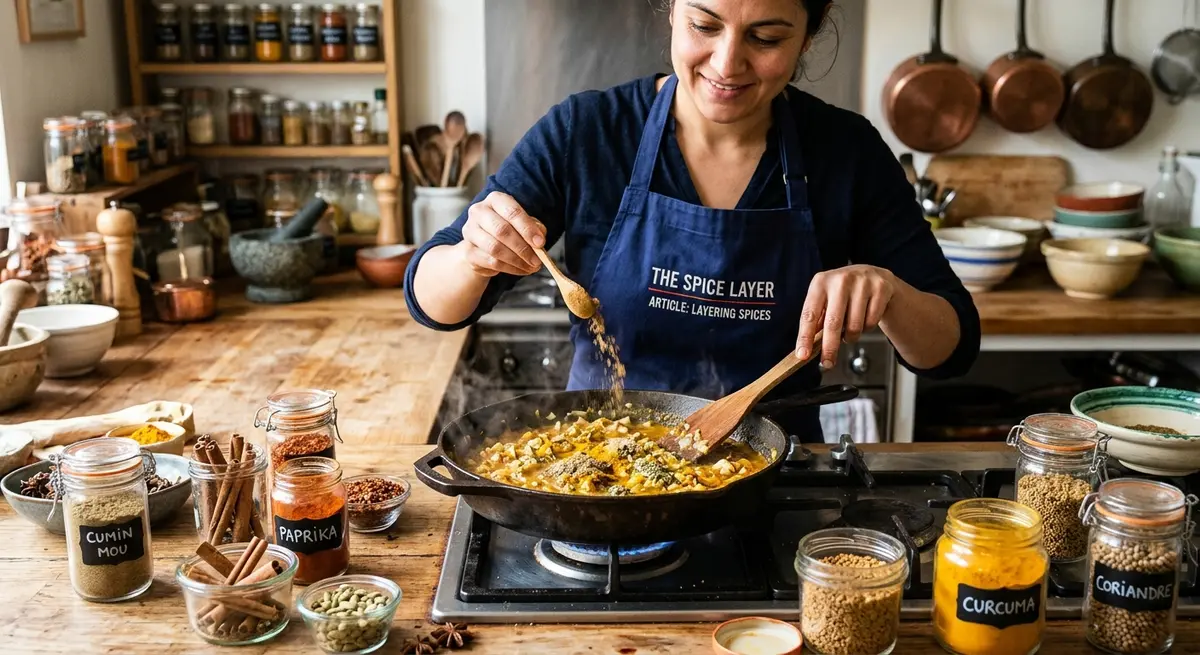
Layering Spices: Why a Dish Tastes Better in Waves
Spices change as they cook. Add some early for depth and some late for brightness, and the same jar gives the dish two voices.
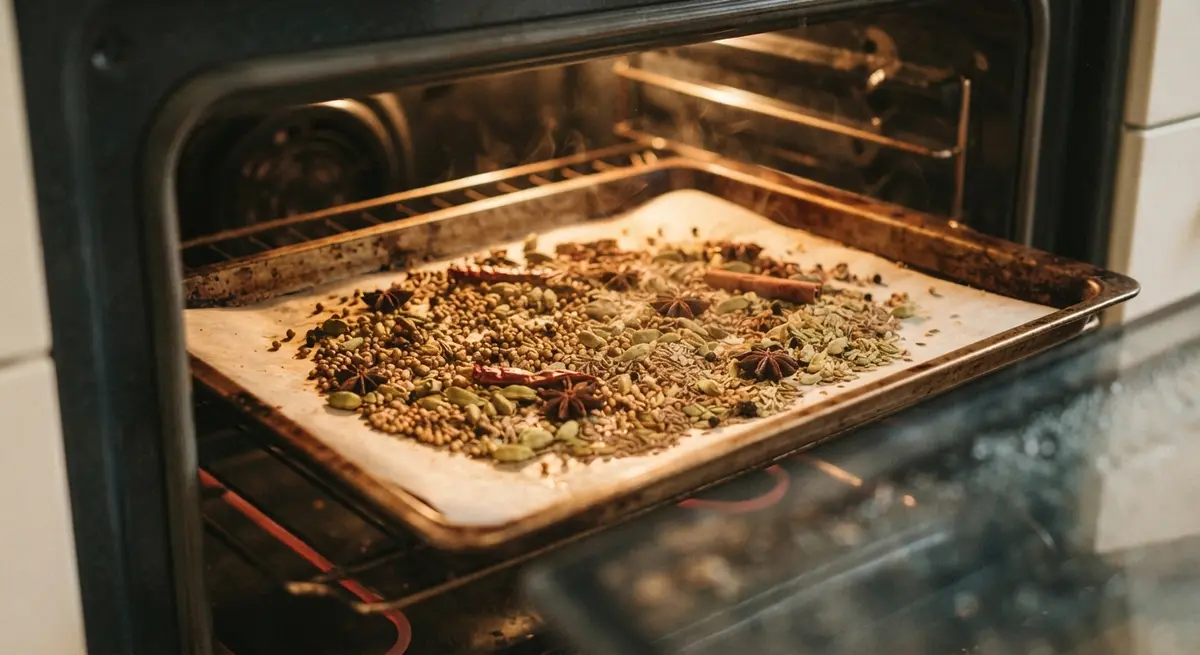
Oven-Roasting Spices for Steady, Gentle Depth
A low oven turns whole spices toasty and even, no shaking required. Perfect for big batches when your wrist and stovetop need a break.
About the Authors
This recipe and guide was developed, tested, and approved in our home kitchen and daily life. Jamy is a retired Food Service District Manager and Early Childhood Program Manager who spent his career overseeing multi-site restaurant operations, large-scale culinary production, and daycare menu management. Kaïna brings the ultimate real-world test: making sure it brings ease and joy to our kids on a busy weeknight.
Read more about our professional background and philosophy →