Timut Pepper: Flavor Profile, Health Benefits & Culinary Uses
By the QuiteRecipes team (Jamy & Kaïna)
Where Sichuan pepper buzzes and bites, Timut is the gentle, perfumed cousin that tastes like pink grapefruit rind and suits delicate fish and bright desserts.
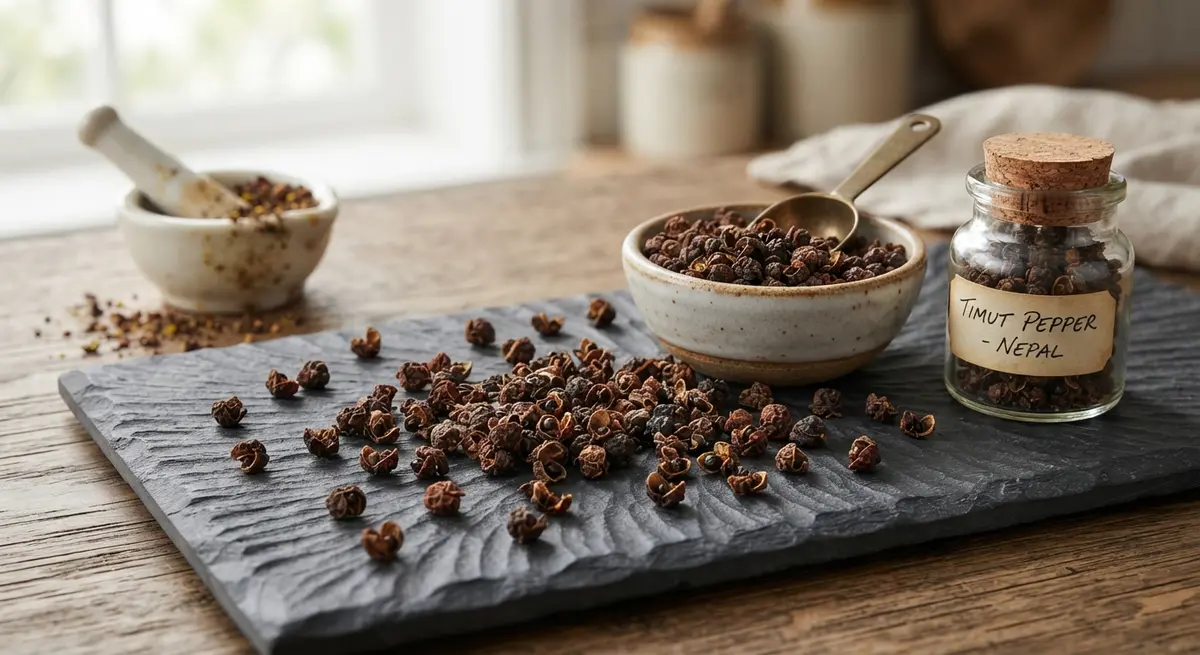
Timut pepper grows wild in the hills of Nepal, where it has been a kitchen staple for generations, and until recently most of the world had never heard of it. It belongs to the same Zanthoxylum family as Sichuan pepper, which means it shares that peculiar tingling mouthfeel, but it swaps the loud citrus-and-wood of its Chinese relative for a perfume all its own: pungent grapefruit, pink grapefruit rind, a hint of lime peel, and a tingle so gentle some people mistake it for carbonation in a glass of water. The aromatic oils that carry those citrus notes are extremely volatile, and they disappear fast once the corns are cracked.
Because of that fragility, Timut rewards patience: crush it at the last minute and use it as a fresh burst, not a background hum — it turns plain fish into something people ask about.
Flavor Profile & Notes
The most citrus-forward of the Zanthoxylum peppers, with a grapefruit-led nose and a whisper of grapefruit-pith bitterness that keeps it interesting. Heat is low and comes second to the tingle. The corns are small, gray-green, and often sold with dried husks still attached, so coarse-crack or grind as needed and never fine-grind ahead: the volatile oils are gone within minutes. Add it at the end of cooking or use it raw in vinaigrettes, marinades, and garnishes.
Health Benefits & Nutrition
The Zanthoxylum lineage has a long history in Ayurvedic and East Asian herbalism as a warming, stomach-settling spice, and the pericarp is rich in the antioxidant compounds shared by its relatives. From the kitchen, the honest selling point is what it does for a plate: massive, fresh citrus flavor for no salt and almost no calories. If you love big flavor with less sodium, Timut is a wonderful tool. It is food, not medicine, and the tingle, however pleasant, is not a health claim.
Best Culinary Pairings
Timut is a natural for anything that loves grapefruit: ceviche, citrus-cured white fish, and salmon with lemon. It is superb crushed over roasted vegetables, folded into a bright vinaigrette for bitter greens, or stirred into whipped cream for a honey-and-grapefruit dessert. It also lifts creamy curries at the last moment, and bartenders are fond of a few toasted corns in gin cocktails and grapefruit seltzer drinks.
Quick Substitutes
The closest quick swap is pink or green Sichuan husks cracked with a strip of fresh grapefruit zest, which restores most of the tingle and the citrus. Failing that, pink peppercorns with a little lemon zest approximate the gentle bite. Nothing recreates the exact perfume, so when a dessert or fish dish really needs it, buy the real thing.
FAQ / Quick Facts
- How long does it keep? Whole corns keep flavor for about a year in a sealed, cool jar; cracked Timut should be used within days.
- What does it taste like? Grapefruit rind, lime peel, and a soft, harmless tingle on the tongue.
- Does Timut burn? Not really; the sensation is a gentle vibration, closer to sparkling water than heat.
- Botanical family / Form / Best uses: Zanthoxylum armatum (citrus family) / whole gray-green corns / fish, shellfish, dressings, and light desserts.
Related Articles
Sansho Pepper: Flavor Profile, Health Benefits & Culinary Uses
Sansho is the green and lemony Zanthoxylum cousin of Sichuan pepper, at home on grilled eel and in shichimi togarashi, and all but ruined by high heat.
Sichuan Pepper: Flavor Profile, Health Benefits & Culinary Uses
The tingly, vibrating mouthfeel called ma is unique to Sichuan pepper, and it turns out to be easier to work with than most cooks expect once you stop scorching it.
Achiote (Annatto): Flavor Profile, Health Benefits & Culinary Uses
Tiny coral-red seeds that paint food golden: the annatto tree's achiote, how to use the seeds and the Yucatan paste, and honest color substitutes.
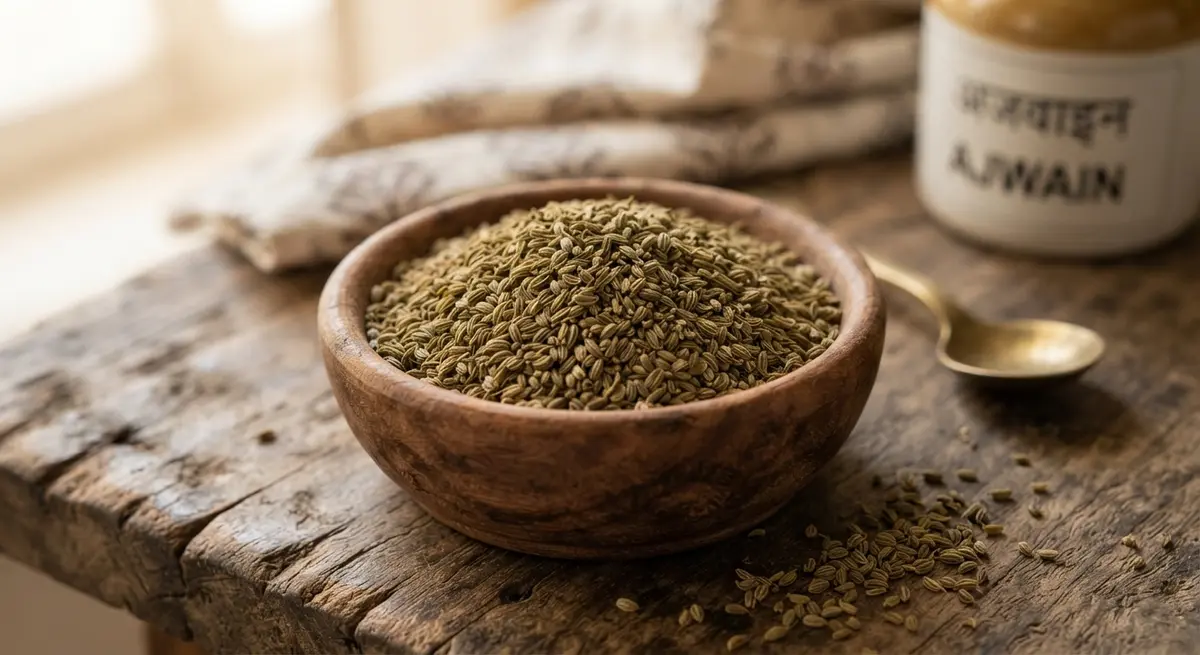
Ajwain (Carom) Seeds: Flavor Profile, Health Benefits & Culinary Uses
A tiny gray-brown seed that tastes like thyme, oregano, and cumin had a baby with a timer fuse. Here is how and why Indian kitchens use ajwain.
About the Authors
This recipe and guide was developed, tested, and approved in our home kitchen and daily life. Jamy is a retired Food Service District Manager and Early Childhood Program Manager who spent his career overseeing multi-site restaurant operations, large-scale culinary production, and daycare menu management. Kaïna brings the ultimate real-world test: making sure it brings ease and joy to our kids on a busy weeknight.
Read more about our professional background and philosophy →