Sarsaparilla Root: Flavor Profile, Health Benefits & Culinary Uses
By the QuiteRecipes team (Jamy & Kaïna)
A dried root that tastes like the shadow of root beer: sarsaparilla's real flavor, traditional tonic use, and why it became the soda fountain's safe choice.
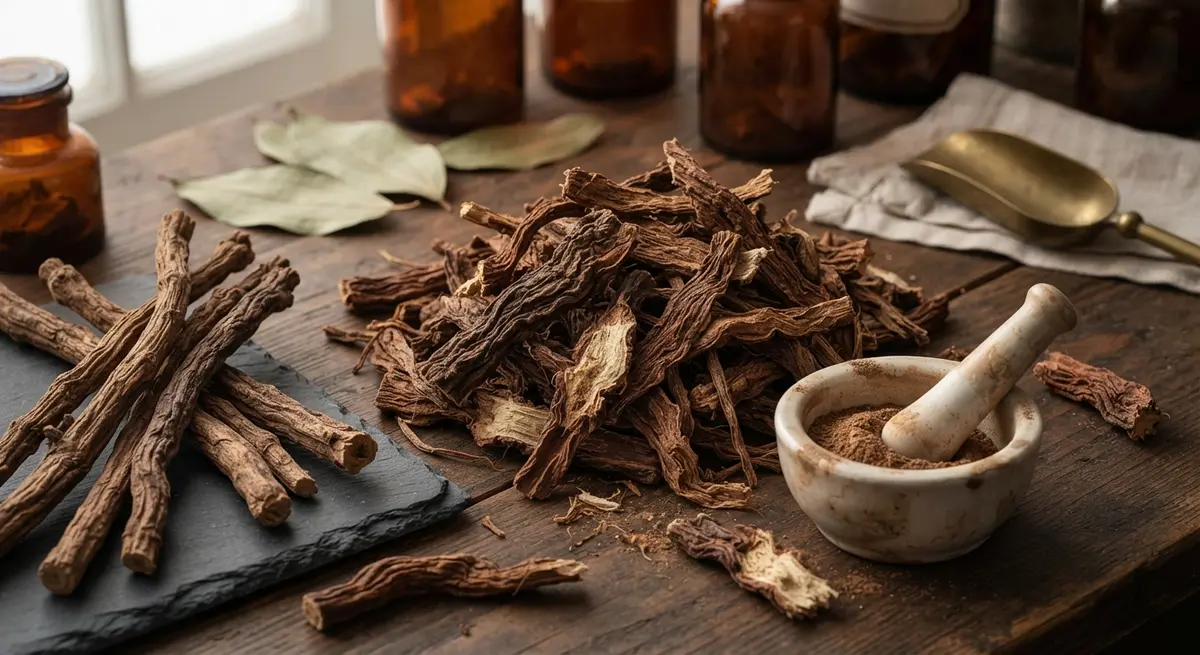
Sarsaparilla is a plant with a surprisingly modern voice. The dried, twisted root of several Smilax species, mostly native to Central America, has been brewed into root-beer-adjacent soda, tonics, and herbal teas for centuries. If you taste it, you recognize the shadow of old-fashioned root beer, because sarsaparilla and sassafras shared the soda fountain's spotlight back when a root was a beverage.
The journey is a good story: the root traveled from tropical vines to the pharmacy shelf, then to the American soda fountain, where it built its fame on a sweet, earthy goodness all its own.
Flavor Profile & Notes
The dried root tastes sweet, earthy, and musky, with a vanilla-like warmth and a hint of wintergreen. Brewed into syrup, it comes across as root beer's wiser grandparent — softer and balsamic, with none of the sharp bite of modern soda. Chewing a small piece of the root is like sipping mild tea and licorice at once, which tells you a lot about its personality. It steeps gently: a long, slow simmer draws the sweetness out, and it plays extraordinarily well when blended with other roots and spices.
Health Benefits & Nutrition
Here is the honest part. Sarsaparilla has a long traditional career as a "blood purifier" and a general tonic, and none of it survives modern scrutiny — there are no well-designed trials showing it cleans anything. It does not contain sassafras's safrole, the compound that landed old root beer in trouble, which is part of why sarsaparilla became the legal alternative; that is the measure of its value. The root carries saponins, the foamy compounds many plants use, and a modest handful of plant compounds studied for antioxidant activity. Treat it as a flavorful, caffeine-free root tea — pleasant, traditional, and nothing more. As with any herbal root, sip in moderation, and if you are pregnant or on medication, ask your doctor first.
Best Culinary Pairings
The classic use is syrup for root-beer-style soda, built by simmering sarsaparilla with ginger, licorice root, cinnamon, and orange peel. The same syrup makes a lovely cream soda or an old-fashioned-style cocktail with whiskey and bitters. Splash sarsaparilla syrup into sparkling water, use it to sweeten-poach pears, or stir a little into barbecue sauce for a sweet, malty underside. Ginger, vanilla, anise, and citrus are its natural partners.
Quick Substitutes
Root beer extract — usually a blend of several roots and spices — is the closest goal, capturing sarsaparilla's character in a bottle. A mix of licorice root, vanilla, and ginger simmers into something in the same family. Do not substitute sassafras: its safrole content is exactly why it is out of favor. Dried ginger and vanilla with a touch of molasses gets you a comforting earthy-sweet drink even if it is not technically sarsaparilla.
FAQ / Quick Facts
- Is sarsaparilla the same as sassafras? No — different plants entirely, and sassafras carries safrole, which is why its use is restricted.
- What does it taste like? Sweet, earthy, and musky, like gentle root beer with vanilla and a hint of wintergreen.
- Botanical family / Form: Smilacaceae — the dried root of Smilax species. Sold as whole root, powder, or syrup extract for teas and sodas.
Related Articles
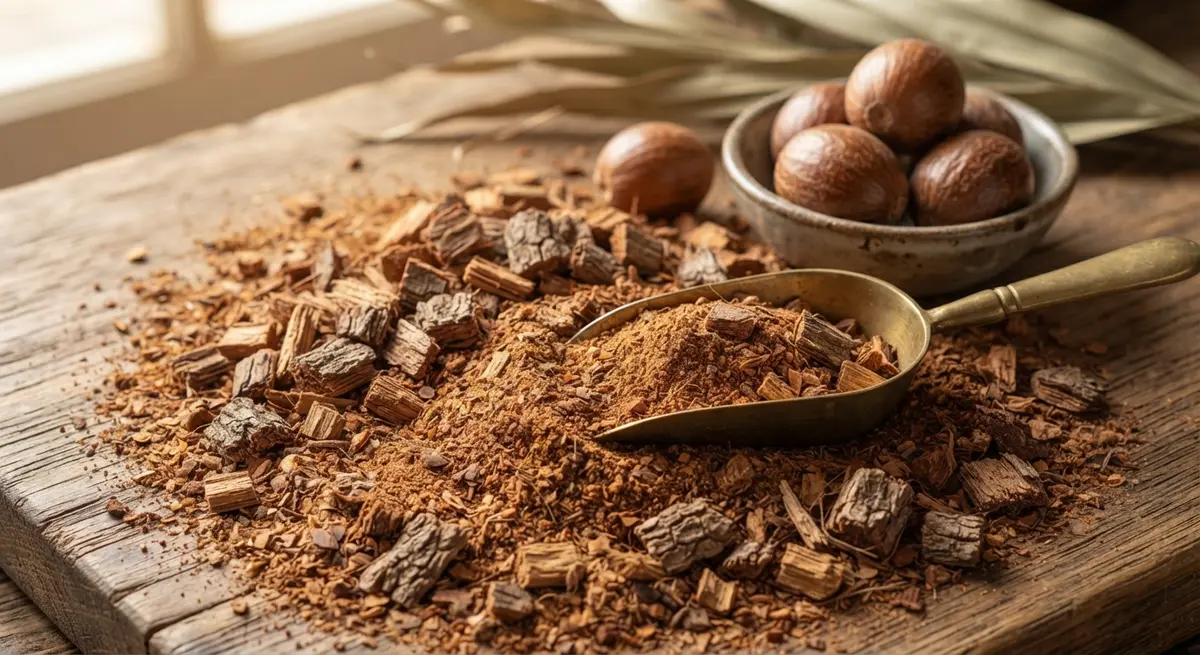
Doum Palm Bark: Flavor Profile, Health Benefits & Culinary Uses
The doum palm's hard bark brews a sweet, caramel-woody tea with a hint of gingerbread — a Nile valley staple from Egypt and Sudan, now easy to make at home.
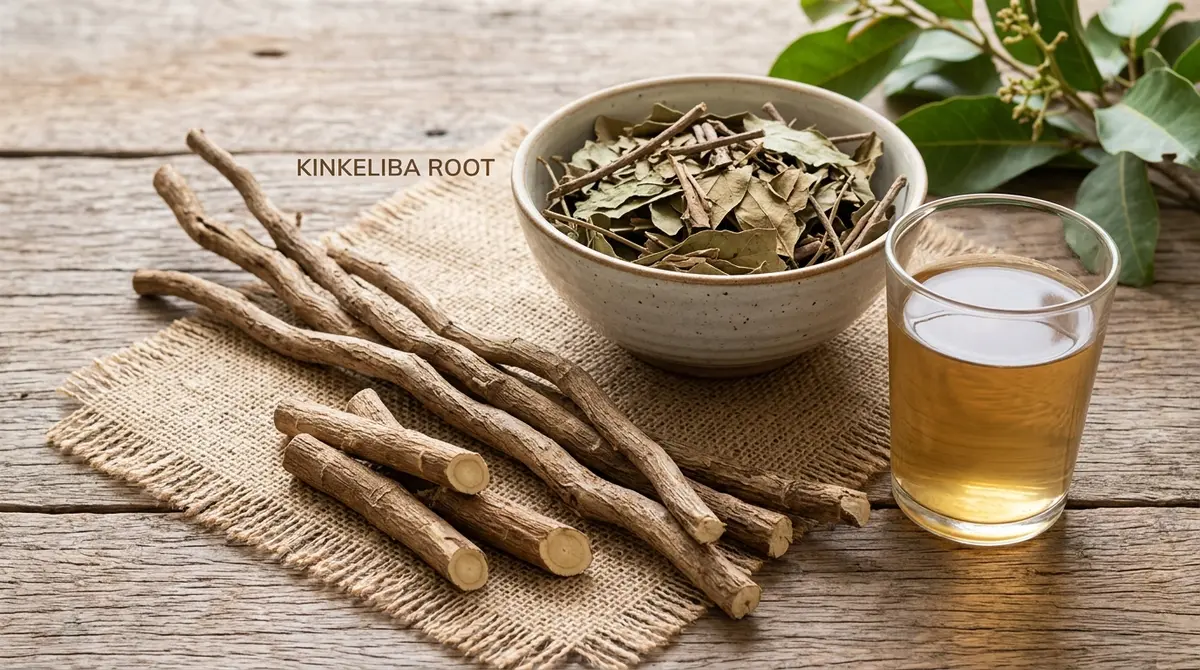
Kinkeliba Root: Flavor Profile, Health Benefits & Culinary Uses
West Africa's answer to chamomile: kinkeliba roots and leaves from the Combretum shrub brew a mild, woodsy, gently sweet tea for slow afternoons.
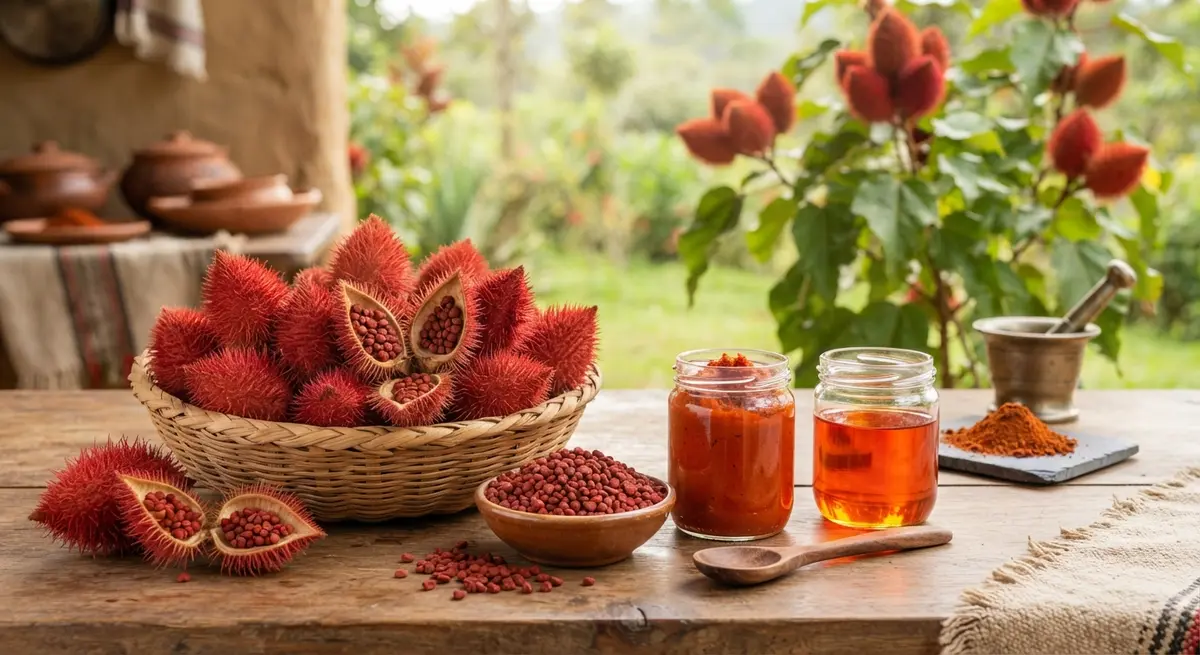
Achiote (Annatto): Flavor Profile, Health Benefits & Culinary Uses
Tiny coral-red seeds that paint food golden: the annatto tree's achiote, how to use the seeds and the Yucatan paste, and honest color substitutes.
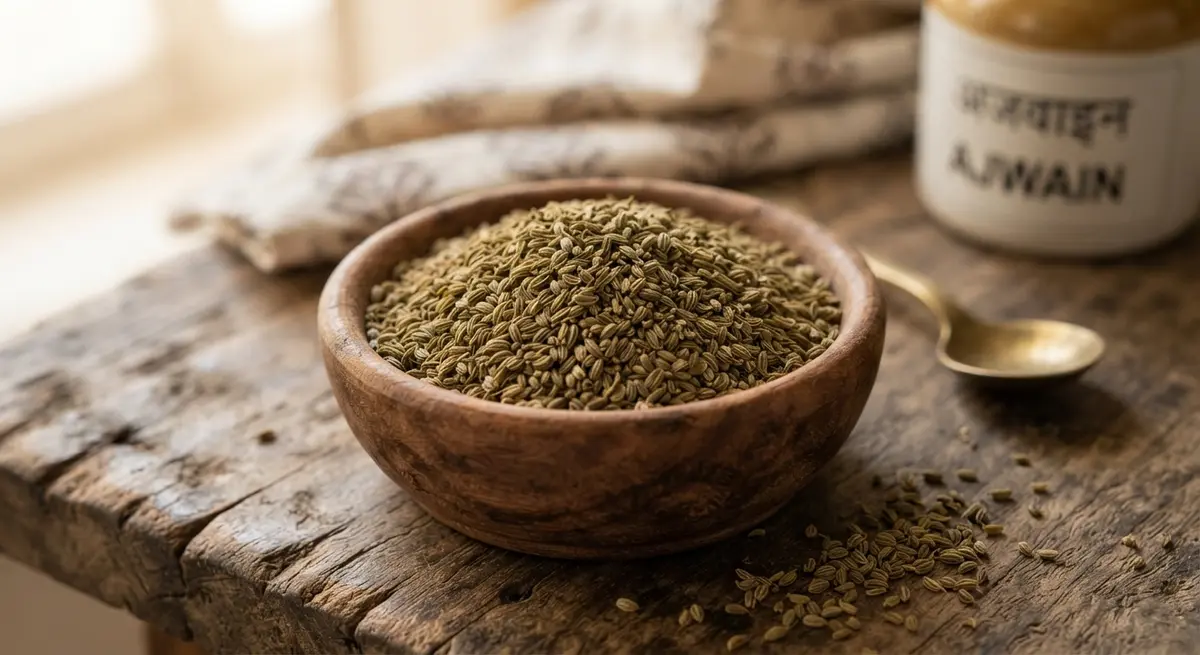
Ajwain (Carom) Seeds: Flavor Profile, Health Benefits & Culinary Uses
A tiny gray-brown seed that tastes like thyme, oregano, and cumin had a baby with a timer fuse. Here is how and why Indian kitchens use ajwain.
About the Authors
This recipe and guide was developed, tested, and approved in our home kitchen and daily life. Jamy is a retired Food Service District Manager and Early Childhood Program Manager who spent his career overseeing multi-site restaurant operations, large-scale culinary production, and daycare menu management. Kaïna brings the ultimate real-world test: making sure it brings ease and joy to our kids on a busy weeknight.
Read more about our professional background and philosophy →