Doum Palm Bark: Flavor Profile, Health Benefits & Culinary Uses
By the QuiteRecipes team (Jamy & Kaïna)
The doum palm's hard bark brews a sweet, caramel-woody tea with a hint of gingerbread — a Nile valley staple from Egypt and Sudan, now easy to make at home.
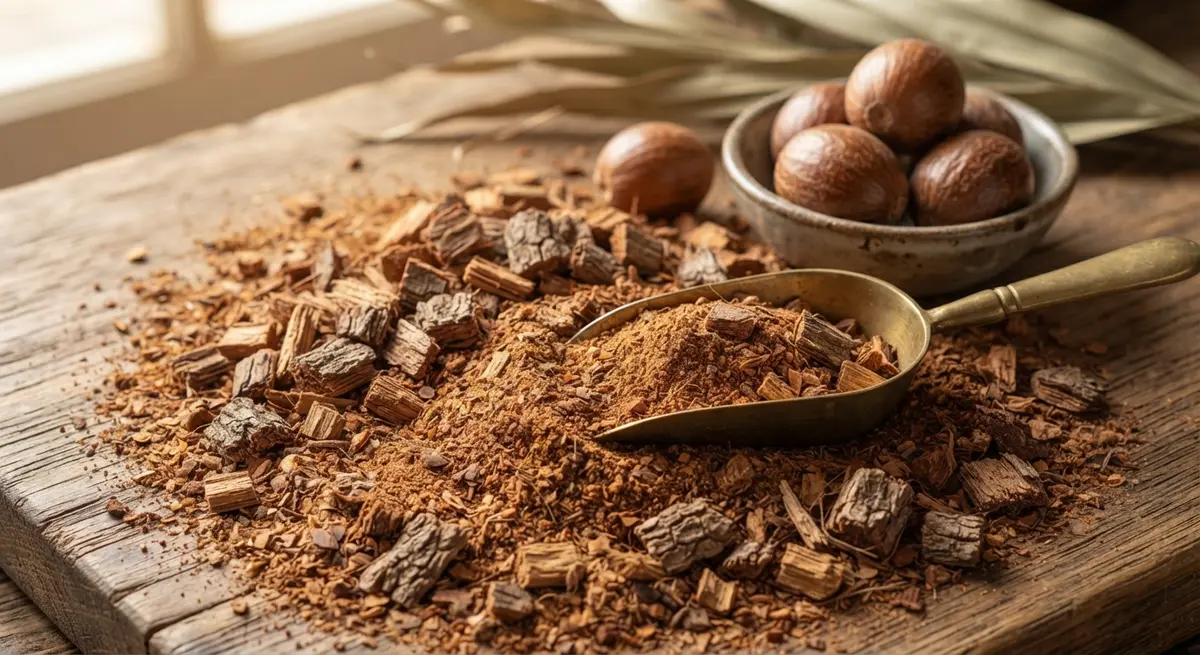
Doum palm is one of Africa's quietest food traditions. The doum palm tree, Hyphaene thebaica, grows across the Sahel and along the Nile valley, and its hard, fibrous, reddish-brown bark — alongside its famous "gingerbread fruit" — has been ground, boiled, and brewed for centuries in Egypt, Sudan, and the surrounding regions.
If you have tasted Egyptian erk el doum or Sudanese labob, you have tasted it: a reddish infusion that is mildly sweet, softly woody, and a little like a caramelized date got comfortable in a cup.
Flavor Profile & Notes
The bark steeps into a gentle, sweet tea with a caramel-and-date undertone and a faint hint of gingerbread spice — no wonder the fruit carries that nickname. Steeped like tea for about ten minutes, it is pleasant as is; simmered longer, it builds body and depth. You can also grind the bark into a coarse flour used in local porridges and breads. It is sweet enough that most drinkers skip sugar entirely, and it takes well to a little cinnamon, dried mint, or a squeeze of lime. Served over ice on a hot day, it is one of the great warm-climate refreshers.
Health Benefits & Nutrition
Doum drinks are often described in local tradition as cleansing and restorative, and the measured truth is gentler: the bark and fruit bring fiber, tannins, and a modest antioxidant content, with research still thin. What is genuinely useful about it is replacing sugary drinks — a glass of doum tea is sweetly satisfying with none of the syrup, which is a quietly good trade in anyone's book. As with all herbal botanicals, enjoy it in everyday amounts, and if you are pregnant or managing a health condition, run it past your doctor first.
Best Culinary Pairings
Served hot or iced, plain or with mint, doum bark makes a fine table drink after a rich meal. It is commonly blended with hibiscus, whose tartness sets off the caramel sweetness beautifully, and it pairs with lemon, ginger, and cinnamon. The ground bark can be stirred into smoothies or rolled into energy bites for a woody sweetness no dried date quite supplies. At dinner it stands in for dessert tea.
Quick Substitutes
Carob is the closest flavor sibling — sweet, woody, faintly caramel — and rooibos captures the mild woodsy sweetness with a different profile. If you need the caramel-date hum for a brew, steep cinnamon and a chopped dried date with a pinch of allspice, and you will be in the neighborhood. Hibiscus alone gets the tart brightness but none of the wood, so blend it with a sweet woody tea for the full effect.
FAQ / Quick Facts
- What does doum bark taste like? Mildly sweet, woody, and caramel-like, with a hint of gingerbread and dates.
- Where is it from? The doum palm (Hyphaene thebaica) of the Nile valley and the Sahel, prized across Egypt and Sudan.
- Form / uses: Dried ground bark for tea or flour; steep ten minutes, simmer longer for more body, and sweeten rarely because it is already gentle.
Related Articles
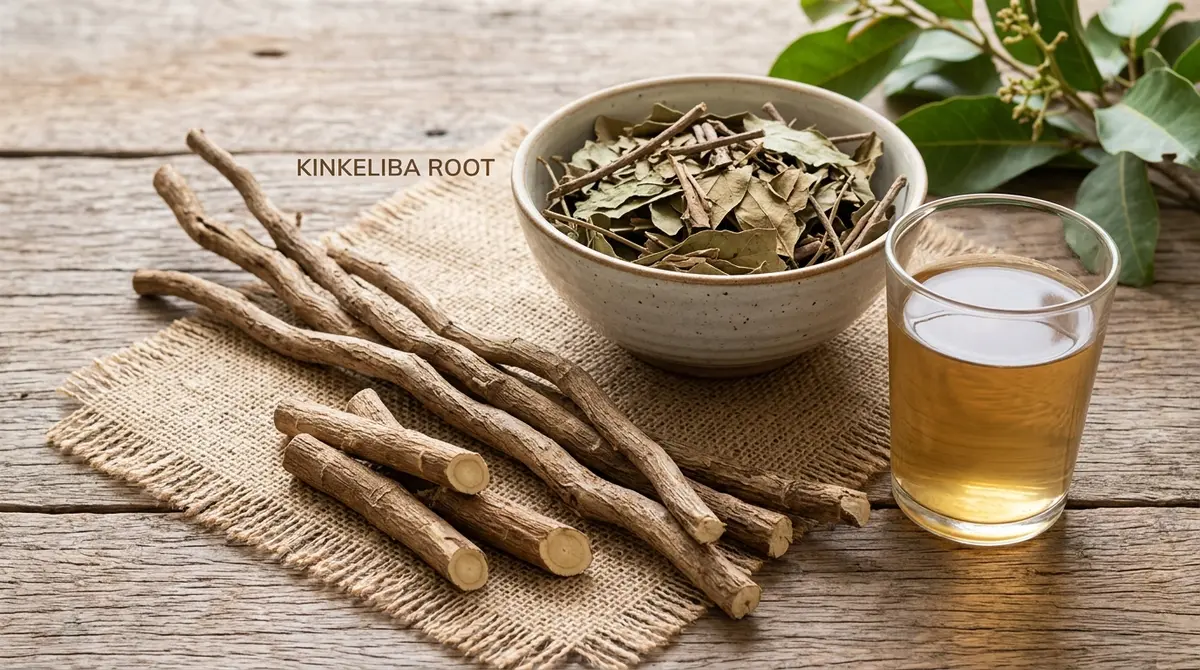
Kinkeliba Root: Flavor Profile, Health Benefits & Culinary Uses
West Africa's answer to chamomile: kinkeliba roots and leaves from the Combretum shrub brew a mild, woodsy, gently sweet tea for slow afternoons.
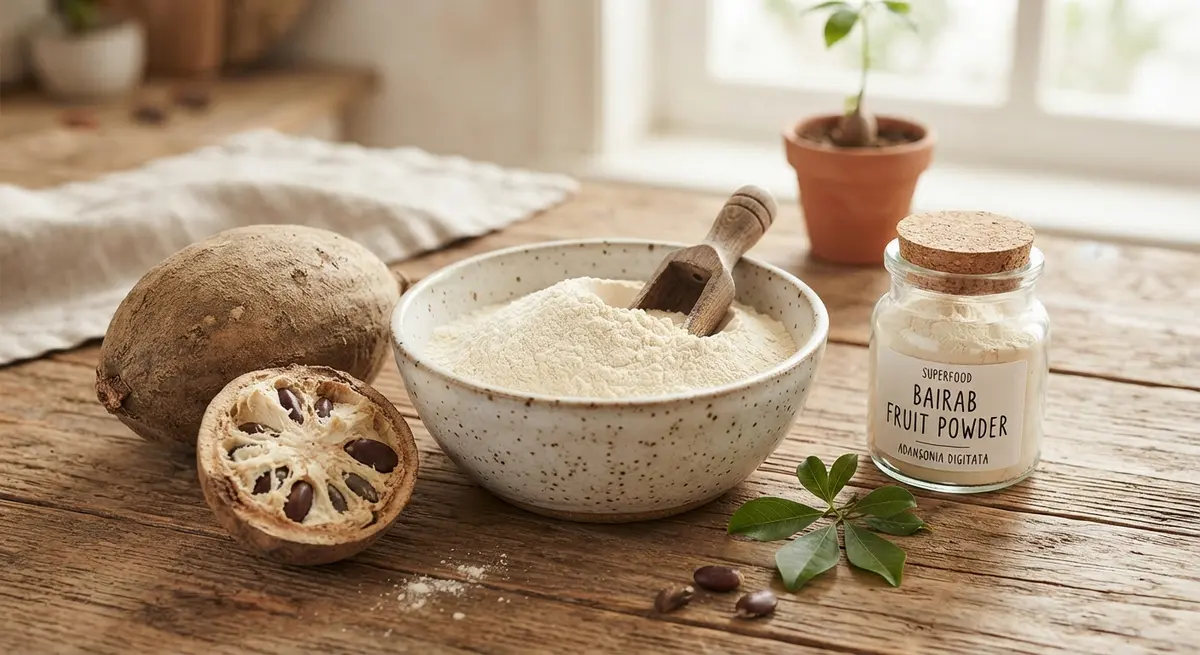
Baobab Fruit Powder: Flavor Profile, Health Benefits & Culinary Uses
Inside Africa's baobab pods sits a dry, tangy pulp that dissolves instantly into smoothies and sauces — a citrus-pineapple jolt of vitamin C and fiber.
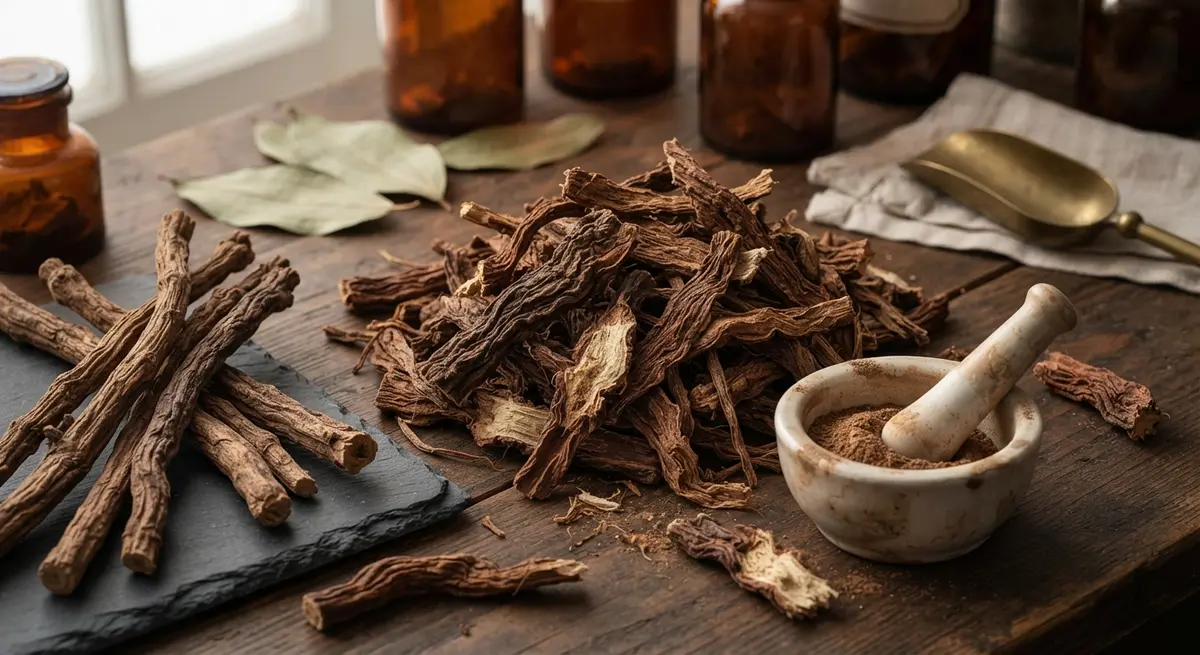
Sarsaparilla Root: Flavor Profile, Health Benefits & Culinary Uses
A dried root that tastes like the shadow of root beer: sarsaparilla's real flavor, traditional tonic use, and why it became the soda fountain's safe choice.
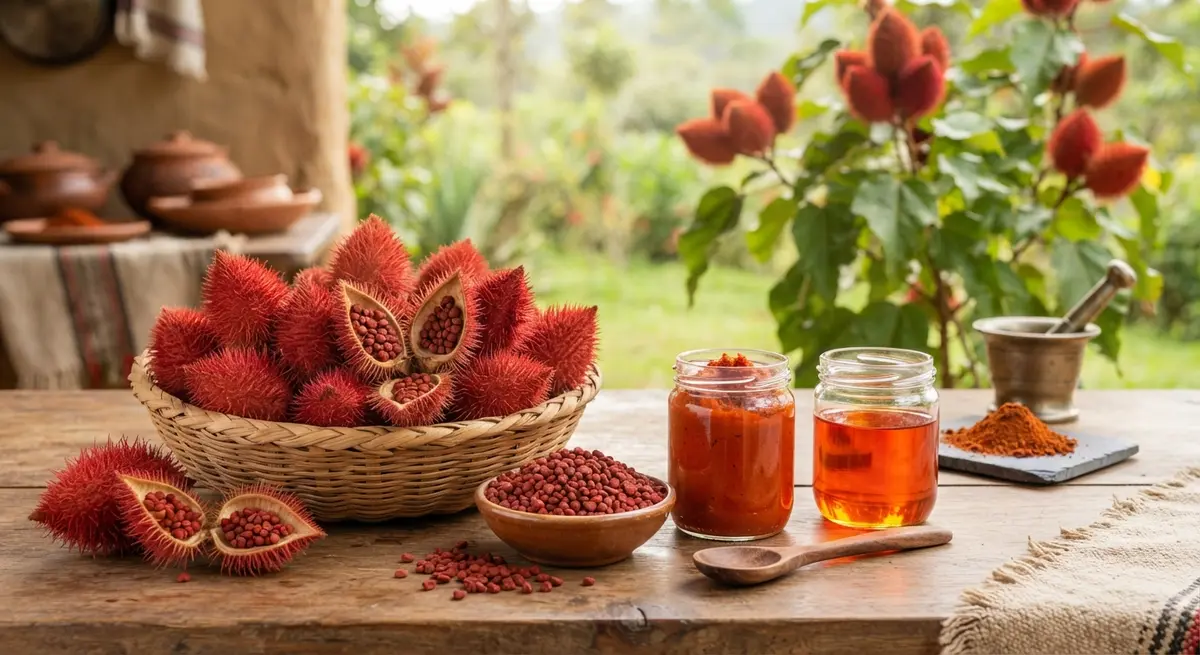
Achiote (Annatto): Flavor Profile, Health Benefits & Culinary Uses
Tiny coral-red seeds that paint food golden: the annatto tree's achiote, how to use the seeds and the Yucatan paste, and honest color substitutes.
About the Authors
This recipe and guide was developed, tested, and approved in our home kitchen and daily life. Jamy is a retired Food Service District Manager and Early Childhood Program Manager who spent his career overseeing multi-site restaurant operations, large-scale culinary production, and daycare menu management. Kaïna brings the ultimate real-world test: making sure it brings ease and joy to our kids on a busy weeknight.
Read more about our professional background and philosophy →