Kinkeliba Root: Flavor Profile, Health Benefits & Culinary Uses
By the QuiteRecipes team (Jamy & Kaïna)
West Africa's answer to chamomile: kinkeliba roots and leaves from the Combretum shrub brew a mild, woodsy, gently sweet tea for slow afternoons.
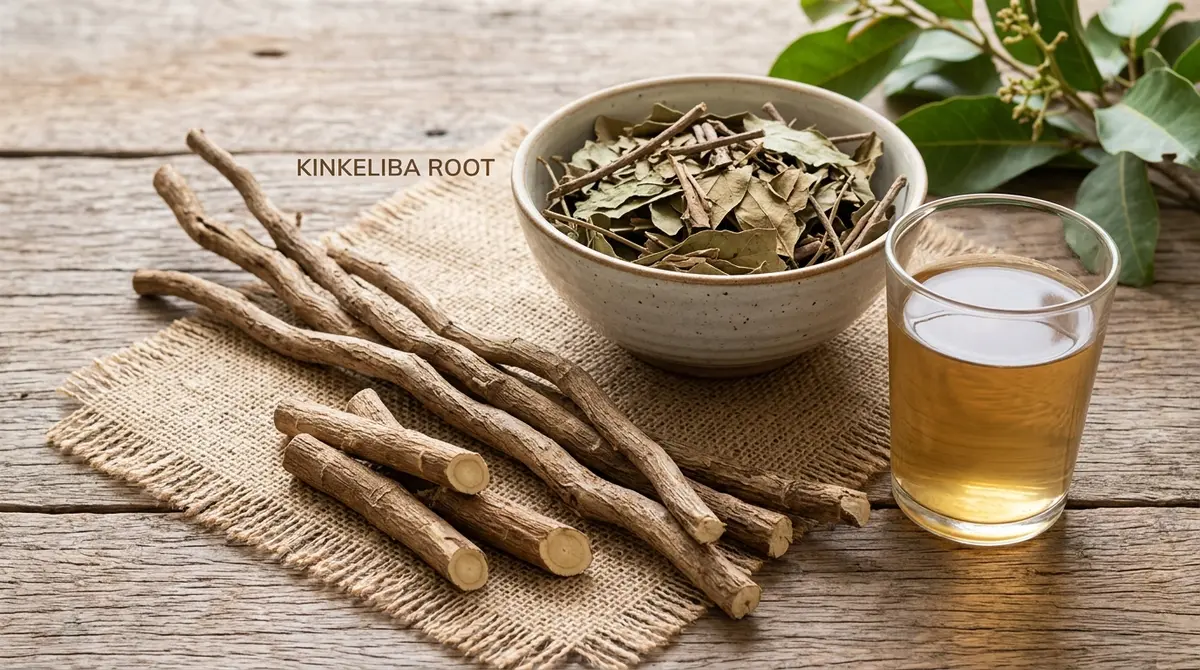
Kinkeliba is West Africa's answer to chamomile — a humble, caffeine-free root-and-leaf brew from a savanna shrub, used for generations as the gentle tea that ends big meals and starts slow afternoons. The plant at the heart of the tradition is Combretum micranthum, called "the tree of life" in parts of Senegal, where both its leaves and its roots have been steeped, and where the roots have also served as the region's traditional chewing stick.
If you have joined a Senegalese family for a feast, you have likely been handed a small cup of kinkeliba at the end. It is warm, gentle, and quietly restorative in a way that needs no explaining.
Flavor Profile & Notes
Steeped roots or leaves pour out an amber cup that tastes mildly earthy and woody, with a soft, tea-like smoothness, a hint of clove warmth, and a whisper of natural sweetness. Nothing about it shouts; it is the sort of brew you drink without deciding to, which is precisely its charm. Serve it hot in the morning or over ice through the afternoon, and give it a turn with a slice of lime or a little mint. It also mixes beautifully with other African botanicals — in Senegal it is often combined with baobab pulp, a pairing native to the same market stalls.
Health Benefits & Nutrition
Local tradition elevates kinkeliba as a cleansing and digestive tea, and herbal guides repeat the claim fondly. The measured truth: science on Combretum micranthum is thin, with a handful of lab studies pointing to antioxidant and antimicrobial activity in the plant family. What the tea genuinely does is offer a pleasant, caffeine-free substitute for soda or a second cup of coffee, made of nothing but warm water and plant — that is an honest health win in everyday life. As with any herbal drink, steep it in sensible amounts, and check with your doctor if you are pregnant or managing a health condition.
Best Culinary Pairings
Serve it as the digestive close to a rich meal — that is its calling in Senegal and Mali. Iced with lime or mint, it is the great hot-season refresher. A pot of kinkeliba sweetened with honey and spiced with ginger makes a warming evening tea, and a splash of it in smoothies adds a gentle woody undertone. It drinks beautifully on its own, which is the highest compliment a tea can earn.
Quick Substitutes
Rooibos is the closest pantry relative — mild, woodsy, and faintly sweet with no caffeine. A brew of chamomile with a touch of clove gets the gentle comfort, though not the wood. For a kinkeliba-style blend without the plant, steep rooibos with a cinnamon nib and a slice of dried orange, and you will be in the same warm, slow territory.
FAQ / Quick Facts
- What is kinkeliba? A West African savanna shrub, Combretum micranthum, whose roots and leaves are brewed into a caffeine-free tea.
- What does it taste like? Mildly earthy and woodsy, gently sweet, with a hint of clove warmth and no bitterness.
- Form / uses: Dried leaves or root, steeped hot or iced; traditionally served after meals and often blended with baobab in Senegal.
Related Articles
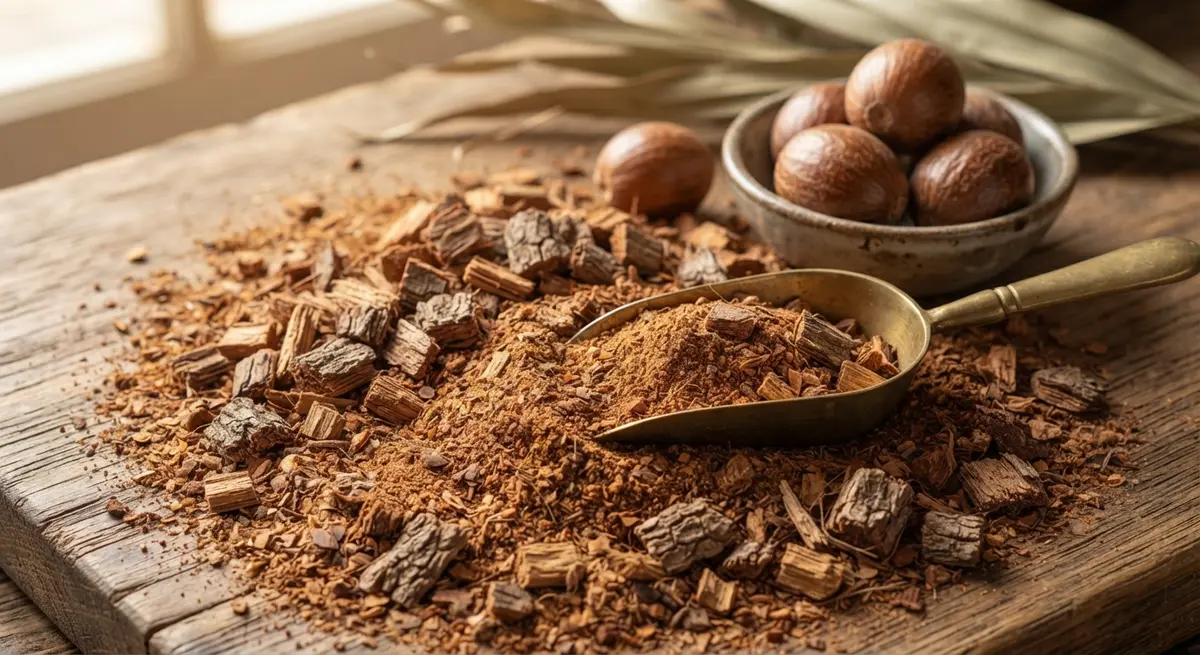
Doum Palm Bark: Flavor Profile, Health Benefits & Culinary Uses
The doum palm's hard bark brews a sweet, caramel-woody tea with a hint of gingerbread — a Nile valley staple from Egypt and Sudan, now easy to make at home.
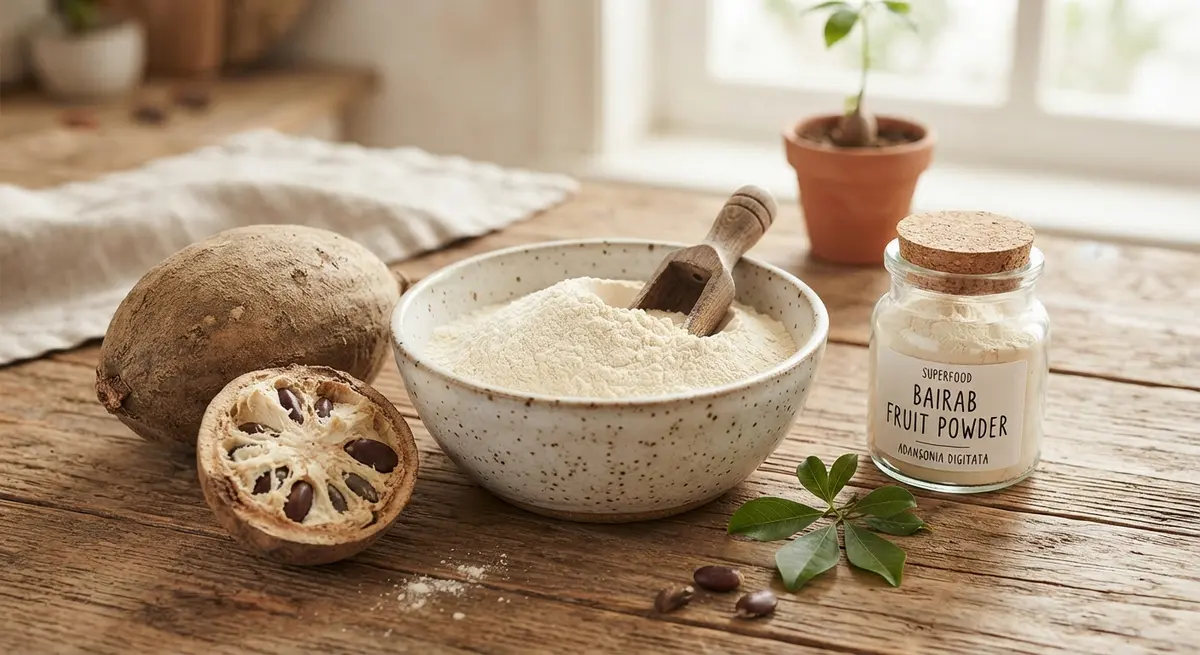
Baobab Fruit Powder: Flavor Profile, Health Benefits & Culinary Uses
Inside Africa's baobab pods sits a dry, tangy pulp that dissolves instantly into smoothies and sauces — a citrus-pineapple jolt of vitamin C and fiber.
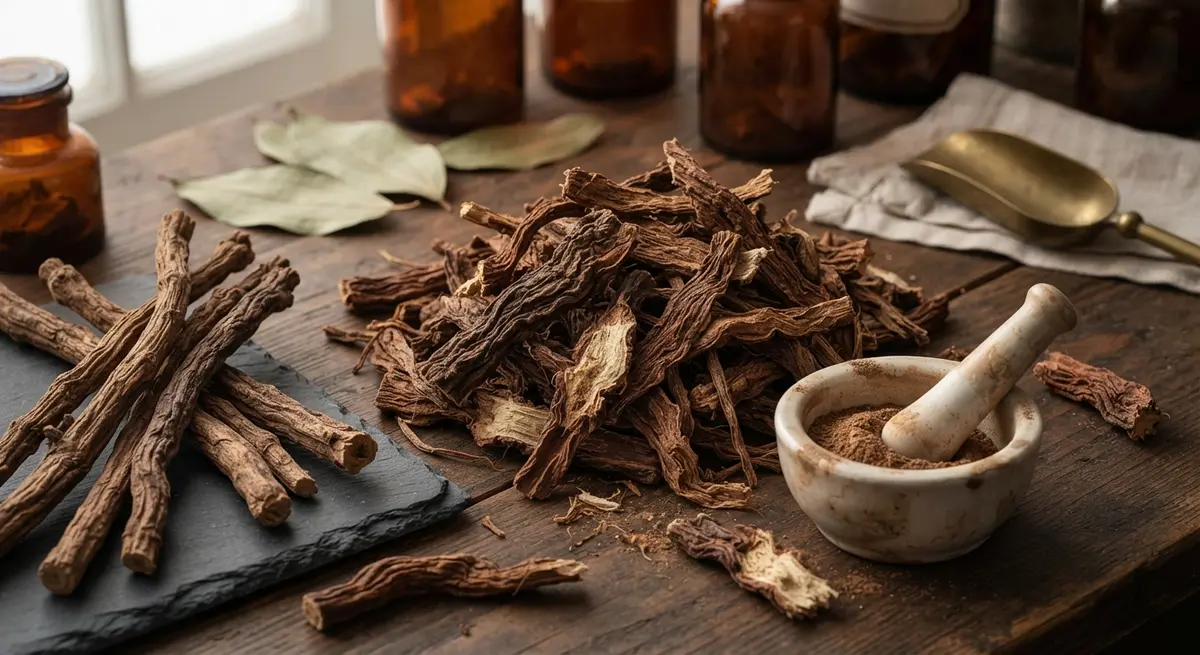
Sarsaparilla Root: Flavor Profile, Health Benefits & Culinary Uses
A dried root that tastes like the shadow of root beer: sarsaparilla's real flavor, traditional tonic use, and why it became the soda fountain's safe choice.
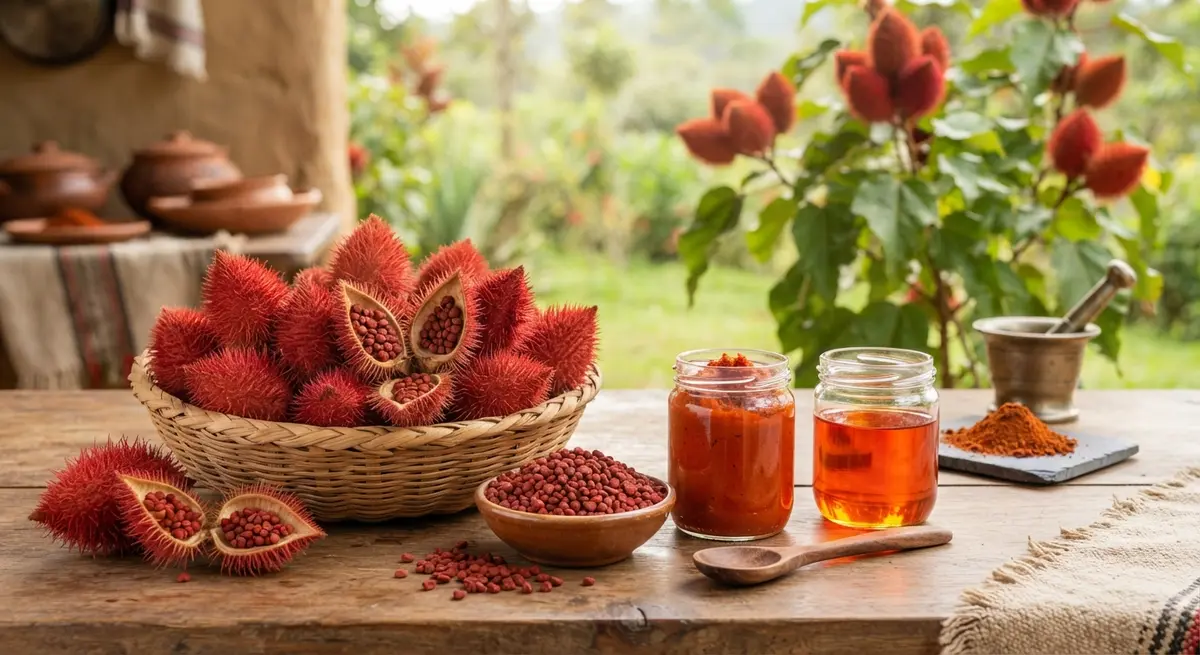
Achiote (Annatto): Flavor Profile, Health Benefits & Culinary Uses
Tiny coral-red seeds that paint food golden: the annatto tree's achiote, how to use the seeds and the Yucatan paste, and honest color substitutes.
About the Authors
This recipe and guide was developed, tested, and approved in our home kitchen and daily life. Jamy is a retired Food Service District Manager and Early Childhood Program Manager who spent his career overseeing multi-site restaurant operations, large-scale culinary production, and daycare menu management. Kaïna brings the ultimate real-world test: making sure it brings ease and joy to our kids on a busy weeknight.
Read more about our professional background and philosophy →