Baobab Fruit Powder: Flavor Profile, Health Benefits & Culinary Uses
By the QuiteRecipes team (Jamy & Kaïna)
Inside Africa's baobab pods sits a dry, tangy pulp that dissolves instantly into smoothies and sauces — a citrus-pineapple jolt of vitamin C and fiber.
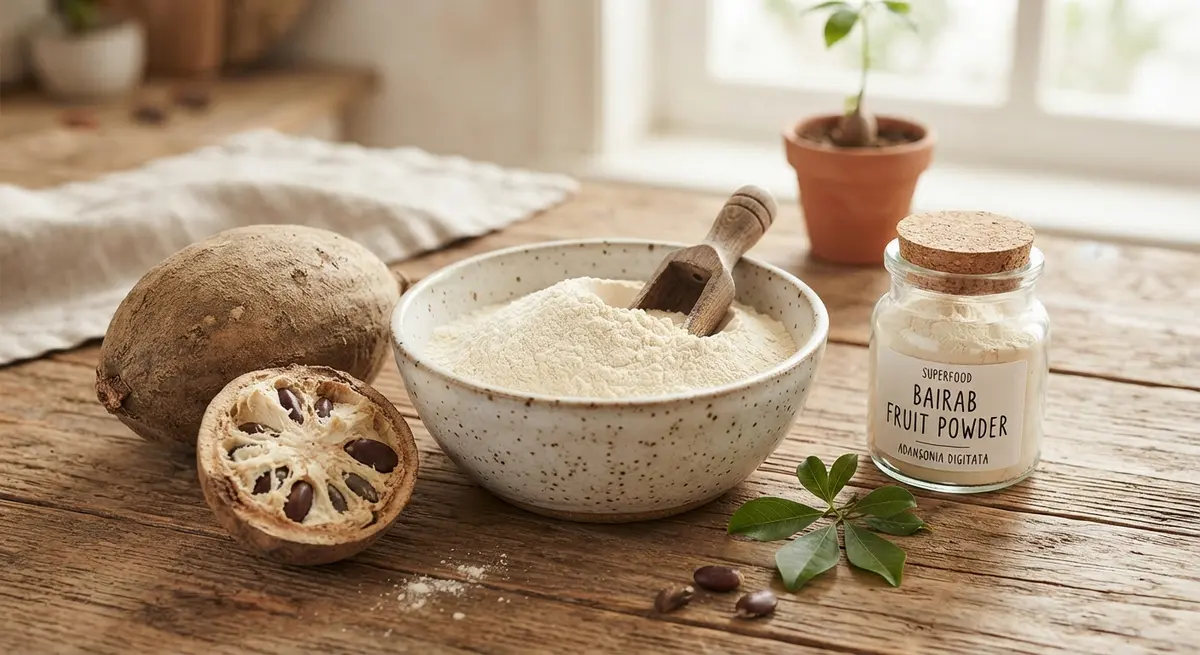
Baobab fruit powder is the dried, ground pulp of the fruit of the African baobab tree, Adansonia digitata — the enormous "upside-down tree" that has been a pantry, water tank, and village meeting place across sub-Saharan Africa. The fruit is a big wooden-looking pod full of dry, chalky, cream-colored pulp — sour-sweet and instantly refreshing, and so rich in vitamin C and fiber that it has traveled the Atlantic, from African markets to smoothie aisles everywhere.
Flavor Profile & Notes
Think mango crossed with citrus and a hint of pineapple sherbet. The powder is tangy, lightly creamy, and citrusy, with no added sugar and no bitterness. Best of all, it dissolves instantly in cold liquid — no heat required — which makes it the most convenient smoothie addition you will ever meet. It drinks like a fruit juice concentrate and seasons like a tropical lemonade powder. A teaspoon in water tastes like a boozy-free sherbet; a spoonful in sauce cuts richness the way lime does, only sweeter.
Health Benefits & Nutrition
This is one of the cases where the label is genuinely impressive. By weight, baobab pulp carries roughly three times the vitamin C of an orange, plus real soluble fiber and useful amounts of calcium and polyphenols; the fiber may also help the feeling of satisfaction after eating. Studies on the powder's antioxidant activity are promising and honest — this is a fruit pulp doing ordinary, excellent food things. Because it is a dessert-level tang, it tempts people into drinking more water and flavoring treats without sugar, which is a solid everyday win.
Best Culinary Pairings
Smoothies, yogurt, overnight oats, and energy bites are the obvious friends, but baobab also shines in marinades and dressings, standing in for the lime that would water everything down. A spoonful in tomato sauce, barbecue sauce, or poaching liquid brings bright tang without acidity spikes. It loves ginger, lemon, cinnamon, and mango. In baking, it adds a subtle citrus lift to quick breads and cookies; in drinks, blend it with mint and sparkling water for an African-style cooler.
Quick Substitutes
For the sour-sweet tang, a combination of lime zest and a little date or fig sweetness gets close; freeze-dried mango or lemon powder carries similar fruit-sharp character. In smoothies, extra citrus plus a pinch of sweetener approximates the flavor, though you lose the fiber and the instant-dissolve trick. Sumac supplies sourness alone, but none of the tropical sweetness — use it only in savory marinades. In every substitution, you are chasing a flavor, not the nutrition.
FAQ / Quick Facts
- Where does baobab powder come from? The dried pulp of the baobab tree's fruit pods, gathered across sub-Saharan Africa.
- What does it taste like? Sour-sweet and citrusy, like a mix of mango, lemon, and pineapple sherbet.
- Form / uses: A pale powder that dissolves instantly in cold liquid; use it in smoothies, drinks, dressings, marinades, and baking without heating.
Related Articles
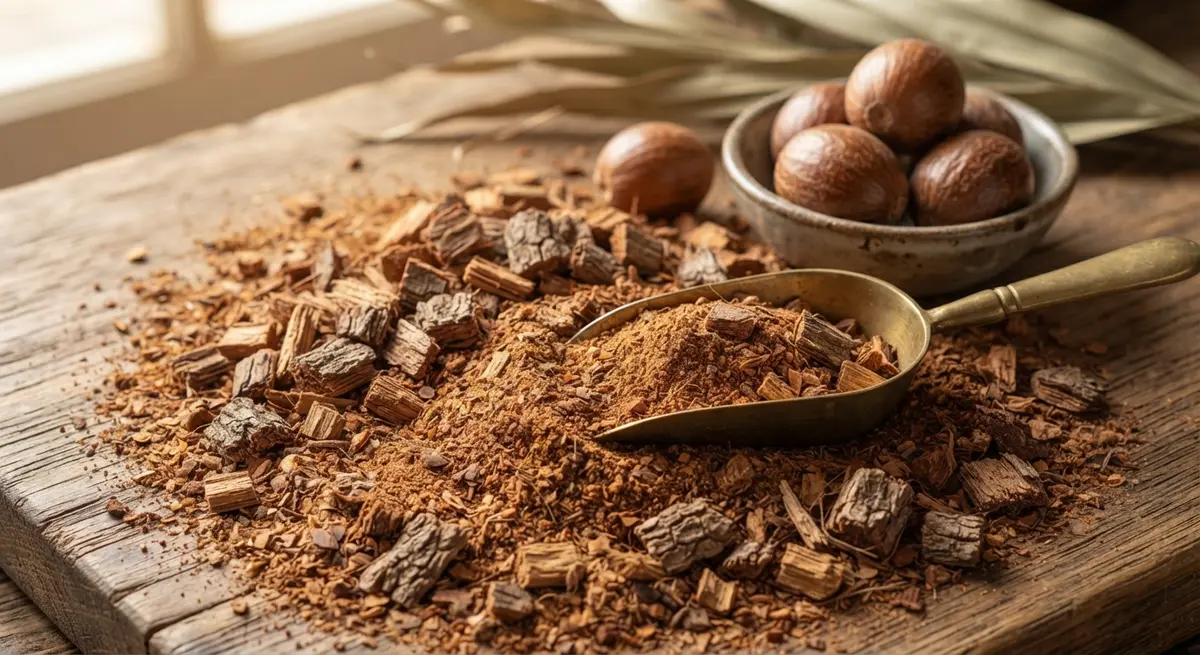
Doum Palm Bark: Flavor Profile, Health Benefits & Culinary Uses
The doum palm's hard bark brews a sweet, caramel-woody tea with a hint of gingerbread — a Nile valley staple from Egypt and Sudan, now easy to make at home.
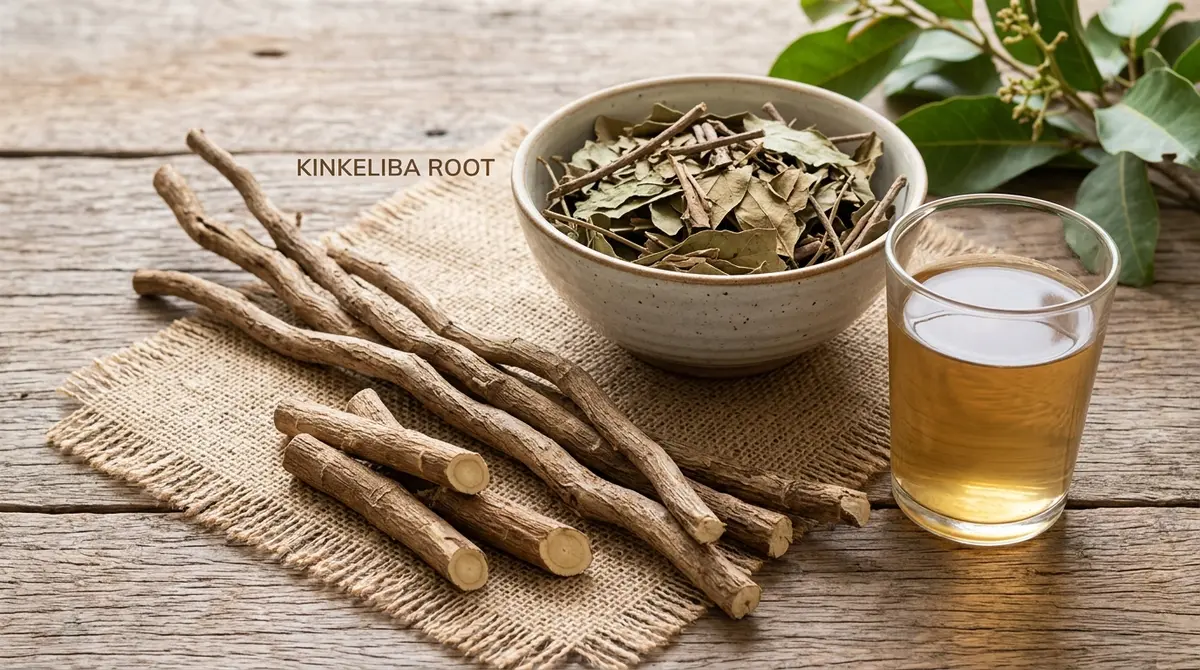
Kinkeliba Root: Flavor Profile, Health Benefits & Culinary Uses
West Africa's answer to chamomile: kinkeliba roots and leaves from the Combretum shrub brew a mild, woodsy, gently sweet tea for slow afternoons.
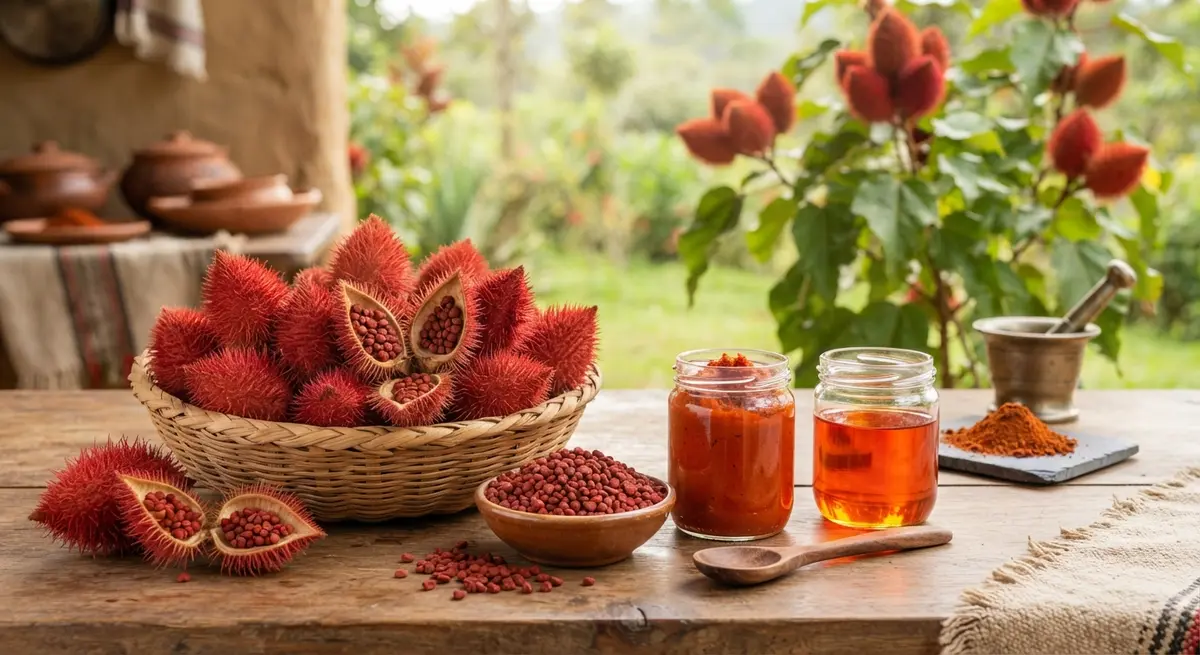
Achiote (Annatto): Flavor Profile, Health Benefits & Culinary Uses
Tiny coral-red seeds that paint food golden: the annatto tree's achiote, how to use the seeds and the Yucatan paste, and honest color substitutes.
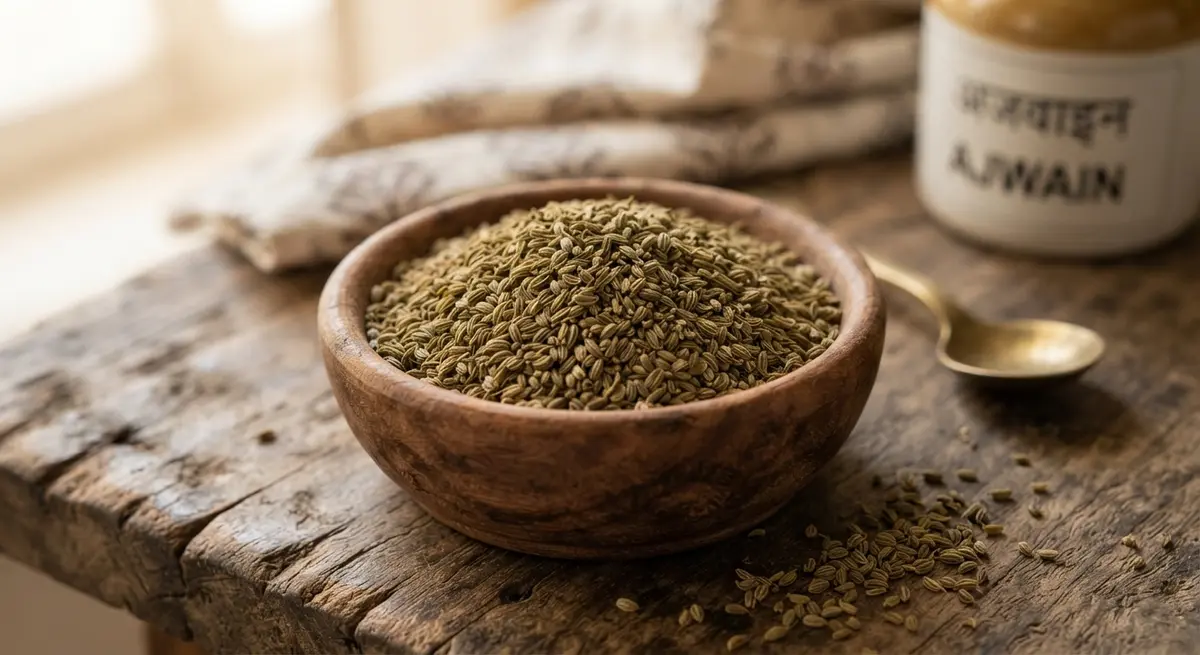
Ajwain (Carom) Seeds: Flavor Profile, Health Benefits & Culinary Uses
A tiny gray-brown seed that tastes like thyme, oregano, and cumin had a baby with a timer fuse. Here is how and why Indian kitchens use ajwain.
About the Authors
This recipe and guide was developed, tested, and approved in our home kitchen and daily life. Jamy is a retired Food Service District Manager and Early Childhood Program Manager who spent his career overseeing multi-site restaurant operations, large-scale culinary production, and daycare menu management. Kaïna brings the ultimate real-world test: making sure it brings ease and joy to our kids on a busy weeknight.
Read more about our professional background and philosophy →