Safflower Petals (Bastard Saffron): Flavor Profile, Health Benefits & Culinary Uses
By the QuiteRecipes team (Jamy & Kaïna)
One of the oldest crops on Earth, grown for oil and for petals that dye rice gold: safflower, the economical stand-in that never pretends to saffron's flavor.
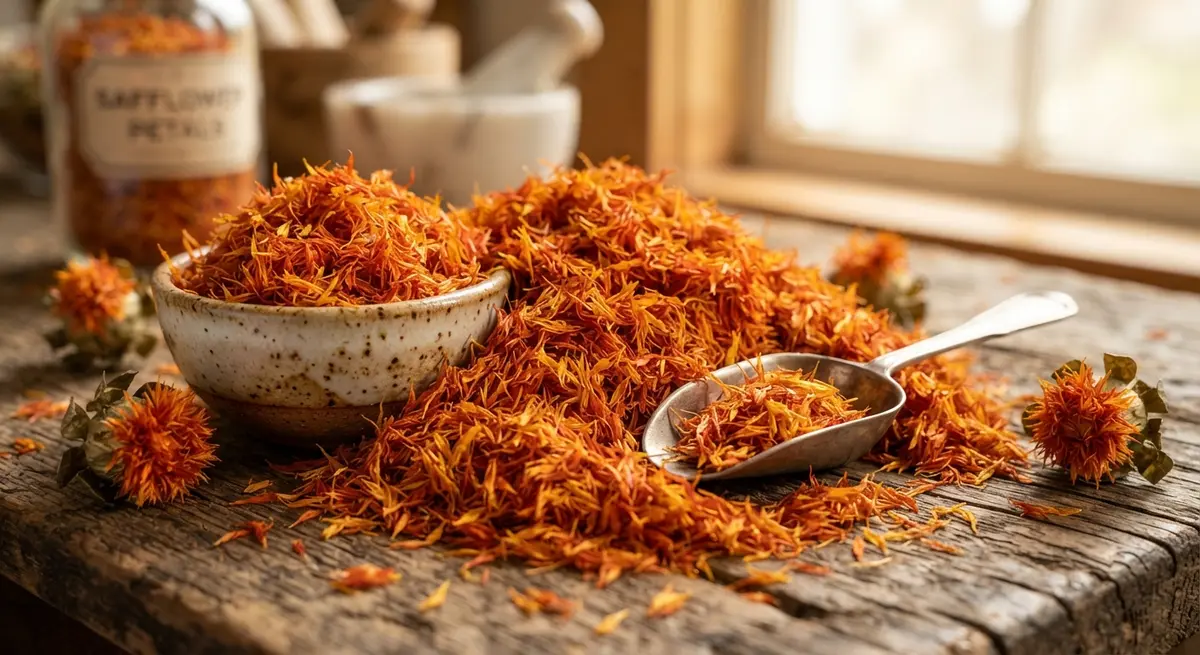
Safflower, Carthamus tinctorius, is one of the oldest crops on Earth, grown for its oil and, in the kitchen, for its dried orange-red petals — which have been dodging a career as a stand-in saffron since ancient times. The nickname "bastard saffron" tells the whole story, and the story is mostly about color.
The petals stain rice, broth, and paellas a lovely lemon-apricot gold at a fraction of saffron's price, and they do it without pretending to saffron's flavor. In the culinary world they are the honest, practical middle chapter between a fortune and a dye bottle.
Flavor Profile & Notes
Let us be clear: this is a color spice. The petals are mild — barely floral, a whisper of hay and grass — and their real gift is a clean golden-yellow dye that turns plain rice into something that reads as festive at a glance. You buy safflower for golden rice, golden marinades, golden basted butter. Draw the color out by steeping the petals in hot water for a few minutes, then use the tinted liquid; simmering the petals directly works but fishes awkwardly. Strong heat fades the gold, so add the steeped liquid late and keep the pot gently warm.
Health Benefits & Nutrition
The petals carry the pigment carthamin, a plant color studied in laboratories for antioxidant activity, and the seeds of the same plant produced the safflower oil prized as a source of linoleic acid in heart-healthy dietary patterns. The honest kitchen summary: safflower petals are a food color first, a seasoning second, and the amounts you eat are tiny. Steeped into rice they add color and nothing you need to count, which makes them a pleasant, harmless way to make food look as good as it tastes.
Best Culinary Pairings
Spanish-style rice when you want golden color on a budget, yellow rice in the Caribbean tradition, and paella that must look the part without the saffron invoice. Steep the petals in warm stock and use that stock to cook the rice — the rice comes out uniformly gold. The tinted water also makes beautiful one-color marinades for chicken, softly yellow butter for corn or fish, and a cheerful backdrop for turmeric and smoked paprika, which bring the flavor safflower cannot. It pairs well with garlic, olive oil, and lemon.
Quick Substitutes
Saffron is the real thing when the dish wants saffron's flavor — expensive, but that is the point. For color only, turmeric gives a deeper, earthier gold; annatto gives a cleaner orange-gold. A pinch of both turmeric and annatto approximates safflower's warm golden tint in most recipes. If a dish calls for safflower for its petals and you have none, sweet paprika colors near enough for a garnish, though it will not dye a whole pot of rice.
FAQ / Quick Facts
- Why is it called bastard saffron? Because it colors like saffron at a fraction of the cost, while contributing none of saffron's flavor.
- Does it taste like saffron? No — safflower petals are nearly flavorless, and that is the point.
- Form / uses: Dried orange-red petals; steep in hot water or stock first, then use the golden liquid for rice, paella, marinades, and butter.
Related Articles
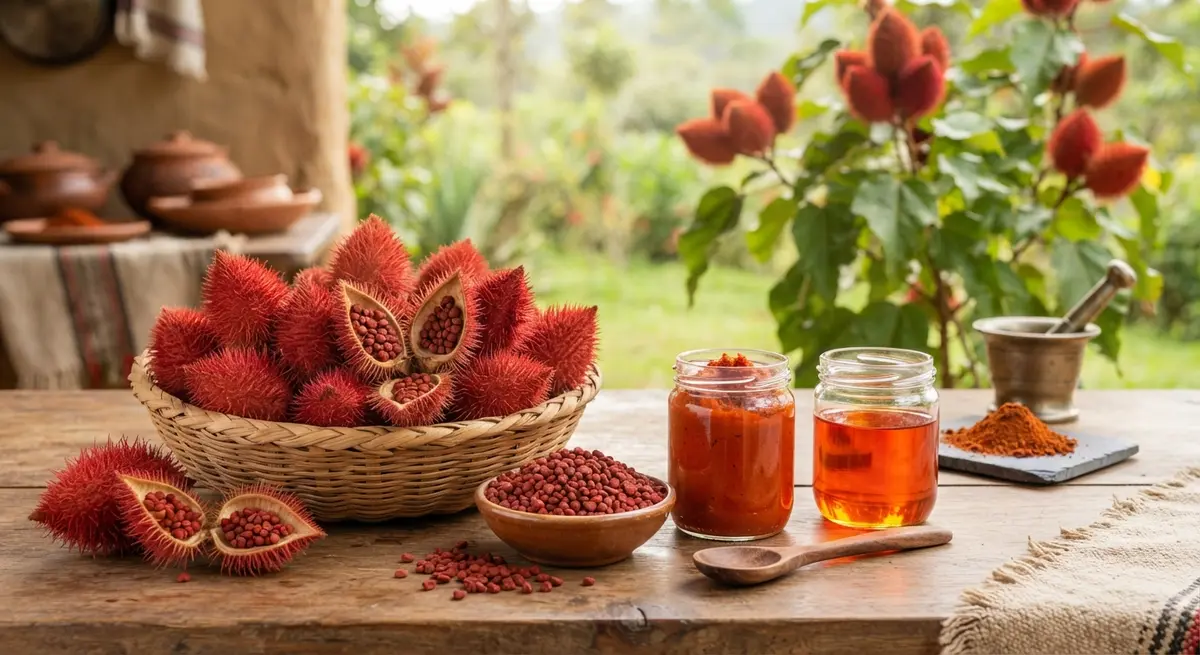
Achiote (Annatto): Flavor Profile, Health Benefits & Culinary Uses
Tiny coral-red seeds that paint food golden: the annatto tree's achiote, how to use the seeds and the Yucatan paste, and honest color substitutes.
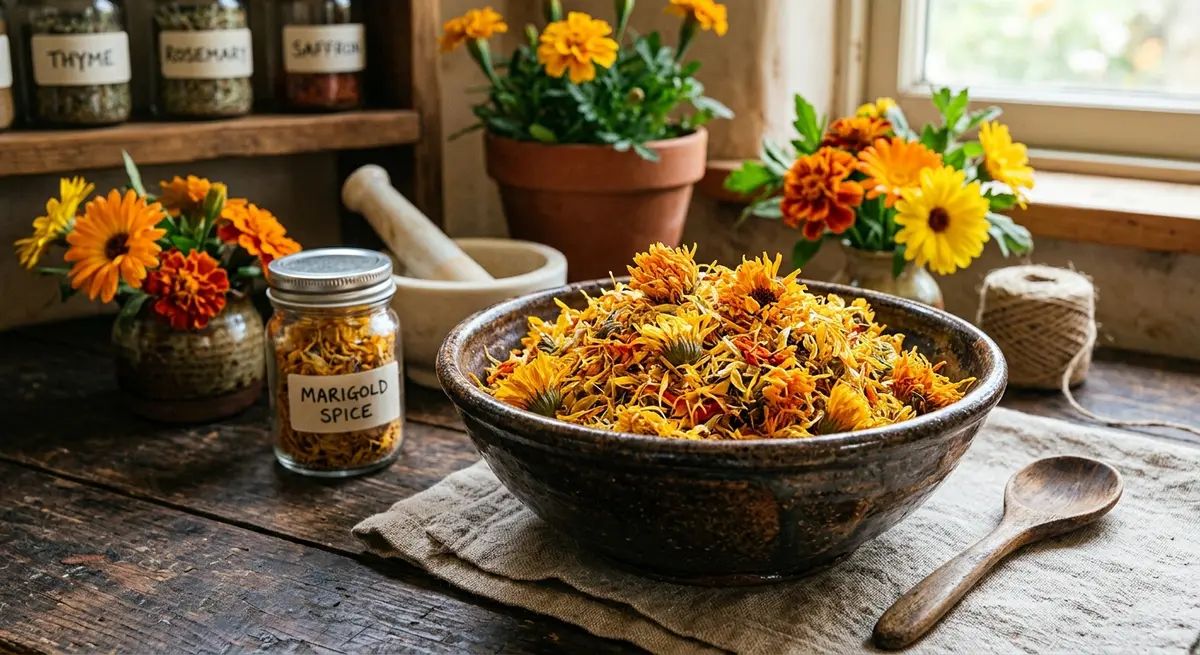
Dried Marigold Flowers: Flavor Profile, Health Benefits & Culinary Uses
Golden petals that dye rice and butter saffron-color for pennies: culinary marigold and calendula, how to use them, and the honest saffron question.
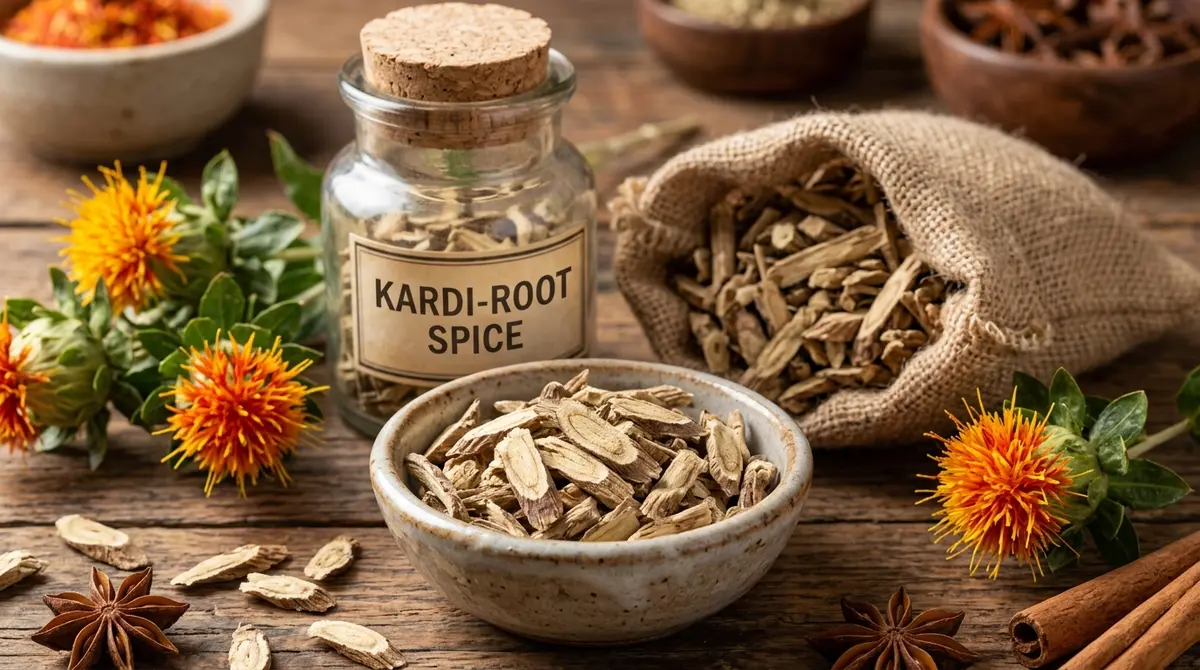
Kardi Root Powder: Flavor Profile, Health Benefits & Culinary Uses
Kardi is what Maharashtra and Gujarat call safflower — and its root powder, earthy and mildly bitter, is a quiet traditional addition to porridges and drinks.
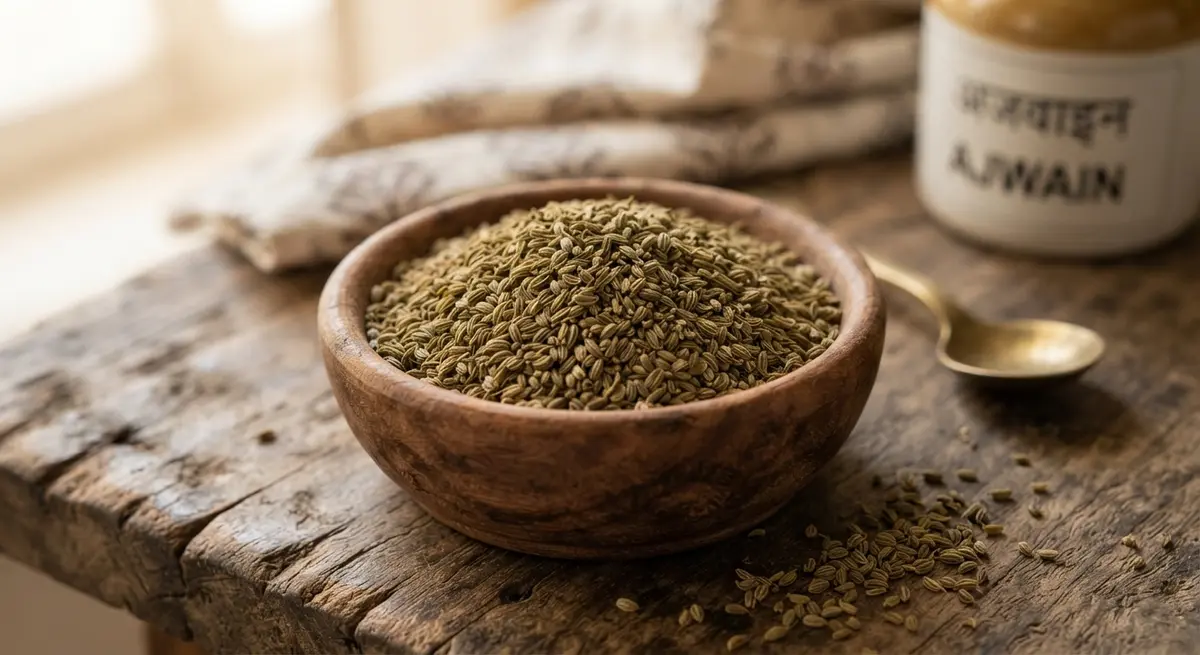
Ajwain (Carom) Seeds: Flavor Profile, Health Benefits & Culinary Uses
A tiny gray-brown seed that tastes like thyme, oregano, and cumin had a baby with a timer fuse. Here is how and why Indian kitchens use ajwain.
About the Authors
This recipe and guide was developed, tested, and approved in our home kitchen and daily life. Jamy is a retired Food Service District Manager and Early Childhood Program Manager who spent his career overseeing multi-site restaurant operations, large-scale culinary production, and daycare menu management. Kaïna brings the ultimate real-world test: making sure it brings ease and joy to our kids on a busy weeknight.
Read more about our professional background and philosophy →