Pink Berries (False Pepper): Flavor Profile, Health Benefits & Culinary Uses
By the QuiteRecipes team (Jamy & Kaïna)
Pink 'peppercorns' are really the dried berries of Schinus trees, sweet and piney rather than hot — useful and pretty, but not a stand-in for true pepper.
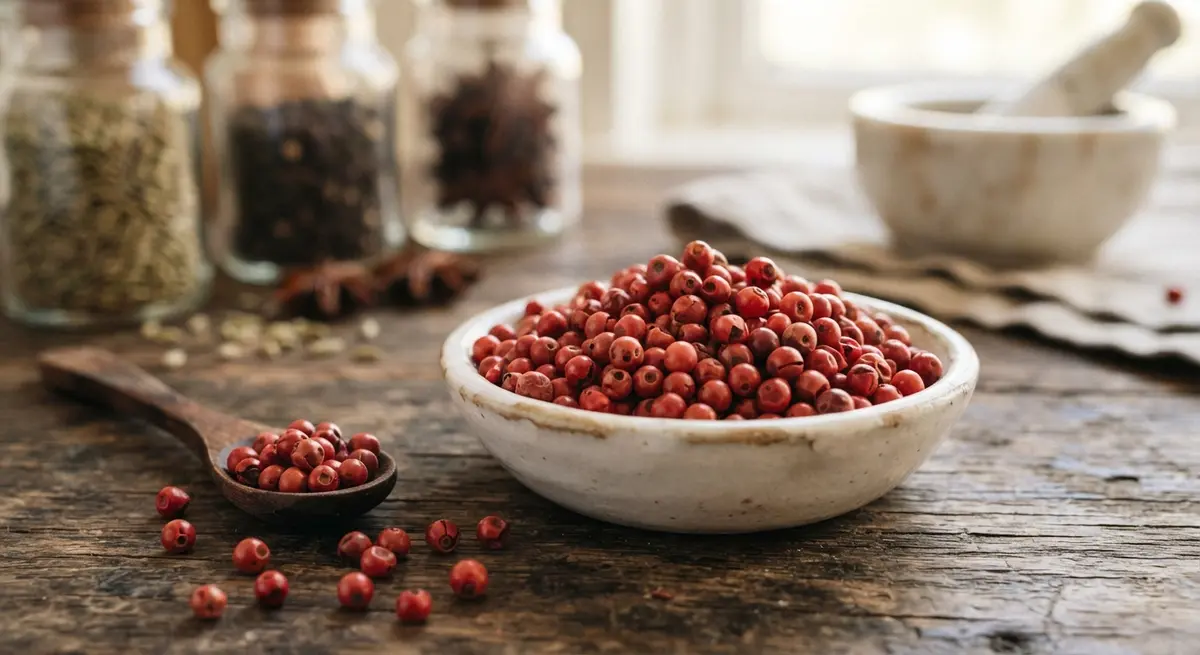
Let's clear up the label first: pink peppercorns are not pepper. They are the dried berries of Schinus trees — the Peruvian peppertree (Schinus molle) and the Brazilian pepper tree (Schinus terebinthifolia) — and they only glitter on the spice shelf because real pepper was so legendary that any round, bright berry got dragged into the family. The difference matters in the pan. True black pepper carries sharp, hot piperine; pink "peppercorns" are sweet, fruity, and faintly piney, with a delicate crackle and almost no heat. They add color and lift to a plate, not fire. Used honestly, they are a lovely seasoning in their own right.
Two notes before you buy: they are fragile, and they have limits. Crush them gently, and keep them as a seasoning rather than a bulk ingredient — their lineage carries a caution.
Flavor Profile & Notes
Sweet and fruity with a soft juniper-pine note, a whisper of rose, and a mild, resinous bite that is more tingle than heat. The berries are light and brittle, cracking into brittle shards that release their perfume quickly. Grind them coarsely or toast them dry briefly; prolonged heat destroys their delicate top notes. Store sealed and away from light — their pretty color is the first thing to go. Buy only from reputable spice sellers, since low-grade lots can be hollow and tasteless.
Health Benefits & Nutrition
The Schinus berries carry a modest antioxidant load and have traditional uses as a mild digestive aid in South America, but the careful note is different: the compounds that give pink pepper its unique bite can be irritating to the stomach in large amounts, and the berries are not recommended in quantity for that reason. They are perfectly fine as a seasoning — think a sprinkle of berries over a salad, not a fistful ground into a paste. If you have digestive sensitivities, use them lightly or skip them.
Best Culinary Pairings
Pink berries are at their best where black pepper feels too hot. Crush them over a delicate white fish, a quinoa tabbouleh, or a composed green salad with citrus. They are superb with cream and light cheese: scatter them over whipped feta, a ricotta toast with honey, or a panna cotta. Macerate a few in gin or vinegar for a rose-hued cocktail, keep quantities modest, and let the sweetness do the talking.
Quick Substitutes
For color and fragrance, a few crushed green peppercorns soaked in brine plus a scrap of grated orange zest come closest. For the sweetness without the shape, sweet paprika scattered lightly mimics both color and aroma. If a recipe simply wants heat, use real black pepper instead — pink berries will not deliver it.
FAQ / Quick Facts
- How long does it keep? Whole berries keep their color and perfume for six months to a year in a sealed jar.
- Why aren't they true pepper? They are berries of the Schinus tree, in the cashew family, botanically unrelated to Piper nigrum.
- Are they safe to eat? Yes, as a seasoning in normal amounts; heavy consumption can irritate some stomachs.
- Botanical family / Form / Best uses: Schinus molle / terebinthifolia (Anacardiaceae) / dried whole berries or coarsely ground / salads, fish, cream dishes, and garnish.
Related Articles
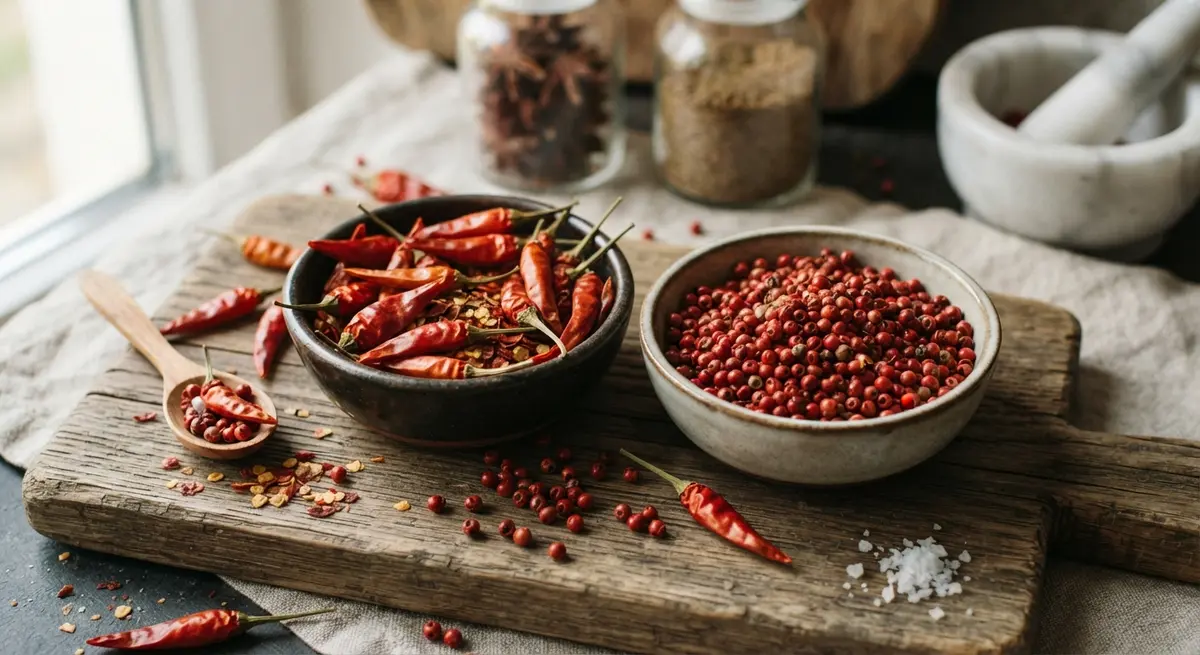
Red Pepper & Pink Peppercorn Alternatives: Flavor Profile, Health Benefits & Culinary Uses
Only one of these berries is actually pepper. Red peppercorns are ripe Piper nigrum; pink peppercorns are a sweet Peruvian tree fruit. Here is how to use both.
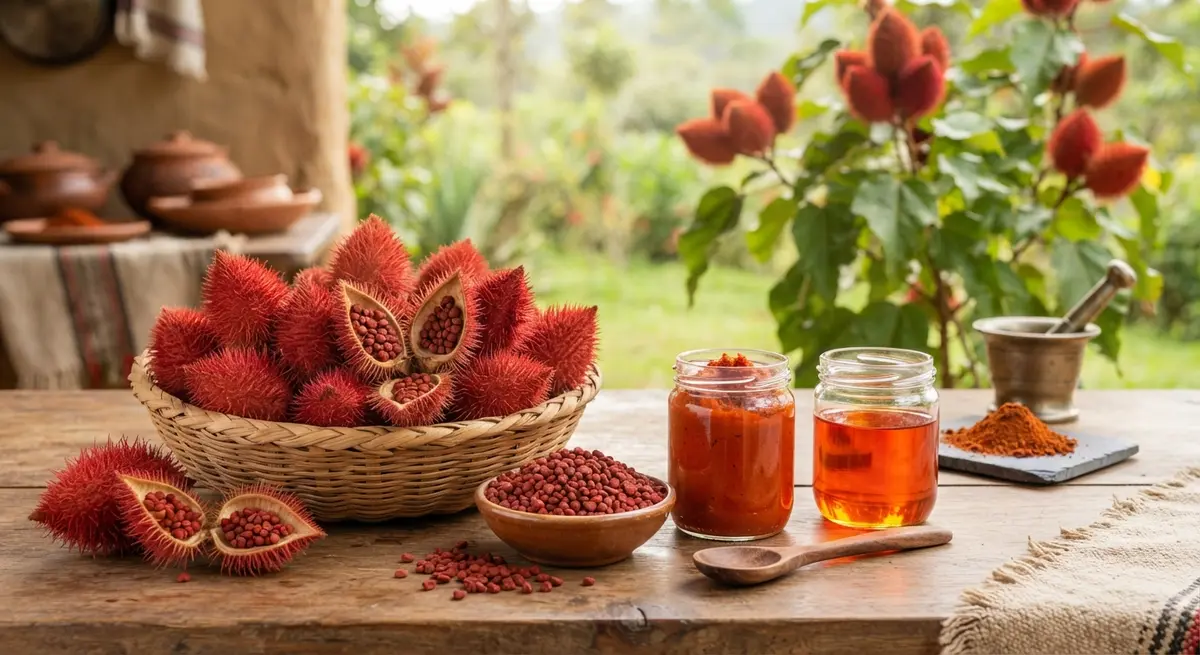
Achiote (Annatto): Flavor Profile, Health Benefits & Culinary Uses
Tiny coral-red seeds that paint food golden: the annatto tree's achiote, how to use the seeds and the Yucatan paste, and honest color substitutes.
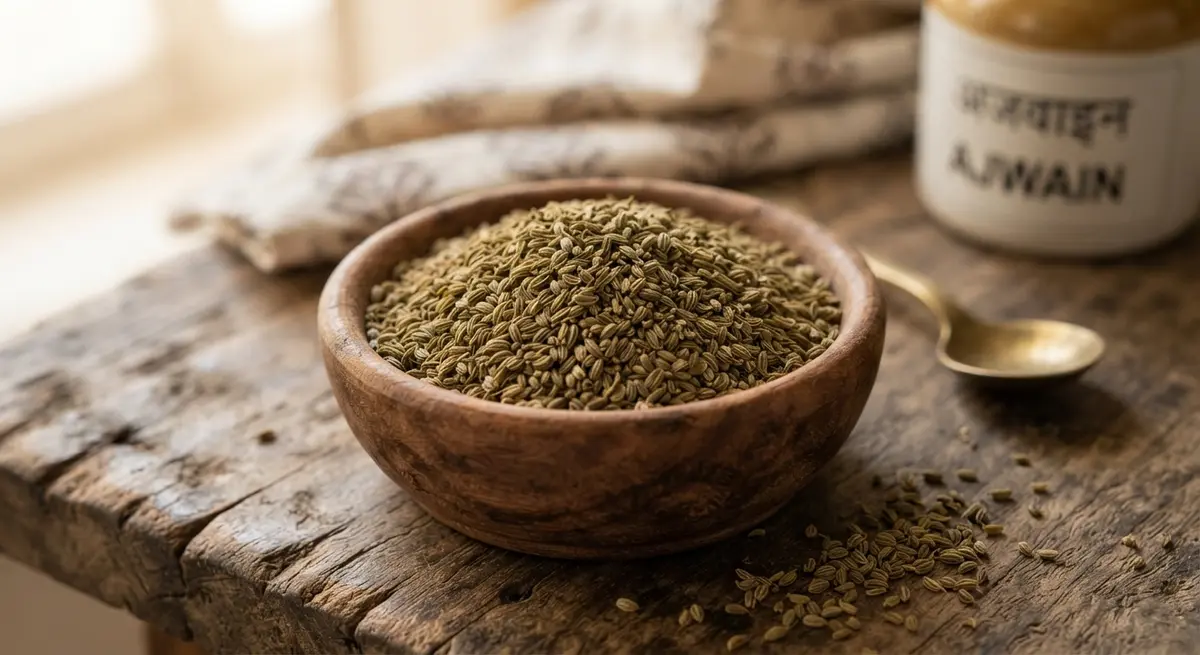
Ajwain (Carom) Seeds: Flavor Profile, Health Benefits & Culinary Uses
A tiny gray-brown seed that tastes like thyme, oregano, and cumin had a baby with a timer fuse. Here is how and why Indian kitchens use ajwain.
Aleppo Pepper: Flavor Profile, Health Benefits & Culinary Uses
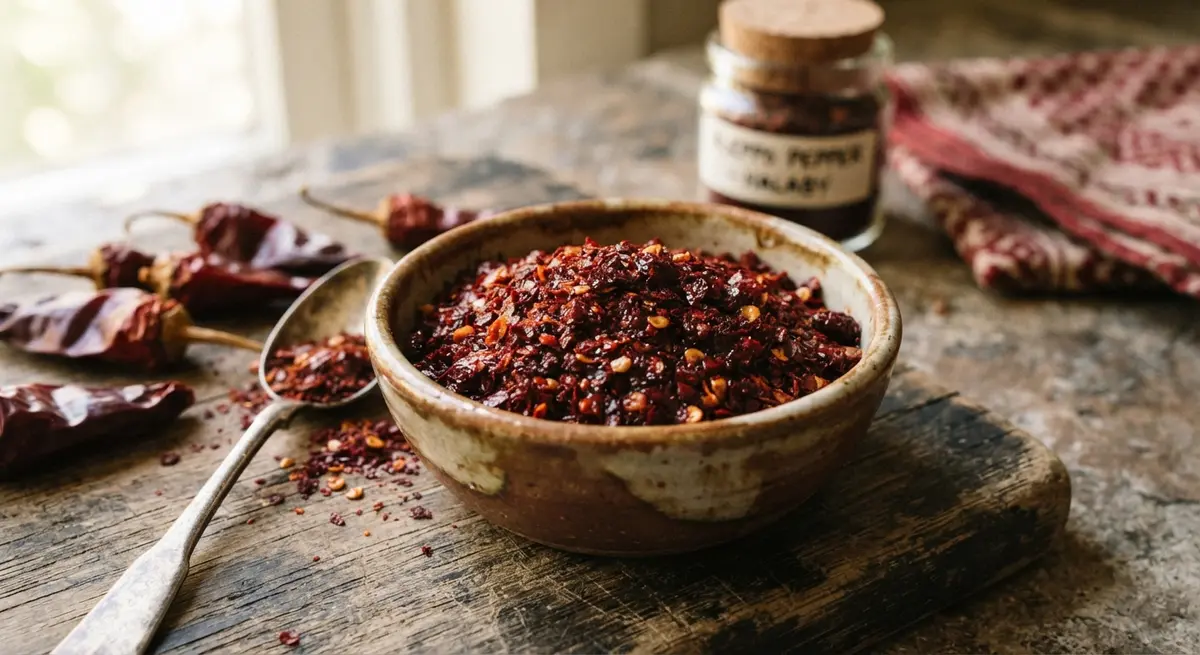
Aleppo is the Mediterranean's gentle red flake, fruity and warm with real heat that never bites, perfect for everything from muhammara to roast carrots.
About the Authors
This recipe and guide was developed, tested, and approved in our home kitchen and daily life. Jamy is a retired Food Service District Manager and Early Childhood Program Manager who spent his career overseeing multi-site restaurant operations, large-scale culinary production, and daycare menu management. Kaïna brings the ultimate real-world test: making sure it brings ease and joy to our kids on a busy weeknight.
Read more about our professional background and philosophy →