Kencur Root: Flavor Profile, Health Benefits & Culinary Uses
By the QuiteRecipes team (Jamy & Kaïna)
Kencur, the small aromatic ginger-family root of Java, gives Indonesian peanut sauce and jamu their distinct camphor-sweet note — here is how to use it.
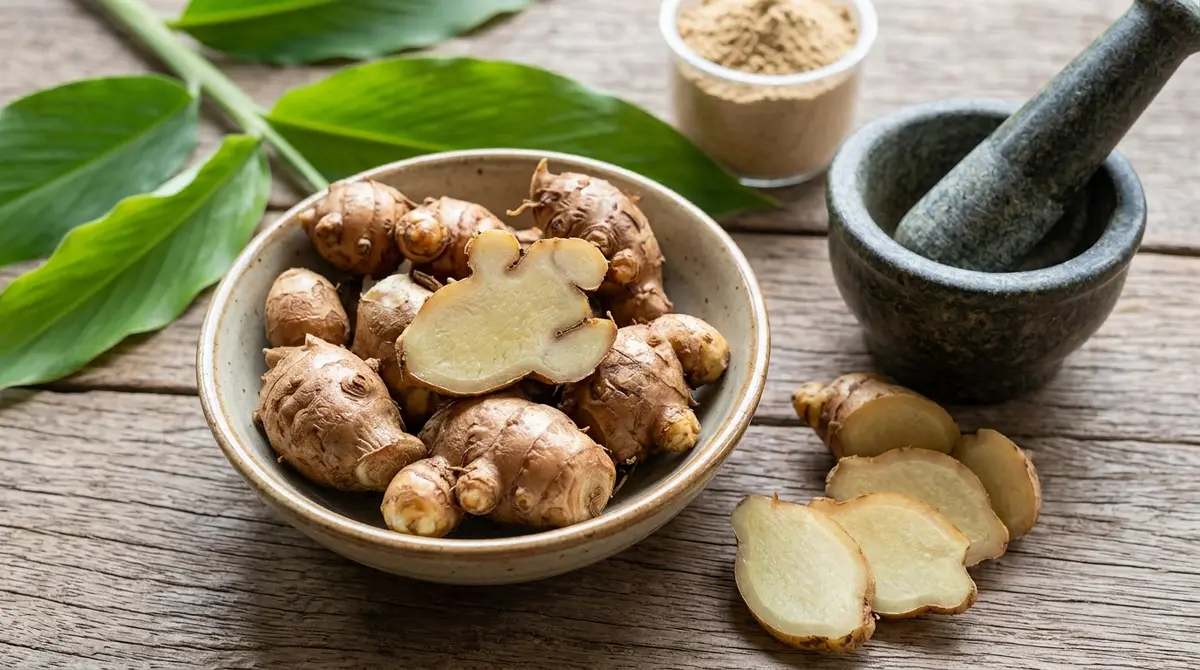
Indonesian food has a secret flavor hiding in plain sight, and its name is kencur. It is the small, brown-fleshed rhizome of Kaempferia galanga, a member of the ginger family that grows across Southeast Asia and is called sand ginger or aromatic ginger elsewhere. On Java it does steady, quiet work: pounded into spice pastes for peanut sauce and salads, simmered into soups, and stirred into the famous morning tonic drink beras kencur. Visitors who fall in love with Indonesian food often cannot name the note they love — that odd, clean, camphor-and-sweet-herb warmth that makes golden turmeric taste timid — and kencur is almost always the answer.
Flavor Profile & Notes
Kencur is a contrast act: warm and gingery up front, then a distinct camphor-pine freshness that is simultaneously sweet and medicinal, like eucalyptus crossed with fresh ginger and a hint of something floral. It is milder and more fragrant than true camphor, with a clean, lingering finish rather than a bite. Dried and ground, it settles into the spice drawer as kencur powder, silkier and less intense but still unmistakably itself — which is why a pinch of it identifies a dish as Indonesian in a single sniff. Unlike galangal, it gives up its aroma easily, so it is often pounded rather than simmered for long.
Health Benefits & Nutrition
The rhizome earns its place in Java's jamu tradition: it is a fixture of the archipelago's warming tonics, used traditionally for the stomach, the appetite, and as a general pick-me-up in drinks like the breakfast staple beras kencur, where it meets rice and palm sugar. Research has paid attention to its essential oil and recorded antimicrobial and anti-inflammatory activity, keeping the traditional story plausible. Keep both feet planted: kencur is an aromatic root used in small amounts for flavor and ritual comfort, and no amount of jamu replaces a doctor's advice. Treat it as a lovely, everyday Indonesian habit rather than a treatment.
Best Culinary Pairings
Kencur is a pillar of Indonesian kacang (peanut) preparations — the groundnut sauce that dresses gado-gado, sate, and lontong owes it much of its complexity. It seasons the fresh salad rujak, enhances soto ayam's broth, and perfumes fried rice in many home versions. The classic doorway is beras kencur itself: rice, kencur, palm sugar, and water, blended and drunk cold as Java's favorite morning wake-up. Pair it with lemongrass, galangal, lime leaves, turmeric, chilies, and the archipelago's faithful trio of garlic, shallot, and palm sugar.
Quick Substitutes
Fresh ginger with a whisper of fresh galangal catches the warm-and-sharp part; a tiny pinch of grated lime zest or curry leaves adds the citrus-lift. Powdered kencur works in cooked pastes that call for ease, at two-thirds the fresh amount. In the peanut sauce — one of the world's great flavors — the honest truth stands: nothing reconstructs kencur's precise camphor-sweetness, so for authentic results seek the fresh root (or frozen) from an Asian grocer.
FAQ / Quick Facts
- What does kencur taste like? Camphor and sweet-herby freshness — warm ginger meets eucalyptus, with a clean floral finish.
- Can you eat it raw? In drinks and pastes, yes — it is pounded fresh in beras kencur and sambals all over Indonesia.
- Botanical family / Form: Zingiberaceae (ginger family); fresh rhizome or kencur powder. Best uses: peanut sauce, rujak, soto, and jamu drinks.
Related Articles
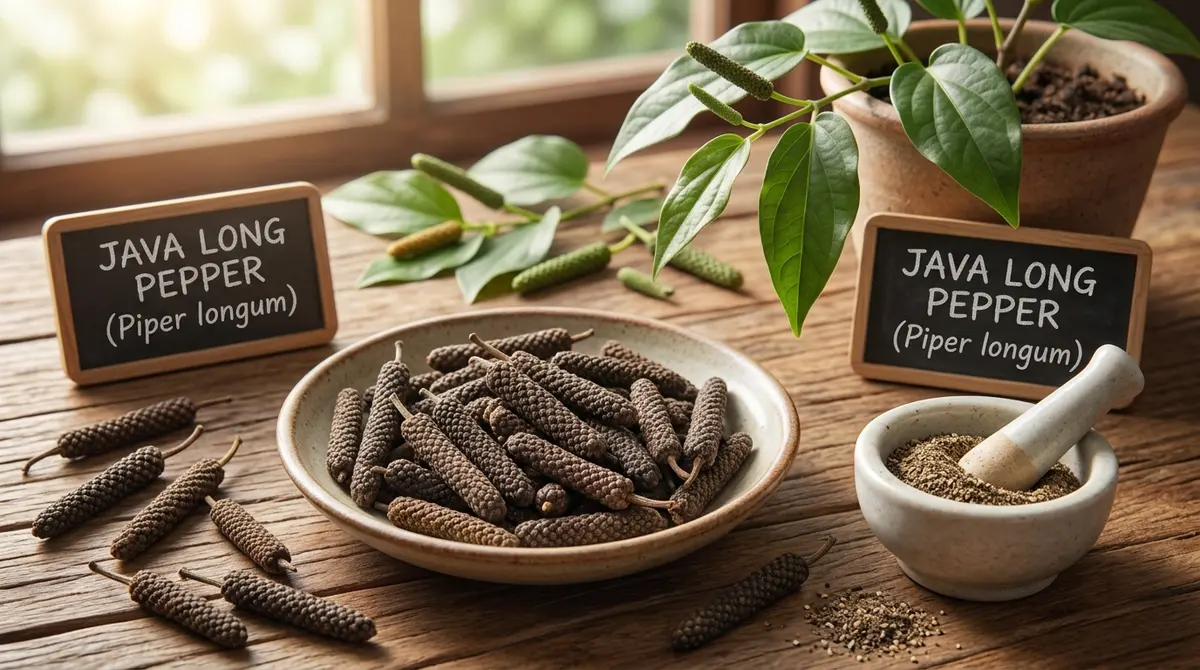
Java Long Pepper: Flavor Profile, Health Benefits & Culinary Uses
Java long pepper brings more fire than its Indian cousin, with a dusty, throaty heat that anchors Indonesian rempah pastes and beef rendang.
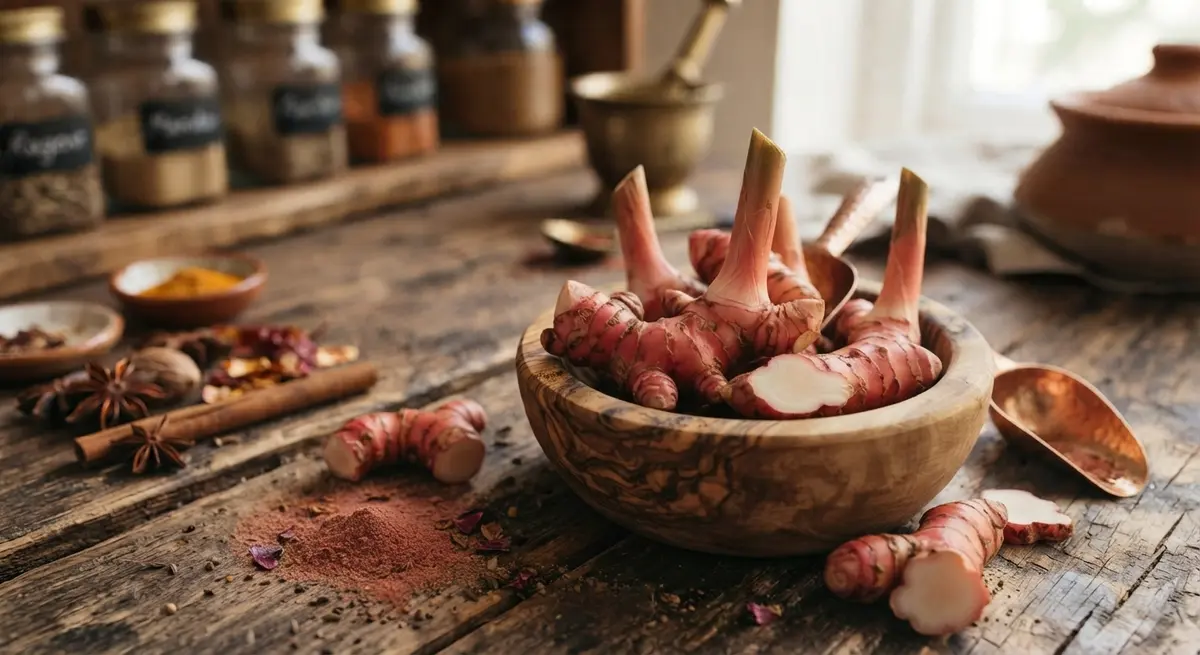
Red Galangal: Flavor Profile, Health Benefits & Culinary Uses
The red-skinned lengkuas that growers spoil for themselves: red galangal is sharper and more aromatic than the white kind, with its own place in the kitchen.
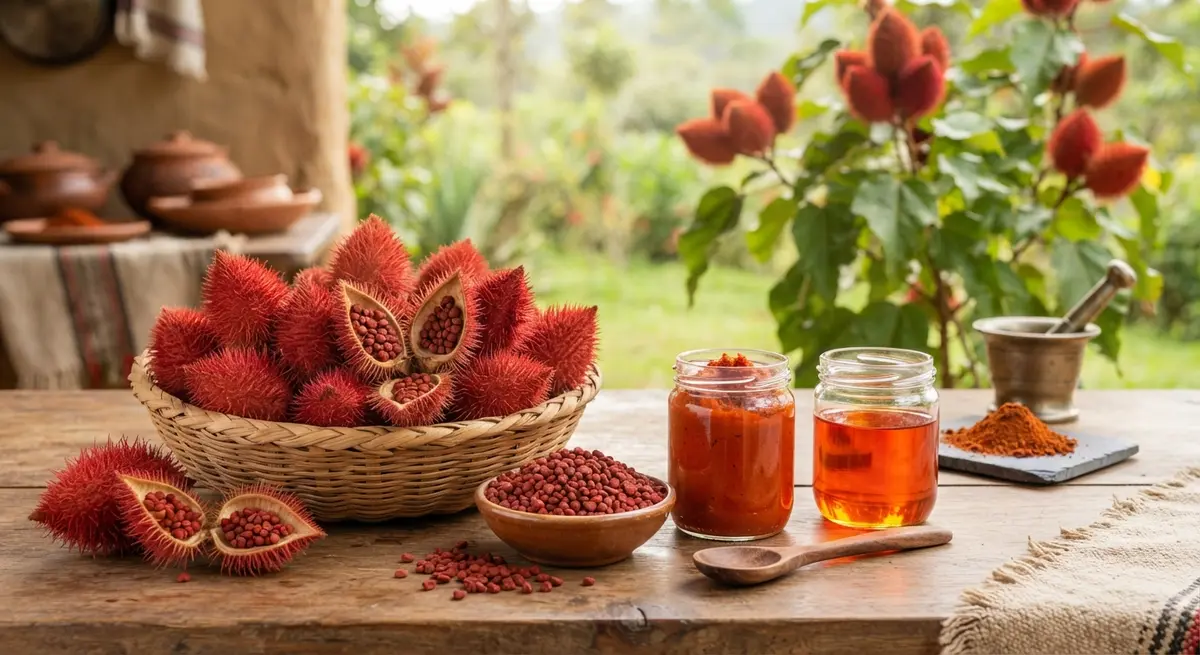
Achiote (Annatto): Flavor Profile, Health Benefits & Culinary Uses
Tiny coral-red seeds that paint food golden: the annatto tree's achiote, how to use the seeds and the Yucatan paste, and honest color substitutes.
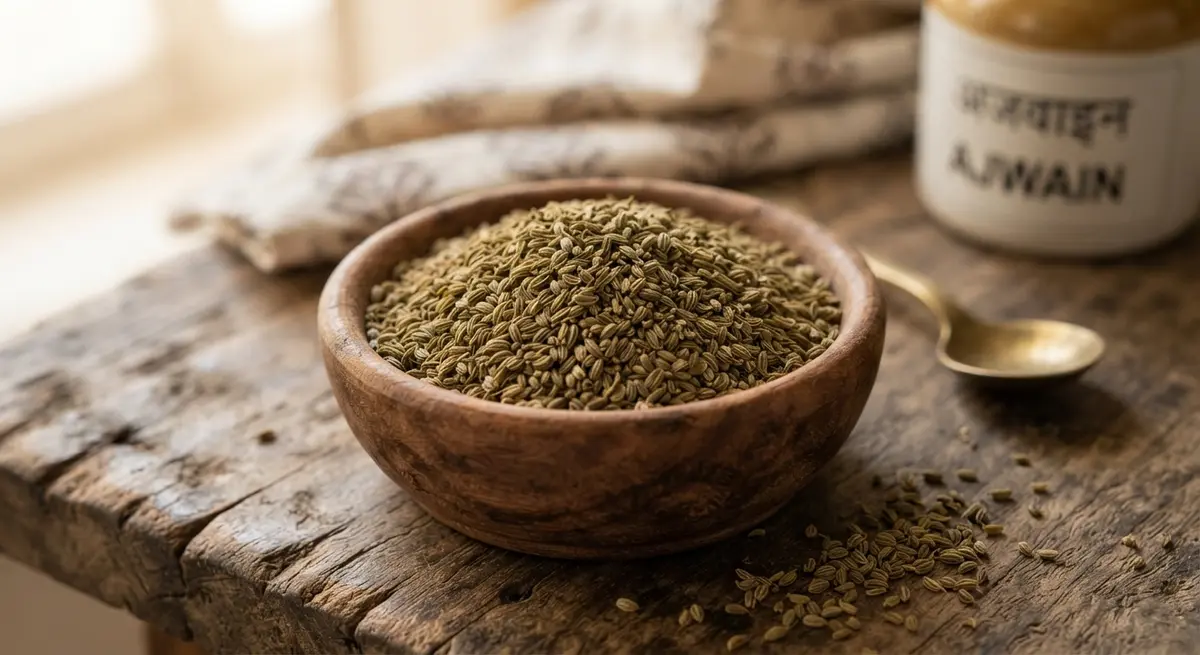
Ajwain (Carom) Seeds: Flavor Profile, Health Benefits & Culinary Uses
A tiny gray-brown seed that tastes like thyme, oregano, and cumin had a baby with a timer fuse. Here is how and why Indian kitchens use ajwain.
About the Authors
This recipe and guide was developed, tested, and approved in our home kitchen and daily life. Jamy is a retired Food Service District Manager and Early Childhood Program Manager who spent his career overseeing multi-site restaurant operations, large-scale culinary production, and daycare menu management. Kaïna brings the ultimate real-world test: making sure it brings ease and joy to our kids on a busy weeknight.
Read more about our professional background and philosophy →