Horseradish Root: Flavor Profile, Health Benefits & Culinary Uses
By the QuiteRecipes team (Jamy & Kaïna)
Fresh horseradish is a different creature than the jarred kind. Learn to pick, grate and use it so the heat lands where it should and pairs like a pro's.
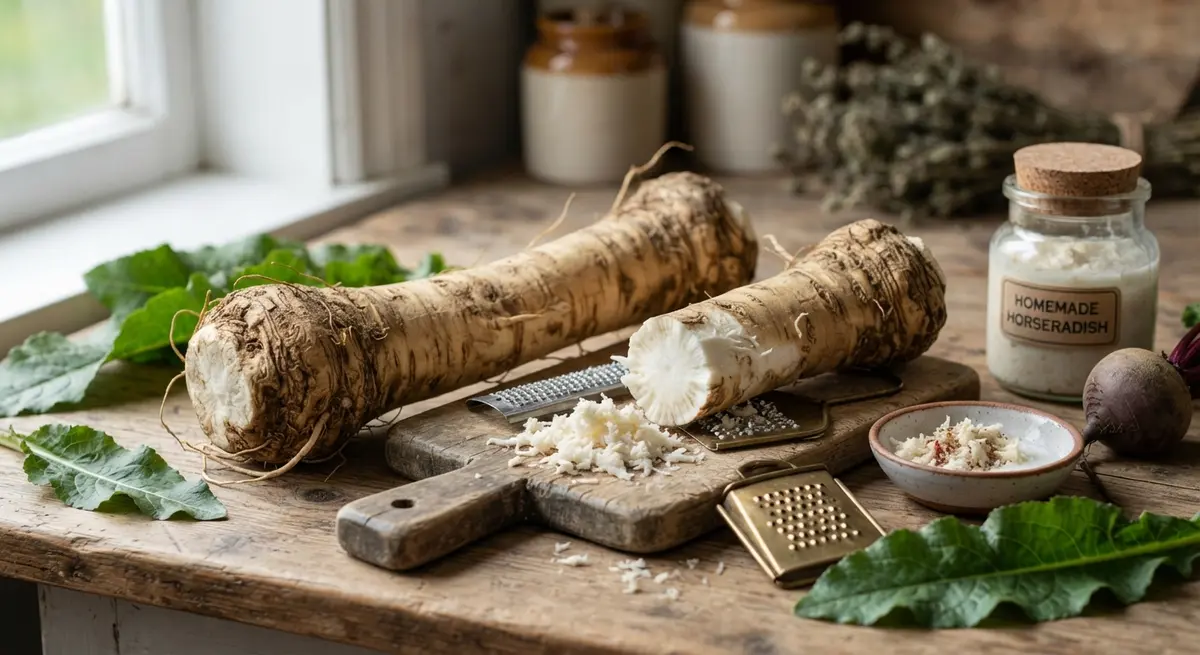
Horseradish is the brute of the condiment shelf. Fresh root comes from Armoracia rusticana, a mustard-family perennial that shrugs off frost and refuses to leave a garden once planted. Grate it and the piercing heat flies straight up your nose before your tongue gets a vote — isothiocyanates at work, fading fast once exposed to air.
Most of us meet horseradish already creamed in a jar. Fresh root is a different creature: brighter, meaner, and worth the tears.
Flavor Profile & Notes
Fresh horseradish is hot in a way no chili can imitate — a chemical burn that clears your sinuses rather than scorching your tongue. That heat only exists after grating, when the enzyme myrosinase meets the glucosinolate sinigrin inside the cells. The pungency evaporates within the hour, so grate it last and add acid quickly to hold the fire. Whole, refrigerated, unpeeled root stays feisty for weeks.
Health Benefits & Nutrition
Horseradish is low in calories and a solid source of vitamin C, fiber, folate, and potassium. The same glucosinolates behind the sting have been studied for antibacterial action and possible cancer-protective effects, though the evidence is preliminary and we eat it in small amounts. It is naturally sodium-free, which makes it a useful flavor punch for people watching salt, and raw grated horseradish delivers more of its volatile compounds than cooked.
Best Culinary Pairings
Grate fresh horseradish into whipped cream or sour cream for a sauce that belongs on roast beef and smoked salmon. It is the point of cocktail sauce — stir it into ketchup, lemon, and Worcestershire for shrimp. Potato salad, beet salads, and coleslaw brighten with a tablespoon worked in. Horseradish loves vinegar (a splash locks in the heat) and apples (classic tartare). Czech and German cooking pair it with boiled beef and cream; Jewish kitchens use it with gefilte fish. Start small; you can always grate more.
Quick Substitutes
Wasabi is the closest heat-mate, but true wasabi is rare and expensive — and most "wasabi" on the shelf is horseradish dyed green anyway. Dijon mustard carries a similar nasal heat with less violence. If a recipe only needs background heat, a pinch of mustard powder with a splash of vinegar works in a pinch.
FAQ / Quick Facts
- How long does fresh root keep? Wrapped in a damp paper towel in the fridge, a whole root lasts three to four weeks; grated and mixed with vinegar it holds for months.
- Why does prepared horseradish seem mild? Vinegar stops the enzyme reaction, so the jar you open has already mellowed — raw root is where the fire lives.
- What does it taste like? Sharp, stinging, and clean with faint sweetness underneath — closer to mustard than to chili.
- Botanical family: Brassicaceae / Form: fresh root, grated, dried powder / Best uses: roast beef, cocktail sauce, potato salads, creamy dressings.
Related Articles
Burdock Root: Flavor Profile, Health Benefits & Culinary Uses
The humble weed that cooks on three continents refuse to give up. How to stir-fry, braise, and pickle burdock, plus prebiotic fiber facts.
Dried Parsnip Root: Flavor Profile, Health Benefits & Culinary Uses
An orange-and-carrot cousin hiding in plain sight: dried parsnip root as powder, flakes, and sweet-savory seasoning for your whole winter kitchen.
Lovage Root: Flavor Profile, Health Benefits & Culinary Uses
The tallest, boldest member of the celery family — the root is where the flavor concentrates. Here's how much to use and where it excels.
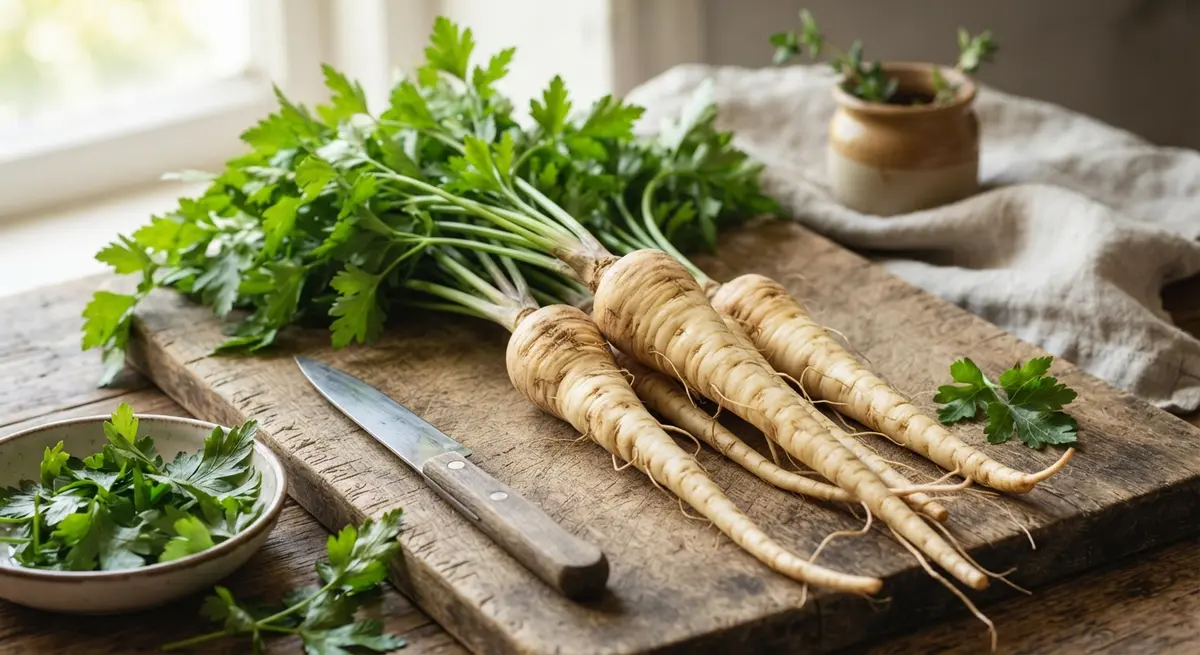
Parsley Root: Flavor Profile, Health Benefits & Culinary Uses
The carrot-topped twin of the herb on your rack, only earthier and herb-forward. Where to find it, how to cook it, and better substitutes.
About the Authors
This recipe and guide was developed, tested, and approved in our home kitchen and daily life. Jamy is a retired Food Service District Manager and Early Childhood Program Manager who spent his career overseeing multi-site restaurant operations, large-scale culinary production, and daycare menu management. Kaïna brings the ultimate real-world test: making sure it brings ease and joy to our kids on a busy weeknight.
Read more about our professional background and philosophy →