Burdock Root: Flavor Profile, Health Benefits & Culinary Uses
By the QuiteRecipes team (Jamy & Kaïna)
The humble weed that cooks on three continents refuse to give up. How to stir-fry, braise, and pickle burdock, plus prebiotic fiber facts.
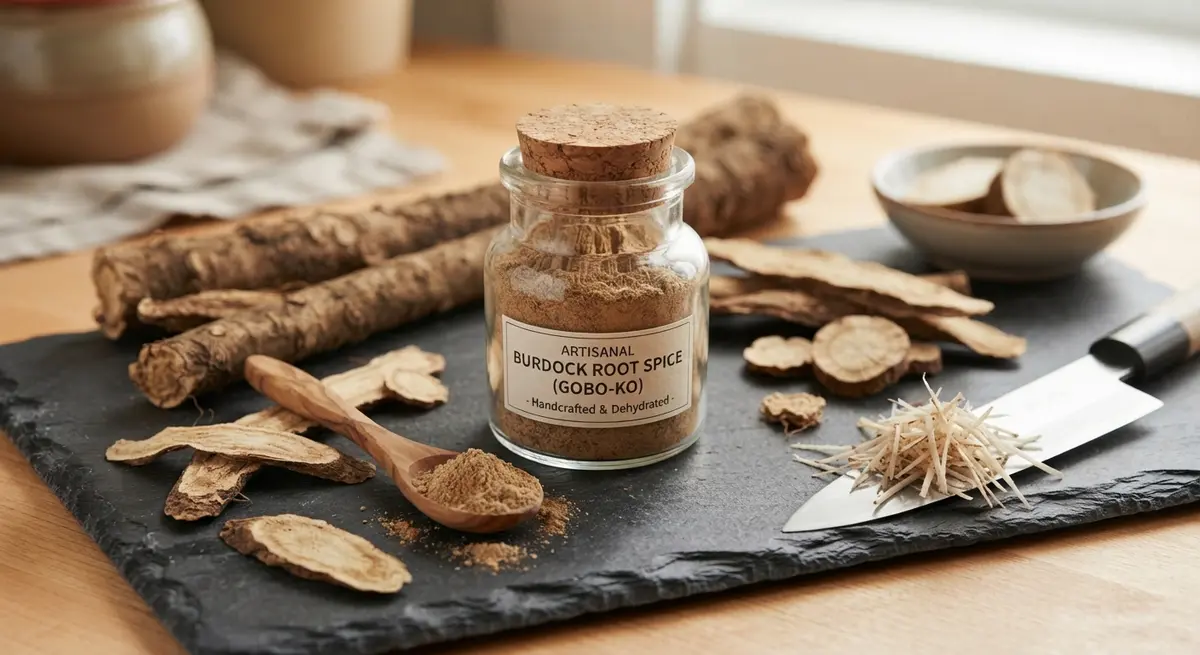
Burdock root is the humble weed that cooks on three continents refuse to give up. Arctium lappa, the big-leafed burr plant of roadsides, produces a long, slender, earth-flavored root that Japanese cuisine treats with reverence as gobo, Korean cooks pickle and braise as ueong, and European herbalists have used for centuries as a cleansing tonic.
In the kitchen, buy your burdock from a market, not a ditch: commercial roots are tender, clean, and mild. Foraged roots near roads, dog parks, or sprayed fields are not worth the risk.
Flavor Profile & Notes
Fresh burdock root is crunchy, pale cream, and mild, tasting like a cross between a sunchoke, a parsnip, and a water chestnut — earthy, slightly sweet, with a faint mineral note and a whisper of artichoke. It browns once cut, so drop pieces into salted water or vinegar as you work. Heat transforms it: stir-fried it turns crisp-chewy; simmered or pickled it softens into a silken, sweet-savory stick that takes flavors beautifully. Dried root makes a gentle, earthy amber tea with a mildly sweet, starchy finish — the version you meet in herbal formulas.
Health Benefits & Nutrition
This is the burdock you can root for genuinely: a solid source of fiber, including the prebiotic inulin, plus potassium, magnesium, and B vitamins. The old folk reputation as a "blood purifier" has gentle modern company — research has nibbled at its antioxidant and prebiotic properties — but the honest line is that it behaves like a lovely root vegetable with a prebiotic bonus, not a medicine. Inulin can cause gas in large quantities, so ease in. People with diabetes or on certain medications should mention burdock to a doctor first.
Best Culinary Pairings
Japan stir-fries gobo with carrot and sesame as kinpira, simmers it in nimono dishes, and pickles it as tataki gobo. Korea braises ueong with soy, garlic, and sesame oil; European cooks add young roots to salads, soups, and stews. Roasted burdock chips, dusted with soy, make a great snack. It pairs with sesame, soy sauce, mirin, ginger, and chicken stock, and with potato, beet, and carrot in root-vegetable roasts. A simple win: julienne burdock, blanch, then saute with sesame oil, soy, and a pinch of sugar.
Quick Substitutes
Sunchokes (Jerusalem artichokes), with their artichoke-earthy crunch and fiber, are the closest texture twin. Parsnips and carrots cover the sweet root slot but lose the minerality. Water chestnuts provide the crunch in stir-fries. For dried-tea purposes, dandelion root comes nearest to burdock's earthy, roasted-vegetable character. None mimic its exact sweet crunch; when a recipe calls for gobo, your produce aisle's answer is usually a sunchoke.
FAQ / Quick Facts
- Does it discolor fast? It oxidizes quickly — soak cut pieces in water with a little vinegar until use.
- Can I eat it raw? Yes, very thinly sliced in salads; it is crunchy and mildly sweet.
- What does it taste like? A water chestnut crossed with an artichoke — earthy, sweet, and crisp.
- Botanical family: Asteraceae / Form: fresh root, dried root, pickled or braised / Best uses: kinpira, soups, pickles, tea.
Related Articles
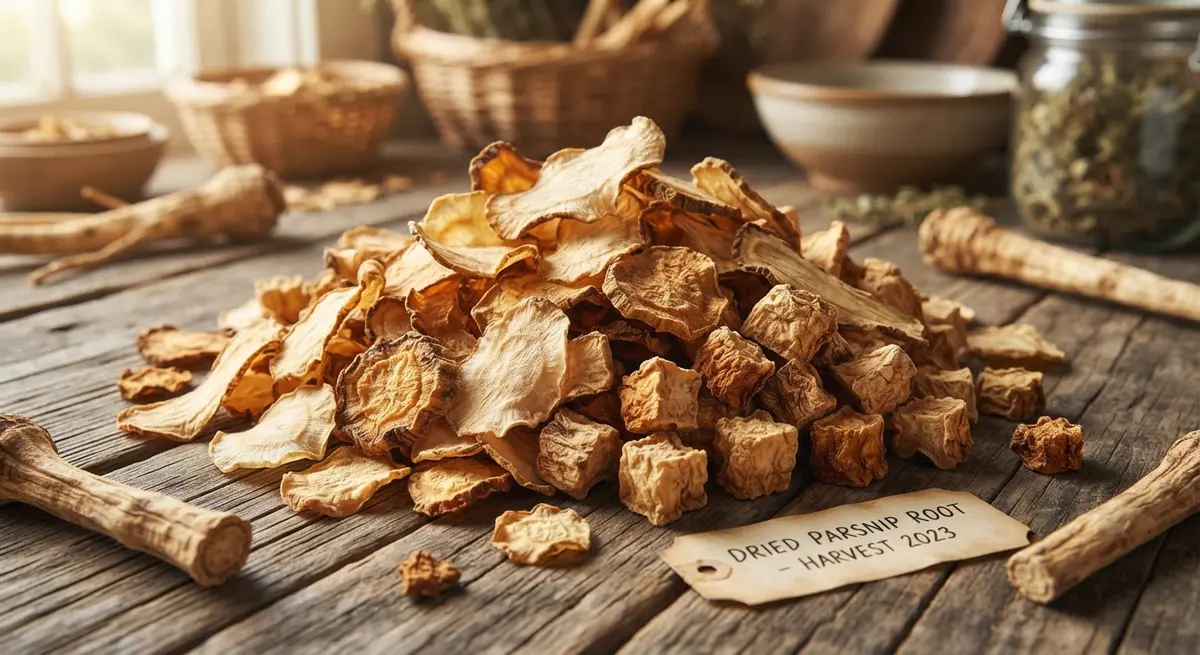
Dried Parsnip Root: Flavor Profile, Health Benefits & Culinary Uses
An orange-and-carrot cousin hiding in plain sight: dried parsnip root as powder, flakes, and sweet-savory seasoning for your whole winter kitchen.
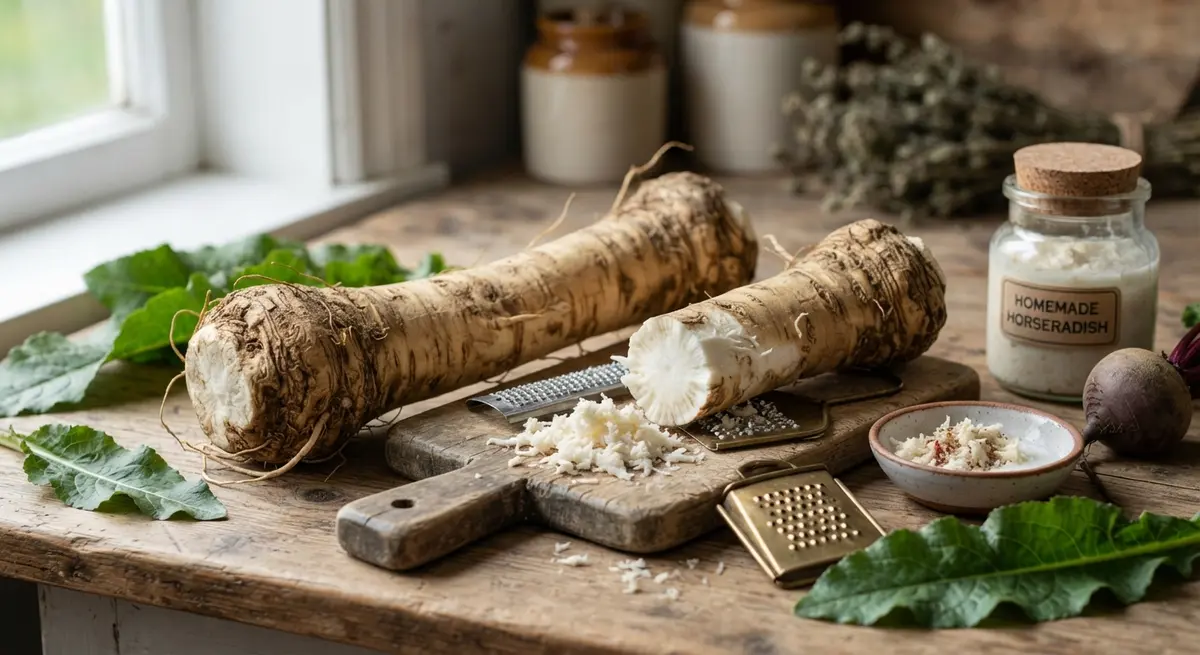
Horseradish Root: Flavor Profile, Health Benefits & Culinary Uses
Fresh horseradish is a different creature than the jarred kind. Learn to pick, grate and use it so the heat lands where it should and pairs like a pro's.
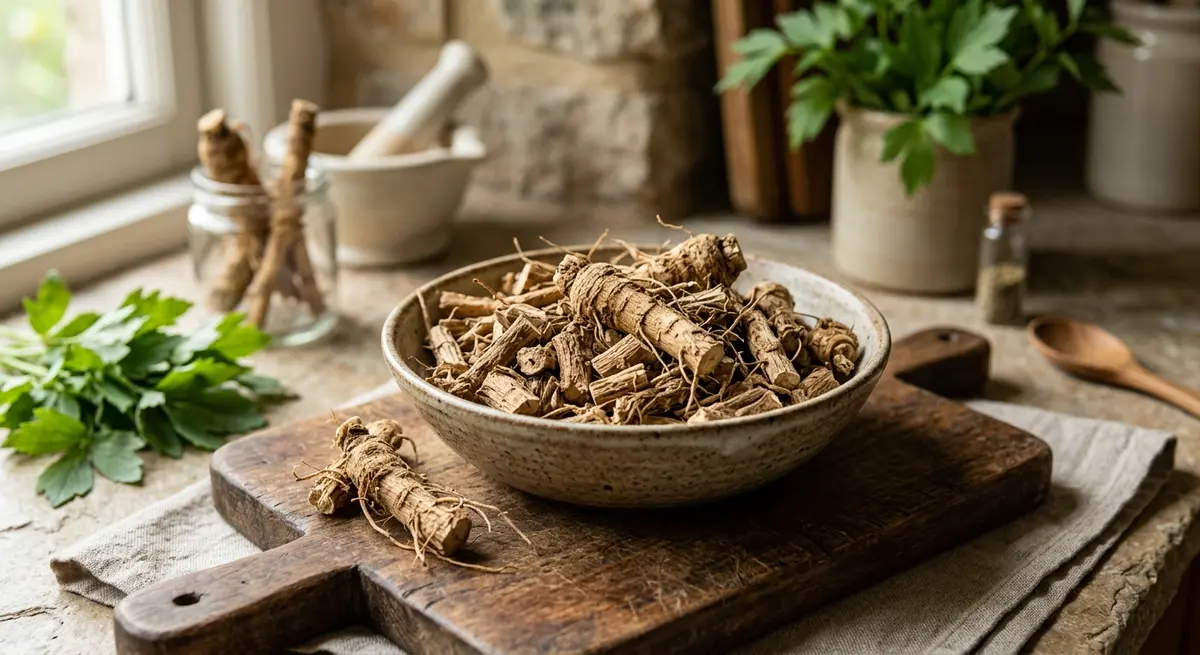
Lovage Root: Flavor Profile, Health Benefits & Culinary Uses
The tallest, boldest member of the celery family — the root is where the flavor concentrates. Here's how much to use and where it excels.
Parsley Root: Flavor Profile, Health Benefits & Culinary Uses
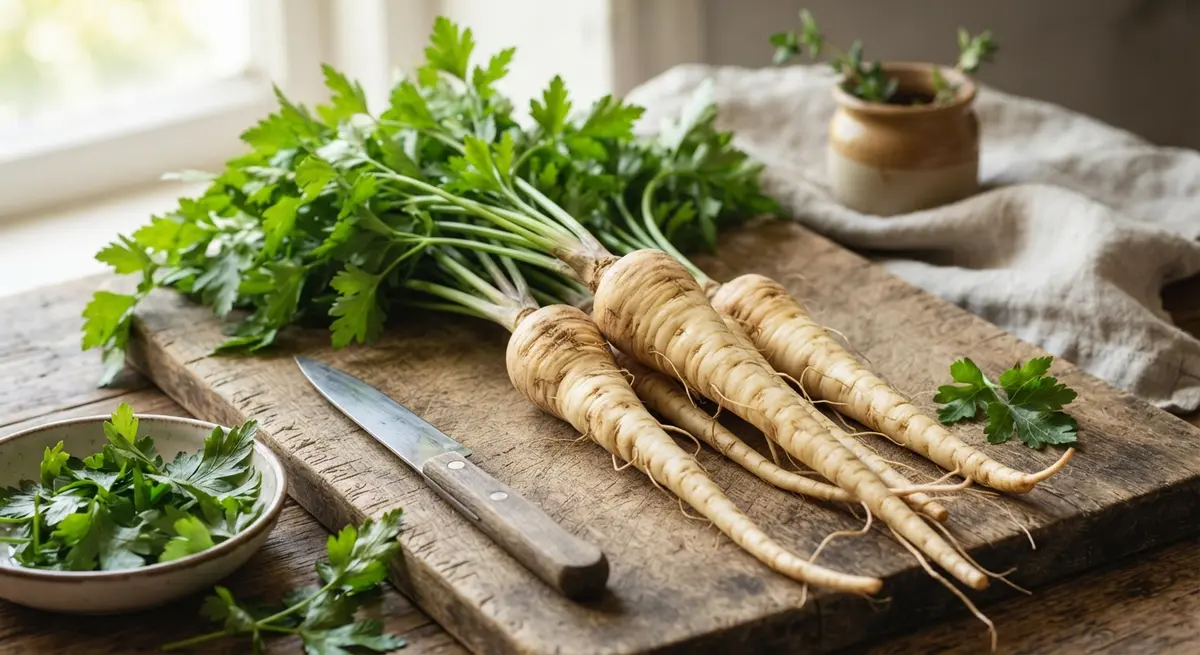
The carrot-topped twin of the herb on your rack, only earthier and herb-forward. Where to find it, how to cook it, and better substitutes.
About the Authors
This recipe and guide was developed, tested, and approved in our home kitchen and daily life. Jamy is a retired Food Service District Manager and Early Childhood Program Manager who spent his career overseeing multi-site restaurant operations, large-scale culinary production, and daycare menu management. Kaïna brings the ultimate real-world test: making sure it brings ease and joy to our kids on a busy weeknight.
Read more about our professional background and philosophy →