Greater Galangal: Flavor Profile, Health Benefits & Culinary Uses
By the QuiteRecipes team (Jamy & Kaïna)
The jungle-strong cousin of ginger that Thai curries and beef rendang are built on. Here is who it is, what it does in the pot, and how to shop for it.
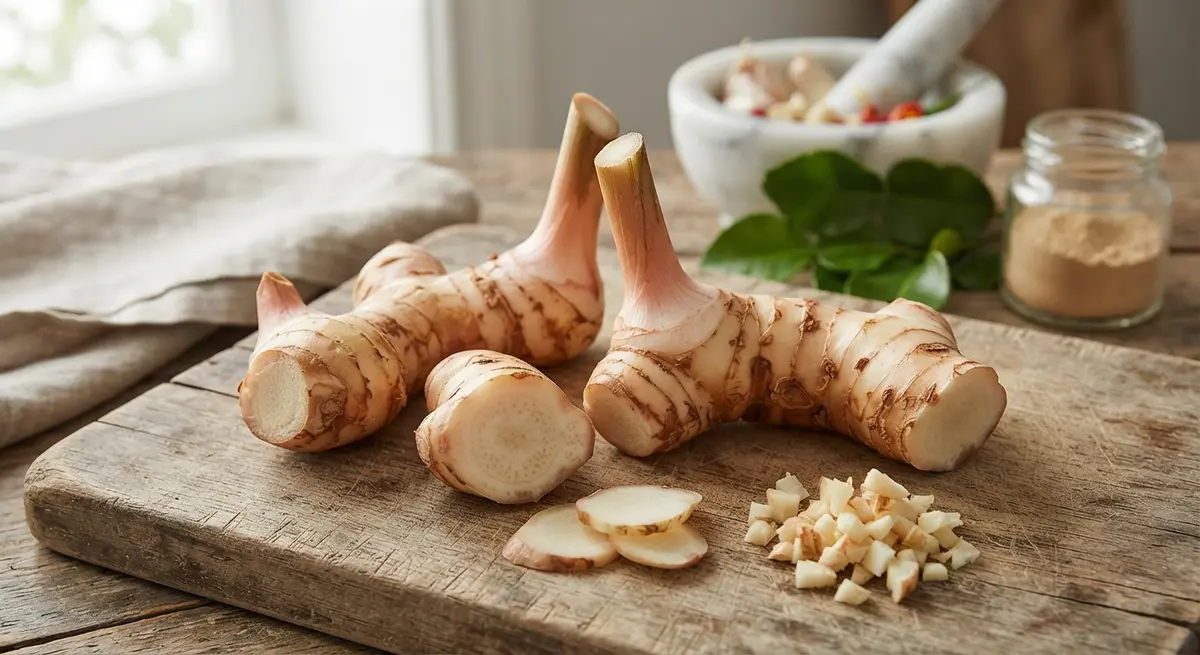
The first time someone handed me a slice of galangal and called it "Thai ginger," I nodded, cooked with it, and promptly understood why that shorthand is a lie. Ginger is bright and juicy. Galangal is woodsy, peppery, and quietly fierce — like ginger that spent its whole life in the wilderness. Swap them and you will know it, because plain ginger can't give you that sharp pine-and-citrus bite that makes a Thai curry taste like a Thai curry.
Greater galangal (Alpinia galanga) is the big rhizome you meet at Asian grocers next to the lemongrass, sold as lengkuas in Indonesia and kha in Thailand. It grows throughout Southeast Asia and has been a trade spice since before anyone wrote the recipe down. The white-fleshed cultivars are the kitchen ones; red varieties lean medicinal.
Flavor Profile & Notes
Fresh greater galangal smells like eucalyptus and citrus peel crossed with black pepper and pine needles. The first hit is warm and resinous, then a peppery tingle lands on the tongue and fades into earthy, camphor-like calm. It is not hot the way chili is hot — it is pungent the way good wood is pungent. Sliced into a simmering soup, it perfumes the broth without dominating it; that is why recipes ask for a few coins of it rather than a handful. The ground powder is another creature entirely: much tamer, slightly sweet, more like gingerbread spice, so bump the amount if you are relying on it.
Health Benefits & Nutrition
Galangal is light on calories and heavy on volatile oils, including 1,8-cineole and related compounds that researchers have studied for anti-inflammatory and antioxidant activity. The honest version: a few slices in a curry will never be a medicine dose, and no spice cures anything. What galangal does do is give you a little fiber, potassium, and vitamin C with your flavor, and its strong aromatic oils make food more interesting without extra salt. If you want to lean on it, infuse slices into broth or tea with lemongrass, and check with your doctor before treating any spice like a treatment.
Best Culinary Pairings
Pound dry curry paste with galangal, lemongrass, shallots, garlic, and lime leaves, then simmer with coconut milk. It is the backbone of tom kha gai — coconut chicken soup where thin slices simmer until tender enough to eat. It stars in Indonesian beef rendang and soto ayam, and it belongs in any laksa you are serious about. Galangal does not need blooming like seeds do; it cooks gently in liquid, and the powder can be toasted in a dry pan for thirty seconds to wake it up. Coconut milk, fish sauce, chilies, lime, and turmeric all hang around it naturally.
Quick Substitutes
Fresh ginger with a little lemon zest and a pinch of white pepper gets close to the sharpness but not the pine. Lesser and officinal galangal are real galangals and the closest swap. Dried slices rehydrate in warm water before use and land softer than fresh. No substitute, honestly, gives you that resinous bite — a curry made with ginger alone tastes different, and you will notice.
FAQ / Quick Facts
- How long does fresh galangal keep? About a week loosely wrapped in the fridge; sliced and frozen, it keeps for months without thawing.
- What does it taste like? Pepper, citrus, and pine resin — sharper and woodsier than ginger.
- Botanical family / Form: Zingiberaceae (ginger family); fresh rhizome, dried slices, and powder. Best uses: Thai soups and curries, rendang, laksa.
Related Articles
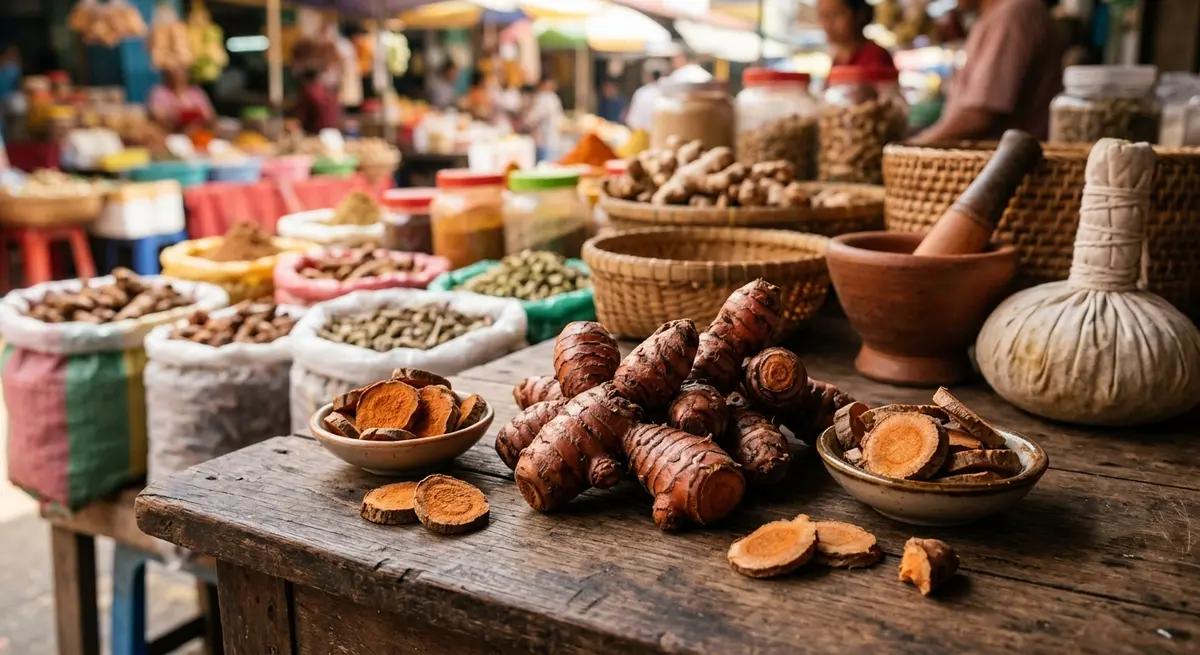
Lesser Galangal: Flavor Profile, Health Benefits & Culinary Uses
A smaller, fiercer galangal that bites back: what lesser galangal tastes like, where Southeast Asian cooks use it, and how to keep it on your shelf.
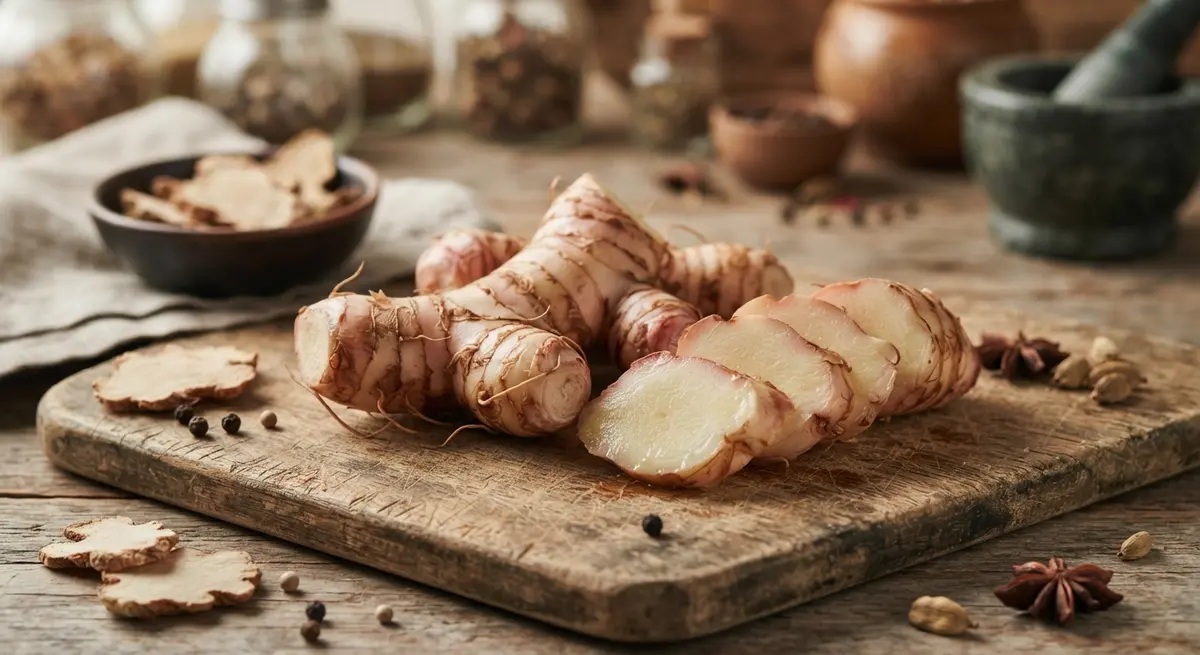
Officinal Galangal: Flavor Profile, Health Benefits & Culinary Uses
The hot-toothed Chinese galangal that apothecaries and tea makers have prized for centuries: what officinal galangal is, how to use a little, and why.
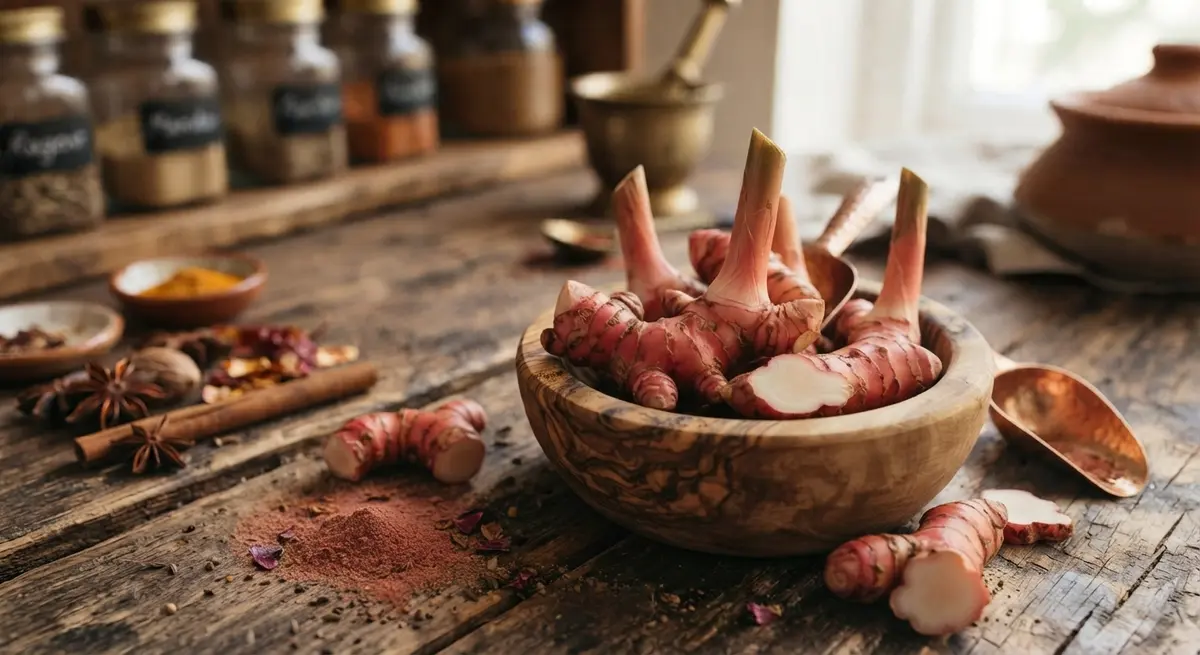
Red Galangal: Flavor Profile, Health Benefits & Culinary Uses
The red-skinned lengkuas that growers spoil for themselves: red galangal is sharper and more aromatic than the white kind, with its own place in the kitchen.
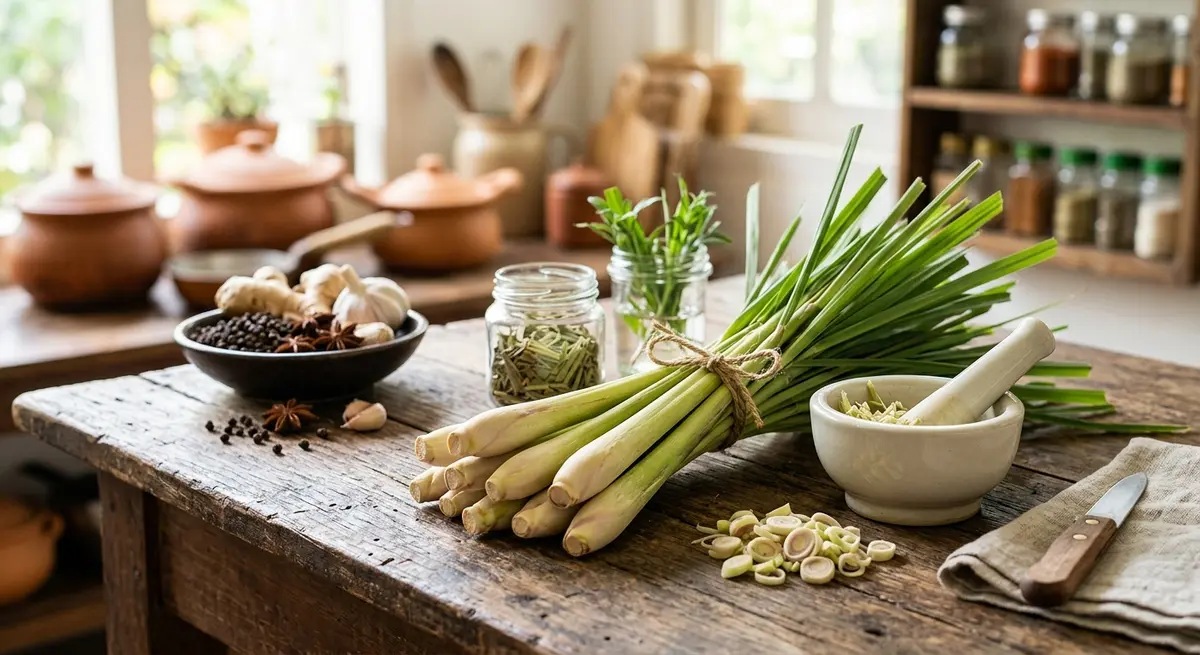
Lemongrass: Flavor Profile, Health Benefits & Culinary Uses
The tropical grass that tastes like lemon but never goes sour: how lemongrass perfumes soups, curries, and tea, with honest notes on using the dry version.
About the Authors
This recipe and guide was developed, tested, and approved in our home kitchen and daily life. Jamy is a retired Food Service District Manager and Early Childhood Program Manager who spent his career overseeing multi-site restaurant operations, large-scale culinary production, and daycare menu management. Kaïna brings the ultimate real-world test: making sure it brings ease and joy to our kids on a busy weeknight.
Read more about our professional background and philosophy →