Espelette Pepper Powder: Flavor Profile, Health Benefits & Culinary Uses
By the QuiteRecipes team (Jamy & Kaïna)
Appellation-protected from a single Basque village, Espelette is a fruity, gently smoked chili that seasons ham, piperade, and chocolate without stealing the show.
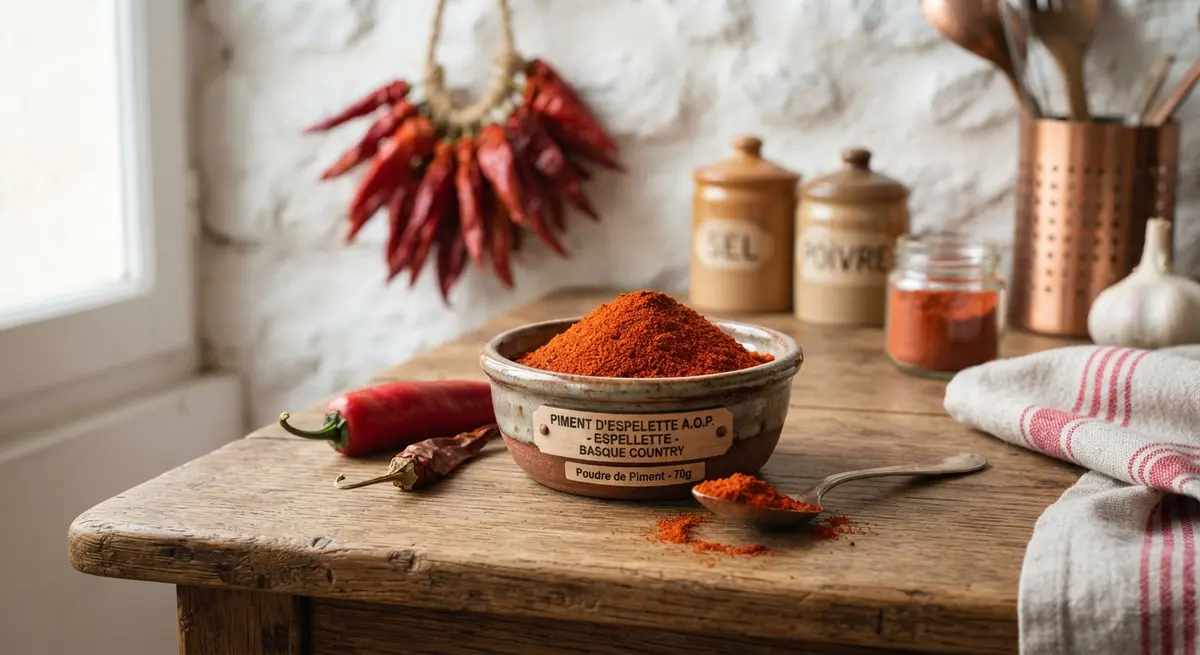
Piment d'Espelette is the chili that behaves like a gentleman. It is grown from a single Capsicum annuum variety in and around one small town in the French Basque Country — Espelette itself — where the peppers are hand-picked, strung, smoke-and-sun-dried on white buildings, then ground into a fine, deep-red powder. The whole process is protected by European appellation rules as strict as any wine's, which is why the jar costs what it does and why it tastes so reliably like something: mild, fruity, gently smoky, with a warm finish that lingers politely instead of pushing you around. Its heat is barely a third of standard paprika, and nowhere near a generic cayenne.
In recent years it has gone global, the finishing powder of choice for cooks who want chili flavor without chili personality.
Flavor Profile & Notes
Delicate and fruity, like sun-dried berries crossed with a mellow cayenne, carrying a light wood smoke and a rounded, slow warmth. The powder is fine, brilliant red, and makes a beautiful bright dust on pale food. Use it generously — it is one of the few chilies you can measure in teaspoons without fear — and treat it as a finisher: sprinkle over eggs, mash, ham, or fish at the end, or stir it into sauces and aioli. A quick bloom in olive oil also rewards with a warmer, toastier note.
Health Benefits & Nutrition
Espelette brings the standard red-chili asset list — antioxidants, carotenoids, gentle capsaicin — with one practical quality: because the heat is mild and the fruit depth real, it lets you skip extra salt and still feel satisfied. That is the honest kitchen benefit. It is not a health food; it is a careful harvest that makes ordinary plates feel finished.
Best Culinary Pairings
In the Basque Country it seasons Bayonne ham, piperade (the pepper-tomato-egg scramble), axoa veal stew, and grilled fish like tuna. Take the idea home: dust over scrambled eggs, fold into potato salad, rub over chicken before roasting, or finish a tomato sauce with a generous spoon. Its delicate heat also shines in desserts — a light dusting over dark chocolate mousse or strawberries with cream never fails.
Quick Substitutes
A blend of mild/sweet paprika with a pinch of cayenne comes closest in heat and color, though you will miss the fruit and smoke; add a dusting of smoked paprika to bring that back. Aleppo pepper is a more characterful substitution in savory dishes but leans redder and brighter. For genuine Espelette occasions — a Basque recipe or a chocolate garnish — the real powder is the whole point.
FAQ / Quick Facts
- How long does it keep? Sealed in a dark, cool spot, Espelette powder holds its bright color and aroma for about a year.
- Is it very hot? No — gentle and rounded, roughly a third of standard paprika's heat.
- Why is it so pricey? Strict appellation rules, hand harvest, and a long smoke-dry process limited to one Basque region.
- Botanical family / Form / Best uses: Capsicum annuum (Solanaceae) / fine red powder / eggs, fish, ham, stews, roasted vegetables, and chocolate desserts.
Related Articles
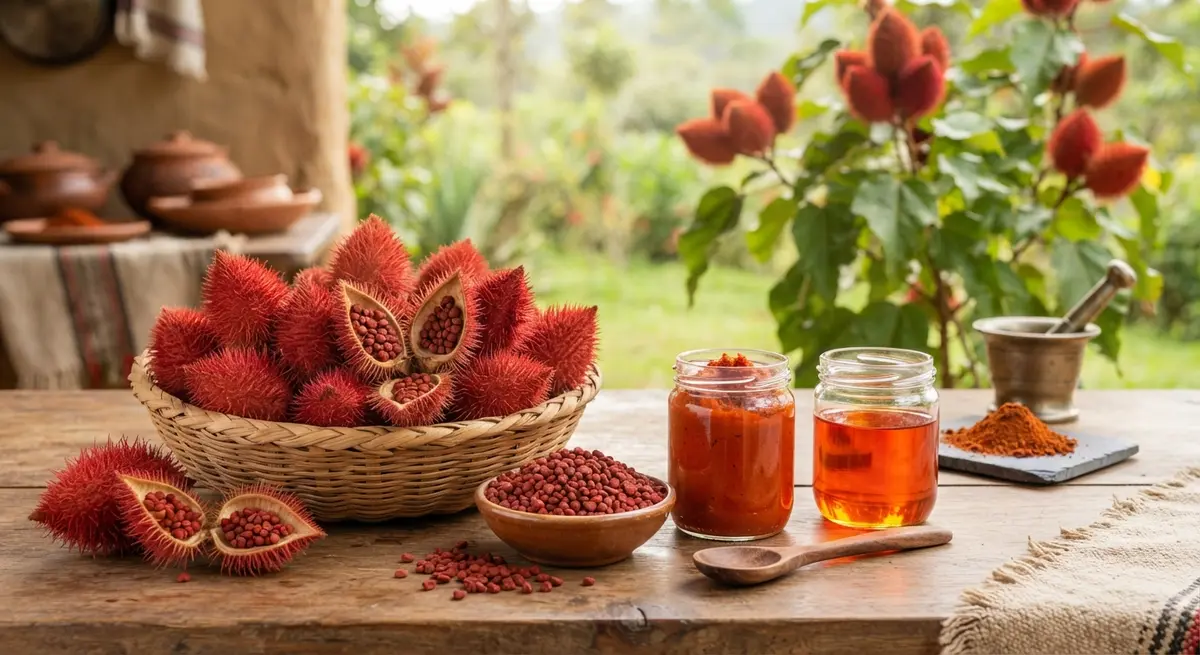
Achiote (Annatto): Flavor Profile, Health Benefits & Culinary Uses
Tiny coral-red seeds that paint food golden: the annatto tree's achiote, how to use the seeds and the Yucatan paste, and honest color substitutes.
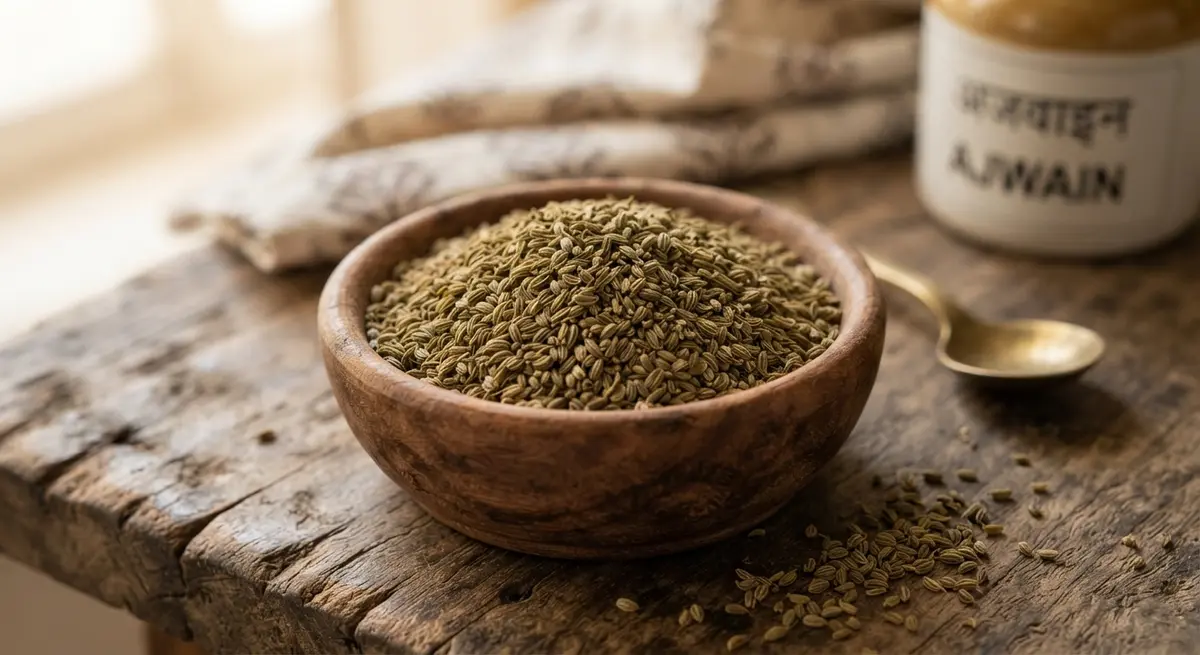
Ajwain (Carom) Seeds: Flavor Profile, Health Benefits & Culinary Uses
A tiny gray-brown seed that tastes like thyme, oregano, and cumin had a baby with a timer fuse. Here is how and why Indian kitchens use ajwain.
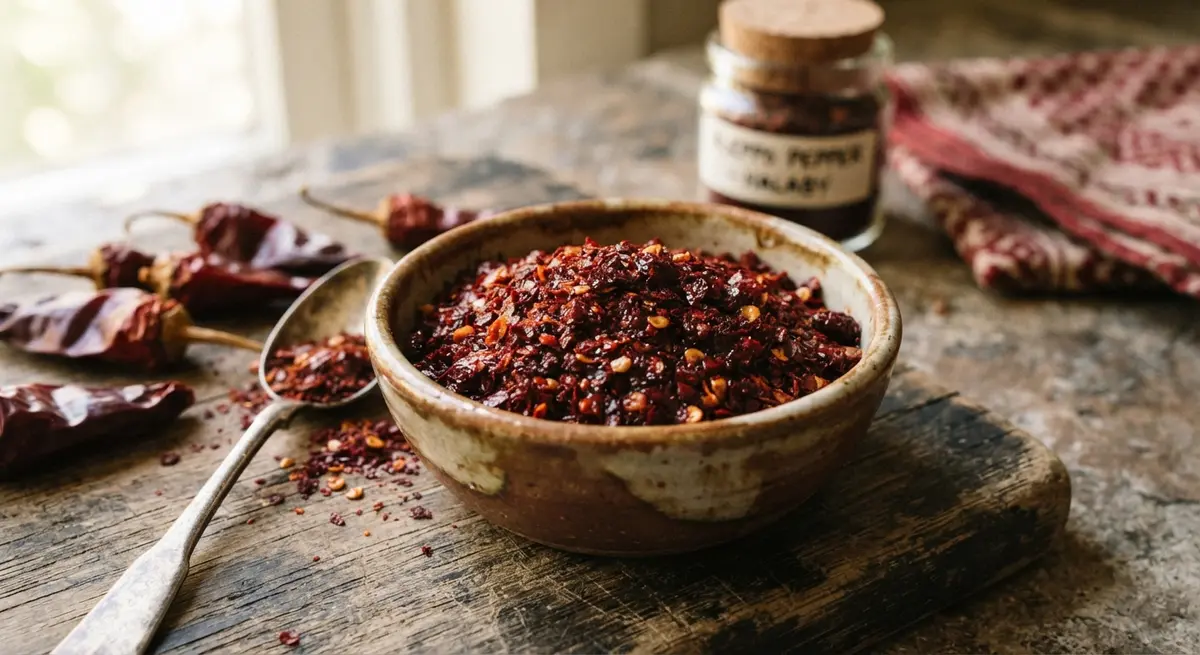
Aleppo Pepper: Flavor Profile, Health Benefits & Culinary Uses
Aleppo is the Mediterranean's gentle red flake, fruity and warm with real heat that never bites, perfect for everything from muhammara to roast carrots.
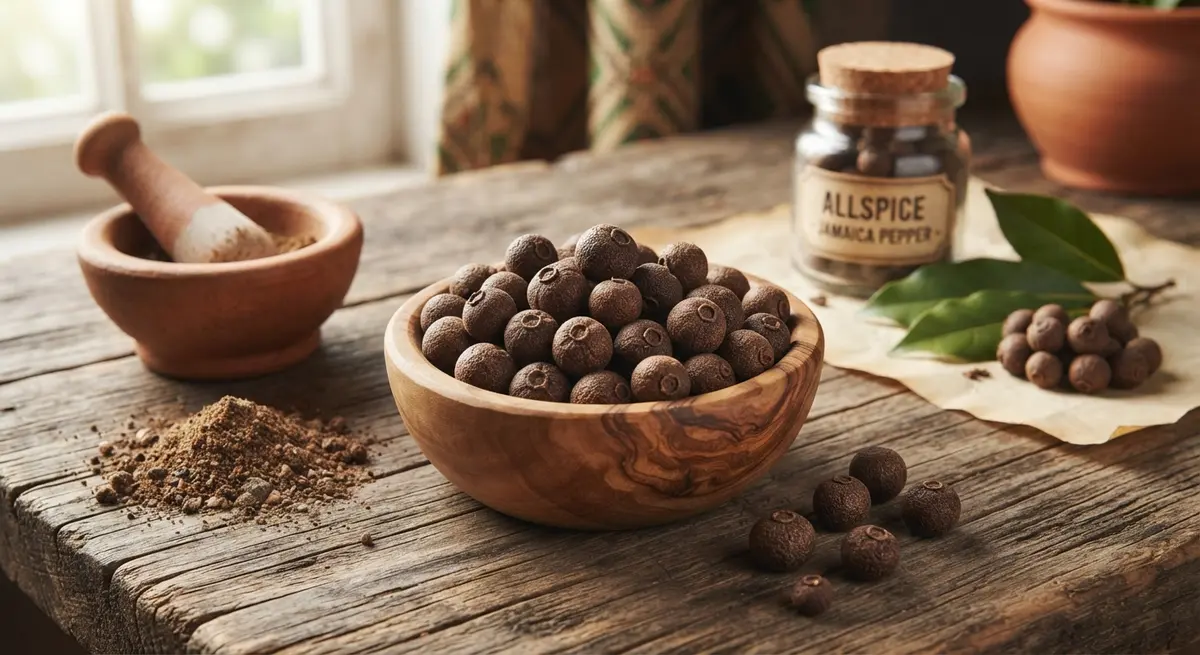
Allspice (Jamaica Pepper): Flavor Profile, Health Benefits & Culinary Uses
The original seasoning cheat: a single berry tasting of cinnamon, clove, and nutmeg, born in Jamaica, baked into jerk and grandmothers' Christmas cakes alike.
About the Authors
This recipe and guide was developed, tested, and approved in our home kitchen and daily life. Jamy is a retired Food Service District Manager and Early Childhood Program Manager who spent his career overseeing multi-site restaurant operations, large-scale culinary production, and daycare menu management. Kaïna brings the ultimate real-world test: making sure it brings ease and joy to our kids on a busy weeknight.
Read more about our professional background and philosophy →