Black Elderberry: Flavor Profile, Health Benefits & Culinary Uses
By the QuiteRecipes team (Jamy & Kaïna)
The glossy hedge fruit with a serious cooked-vs-raw rule. Its wild taste, immunity research, and the glazes and syrups that make it safe.
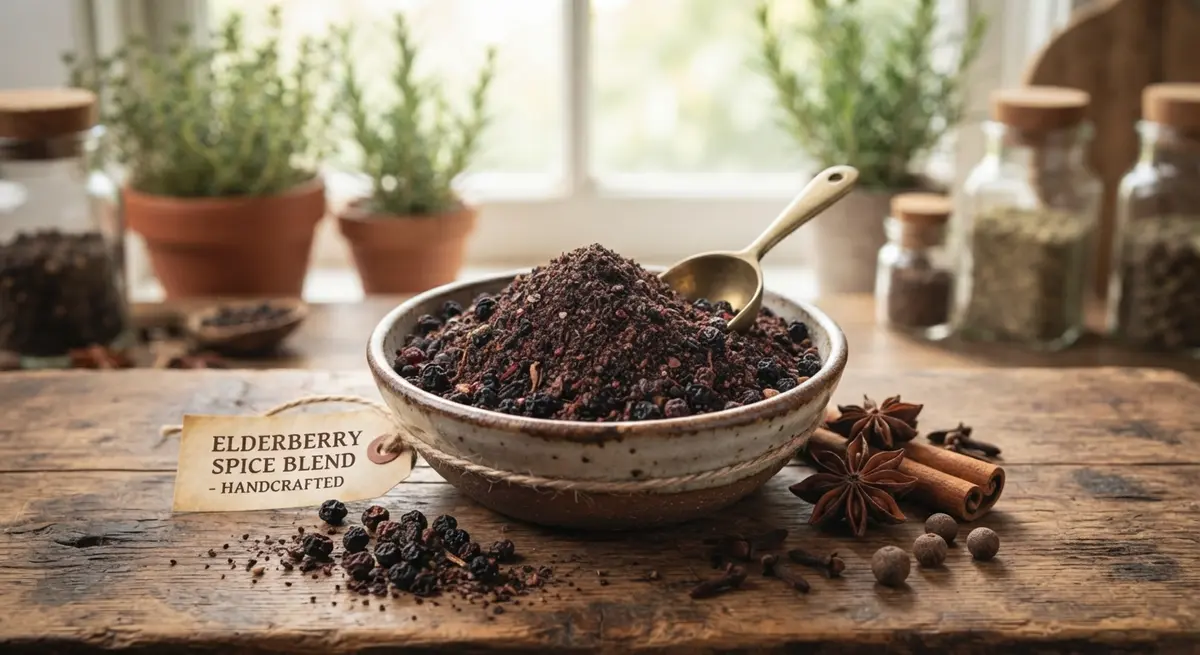
Black elderberry (Sambucus nigra) is the glossy dark jewel of late-summer hedgerows — the same plant whose flowers give you cordial, now delivering deep purple berries that folk medicine has leaned on for colds and immunity for centuries. What most people do not know: the berries are mildly toxic raw (they carry cyanogenic glycosides) and become perfectly safe only after thorough cooking.
That one fact designs every recipe in this article: always simmer, never snack. Cooked elderberries, in syrup and jam, taste like dark winy berries with floral chameleon potential.
Flavor Profile & Notes
Cooked black elderberry is a wild-tasting dark berry: winey and slightly bitter, like a cross between black currant, blueberry, and blackberry, with a tannic-herbal finish and a faint floral echo of the flower. Raw, the flavor is starchy-bitter and genuinely unpleasant — and unsafe. Cooking transforms the profile completely: simmered with sugar they become a glossy, purple-black sauce with sweet-sour depth and a hint of grape and fig. Dried berries hold that dark fruitiness and form the base of elderberry syrups and winter tonics; their essence also appears in soda and gummies.
Health Benefits & Nutrition
The immunity reputation has real research behind it: studies on elderberry extracts — especially for shortening cold symptoms rather than preventing them — are common enough that "commonly used, modestly studied" is honest. Elderberries are also rich in antioxidants (anthocyanins) and some vitamin C. Twin cautions: raw berries must be cooked, as the toxicity is most concentrated in unripe fruit and raw handfuls, and concentrated elderberry syrups and gummies can carry heavy sugar loads and possible interactions with immunosuppressants. Pregnant women and young children should check with a doctor. Enjoy as food, treat as seasonal wellness, not medicine.
Best Culinary Pairings
Elderberry's natural kitchen: glazes for pork, duck, or game, cranberry-style sauces for turkey, and dark jams, jellies, and syrups. It shines in wine, cider, and cordials; a dollop of cooked berries in balsamic pan sauce for roast chicken is bold and fast. Bake them into muffins, pies, and crumbles, or stir syrup into sparkling water. Pair with blackberry, plum, apple, cinnamon, cloves, and vanilla; a pinch of rose or hibiscus lifts the floral side.
Quick Substitutes
Black currants, where you can find them, are the closest — same winey depth and astringency. Blueberries with a splash of wine and a pinch of clove cover some ground. Chokeberry (aronia), equally wild and tannic, swaps in for jams and syrups. For a cold-season syrup, a blackberry-hibiscus-ginger syrup is a fair, child-friendly stand-in. The winey bite is the trick; a spoon of red wine vinegar in a cooked berry sauce approximates it convincingly.
FAQ / Quick Facts
- Why must they be cooked? Raw berries contain cyanogenic glycosides that simmering destroys — always boil or bake them.
- Are the flowers safe raw? Yes, in culinary amounts — the toxicity sits mainly in unripe and raw berries.
- What do they taste like? Winey, dark, and slightly bitter-herbal — black currant meets blackberry with a floral note.
- Botanical family: Adoxaceae / Form: cooked berries, juice, syrup, dried / Best uses: jams, glazes, cordials, winter syrups.
Related Articles
Rosehip Powder: Flavor Profile, Health Benefits & Culinary Uses
The rose you never ate: a vitamin-C-rich, hibiscus-like fruit from the plant's hips. Real pairing logic, gentle-drying tips, and honest swaps.
Achiote (Annatto): Flavor Profile, Health Benefits & Culinary Uses
Tiny coral-red seeds that paint food golden: the annatto tree's achiote, how to use the seeds and the Yucatan paste, and honest color substitutes.
Ajwain (Carom) Seeds: Flavor Profile, Health Benefits & Culinary Uses
A tiny gray-brown seed that tastes like thyme, oregano, and cumin had a baby with a timer fuse. Here is how and why Indian kitchens use ajwain.
Aleppo Pepper: Flavor Profile, Health Benefits & Culinary Uses
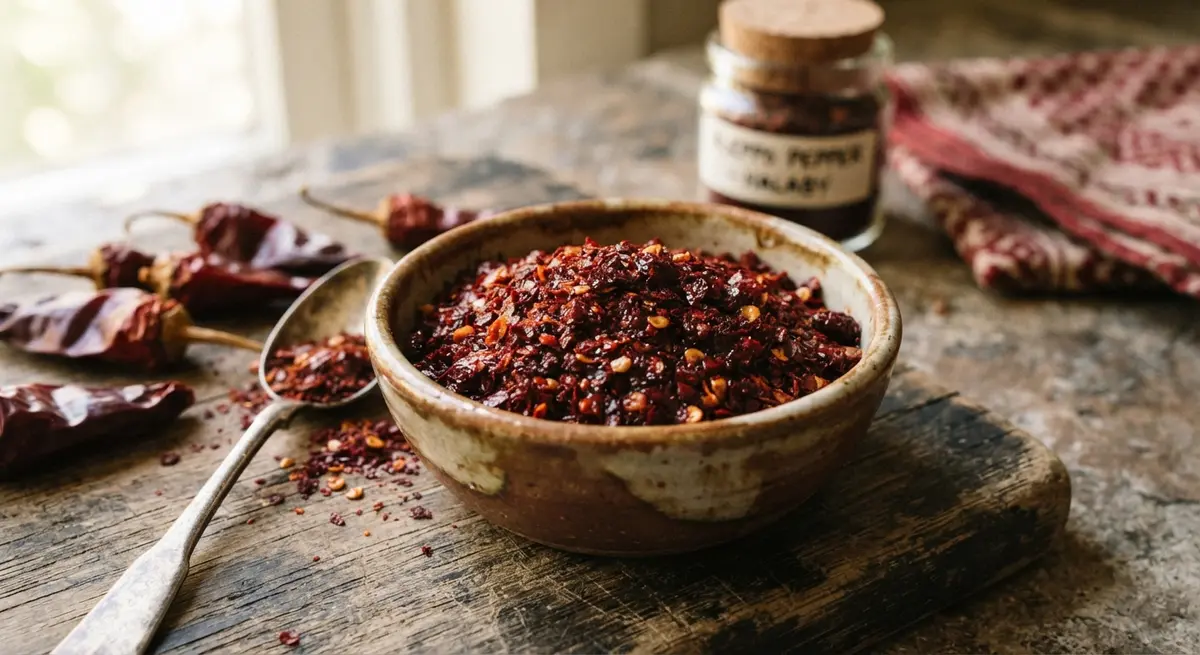
Aleppo is the Mediterranean's gentle red flake, fruity and warm with real heat that never bites, perfect for everything from muhammara to roast carrots.
About the Authors
This recipe and guide was developed, tested, and approved in our home kitchen and daily life. Jamy is a retired Food Service District Manager and Early Childhood Program Manager who spent his career overseeing multi-site restaurant operations, large-scale culinary production, and daycare menu management. Kaïna brings the ultimate real-world test: making sure it brings ease and joy to our kids on a busy weeknight.
Read more about our professional background and philosophy →