Angelica Root & Seeds: Flavor Profile, Health Benefits & Culinary Uses
By the QuiteRecipes team (Jamy & Kaïna)
The tallest herb in the parsley family. Where the pine-meets-celery aroma comes from, which parts to use, and why a little goes so far.
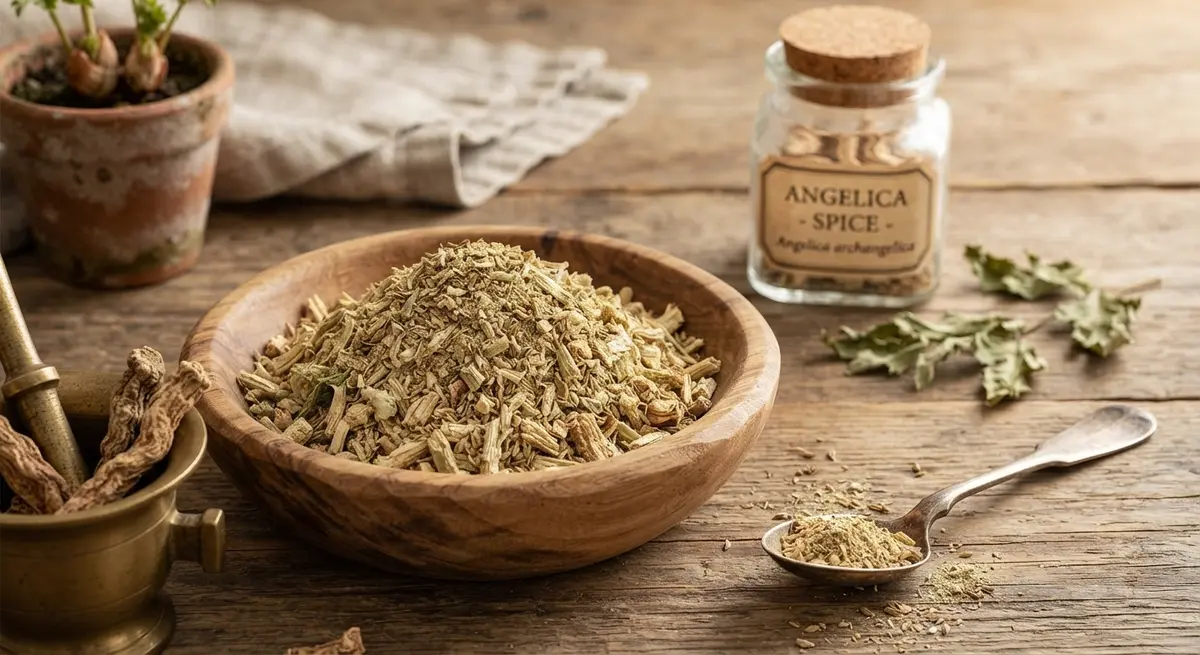
Angelica is the tallest herb in the parsley family, and famously hard to pin down: candied stems at the bakery, liqueur makers, the perfume counter, and the pillar of Scandinavian and French pastry all claim it at once. Angelica archangelica was once grown in medieval gardens for everything from plague tonics to "angelic" stomach remedies. Today the stems, seeds, and root find their way into sweets, spirits, and bitters.
The root is the most intensely flavored part — earthy, piney, and musk-sweet, like celery and gin botanicals crossed with a walk through a conifer stand.
Flavor Profile & Notes
Angelica root is dense, woodsy, and bittersweet, with a medicinal, pine-forward bite like a botanical liqueur waiting to happen. The seeds echo the root with more of a celery-air and a touch of juniper incense, while candied stems are sweet and faintly cypress-green. The root's oils — including a musky sweetness — make it a favorite aromatic for modern bitters and gin-style blends. It works best in small doses; a pinch perfumes a batch where a tablespoon would taste like chewing on a tree. A sliver in spirits is all you need for a ten-day infusion.
Health Benefits & Nutrition
Angelica has been a "tonic" and stomach-soother for centuries, and the root does contain compounds researched for antimicrobial and anti-inflammatory activity. But the honest picture is mixed: parts of angelica can affect how medications are processed, and at high doses the root acts as a cardiac stimulant — genuinely not a thing to experiment with casually. Pregnant women should avoid concentrated angelica entirely. Culinary uses like a nibble of candied stem or a slice of root in a liqueur are fine for most adults; anything more deserves a conversation with your doctor first.
Best Culinary Pairings
Angelica's natural home is baking and drinks. Candied stems crown fruitcakes and classic gâteaux; a thin slice steeped in cold water becomes a sweet-celery tea. In Norway it flavors traditional spring bread and farm beers; in France it is the quiet star of Chartreuse. Pair the root with citrus, rhubarb, strawberries, cream, vanilla, and gin or mead. Dry-mix a little into gingerbread, apple jam, or pear desserts, and drop a sliver into your next batch of bitters.
Quick Substitutes
Nothing nails angelica's montane pine-meets-celery profile exactly. The closest quick pair is celery seed (for green) plus a whisper of juniper berry (for pine) plus a touch of sugar. Lovage root is more vegetal but belongs to the same family and covers savory ground. For sweetness in baked goods, candied citrus peel with a drop of almond extract gives a similar lift.
FAQ / Quick Facts
- Which part do I use? The root for strength, the seeds for gentle celery-pine, and candied stems in baking — all parts carry the fragrance.
- Is it safe to forage? Only with certain identification — angelica species include toxic lookalikes like water hemlock. Buy from known culinary sources.
- What does it taste like? Piney, celery-like, sweet-bitter musk — botanical liqueur, not soup.
- Botanical family: Apiaceae / Form: root, seed, candied stem / Best uses: liqueurs, cakes, rhubarb and berry dishes, bitters.
Related Articles
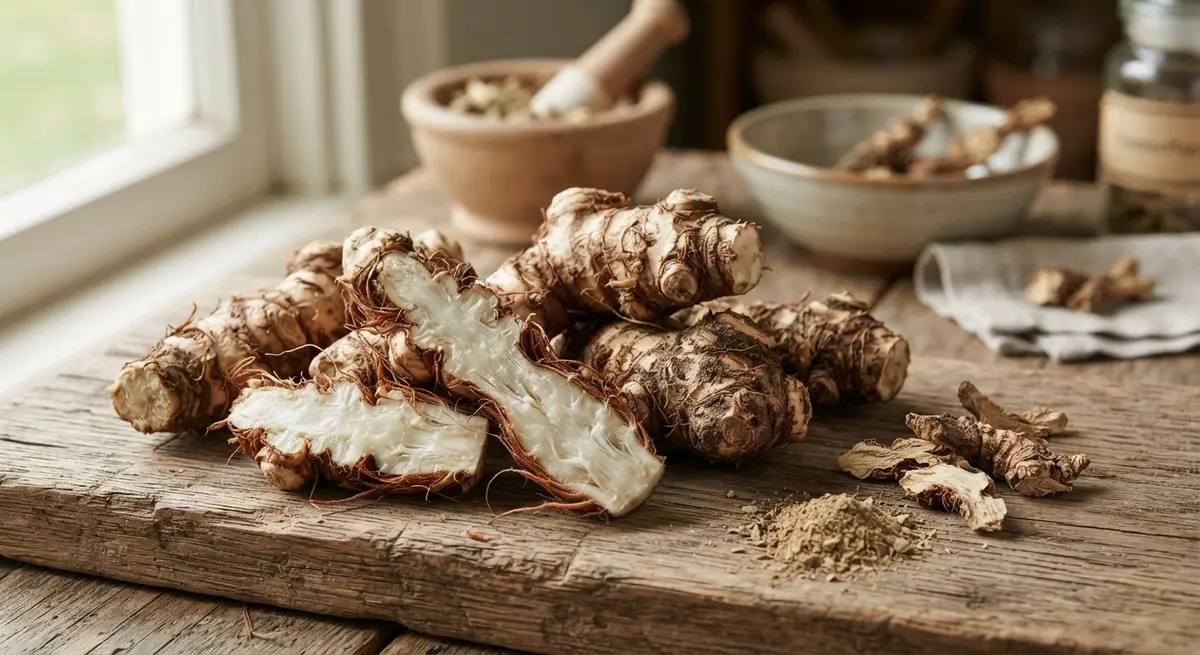
Sweetflag Root (Calamus): Flavor Profile, Health Benefits & Culinary Uses
A marsh-plant rhizome with a legendary aroma and a serious caveat. What beta-asarone is, why modern food safety limits it, what to do instead.
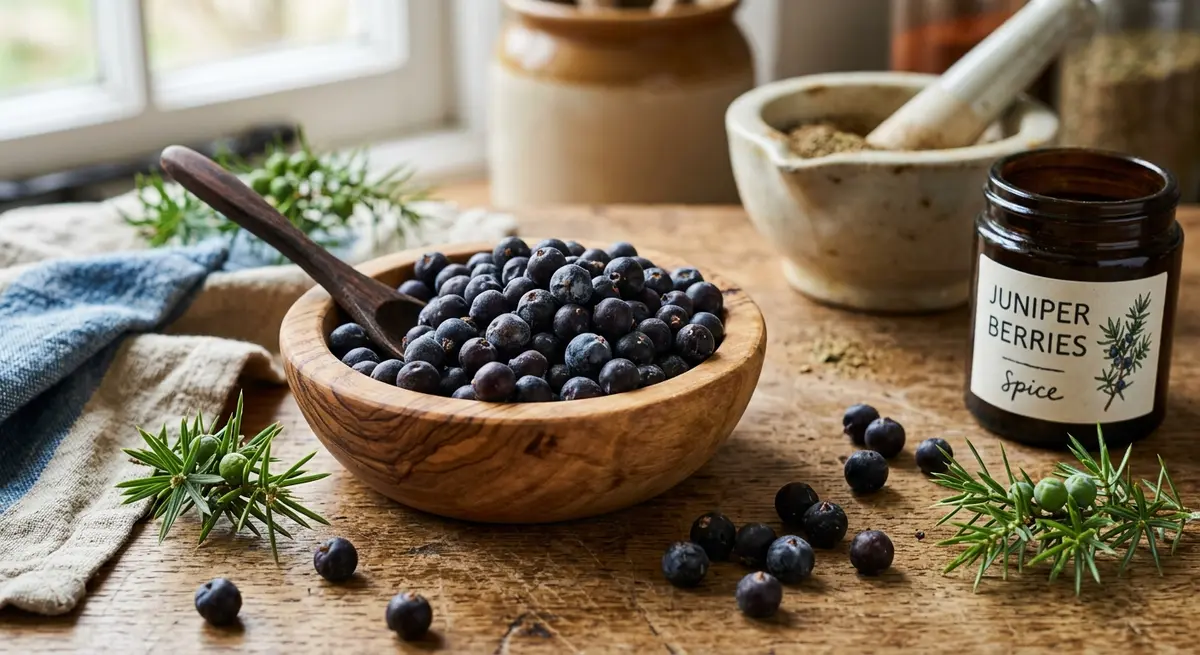
Juniper Berries: Flavor Profile, Health Benefits & Culinary Uses
Juniper is pine, resin, and a bitter bite in one tiny berry, the signature of gin and an essential subtle partner for game, pork, and winter cabbage.
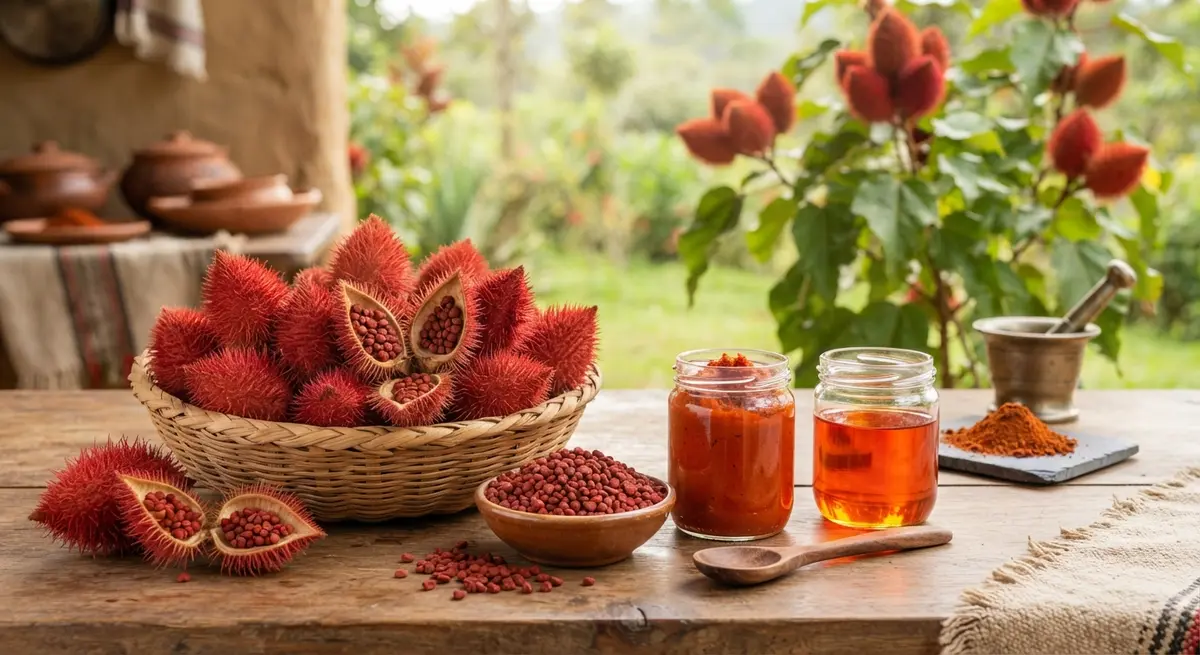
Achiote (Annatto): Flavor Profile, Health Benefits & Culinary Uses
Tiny coral-red seeds that paint food golden: the annatto tree's achiote, how to use the seeds and the Yucatan paste, and honest color substitutes.
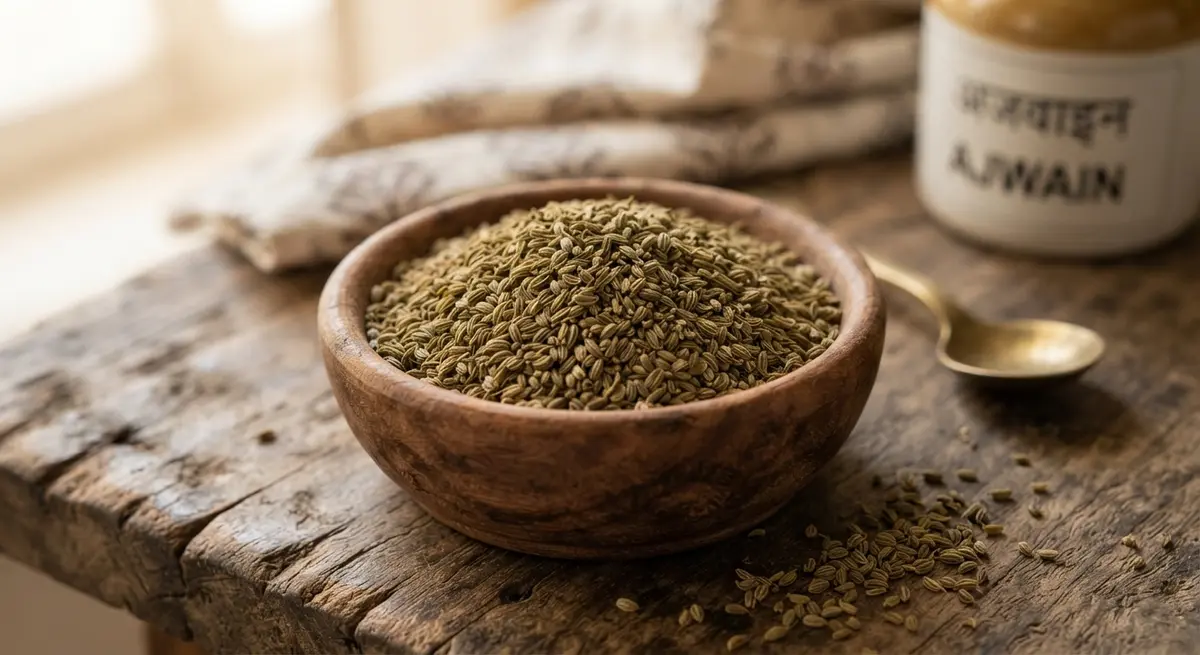
Ajwain (Carom) Seeds: Flavor Profile, Health Benefits & Culinary Uses
A tiny gray-brown seed that tastes like thyme, oregano, and cumin had a baby with a timer fuse. Here is how and why Indian kitchens use ajwain.
About the Authors
This recipe and guide was developed, tested, and approved in our home kitchen and daily life. Jamy is a retired Food Service District Manager and Early Childhood Program Manager who spent his career overseeing multi-site restaurant operations, large-scale culinary production, and daycare menu management. Kaïna brings the ultimate real-world test: making sure it brings ease and joy to our kids on a busy weeknight.
Read more about our professional background and philosophy →