Dukkah 101: How to Transform Simple Veggies with Egyptian Nut & Spice Crunch
By the QuiteRecipes team (Jamy & Kaïna)
Dukkah is the crunch you didn't know your vegetables were missing. I can't stop sprinkling it on everything.
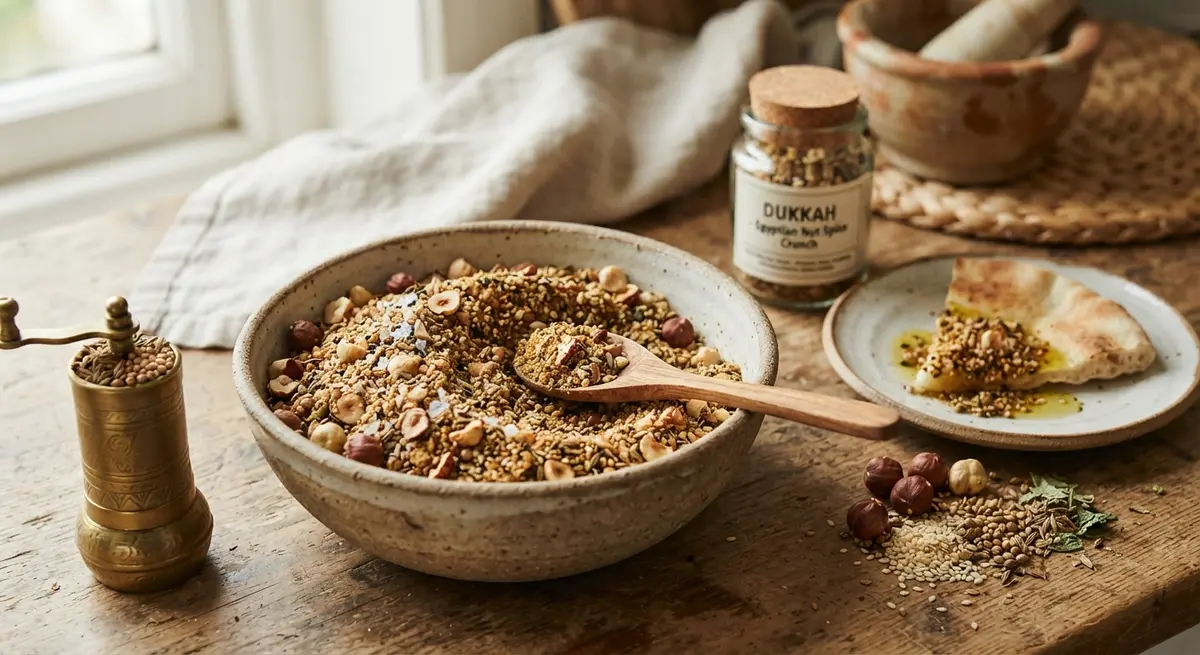
I met dukkah at a friend's table, served as a dip for olive oil and bread, and I understood in one bite why it's a snack tradition in Egypt. It's really just toasted nuts, seeds, and spices crushed into a crumbly, savory crunch. Mine never lasts a week in my house — I sprinkle it over vegetables, yogurt, and eggs until the jar runs dry. It's my favorite answer to the question of what to do with a tray of pale roasted vegetables.
What It Is & Where It Comes From
Dukkah (also spelled duqqa) comes from Egypt, where it's a beloved nibble and all-purpose garnish. At its heart it's toasted nuts — traditionally hazelnuts, though peanuts or almonds are common stand-ins — plus sesame seeds, coriander, cumin, salt, and black pepper. Many versions add dried mint or thyme. The whole point is texture: crushed coarsely, not powdered, so every bite lands with a little crunch.
The Blend: Ratios That Work
A reliable starting ratio is 1/2 cup hazelnuts, 3 tablespoons sesame seeds, 2 tablespoons coriander seeds, 1 tablespoon cumin seeds, and about 1/2 teaspoon each of salt and black pepper. Add 1 teaspoon dried thyme or mint if you like. Toast the nuts and seeds separately in a dry pan until fragrant and lightly golden, then toast the coriander and cumin just until they perfume the air. Cool everything completely, then grind in short, rough pulses — you want a crunchy rubble, never a paste or a powder. The whole kitchen starts to smell incredible, which is half the appeal of making it yourself.
How to Use It
The classic way to eat dukkah is to dip bread first in olive oil, then into the mix — but don't stop at the bread. Roll soft-boiled egg halves through it, or press it onto chicken before roasting. Sprinkle it over roasted vegetables, salads, or a bowl of yogurt with olive oil. Add it at the very end so the crunch survives the journey to the table.
Variations & Storage
No hazelnuts? Almonds or peanuts make a lovely, cheaper stand-in. Add smoked paprika or chili flakes for warmth, or swap the dried thyme for dried mint. Because the nuts carry oils, dukkah does best in a small airtight jar in a cool, dark cupboard; use it within a month or two for maximum crunch.
FAQ / Quick Facts
- Is it dukkah or duqqa? Both spellings are used for the same Egyptian nut-and-spice crunch; you'll see both on packages and menus.
- Should it be fine or coarse? Coarse — it's meant to be a crunchy rubble, not a smooth powder, so resist over-grinding.
- How is it classically served? Bread dipped in olive oil, then dragged through the dukkah — that's the traditional move.
- How long will it keep? About a month or two in an airtight jar; the nuts' oils are the first thing to turn stale.
Related Articles
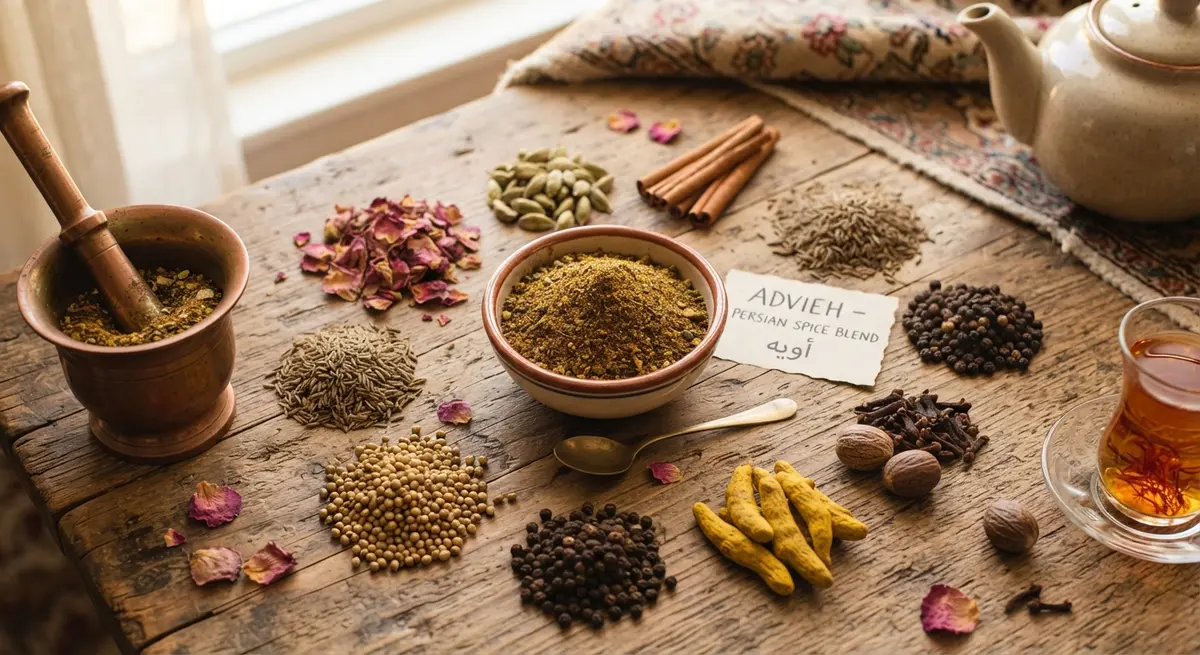
Advieh: Exploring the Aromatic Spice Blends of Persian Cuisine
Cinnamon, cardamom, turmeric, and rose petals in one jar? That is advieh, the Persian blend that turns plain rice into an occasion.
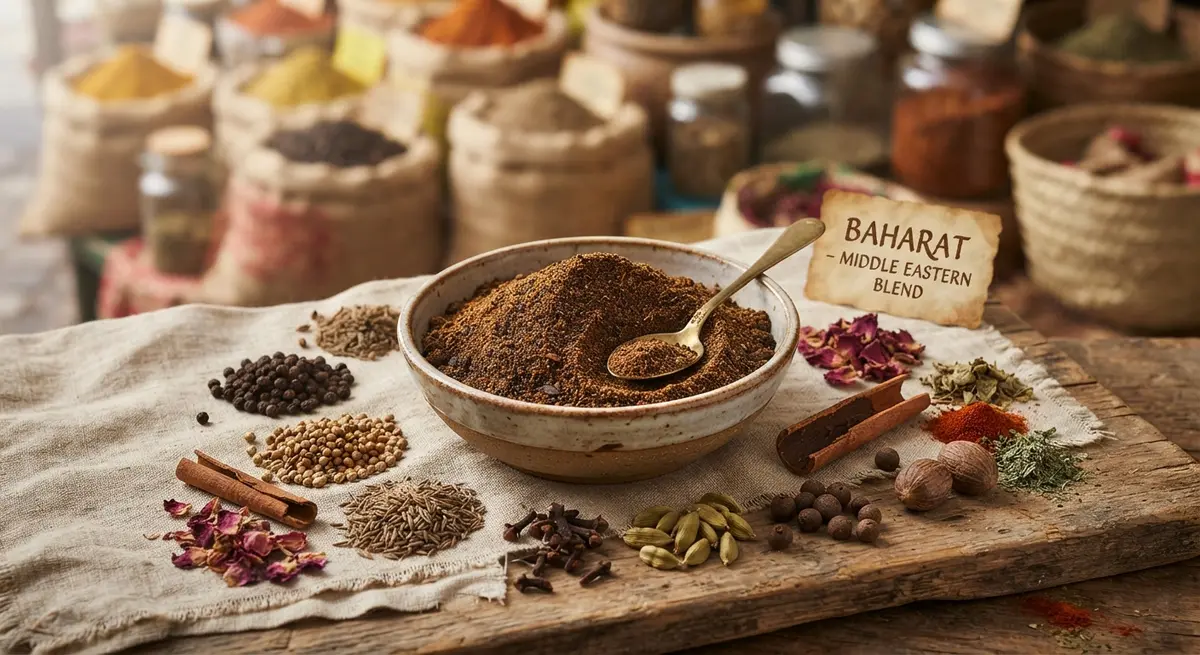
Baharat: The Warm Middle Eastern Blend That Elevates Any Meat Dish
Baharat simply means spices in Arabic, and once you balance the warm ones, it becomes the perfumed hand that lifts your whole plate of meat and rice.
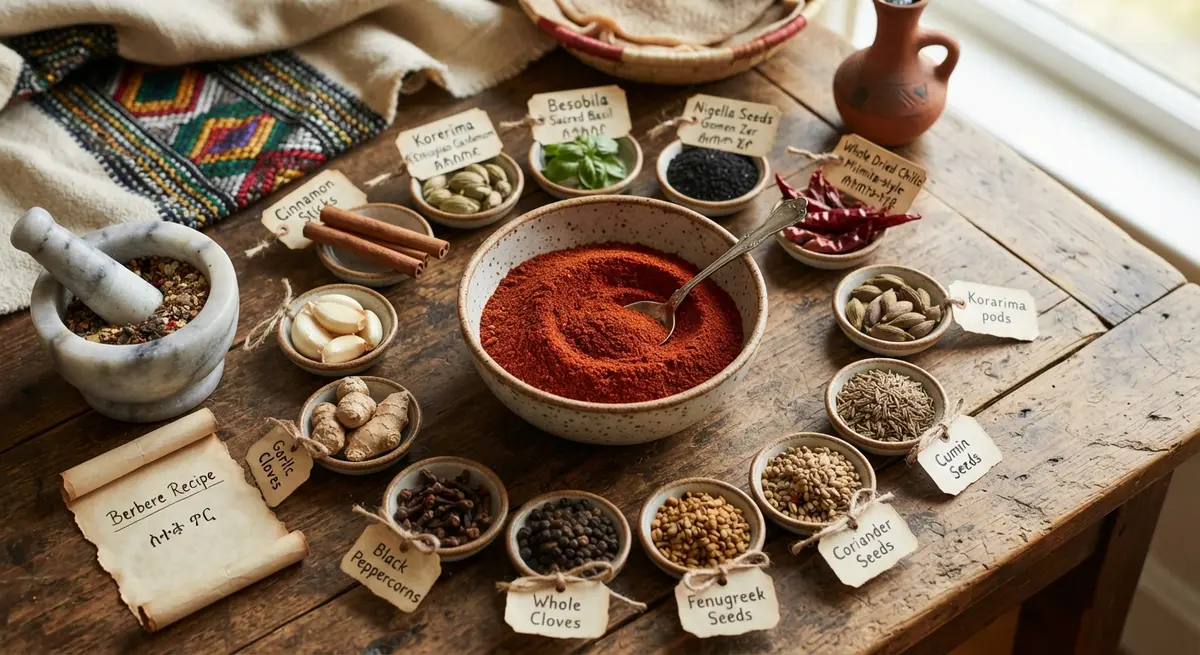
Berbere: The Fiery, Complex Ethiopian Spice Blend Explained
Berbere is the heartbeat of Ethiopian stews like doro wat. Once you blend it, a spoonful of oil turns a plain onion into dinner.

Blackened Seasoning: How to Get That Crust Without Burning Your Spices
I ruined my first three attempts at blackening before I learned the technique matters more than the mix. Now I get that crust every time.
About the Authors
This recipe and guide was developed, tested, and approved in our home kitchen and daily life. Jamy is a retired Food Service District Manager and Early Childhood Program Manager who spent his career overseeing multi-site restaurant operations, large-scale culinary production, and daycare menu management. Kaïna brings the ultimate real-world test: making sure it brings ease and joy to our kids on a busy weeknight.
Read more about our professional background and philosophy →