The Ultimate Guide to Descaling Your Coffee Maker
By the QuiteRecipes team (Jamy & Kaïna)
Limescale quietly ruins coffee flavor and slows brewing. Here's the chemical-free descaling routine I use at home and in professional kitchens to keep machines running like day one.
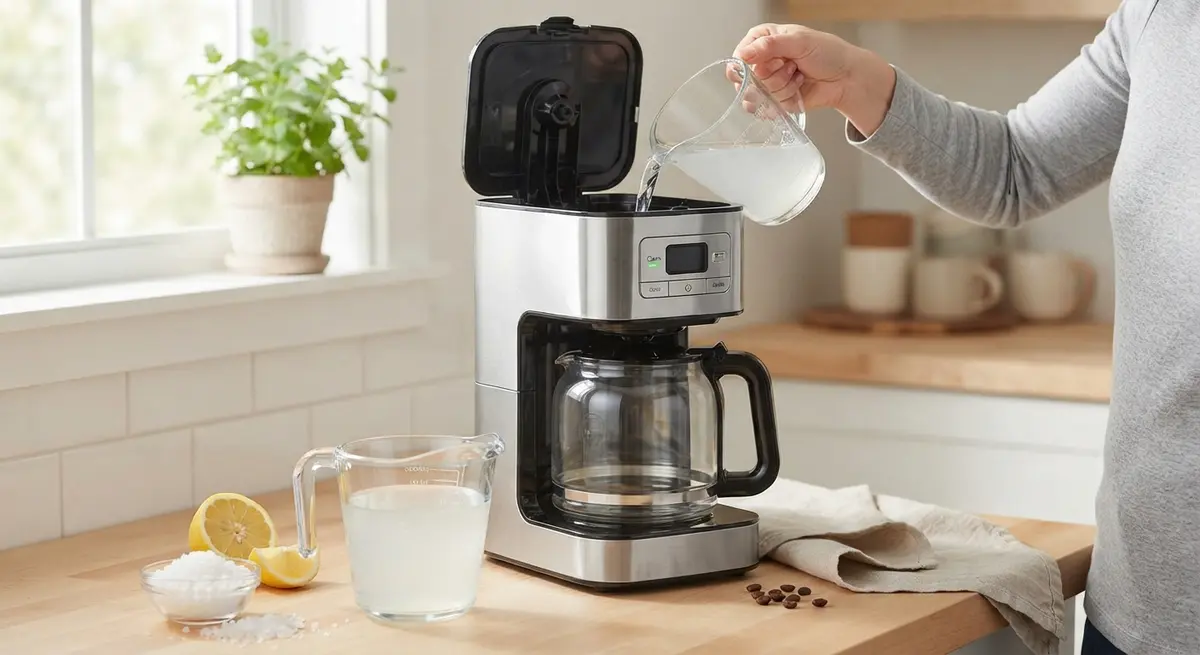
I remember the exact cup of coffee that made me finally descale my home drip machine. It was a Tuesday morning, I was running on four hours of sleep, and I poured myself what should have been a small mercy — and it came out in a thin, weak trickle that took three minutes to brew a single cup, tasting faintly of old pennies. I opened the water reservoir, looked inside, and saw it: a ring of chalky white scale, like a geode growing around the fill line.
Here's the uncomfortable truth: coffee makers are four-dollar plastic mugs held together by plumbing. Every time you brew, hot water leaves behind scale — calcium and magnesium that precipitate as the water heats. It's the same chalk you see on bathroom faucets, and it does three things: it slows the flow, it dulls the temperature, and it lets stale mineral residue sit in the line between you and your beans. Roughly 78 percent of American tap water is at least moderately hard — most of us are brewing in a scale factory whether we know it or not.
The good news is that fixing it doesn't require a bottle of heavy-duty commercial descaler. My go-to descaling routine uses nothing harsher than pantry staples you already own: white vinegar or citric acid, water, and a little time. Let me show you the whole method.
Why Descaling Actually Matters
Let's be blunt: a scaled-up coffee maker doesn't just taste bad, it wastes your money. Here's what scale does, in order of seriousness:
- It ruins flavor. Scale buildup traps stale coffee oils and mineral film in the reservoir and lines. That "pennies" note in my Tuesday cup wasn't imagination — it was scale.
- It slows brewing. Scale narrows the internal tubing, so water crawls through and over-extracts or under-extracts your grounds, depending on the machine. My three-minute trickle was a textbook symptom.
- It shortens the machine's life. Calcium deposits act as insulation around heating elements, so the machine runs hotter internally to compensate, and that extra heat stress kills components early. A descaled machine can last years longer than an ignored one.
It's simple physics: heated water lets dissolved minerals solidify onto whatever warm surface they find — usually your boiler or heating tube. No beans can fix that.
Signs Your Coffee Maker Needs Descaling
You don't need a lab test to know when it's time. These four signs are the standard early-warning system, and more than one of them means today is a good day to descale:
- Your brew time has crept up. It used to take 4 minutes, now it takes 7.
- The coffee tastes flat, bitter, or metallic, even with fresh beans.
- You see white or off-white flakes in the carafe or on the bottom of your cup.
- Your machine is noisier than it once was, or steam comes out irregularly.
If you live with hard or very hard water, don't wait for symptoms. Treat descaling like an oil change: regular enough that you never notice the problem. For me, that's roughly monthly.
What Counts as "Harsh Chemicals" — and What to Avoid
The phrase covers most commercial descalers, which pair strong acids with synthetic additives. They work, but they have real downsides. On a budget, sensitive to chemicals, or just prefer gentler methods? You're not giving up performance — the pantry methods below use the same active ingredients professionals have relied on for decades.
Avoid these entirely:
- Bleach. It's not a descaler; it's a sanitizer, and residual bleach ruins coffee and can damage seals.
- Dish soap. Soap leaves a film that takes many brews to flush out, and it doesn't dissolve scale anyway.
- Drain cleaner or anything not explicitly food-safe. This should go without saying, but every year someone ruins a machine (and risks their health) with a plumbing product.
What works instead is a food-grade weak acid. White vinegar is the classic choice, and citric acid — sold as food-safe powder in the canning aisle — is the one I reach for most, because it leaves zero vinegar smell behind.
The Two Pantry Powerhouses
Let me introduce you to the active ingredients.
White vinegar. About 5 percent acetic acid, which dissolves calcium carbonate scale through a simple acid-base reaction. It's cheap, safe, and everywhere. The trade-off: it smells like a salad while the machine runs, and you need to rinse thoroughly to flush the taste and odor out of the lines.
Citric acid. The active acid in citrus fruit and the standard ingredient in most commercial descalers — the difference is you'll buy pure powder at roughly a tenth of the price. It dissolves scale as fast or faster than vinegar, with no lingering smell, which is why it's my first pick.
Either one does the job. Choose based on what you already have in the pantry.
My preference in one sentence: citric acid does the same job as vinegar with none of the smell. Keep a jar in the pantry and you'll descale on a schedule instead of dreading the aroma.
How Often to Descale — and the Variables That Change It
Frequency depends on your water and your machine type, not a fixed calendar:
- Soft water: every 3 months.
- Moderate or hard water: every 4 to 6 weeks.
- Very hard water: monthly, or before every big bag of beans.
- Espresso and pod machines: scale concentrates faster in these pressurized systems — treat them at the more frequent end of every range above.
If your tap water is genuinely terrible, the single best long-term move isn't more descaling — it's filtered water. Filling your reservoir with filtered or distilled water dramatically slows scale formation. Realistically, that's a habit, and habits need a trigger: I descale on the first of every month, and I run the cycle when I change my water filter cartridge. Pick your own anchor date.
The Chemical-Free Descaling Method: Step by Step
Here's the complete routine, from start to finish. Have on hand: white vinegar or citric acid, 4 cups of water, and 30 minutes of patience. I'll give the vinegar version first, then the citric variant.
Step 1: Prep the Machine
Remove the water reservoir if yours detaches, and take out any removable filter basket and carafe. Rinse the reservoir out with plain water to clear loose debris. Make sure the machine is unplugged before you touch anything around the heating element.
Step 2: Mix Your Descaling Solution
For vinegar: fill the reservoir with a 1:1 mix of white vinegar and cold water — for a standard 10-to-12-cup machine, that's about 4 cups total. For citric acid: dissolve 2 heaping tablespoons (about 25 g) of citric acid powder in the full reservoir of cold water and stir until fully dissolved.
The ratio that works for nearly every home machine: equal parts vinegar and water, or 2 tablespoons of citric acid per liter of water. More is not better — a stronger mix doesn't descale faster, it just wastes acid.
Step 3: Run Half the Cycle, Then Stop
Plug the machine in and start a normal brew cycle with no coffee in the basket. Let it run until the carafe is roughly half full, then turn the machine off and unplug it. This is the clever part: you want the hot solution to sit in the internal lines while it does its work, not just rush through.
Leave it for 30 to 60 minutes. For a heavily scaled machine, leave it overnight — the longer soak dissolves more scale with zero extra effort. Gravity and time are doing the scrubbing for you.
Step 4: Finish the Cycle
Plug it back in and let the machine run the rest of the reservoir through. Then refill with fresh cold water only, and run at least two full, empty cycles to flush every trace of acid out of the lines. If you used vinegar, run three full rinse cycles — you want the next cup to taste like coffee, not a vinaigrette.
The number one reason people think pantry descaling "doesn't work" is a short soak. The acid needs contact time. Thirty minutes minimum, an hour when it's bad, overnight when it's terrible — the scale dissolves in proportion to the minutes it spends soaked.
Step 5: Finish the Outside
While the rinse cycles run, wipe down the machine's exterior with a damp cloth, and hand-wash the carafe, lid, and filter basket in warm soapy water. If the carafe has stubborn mineral film, add a splash of vinegar and a spoonful of baking soda, let it fizz, and rinse — it comes up like new.
Special Cases: Drip, Espresso, and Pod Machines
The core method is universal, but a few machine types deserve a caveat.
Drip coffee makers. This is the ideal case — the method above works as written.
Espresso machines. Scale concentrates in the boiler and group head, so run a descale cycle per the manual, then back-flush the group with clean water. If your espresso machine has a water softener built in, replace it on schedule; it's cheap insurance against scale.
Pod machines. Run the descaling solution through a full cycle with no pod in place, then run two or three water-only cycles. Pod machines recirculate hot water, so scale builds up fast. Follow your model's prompt if it has a descale indicator light.
Kettles and pour-over kettles. The same vinegar or citric soak works: boil the solution, let it sit 30 minutes, rinse thoroughly. No filter basket involved, so it's the fastest win in the kitchen.
What To Do If Scale Is Really Stubborn
Every once in a while you'll descale a machine that's clearly been neglected for a year or two, and the first pass won't fully clear it. That's normal. Two fixes:
- Repeat the cycle. A second soak, a day later, often finishes what the first pass started.
- Check the small parts. Sometimes the scale you taste is living in the carafe, the lid gasket, or the reusable filter. Soak those removable pieces in vinegar for an hour and scrub with a soft brush.
If you're still getting flakes after two full descales, the scale may have permanently degraded the seals or the heating element. That's when it's genuinely time for a new machine — and a monthly descaling habit to protect it.
Frequently Asked Questions
Is white vinegar safe for all coffee makers? Yes, for standard drip, pod, and kettle machines. Some premium espresso machines specify their own descaler in the manual; if yours does, follow that recommendation over mine.
Can I use citric acid in a Keurig or Nespresso? Yes — 2 tablespoons per liter of water, run through a full cycle with no pod, then two rinse cycles. It's the same acid the official descalers use.
Does descaling with vinegar void my warranty? It shouldn't, but manufacturers vary. Vinegar and citric acid are the active ingredients in most food-safe descalers, and rinsing thoroughly keeps them compliant. When in doubt, use the manual's recommended product.
How do I get the vinegar smell out? Run at least two or three full water-only cycles. The smell comes from residual vinegar clinging to the lines; plenty of clean hot water rinses it away completely.
What's the difference between descaling and cleaning? Cleaning removes coffee oils and residue from surfaces with soap or a cleaning cycle; descaling removes mineral scale from the internal heating path with acid. You need both — soap doesn't touch scale, and acid doesn't touch coffee oil.
Will filtered water really prevent scale? Yes, meaningfully. Water filters that reduce hardness cut the minerals that form scale, so your machine needs descaling far less often. It won't eliminate the need entirely — distilled water is the only truly scale-free option, but it's impractical for most people.
Key Takeaways
- Descaling restores coffee flavor, speeds up brewing, and extends machine life — treat it as routine maintenance.
- The standard early-warning signs: slower brew time, flat or metallic taste, visible white flakes, and irregular steam.
- No harsh chemicals required: white vinegar (1:1 with water) or citric acid (2 tablespoons per liter) does the same job as commercial descalers.
- The secret is the soak: run half the cycle, stop, and let the solution sit for 30 to 60 minutes before finishing.
- Rinse thoroughly afterward — two full water cycles for citric acid, three for vinegar.
- Descale monthly for hard water, every 3 months for soft water, and use filtered water to slow scale formation in the first place.
The Bottom Line
That Tuesday cup of pennies-tasting coffee was a gift in disguise. It forced me to learn how scale actually behaves — how it accumulates silently in the warmest parts of the machine, how it degrades flavor long before it shows on the outside, and how a 30-minute routine with pantry staples brings a machine back from the brink.
My coffee has never tasted better than it did in the week after my first real descale. The flow returned, the flavor brightened, and that clunky mid-cycle pause disappeared. The only thing I regret is waiting for the symptoms instead of being preventive.
If your machine has been whispering for a while — slower brews, duller cups — don't ignore it. Run the citric acid cycle tonight. Thirty minutes from now, your next morning cup will tell you it was worth it.
And while you're giving your kitchen equipment the love it deserves, the same philosophy applies everywhere else: a well-maintained range hood, a properly seasoned cutting board, and a gleaming sink are what make cooking feel effortless. I've written guides to each of those too — because the best home kitchens are built on cared-for tools.
Published on 2026-08-13 by the QuiteRecipes team (Jamy & Kaïna).
Related Articles
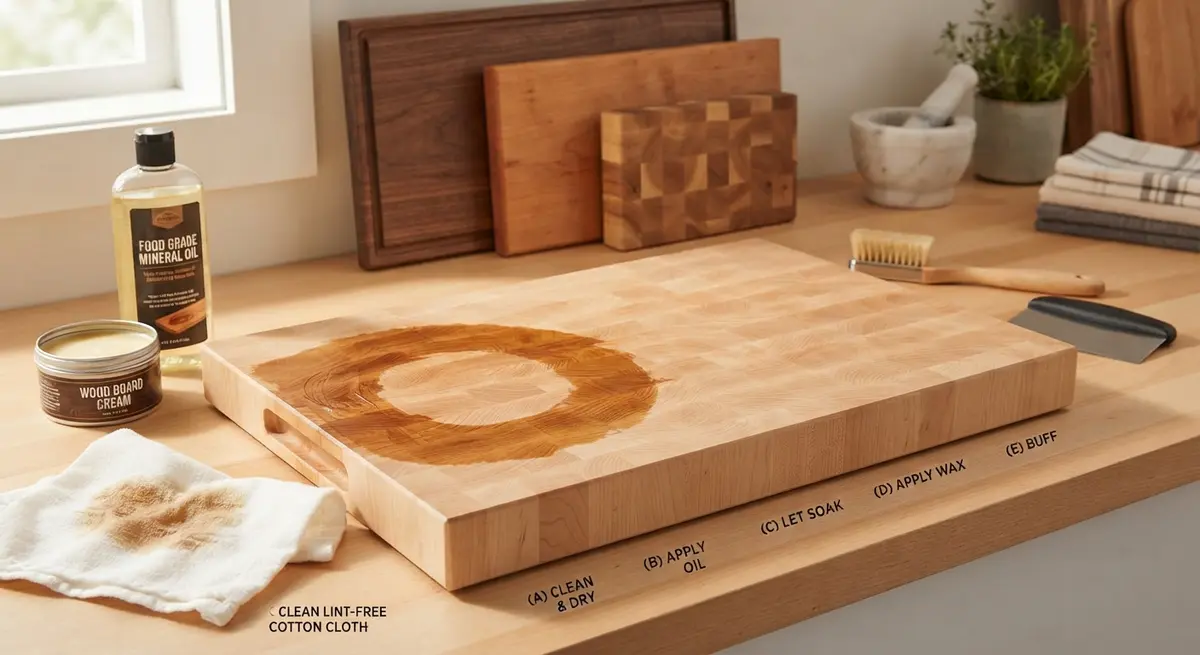
How to Season and Maintain Wooden Cutting Boards
A wooden board isn't fragile — it's forgiving, but not to neglect. With a simple oil-and-wax routine and a few honest habits, yours will stay gorgeous and safe for years.

5 Cozy Decor Ideas to Make Your Kitchen Feel Like Home
The coziest kitchens aren't magazine spreads — they're layered light, soft textures, living green, good smells, and room to gather. These five ideas make any kitchen feel like home.

7 Simple Space-Saving Hacks for Small Kitchens
A tiny kitchen can still feel open and work beautifully. These seven hacks — from vertical storage to multitasking tools — double your usable space without a renovation.
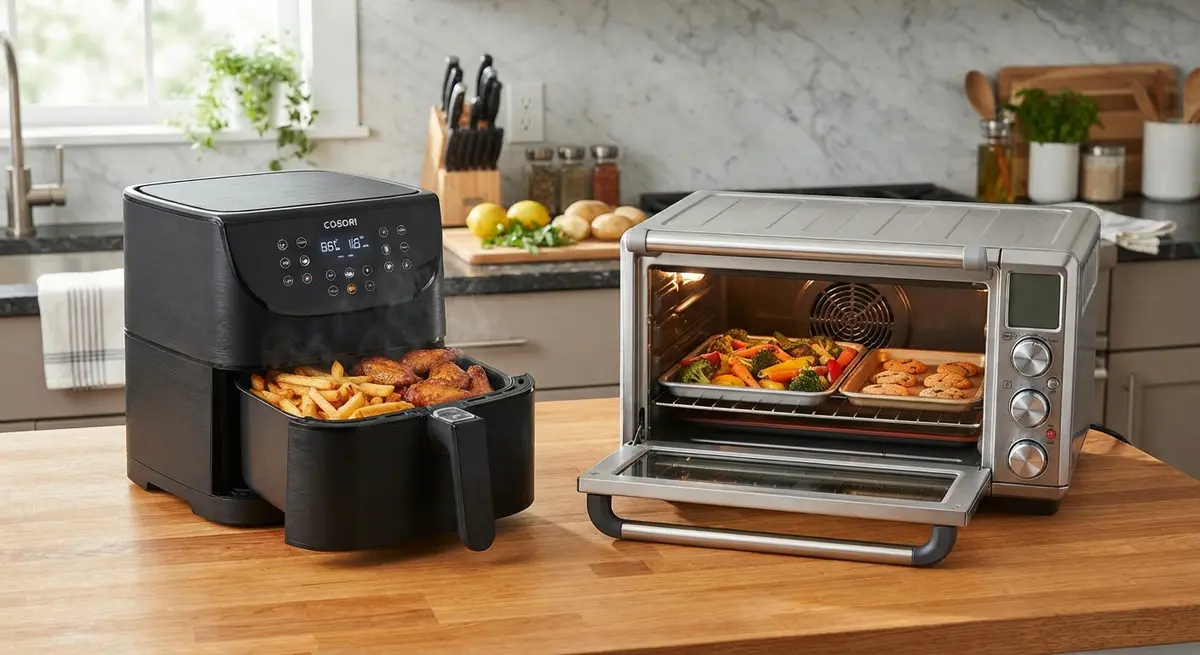
Air Fryer vs. Convection Oven: Which Earns Its Space?
An air fryer is a small convection oven with a built-in fan — but the differences matter. Compare speed, crispiness, capacity, energy, and price to decide what earns your counter.
About the Authors
This recipe and guide was developed, tested, and approved in our home kitchen and daily life. Jamy is a retired Food Service District Manager and Early Childhood Program Manager who spent his career overseeing multi-site restaurant operations, large-scale culinary production, and daycare menu management. Kaïna brings the ultimate real-world test: making sure it brings ease and joy to our kids on a busy weeknight.
Read more about our professional background and philosophy →