Spice Cabinet Goals: How to Label and Arrange Spices
By the QuiteRecipes team (Jamy & Kaïna)
The average spice sits in the cabinet years past its prime — and you'll never notice until dinner tastes flat. Here's how the pros label, sort, and stop buying cinnamon they already own.
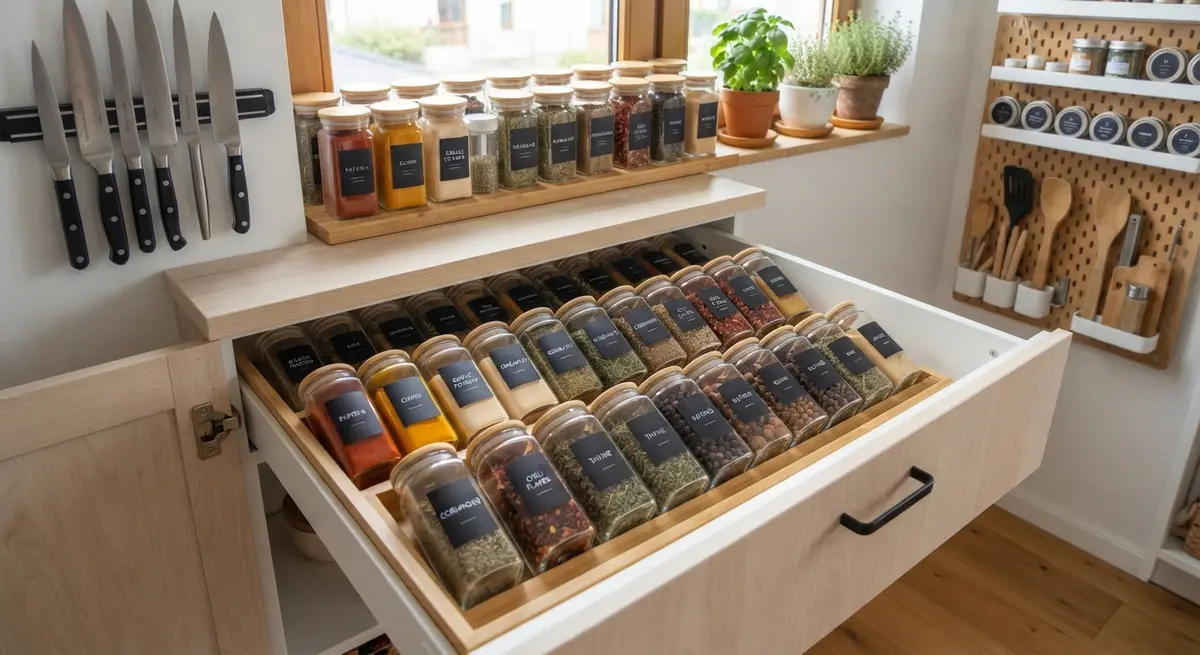
I want you to picture the exact moment most home cooks meet their spice collection: a jar. A cramped, overcrowded cabinet stacked with bottles of every height, where the cumin hides behind the rosemary and the paprika you bought twice sits buried under three other paprikas. You fish out a jar, shake it, sniff it, and shrug. Somewhere along the way your spices stopped being a tool and became a mystery pile.
I've been a professional cook for over a decade, and I can tell you the single most common kitchen complaint I hear from home cooks isn't technique — it's spices. The jar you can't find, the stale oregano you've been cooking with for three years, the $40 you spend restocking things you already own, hidden behind a barricade of identical-looking tins. And here's the frustrating part: the fix costs almost nothing. It takes one afternoon, about twenty minutes, and zero new purchases.
This is the exact system I use in my own kitchen and the one I set up in a dozen friends' kitchens after they saw mine. It's built on three ideas that professional kitchens rely on: sort, label, and arrange. Let me show you each step, and I'll include the mistakes to avoid — I've made all of them myself.
Why Your Spice Cabinet Is Costing You Money
Before the pretty part, the boring part that matters: your chaotic spice shelf is quietly stealing from you. Here's how.
- You're rebuying what you already own. The average kitchen holds duplicates — two cinnamons, three garlic powders — because nobody can see what's actually there. Each duplicate is money you've spent twice.
- You're cooking with stale spices. Whole spices last two to four years; ground spices peak around six months to a year and fade faster if they're near heat or light. A jar of ground cumin from 2019 is essentially expensive dust with pretensions. It adds nothing to your food.
- You throw away more than you use. When you can't find the cayenne you know you bought, you buy another cayenne, and the old one eventually hits the bin unopened.
The professional framing is simple: a spice is an ingredient, and ingredients earn their place. Every jar in your cabinet should be findable in under five seconds, readable in under two, and consumable while it still has flavor. Everything else is clutter.
The Purge: What Stays and What Goes
You cannot organize a collection you haven't audited. The purge is where the whole system starts, and it's freeing in a way that surprises people.
Pull every jar, tin, and sad little bag out onto the counter. All of it. Then run each one through three questions:
- Can I remember using this in the last year? If the jar is full, unlabelled, and vaguely unsettling, it's a donation or the bin. If you use it twice a year, it can earn a spot — but a small one, near the back.
- Does it still smell like a spice? Rub a pinch between your fingers and sniff. A fresh spice hits you immediately. A stale one smells like dust and does nothing. Ground spices past a year, in my experience, are usually gone; whole spices last far longer and can be revived briefly by toasting.
- Do I already have this? Pile up the duplicates. Keep the freshest of each, and mark the survivors with a date if they don't have one.
Be brutal about the "aspirational" spices — the saffron threads from the gift box, the garam masala you were going to cook with that one time. If you're honest with yourself, most home collections shrink by a third to a half at this stage. That reduction is the point: an inventory you can see beats an inventory that owns you.
The date rule I live by: the moment a jar enters my cabinet, it gets the date written on the lid or label. Spices are fresh from when they were ground, not from when you bought them — but "bought 2024" is infinitely better than "no idea." When in doubt, toss over a year for ground blends and about two years for whole seeds and dried herbs.
Pick a Zone That Makes Sense (Ditch the Door, Avoid the Stove)
Once you've got a workable inventory, the arrangement question comes next — and this is where people make their biggest mistake. Let me be direct about what not to do:
- Don't store spices above the stove or near the oven. The heat and steam degrade them faster than anything else in the kitchen. Within weeks, that paprika above the range will lose its color and depth. I keep mine as far from heat as the kitchen layout allows.
- Don't make the cabinet your first choice if you have a drawer. A shallow drawer with a fitted insert is the best possible home for everyday spices: slide it open, everything is visible at a glance, no jars stacked behind other jars. This is the single upgrade I recommend to nearly everyone.
- Do keep spices near where you cook. The spice rack looks gorgeous on the wall above the sink, but you'll use it more if it's within arm's reach of your prep area. Function beats decoration every single time.
If you don't have a spare drawer, a two-tier lazy Susan in the cabinet is my second favorite option — it turns the dark back corner of a shelf into visible, reachable space. And a small magnetic board on the side wall for the five spices you reach for daily is a surprisingly elegant solution if you have the wall real estate.
How the Pros Sort: Alphabetical Isn't the Goal
Here's the part that surprises most people: professional kitchens don't sort spices alphabetically, and neither should you. Alphabetical is tidy, but it requires you to know what you're looking for. The home kitchen works better when the arrangement matches how you actually cook.
I sort my everyday spices into groups by use. The groups I use:
- The daily drivers: salt, black pepper, garlic powder, onion powder, paprika, chili powder, cumin — the flavors of a million weeknight dinners. This is the top-priority row, the closest to your hand.
- The sweet set: cinnamon, nutmeg, allspice, cloves, ginger, vanilla powder, cardamom. Used for baking and coffee drinks, so they can live in a second row or a separate area.
- The herbaceous: dried oregano, basil, thyme, rosemary, parsley, bay leaves. Great for sauces, roasts, and Italian.
- The warm and earthy: cumin (if not in daily drivers), coriander, turmeric, curry powder, garam masala, smoked paprika — your stews, curries, and braises.
- The kick: cayenne, crushed red pepper, chili flakes, wasabi powder, anything hot. Keep the hot stuff slightly out of the direct-flying-powder path; I learned that lesson the hard way with a cinnamon-and-chili mix-up once.
- The specialties and the obsessions: za'atar, sumac, fennel seed, dill, smoked salt, any oddball that earns its keep on specific dishes. These get a lower-priority shelf so they don't crowd the everyday row.
Within each group, arrange by height so nothing hides behind anything else. Tall jars at the back, short at the front. That single habit — "follow the shoulder line" — does more for findability than any label ever will.
The Labeling System That Actually Works
Labels are the soul of the whole operation, and I've settled on the one that works after trying basically everything. Here it is in five rules:
- Big, bold names, read top-down. The biggest mistake is printing a label the size of the jar itself, so you read the list of ingredients instead of the name. Your label should say one word in large type: "OREGANO." Readable while standing upright, from the drawer, in bad light, at a distance of arm's length.
- Two-line labels on the lid. Top of the lid: the name in capitals. Side of the jar: the same name and a date. You'll read the lids when everything is stacked; the sides when it's lined up. Both are worth labeling.
- One handwriting or one font. I use a $10 embossing label maker because it's fast and uniform, but a Sharpie on painter's tape is genuinely fine. What matters is consistency — a mix of label styles turns the drawer back into chaos.
- Include a date, always. The "bought on" date goes on every jar. It doubles as your freshness alarm: when you see a year-old jar, you know it's replacement time next shopping trip.
- Group labels with visual color coding — lightly. A small dot of colored tape for "hot" (red) or "baking" (blue) helps if you have kids or a lot of jars. But don't go color-crazy; the name is what you'll actually read.
The label I keep coming back to: "NAME / DATE" on the lid, printed in a tall sans-serif, and not much else. Fancy hand-drawn herb illustrations are charming for Instagram but terrible for finding cumin at 6:30 on a Tuesday. Clarity is the whole game.
Arrange It: The Two-Minute Rule
Once the labels are on, the final arrangement has one test: can you put your hand on any spice you own in under two minutes, cold, without opening your eyes much? That's the whole goal.
Here's the arrangement I recommend, top to bottom or front to back:
- Row one (closest to hand): the daily drivers in a labeled organizer or shallow tray. These get the prime real estate because they're the ones you touch every day.
- Row two: the cuisine groups you reach for weekly — the herbaceous set, the sweet set.
- Row three and back: the specialties, plus anything you use monthly or less, plus whole spices you bought in bulk.
- A dedicated "bulk" spot: whole spices, peppercorns, and big containers of frequently-used blends go in a separate labeled storage area so they don't crowd the daily drawer. I keep a small airtight jar of whole cumin and one of whole coriander in there — I toast and grind them when I want heat and complexity.
Two extra setup moves that make the whole system hold up:
- Use a drawer insert. A plain wooden or plastic divider grid costs about $15 and turns a slippery drawer into fixed lanes. This is the single biggest visual upgrade you can make — I'd buy the insert before I'd buy a single fancy jar.
- Standardize the jars. If you have matching small jars (about 30 to 60 mL / 1-2 oz) for your ground spices, the drawer looks calm, labels align, and the shoulder-line rule actually works. Transferring is a twenty-minute job once, and it pays you back every single time you open the drawer.
The Fridge-Free Storage Rules
Spice storage is a humidity and light game. Here are the non-negotiables I follow and the commonly-believed-but-wrong ideas to skip.
- Keep them out of direct sunlight and away from the counter-top warm spots. A cool, dark, dry drawer beats a sunny glass jar display, every time.
- Don't leave them out on the counter in open jars. They look great on the tool in a restaurant kitchen because professional kitchens burn through them fast. Home kitchens don't — in the open air their volatile oils leave within weeks.
- Don't refrigerate most spices. Fridge humidity and smells are worse than a dark drawer. The exceptions are paprika-based blends if you're in a hot climate (to slow color fading) and anything you open and then ignore.
- Do keep whole spices separate from ground. Whole spices hold flavor for years because their oils stay sealed inside. Grind as you need and you'll taste the difference immediately.
The one test worth doing: buy the freshest ground cumin you can find, and taste it side by side with your year-old jar. One has elite flavor; one tastes like warmed dust. That single comparison converts more people to proper spice care than any lecture I can deliver.
The Grocery-Run Workflow That Keeps It That Way
The best system on Earth decays in a month if you don't build maintenance in. Here's the tiny workflow I run, and it takes about sixty seconds per week:
- When you open a new jar, date it immediately. Before it goes into the drawer, the lid gets the month and year.
- When you buy a duplicate, merge or retire. Bring the old jar to the front of the drawer for the "use it up" row — or if it's ancient, retire it on the spot. Don't let a second jar join the party unless the first is almost gone.
- Every month, grab the dates. Spend thirty seconds scanning the drawer. Anything with a date past about a year for ground, two years for whole, goes on the "replace soon" mental list — and if you're honest, usually straight to the bin.
- Restock from a list, not from mood. Keep a running list of what's low, on the fridge or in your phone. Replace what's actually gone — not what you think might be gone based on the chaotic memory of last March.
I'll be honest that the maintenance is the part most people skip, and it's also the part that separates a one-time weekend project from a system that actually erases the "where's the oregano" hunt for good.
FAQ
How long do spices actually last?
Ground spices are best within six months to a year; whole seeds, peppercorns, and dried herbs last two to four years if stored cool and dark. Trust your nose more than the calendar — a spice that smells like nothing will taste like nothing.
Should I buy whole spices or ground?
Whole, if you cook with them regularly and don't mind ten seconds of grinding. They keep their oils locked away and deliver dramatically more flavor. For convenience, ground is fine for the daily drivers — just replace them on schedule.
Can I revive a stale spice?
Toast it. Dry-toasting whole seeds in a skillet over medium heat for a minute or two can bring back shocking aroma. For ground spices that are already flat, toasting helps a little but the honest answer is: replace it.
Is alphabetical really bad?
Not bad — it's just organized for the jar, not for you. Grouping by how you cook is faster in daily life. If alphabetical genuinely works for your brain, keep it. The important parts are the purge, the dates, and the labels.
Do I need matching jars to look professional?
No. I use a mix of glass jars and the original packaging. Matching jars look tidy and make labels line up sweetly, but they aren't the point — findability is. Upgrade to matching jars only if you genuinely enjoy the project.
Key Takeaways
- Audit everything first: toss what's stale, consolidate duplicates, and date every jar that stays.
- Store spices in a cool, dark place away from heat and light — not above the stove, not in the sun.
- Sort by cooking use, not alphabet: daily drivers nearest the hand, cuisines grouped, hot stuff separate.
- Label the lid and the side with a big readable name plus a date; consistency beats beauty.
- Use a drawer insert and a shoulder-line height layout so nothing hides behind anything.
- Date jars as they arrive, merge duplicates, and restock from a list — maintenance is the whole game.
A Cabinet That Cooks With You
I remember the first time I did this in my own kitchen. The purge took an hour because I had to keep stopping to taste things and laugh at the archaeology — a "smoked paprika" with a powdery gray hue, a garlic powder jar that could have been from my neighbor's grandmother. By the end I had a drawer that looked small, because I'd thrown out half of what I owned. And then the strangest thing happened over the next month: dinner got better. Not because my cooking improved overnight, but because I was finally using the right spice at the right time, and I could find it in two seconds flat.
That's the real promise of a good spice cabinet. It's not a Pinterest room. It's faster dinners, stronger flavor, and the end of buying your third cinnamon. Empty one drawer, pull out every jar, and start. The system takes an afternoon, and your future Tuesday-night self will thank you every single time you slide that drawer open.
Published on 2026-08-13 by the QuiteRecipes team (Jamy & Kaïna).
Related Articles
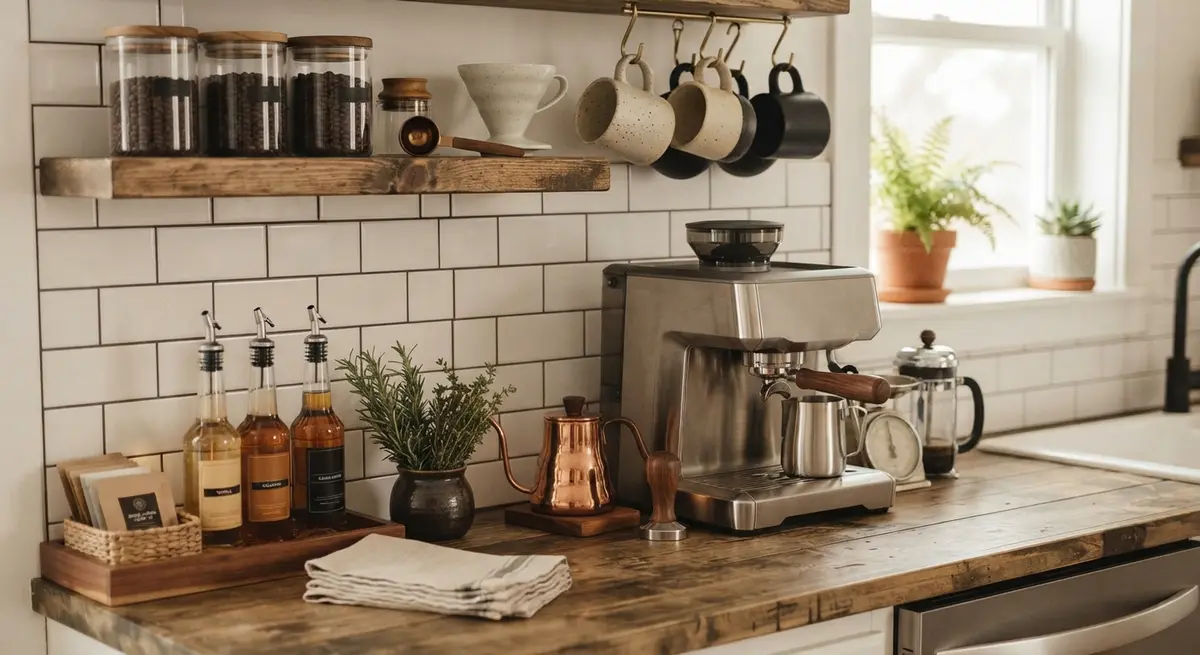
How to Set Up a Stylish and Functional Coffee Bar at Home
A perfect pour at 7 a.m. shouldn't require a hunt for the grinder. With the right gear, a tidy layout, and beautiful storage, your coffee corner becomes the best room in the house.
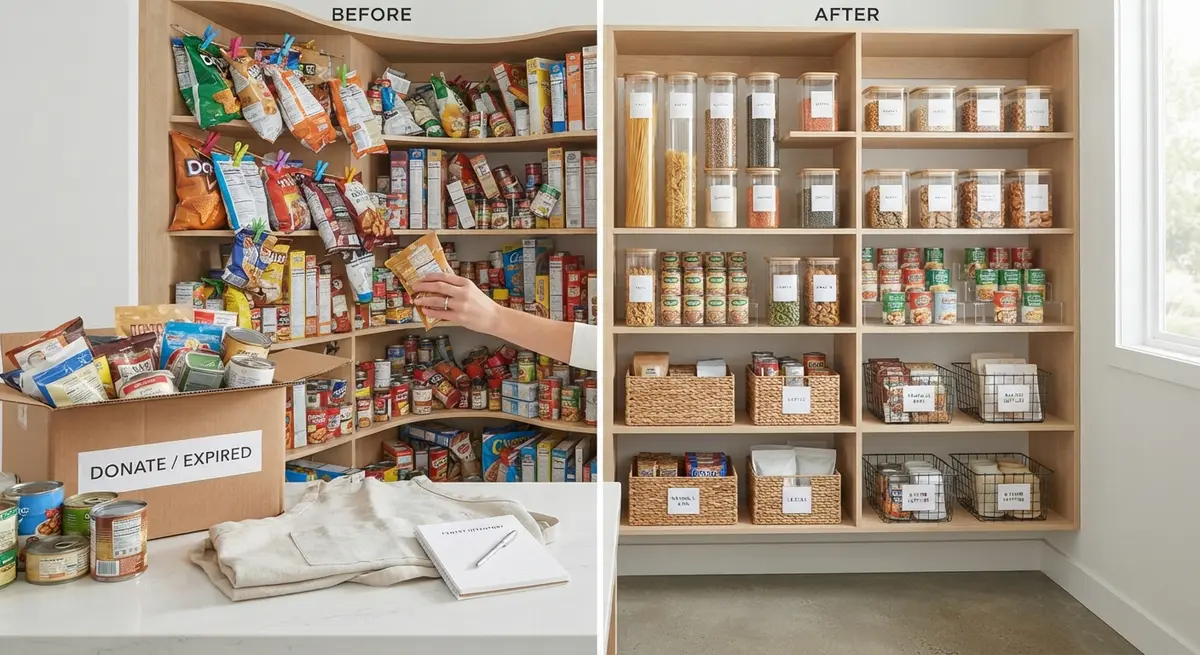
Pantry Reset: The Step-by-Step Cabinets Declutter Method
The pantry reset is a two-hour project that pays for itself all year. Empty everything, discard what's expired, zone by use, label clearly, and restock so dinner gets easier instantly.
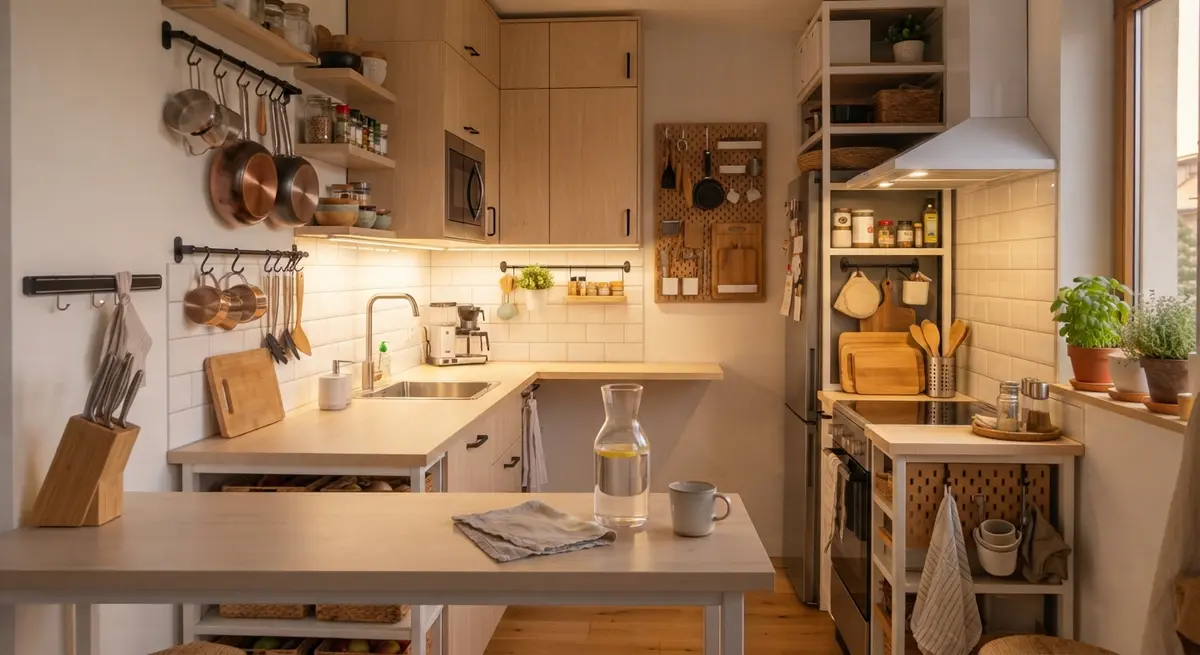
The Evening Kitchen Reset Habit That Will Change Your Mornings
Reset your kitchen in 20 quiet minutes tonight and wake up to a calmer, faster, more pleasant morning tomorrow. One habit, real change.
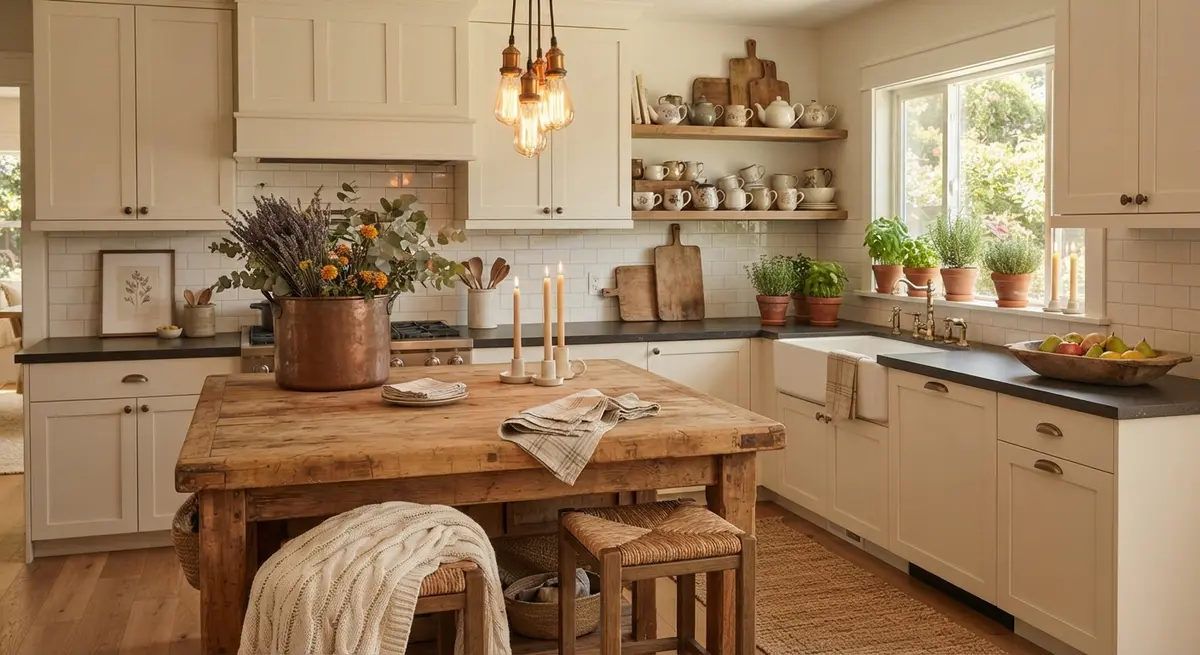
5 Cozy Decor Ideas to Make Your Kitchen Feel Like Home
The coziest kitchens aren't magazine spreads — they're layered light, soft textures, living green, good smells, and room to gather. These five ideas make any kitchen feel like home.
About the Authors
This recipe and guide was developed, tested, and approved in our home kitchen and daily life. Jamy is a retired Food Service District Manager and Early Childhood Program Manager who spent his career overseeing multi-site restaurant operations, large-scale culinary production, and daycare menu management. Kaïna brings the ultimate real-world test: making sure it brings ease and joy to our kids on a busy weeknight.
Read more about our professional background and philosophy →