How to Set Up a Stylish and Functional Coffee Bar at Home
By the QuiteRecipes team (Jamy & Kaïna)
A perfect pour at 7 a.m. shouldn't require a hunt for the grinder. With the right gear, a tidy layout, and beautiful storage, your coffee corner becomes the best room in the house.
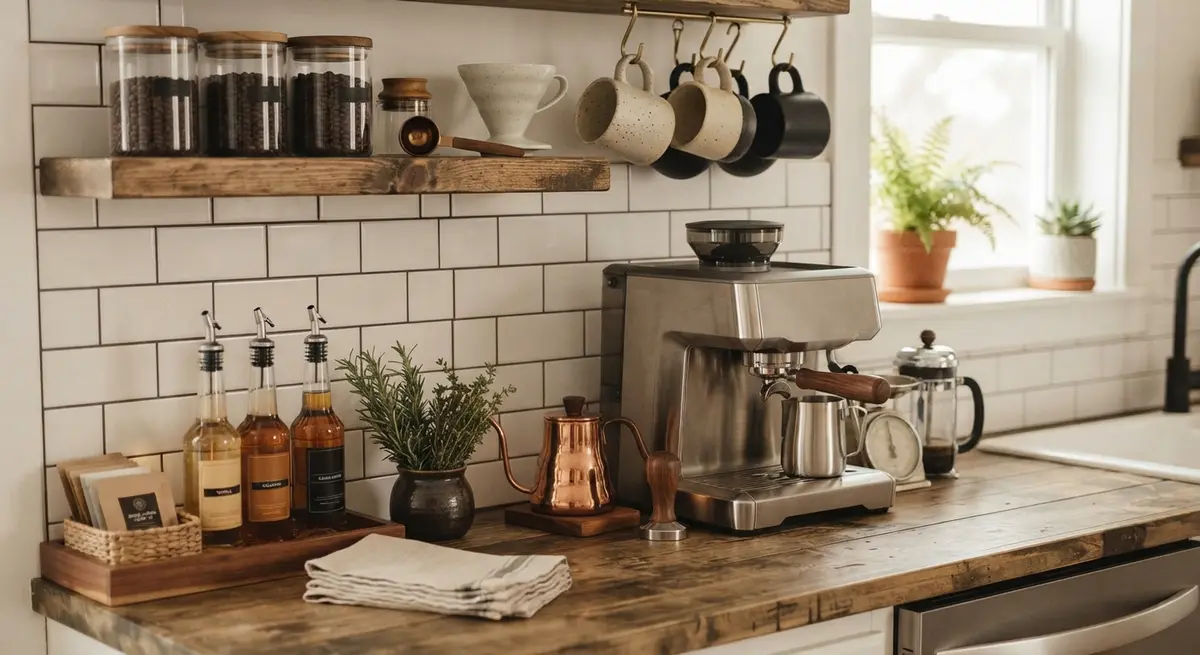
The morning I hit my breaking point involved a grinder on the floor, beans in three different bags, a scale buried under a cookbook, and a kettle that lived on top of the fridge because nothing else had room. I loved coffee. I was waging war with it every single morning.
So I built a coffee bar — not a café-porn fantasy with a $500 machine and a wall of syrups, but a small, honest corner where everything lived in reach. It changed my mornings more than any single gadget ever did.
The best part: a coffee bar is one of the easiest upgrades in a kitchen because it needs so little. A counter (or a slim cart), a few essentials, and a tiny bit of thought about flow. Here's exactly how to set one up — functional first, beautiful second.
The Essentials: Less Gear Than You Think
Before styling, get the function right. You can build a genuinely great coffee bar with five things:
- The brewer you actually use — pour-over dripper, AeroPress, French press, or a decent drip machine. Not all four. One.
- A grinder — burr grinder if you drink coffee regularly; it makes the freshest cup and only costs ~$50–80 for a good entry model. Blade grinders are a compromise but fine to start.
- A kettle — a gooseneck for pour-over control, or any electric kettle. One is enough.
- A scale — a cheap digital scale (accurate to 0.1 g) transforms consistency. Best-value "upgrade" in all of coffee.
- A cup or mug you love — the same mug every morning is a ritual, not a luxury.
That's the core. People fill coffee bars with fifteen gizmos because they think gear makes the café. It doesn't — flow and freshness do.
My test: if you can make tomorrow's coffee standing in one spot without moving, your setup is right. Two steps = acceptable. Three steps = it's a project, not a ritual.
Layout That Works: The Triangle Rule
Think of the bar like a tiny kitchen: you want the three activity points forming a small triangle.
- Point 1 — The beans and grinder. Where you start.
- Point 2 — The brewer. Where the magic happens.
- Point 3 — The kettle and your mug. Where it finishes and gets drunk.
Arrange them close — within a small arc of counter. You'll glance between grinder, brewer, and mug and never walk across the room mid-process.
If counter space is scarce, a slim rolling cart or butcher-block trolley becomes the whole setup: wheels mean you can park it near the sink for fills and near the window for daylight.
Storage That Wins (And Looks Good Doing It)
The storage is where most coffee corners either shine or become chaos. Rules I've learned:
- Beans must be visible and airtight. A clear, sealed canister with a valve, dated, within arm's reach of the grinder. Never store beans in a clear bag in sunlight (light + air = stale).
- Only what you use weekly on the bar. Reserve-stocked beans, backup bags, and syrups you rarely touch go in the pantry, not on the counter.
- One basket or tray for "the daily dust" — bean scoop, tamper, stirring spoon, extra filters. A single drawer or small tray contains the clutter.
- Vertical over cluttered: a wall shelf above the bar holds the pour-over, extra cups, and a couple of syrup bottles off the counter below.
The one habit that changes everything: coffee in "the bar" is seasonal; coffee in the pantry is the reserve. When the bar runs low, the pantry refills it. No more three-bag confusion.
Drinks Station: Milk, Sugar, and the Fine Details
A coffee bar that only makes black coffee is a purist's delight — but the rest of the household will wander in looking for milk and syrup. Give them a tidy home:
- Small milk and oat-milk bottles — labeled, nursery-cute, in the fridge, not piled in a shelf jumble.
- One small jar of sugar and one jar of sweetener (if anyone uses it) — separate, sealed, consistent.
- Syrups, if any, kept at ONE or TWO. A wall of syrups looks like a bar and functions like a dust collector.
The point isn't to ban milk and sugar (dear heavens, I love oat milk). It's to give everything one home so the corner stays calm.
The Cup Wall and the Mug Factor
The single most "styled" thing in a coffee bar is often the cup shelf — and rightfully so, because it's the part you look at while you wait.
My practical-stylish approach:
- A hanging rail or wall shelf for two or three daily mugs within arms reach.
- The "nice cups for guests" either displayed on a higher shelf or tucked above — pretty and daily-visible.
- One signature mug that's yours — the one you reach for without thinking. It seems silly until you miss it on a trip.
The rule: display what you use; store what you save for company. A wall of twenty cute dog mugs you never drink from is decor, not a coffee bar.
Style That Survives Real Life
You can absolutely make this corner gorgeous without turning it into a museum. My styling rules:
- A coffee bar mat (or a tray/runner) under the brewer to catch drips and define the zone. Bamboo, tile, or linen — wipeable is key.
- Warm light adjacent — a small lamp or under-shelf strip light near the bar makes the 7 a.m. moment feel like a ritual instead of a chore.
- One piece of life — a tiny jar of cinnamon, a pothos, a postcard. One. Not a shelf of knickknacks.
- Clutter belongs in the tray. The always-visible counter holds only the five essentials.
The whole design secret is edit. A café corner with three things and a mug is styled. A corner with nineteen things is a junk drawer with mood lighting.
Breadth Check: When the Bar Grows (Espresso, etc.)
If you graduate to an espresso machine, the same principles hold, with two additions:
- Give the machine its own zone — it's tall, it steams, it needs height on the counter or its own cart.
- Keep the grinder beside the machine cup-height, so it drops grounds directly in.
Everything else from this guide transfers: the essentials-first rule, the triangle layout, the daily-use storage, and the single-life edit.
The Coffee Bar You Can Actually Enjoy (Session vs. Everyday)
The best home coffee bar is the one that matches your reality, not the cafe's.
- If you drink one-or-two cups most days: the bar is a minimal ritual — grinder, brewer, cups, and beans within arm's reach of the water source. Speed, not spectacle.
- If you're hosting or brewing big batches: the bar grows a scale, a hot-water kettle, and a station for pour-over or a batch brewer, plus a set of mugs for the crowd.
- If it's a hobby and a joy: then the slow equipment — a lever machine, a hand grinder, milk pitchers, a scale — earns its counter because you want the session, not just the coffee.
Every home coffee bar is a tuned instrument; choose the one that makes your mornings effortless rather than the one that impresses on Instagram.
The Workflow Triangle: Beans, Water, Cups
Treat the bar as three zones and you'll starve the friction:
- The bean zone: grinder and bean vault close together; the least interesting thing that kills a bar is hunting for the grinder's hopper lid.
- The water zone: kettle and water source adjacent; the minutes lost filling a tepid kettle from two feet away are the quiet tax on every good morning.
- The service zone: mugs, saucers, and stirrers within easy reach of the pour; the drip-tray and a small towel live right there too, so cleaning is a wipe not a walk.
When the three zones align, the bar is a closed loop: grind, brew, drink, wipe. When they don't, it becomes a bottleneck of small, annoying steps.
The Maintenance That Keeps It Stylish
Even a stunning bar sours if the gear isn't cared for:
- Rinse the portafilter and wipe the drip tray after every session — coffee oil is the silent killer of machines, and a daily wipe prevents the weekly scrubbing.
- Descaling on a schedule — hard water in the machine is the fastest route to bitterness and failure; a monthly descale beats a repair shop visit.
- Grind the hopper clean and give the burrs a yearly service; stale grounds and dull burrs quietly wreck the flavor more than any bean choice.
- Refresh the milk pitcher and wipe down the counter at the end of the day, so the morning starts with a clean, beautiful stage.
The bar stays stylish through the ritual of care, not through ignoring it. Ten careful minutes a day keep it sparkling for years.
FAQ
Do I need a grinder, or is pre-ground fine?
If you drink coffee daily, a burr grinder is the single highest-impact upgrade you can make — freshly ground beans are dramatically brighter than even a week-old pre-ground bag. If you brew only occasionally, a hand grinder for ~$40 is perfect and takes up nothing.
What's the minimum counter space for a coffee bar?
About 45 cm of depth and 60 cm of width comfortably holds a kettle, brewer, grinder, and a mug. If you have less, a rolling cart gives you the full setup without a permanent footprint.
How should I store coffee beans?
Airtight, opaque or in a sealed canister, in a cool dark spot, away from the window and the stove heat. Buy beans in small amounts (about two weeks' worth) and date the canister. Freezing is fine long-term for reserve stock but not for everyday.
Where's the best place to set up a coffee bar?
Near the sink (for filling the kettle and rinsing) with a power outlet at hand, and ideally near natural light for a morning ritual. A quiet stretch of counter or a cart against a wall both work.
How do I keep a coffee bar from looking cluttered?
Edit ruthlessly: keep only the five essentials visible, contain the daily accessories in one tray, and rotate the pretty-but-rarely-used stuff to higher or pantry storage. A tray and a single decorative element do the rest.
Key Takeaways
- Start with five essentials: brewer, grinder, kettle, scale, and one mug.
- Arrange as a small triangle so you never cross the room mid-brew.
- Store beans airtight and visible; keep the weekly-use gear on the bar.
- Contain the clutter — one tray for daily accessories wins the styling war.
- Display what you use, keep the guest cups for later, add one living detail.
A Final Word
That first cluttered, grinder-on-the-floor morning feels like a decade ago. Now the bar is the first corner I actually look at when I walk into the kitchen — a clean arc of brewer, kettle, scale, and my one mug, with light falling on a jar of beans. It didn't cost a fortune and it didn't need renovation. It just needed a spot for everything, exactly like every other good thing in a kitchen. Set yours up this weekend, and make tomorrow morning the calmest coffee of the year.
Published on 2026-08-13 by the QuiteRecipes team (Jamy & Kaïna).
Related Articles
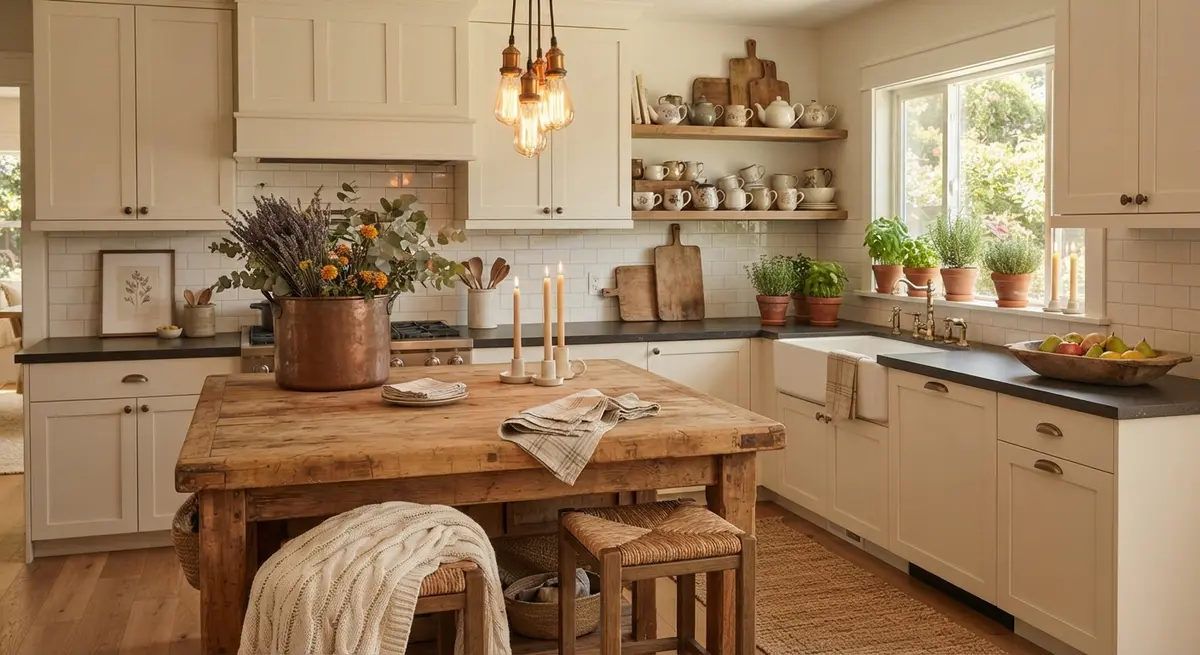
5 Cozy Decor Ideas to Make Your Kitchen Feel Like Home
The coziest kitchens aren't magazine spreads — they're layered light, soft textures, living green, good smells, and room to gather. These five ideas make any kitchen feel like home.
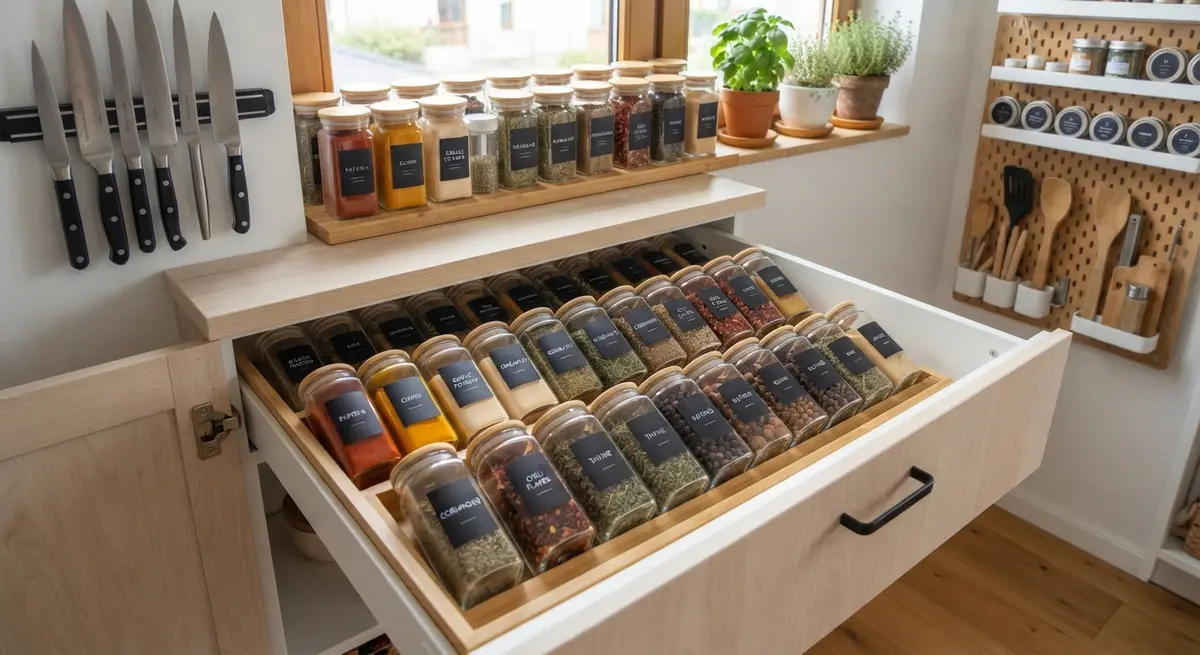
Spice Cabinet Goals: How to Label and Arrange Spices
The average spice sits in the cabinet years past its prime — and you'll never notice until dinner tastes flat. Here's how the pros label, sort, and stop buying cinnamon they already own.
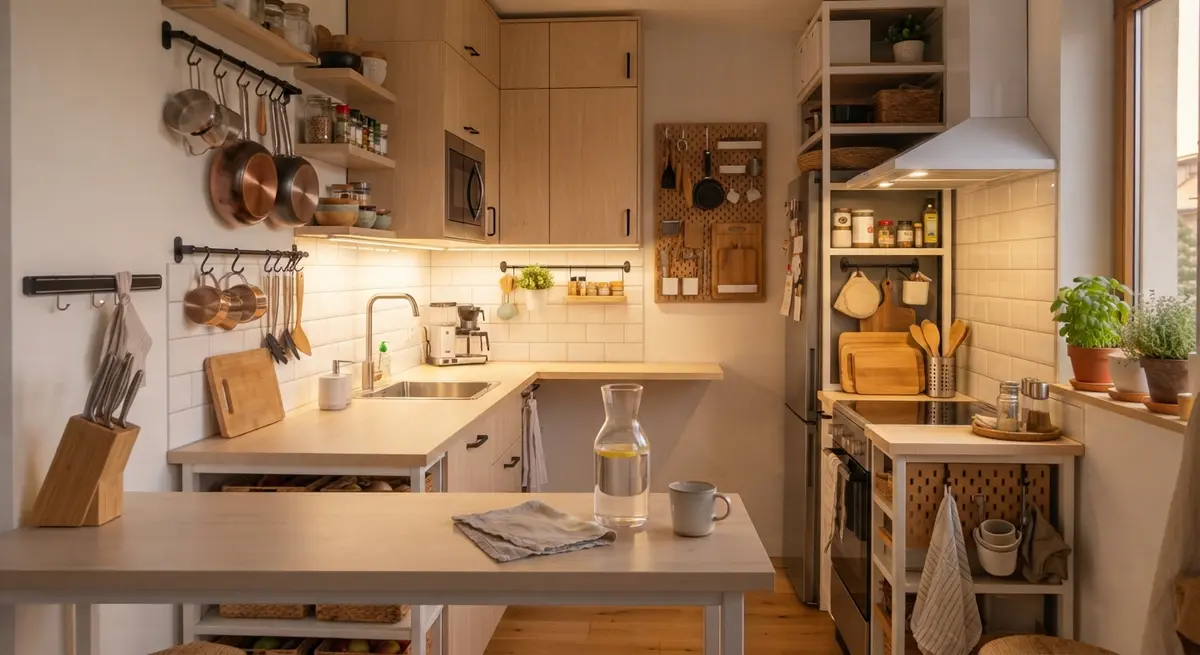
The Evening Kitchen Reset Habit That Will Change Your Mornings
Reset your kitchen in 20 quiet minutes tonight and wake up to a calmer, faster, more pleasant morning tomorrow. One habit, real change.

The Ultimate Brunch Guide: How to Host a Weekend Gathering at Home
Brunch is the easiest party to host — if you know the timing. A complete make-ahead brunch guide.
About the Authors
This recipe and guide was developed, tested, and approved in our home kitchen and daily life. Jamy is a retired Food Service District Manager and Early Childhood Program Manager who spent his career overseeing multi-site restaurant operations, large-scale culinary production, and daycare menu management. Kaïna brings the ultimate real-world test: making sure it brings ease and joy to our kids on a busy weeknight.
Read more about our professional background and philosophy →