Kitchen Linens 101: How to Choose and Care for Towels, Aprons, and Potholders
By the QuiteRecipes team (Jamy & Kaïna)
A great kitchen towel performs, and a great one lasts. Learn which fabrics to buy, how to wash and dry them right, and how to care for aprons and potholders so they serve you for years.
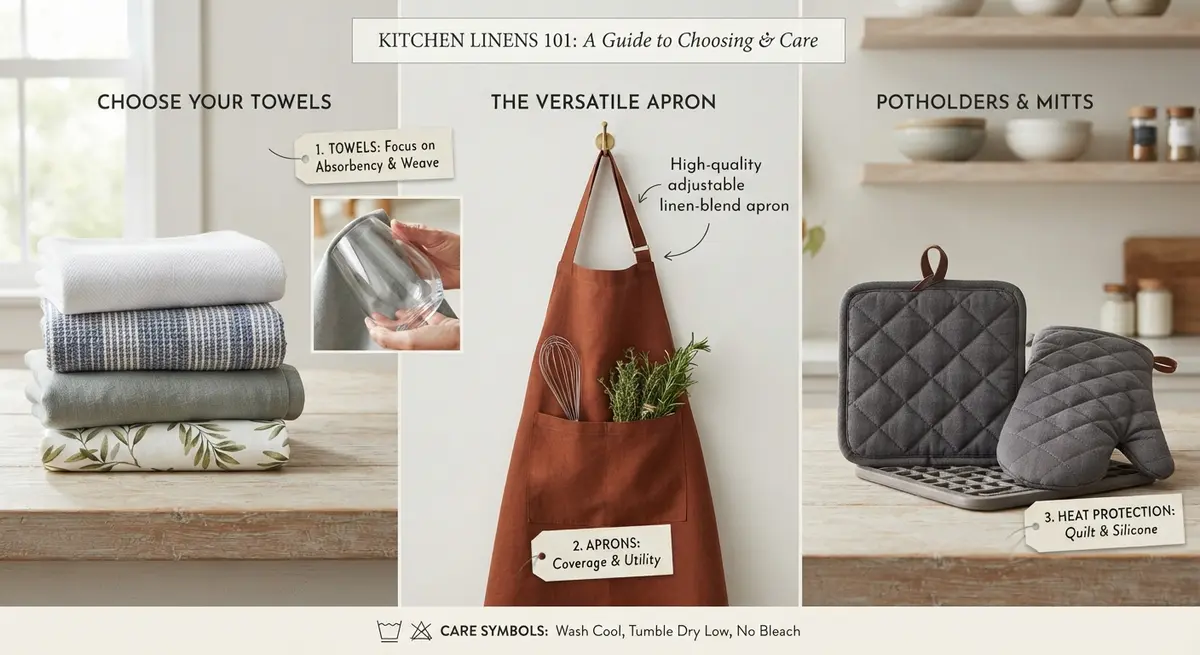
I once had a full drawer of kitchen towels that were all secretly useless. Thick, fluffy bath-towel style fabric that soaked up a spill and stayed wet for a day, insisted on leaving lint on the dishes, and grooved the glass. My potholders were stiff, scorched nylon squares that conducted heat straight to my palm. My one apron was a stiff, plastic-feeling thing that repelled flour, and my sleeve for the rest of the meal.
I treated kitchen linens as afterthoughts — until a chef friend gave me a reality check: the towel, apron, and potholder in my hand do more washing, wiping, folding, and protecting than any other soft good in the kitchen. And like all hard workers, they deserve to be chosen well and cared for right.
This is Kitchen Linens 101 — the honest guide to selecting the right fabrics, washing them so they last, and giving your towels, aprons, and potholders a long, useful life.
Why Fabric Choice Is 80% of the Battle
The right fabric changes everything about performance.
Kitchen towels should be:
- Highly absorbent — cotton or linen, waffle weave, or the classic plain-woven flour-sack cloth. They wick liquid, not bead it.
- Lint-free — especially for drying glassware. Fluffy towels shed; flat-woven cloths don't.
- Fast-drying — thin cotton dries overnight; thick pile holds moisture, smells, and grows bacteria.
Aprons should be:
- Durable and stain-showing (so you know when to wash), with adjustable neck and waist.
- Breathable — cotton canvas or twill; a synthetic "wipe-clean" apron is a trap that sweats against you and repels everything.
- Pocketed — one big pocket for the essential tools; useful, not vanity.
Potholders and mitts should be:
- Insulated — cotton or aramid (the stuff in fire gloves) construction, thick enough to stop heat.
- Not wet — a wet mitt conducts heat; always hang it to dry between jobs.
- Solid or easily washable — seams, not rivets; the heat-melted tip is the universal sign of a mitt that's done.
The biggest rule: the fabric you choose determines everything else. Pick thin, absorbent, fast-drying towels; breathable cotton aprons; and thick insulated potholders — then everything downstream is easy.
How Many Towels, and What Kind?
The classic professional kitchen carries three kinds of towels, and your home kitchen should too:
- The "flour-sack" or waffle towel for drying dishes and glass — thin, absorbent, lint-free.
- The general-purpose "bar" or terry towel for hands and counter messes — thicker, but swapped out once it's damp.
- A dedicated "food-contact towel" — the one you dry produce and handle bread with, kept separate from the greasy one.
A practical home set: 4–6 total towels, with at least one dedicated to the food-contact role. More isn't better; swap-and-wash is.
Washing Kitchen Linens: The Care That Keeps Them Great
Most linens "die" from neglect and mismanaged laundry, not use. Here's how to keep them alive:
- Wash hot — hot water (60°C+) gets the grease out and kills bacteria. If that's not possible, use the hottest your fabric tolerates and add a splash of white vinegar to the rinse.
- Skip the fabric softener — it coats fibers, reduces absorbency, and splits towels. A towel with softener may feel soft but drinks less. Let them be a little crisp.
- Treat stains fast. Grease and berry stains set hard; a little dish soap pre-treatment on the marks does wonders.
- Dry fully — the fastest rout to towel smell is dampness. Air-dry or machine-dry until bone-dry, and store fully dry.
- Rotate towels weekly — each gets rested (and washed) instead of living perpetually damp by the sink.
The pro habit: keep a small dedicated hamper or basket for kitchen linens at the laundry door, so they go in the washer fast and don't sit as a damp pile breeding smell.
Hands-Washing Zones vs. Washing Machine Rules
- Towels and aprons: machine-washable, hot, gentle-to-normal cycle.
- Potholders/mitts: check the tag — cotton and aramid pieces can be machine washed hot; pieces with plastic or foam inserts or glued padding must be hand-washed. Never machine-dry a plastic-backed mitt.
- Delicate or hand-wash items (embroidered, decorative): cold, gentle, low-heat or air dry.
The single most destructive thing you can do is machine-dry a mitt with a plastic or foam core — the heat melts it into uselessness. Read the tag, respect the core.
Drying and the "Fresh Air" Trick
Sun and air are free odor fighters:
- Hang kitchen towels to air-dry in the sun now and then — sunlight naturally bleaches and deodorizes.
- Vinegar in the rinse neutralizes kitchen odors that cling to linens.
- A truly fresh smell comes from clean-and-dry, not perfume. Skip the heavy fabric softeners and let the cloths smell like clean cloth.
Daily Rotation: The Hidden Secret to Long Life
The single most common mistake — and easiest fix — is letting one towel do every job until it's a stiff, smelly rag.
- Refresh the "in-use" towel daily. Pop the damp one in the laundry, hang a fresh one.
- Have a "dry zone" towel for glass and a "grab" towel for hands, and swap the hand towel more often in a busy kitchen.
- A potholder that's just been used for a hot pan hangs to cool and air — never folded damp into a drawer.
The metric-less truth: towels that are swapped and washed regularly last years and perform better the whole time. Rotation is the cheapest "maintenance" there is.
When to Retire a Linen
Everything ends. Signs a kitchen towel, apron, or potholder has earned retirement:
- Rag status — holes, threadbare thin spots, or a smell that won't come out even hot-washed. Retire it to the rag drawer.
- Mitt with a scorched or melted tip — it's lost insulation; retire it from heat duty (even as a pot-scrubber it has life).
- Stains that won't lift on a front-facing towel — send it to the back of the drawer or repurpose it for less visible work.
Retiring honestly is part of the system: a kitchen stuffed with retired rags performs worse than one with a few good cloths.
The Linen Drawer System (Assign Every Cloth a Job)
The linens that perform best have one job each, assigned and respected:
- The dish "dryer" — thin flour-sack or waffle cloths live near the dish rack for glass and plates only.
- The hand towel — near the sink, swapped the moment it's damp; the one guests actually use.
- The food-contact cloth — a dedicated, freshly laundered piece for produce, bread, and food handling, kept separate from greasy rags.
- The general-purpose wipe — the messy one, used on counters, spills, and stove fronts, and sent to the laundry hard.
When each cloth has an owner, no towel becomes the burdened catch-all that wears out fast and smells. Buy a set with color ranges or simple scaling: one of each per zone, plus a spare.
Repair Small Wear Before It Becomes Retirement
Linens are cheap to revive and expensive to replace, so catch the small stuff:
- Skip the iron-on plastic patches on the food-contact cloths — the seal cracks and sheds; better to keep the small hole and wash with the ragged ones.
- A tiny seam split on an apron is a 30-second hand-stitch — catch it before the whole pocket drops and you lose the tool that lives in it.
- A loosened button on a mitt is a needle-quick fix — hanging mitts on a peg snags buttons; resew with doubled thread and it's good for another year.
- Just-loose hems and stray threads on towels are signs to trim, not to mourn — a cloth that survives a year of use is doing its job.
Repair-then-retire is the system: patch the fixables, retire the honestly finished, and keep the drawer of linens full of performers, not has-beens.
Seasonal Rotation and the "Nice Set" Storage
Kitchens change with the year, so should the linens:
- Keep the "everyday" set in the work zone and the "nice set" for hosting in the china cabinet — pin the good linens there to keep them crisp and unused until the table needs them.
- Rotate patterns with the holidays — orange towels in harvest month, red in December, fresh white in spring; a single adjustable box of seasonal cloths refreshes the kitchen with next-to-no cost.
- Store the seasonal sets flat and unfolded when the drawer allows, and wash them before storage to avoid mildew smells greeting you six months later.
A small, curated selection that rotates beats a drawer that's full of everything and used by nothing. Assign, repair, rotate — and your linens serve years instead of months.
The Stain/Lint Balance: When Cotton Isn't the Answer
One honest exception to "all cotton":
- Microfiber is a superstar for glassware in the right role and a nightmare in the wrong one — it smears, sheds, and holds smells if misused. Reserve it for the dedicated "shine pass" and l-hanging.
- Linen dries faster and repels fuzz, at a higher cost — the premium splurge for the food-contact and glass cloth that will be used hard.
- Bamboo — quite absorbent but softer and less durable; a budget-ish compromise for the general-use towel that gets replaced often.
Every fabric trades one virtue for another; the winning system is a small, matched wardrobe of cotton flour-sack for the heavy work, linen for the delicate, and a micro cloth for the finish. The right cloth for the right job is why restaurants never use per craft towels.
The Real Cost of Wet Linens (and the Humidity Lesson)
"Wet" and "worn out" are the same step:
- Damp towels breeding bacteria aren't just smelly — the fiber load and ethnic of dampness degrade the cloth itself, shrinking it and splitting the weave.
- The hung-to-dry discipline — every cloth, once used, gets hung rather than folded into a pile. A pile of damp cottons is where odors are born and where washing has to work triple.
- In a humid kitchen, wash the load at the full hot setting — tepid water lets the musty microbiome set in the fabric and the smell returns the next morning like clockwork.
Wet linens are the enemy; hang and rotate them, hot-wash them, and the "smell that returns" problem mostly disappears by definition.
FAQ
What's the best fabric for a kitchen towel?
Thin, lint-free cotton — classic flour-sack cloths or waffle weaves are the professional standard. They absorb fast, dry fast, and don't streak glassware. Linen is a premium option that also performs beautifully.
Should I use fabric softener on kitchen towels?
No. Fabric softener coats fibers, reduces absorbency, and contributes to lint and odor. Skip it in favor of vinegar in the rinse for a natural fresh scent and a crisp cloth.
Why do my kitchen towels smell bad, even after washing?
Almost always dampness-plus-time or a buildup of grease and detergent residue. Wash hot with vinegar in the rinse, dry fully, and rotate them more frequently. If the smell is baked in, it's time to retire that towel to rag duty.
How do I make an apron last?
Choose durable, breathable cotton canvas or twill, wash it on normal (not heavy) cycles, treat stains fast, and hang it to dry fully. Avoid iron-on decorations that crack, and patch small holes early.
How often should I wash my kitchen towels?
Every 1–2 days in a busy household, or at the first sign of damp or smell. Rotate the in-use towel daily, keep clean backups hanging, and wash the load hot with a vinegar rinse.
Key Takeaways
- Choose thin, absorbent, lint-free towels; breathable cotton aprons; insulated potholders.
- Keep three towel types: dish-drying, general-purpose, and food-contact.
- Wash hot, skip the fabric softener, treat stains fast, dry fully.
- Respect the potholder tag — never machine-dry a foam- or plastic-cored mitt.
- Rotate daily and retire honestly; a few great cloths beat a stuffed rag drawer.
A Final Word
The day I replaced my fluffy, lint-shedding towels with a set of proper flour-sack cloths, drying a glass stopped being an exercise in streak-removal. And the day I switched to a breathable cotton apron, cooking stopped being a humid, stiff ordeal. It didn't cost a fortune — it cost choosing the right fabric once. Give your kitchen linens that one-time upgrade, wash them by the rules above, and they'll be the quietest, best-behaved workers in your kitchen for years.
Published on 2026-08-13 by the QuiteRecipes team (Jamy & Kaïna).
Related Articles
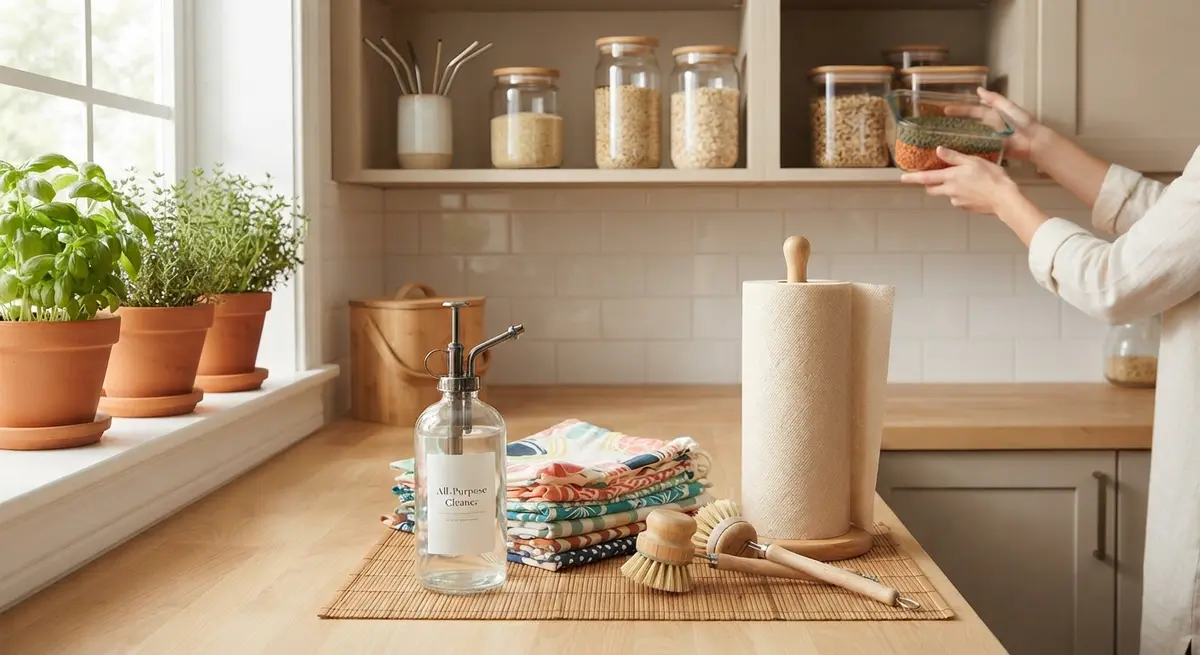
Easy Swaps to Make Your Kitchen More Eco-Friendly Every Day
Going greener in the kitchen doesn't mean a full zero-waste conversion. These small, daily, budget-friendly swaps genuinely cut waste, energy, and cost — without the guilt trip.
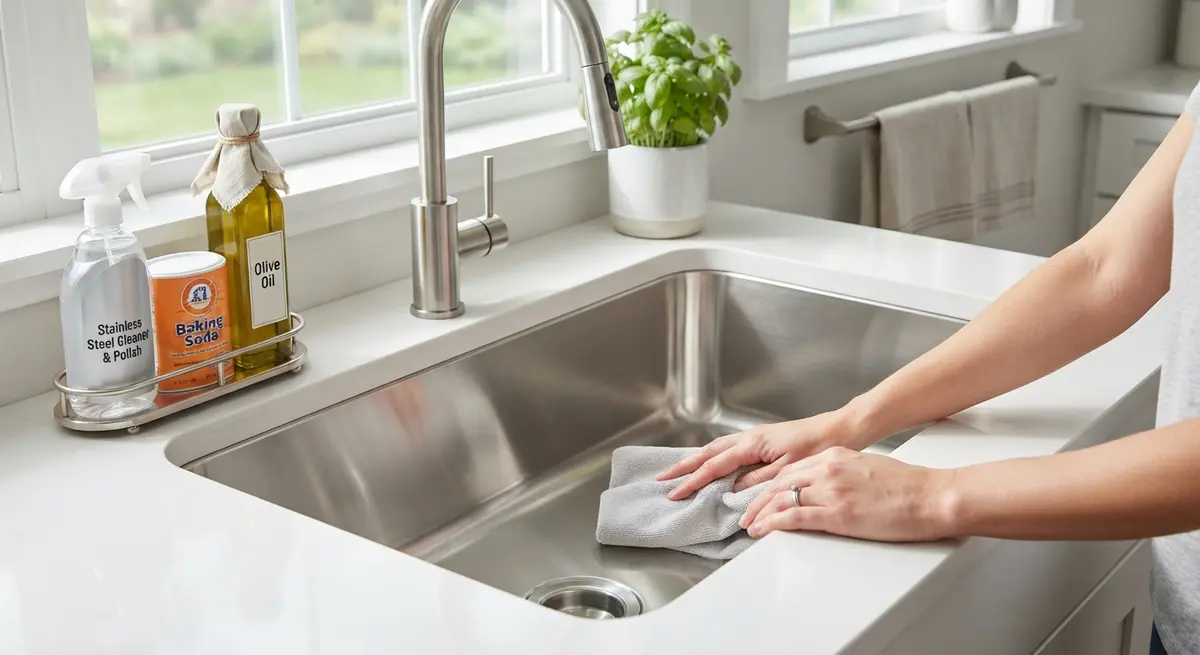
How to Make a Stainless Steel Sink Shine Like New
A stainless steel sink isn't supposed to look water-spotted. With the right wipes, the right direction, and one pantry ingredient, you can restore that mirror finish in minutes.
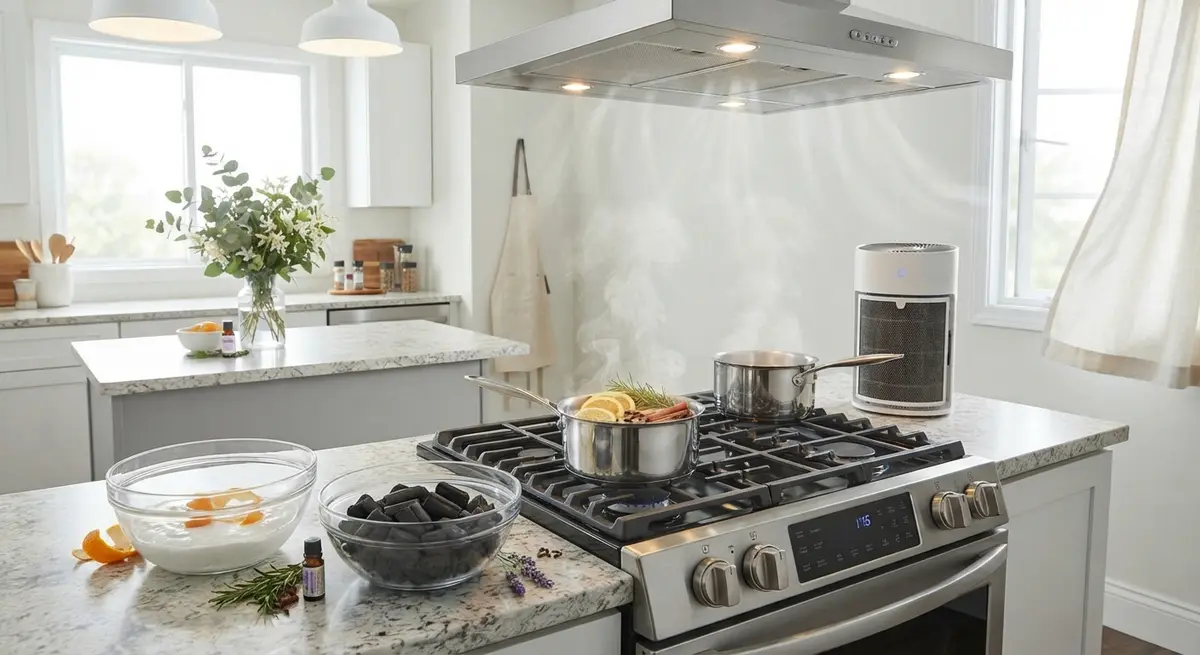
How to Quickly Get Rid of Cooking Odors in Your House
Tonight's fish smells like tomorrow's problem — until you know the trick. Neutralize cooking odors fast with baking soda, vinegar, proper ventilation, and the order that actually works.

5 Cozy Decor Ideas to Make Your Kitchen Feel Like Home
The coziest kitchens aren't magazine spreads — they're layered light, soft textures, living green, good smells, and room to gather. These five ideas make any kitchen feel like home.
About the Authors
This recipe and guide was developed, tested, and approved in our home kitchen and daily life. Jamy is a retired Food Service District Manager and Early Childhood Program Manager who spent his career overseeing multi-site restaurant operations, large-scale culinary production, and daycare menu management. Kaïna brings the ultimate real-world test: making sure it brings ease and joy to our kids on a busy weeknight.
Read more about our professional background and philosophy →