How to Quickly Get Rid of Cooking Odors in Your House
By the QuiteRecipes team (Jamy & Kaïna)
Tonight's fish smells like tomorrow's problem — until you know the trick. Neutralize cooking odors fast with baking soda, vinegar, proper ventilation, and the order that actually works.
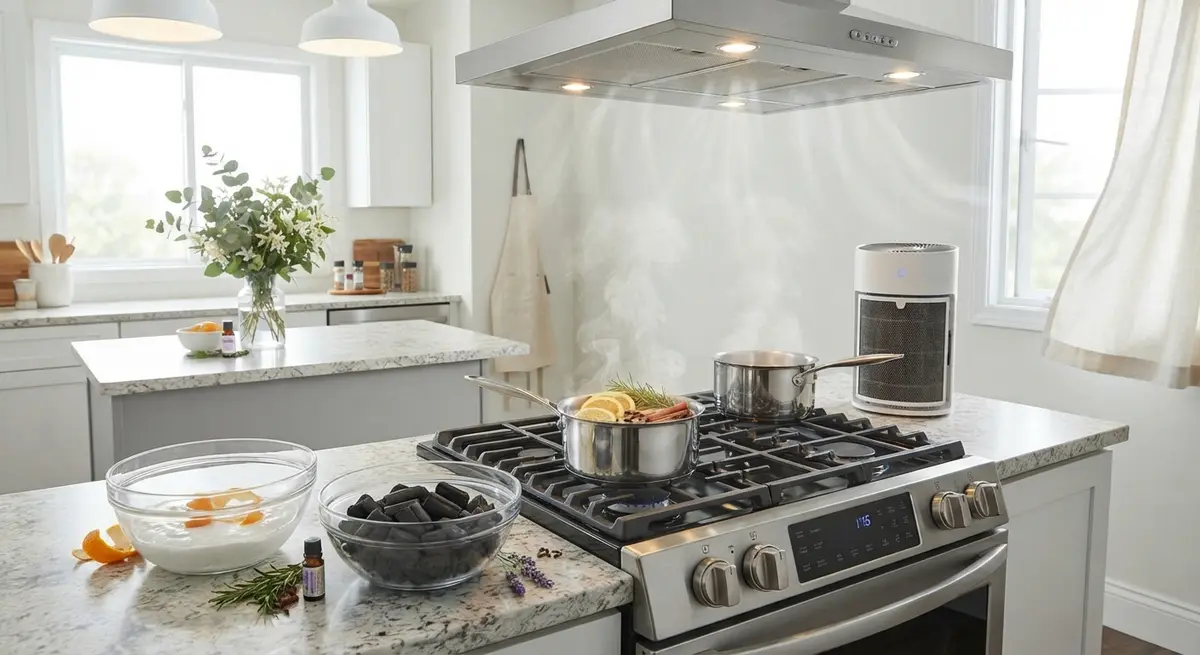
I once hosted a small dinner party with a crispy, garlicky, gloriously fishy menu — pan-seared anchovy fillets, roasted garlic, a curry that laughed at ventilation. By 9 p.m. the food was gone, and by midnight my whole apartment smelled like the kitchen floor of a seafood restaurant had made a final stand in my curtains.
My guests charitably said, "It's fine!" I could smell the lie. For years I fought these odors with candles and scented sprays — which, let me be honest, mix with the smell like perfume over gym socks.
Then I learned the actual mechanics of how odors work, and I stopped fighting. Cooking smells are volatile compounds that dissolve into air, fabric, and wall pores. The fix isn't to mask them — it's to remove or neutralize them with the right sequence. Here's the whole, honest system that quickly clears even stubborn-smelling kitchens.
Understand: Masking vs. Neutralizing
The single biggest amateur mistake: reaching for a "fragrance" that competes with the smell.
- Masking (candles, sprays, plugins) overlays a new scent. You end up with two smells at war. It never truly clears the space.
- Neutralizing removes or breaks down the odor molecules. That's what actually wins — and the best neutralizers live in your pantry.
Once that clicked, my whole approach changed: do the work first, then a very light scent is a bonus, not a weapon.
Step 1: Ventilate Properly (Right Now, and During Cooking)
The cheapest and most effective odor weapon is the one most of us misuse.
- Crack a window and turn on the range hood — at the start of cooking, not after. The hood pulls airborne odors out while they're volatile. Do it before you sear the fish.
- Use the kitchen exhaust, not just the fan — find the hood vent that actually directs air, and keep the path clear.
- After cooking, keep the window slightly cracked for 15–20 minutes — you're pushing out the residual air that would otherwise settle into fabric.
The pro habit: let the hood run for 5–10 minutes after the pan is off, while the last steam and aroma are still airborne. That vent-time does more than an hour of candles.
Step 2: Neutralize with Baking Soda (The Air + The Source)
Baking soda is the quiet hero. It absorbs and balances odor molecules rather than covering them.
For the air:
- Set open containers of baking soda around the kitchen while you cook — on a shelf, near the sink, by the door. Replaced every few weeks, it quietly eats ambient smells.
- After a stinky dinner, leave a bowl of baking soda (or coffee grounds, which smell great) out overnight. By morning the air has measurably calmed.
For the source (THE part most people miss):
- Wash pans, cutting boards, and utensils immediately with hot water and dish soap. Odor molecules re-emit from oily surfaces — a pan left to sit "because it's soaking" keeps smelling.
- My go-to for a stinky pan: a tablespoon of baking soda plus a splash of vinegar in the pan, let it fizz for a few minutes, scrub, rinse. The fizz lifts the oil-borne stink.
The reminder: clean the source before you freshen the room. A deodorized kitchen with a reeking dishrag will re-stink itself overnight.
Step 3: Vinegar Is Your Heavyweight
Where baking soda absorbs, vinegar overpowers and evaporates. It's a sink-filler, counter-wiper, and air-neutralizer with real results.
- A small bowl of white vinegar left out for an hour (or overnight) neutralizes stubborn air-borne odors — fish, cabbage, garlic, even that mysterious smell from the back of the fridge.
- Wipe surfaces (the backsplash, counter, and inside of cabinets near the stove) with a diluted vinegar-water mix. Odors cling to cleanable surfaces more than you'd expect, especially oils.
- Simmer it: a pot with a cup of water and a splash of vinegar, simmered for 5–10 minutes after dinner, steams the whole kitchen and pulls odor from the air. Then crack a window to let the vinegar vapor itself clear.
The vinegar smell dissipates fast (within minutes to an hour); the fish smell does not — so vinegar wins by outlasting.
Step 4: The Fan Trick for Fabrics (Rapid Fire)
Curtains, tea towels, oven mitts, and upholstery are odor sponges. They hold the smell long after the air clears. Quick rescue without a laundromat:
- Kitchen textiles (towels, oven mitts, aprons): run them through the washer with a scoop of baking soda in the drum, or add half a cup of white vinegar to the rinse cycle. They come out genuinely neutral.
- Curtains and cushions: if they smell smoky or fishy and can't be washed easily, hang them in fresh air overnight if possible — air movement breaks the clinging molecules.
- The fast one: for a only-slightly-lingering smell, spritz a 50/50 water-and-vinegar mix lightly over fabrics; let it air. Vinegar dries scentless and displaces the odor.
Step 5: Deep-Clean the Culprits (Weekly)
Some kitchens re-smell because the source is buried. A 20-minute weekly pass handles it:
- Clean the range hood filter — grease traps hold a permanent odor if ignored. Wash it in hot soapy water or run it through the dishwasher.
- Wipe the inside of the cabinet above the stove and the backsplash near the vent.
- Degrease the top of cabinets — airborne oil film collects on vertical surfaces invisibly.
- Wash the trash bin and the compost bin with a vinegar-water rinse to kill the "kitchen smell" that's actually garbage smell.
The tell: if a clean kitchen still smells after fresh cooking air, it's a trapped source — the vent, the bin, the towels, or the drain (see below).
The Dishwasher / Drain Finale (The Forgotten Stink)
The kitchen drain, oddly, is a major unsung odorizer. When garlic smells "come back," half the time it's the drain, not the dinner.
- Pour half a cup of baking soda down the drain, then half a cup of white vinegar; let it fizz for a few minutes, then flush with hot water.
- Do this monthly to keep the drain bacteria that cause "sink smell" from building up.
- Run the dishwasher on a maintenance cycle with a bowl of vinegar or a purpose-made cleaner if the machine itself carries an odor.
A Word on the "Candles Aren't Useless" Caveat
I'm not an anti-scent absolutist. Once the odor is neutralized, a clean candle or natural spray is a lovely garnish — it maintains a fresh room. The mistake is using scent at step one, when you should be closing the vent, scrubbing the pan, and setting out the baking soda. Scent is the icing; the neutralizer is the cake.
The Vent Upgrade That Stops Odors at the Source
The best odor remedy is the one that never has to work. Look at the airborne side first:
- Run the range hood on a timer, not the moment it gets loud. Start it before you begin cooking; warm-up odors are the ones that set into fabrics.
- If you have no hood, crack the window and use a box fan pointing out. Moving air beats scent-masking every time; the fan converts "smell fills the house" into "smoke leaves the window."
- For frying days, run a small air purifier with a charcoal filter afterward. Frying oils atomize into the air, and only capture filtration pulls them out of curtains and cushions.
The smell that never enters the room is the smell that never enters the sofa. Energy spent at the source beats three hours of chasing it downstream.
The "Morning After" Checklist for Deep-Cleaned Air
When odors have already settled, attack in order:
- Air it out first. Open two windows for 15 minutes — cross-ventilation does more than any candle.
- Boil-simmer a pot of cinnamon-orange or cloves for the room's standard deodorizer; steam carries the fresh scent into the fabric you can't wipe.
- Wipe the actual surfaces — the stove, the hood, the counters, the microwave; oils hide on hot surfaces and re-release for days.
- Wash the fabric that holds it — the kitchen towel, the apron, the curtains near the stove, the rag rug. Clicking on the laundry is the real "deep clean."
The morning-after list is a loop: air, simmer, wipe, wash. Run it once and the room genuinely resets.
The "Smell They Told You Was Impossible" (Fish, Curry, Burnt)
Some odors feel stuck in the plaster. The real fixes:
- Fish: wash the pans immediately and the cutting board with hot soap before it sets; step-2 a vinegar wipe and air-dry in the rattle of a fan.
- Curry: the spices bind to surfaces — wipe all counters with warm soapy water, then wipe with a weak bleach-free sanitizer or wipe down with a paste of baking soda, then wash textiles.
- Burnt: get the smoke out with the open-window fan trick, then leave a bowl of white vinegar and a bowl of coffee grounds near the source overnight — the two traps absorb, they don't cover.
Burnt is the only one that needs the overnight — and the vinegar-and-grounds trap is the professional secret that actually calls it done.
FAQ
How fast can I get fish smell out of a small apartment?
15–20 minutes with the right order: vent now, wash the pans and cloths immediately, set out a bowl of white vinegar, crack a window, and let the hood run a few minutes after. Most apartments read neutral within half an hour.
Is baking soda or vinegar better for removing odors?
They work as a team: baking soda absorbs gradual ambient smells (leave it out overnight), vinegar aggressively neutralizes active, stubborn odors fast (bowl, simmer, or fabric spray). Use both for serious jobs.
Will opening a window actually remove cooking odors?
Yes — cracked windows plus the range hood actively pull odor-laden air out. Ventilation is the highest-leverage first step, more effective than any spray, and costs nothing. The issue is people do it too late.
Why do cooking smells return the next morning?
Because the source was left behind: oily pans, dishcloths, a greasy vent, or the drain. Neutralize the air and clean the source, and the smell doesn't return. Deodorizing without cleaning is renting tomorrow's reminder.
Are scented candles or sprays completely useless?
Not useless — they're finishing touches after you neutralize. Used alone, they mask briefly and can make things smell "faintly of smoke + flowers." The sequence matters: clean and neutralize first, scent last.
Key Takeaways
- Ventilate during cooking, and keep the hood running a few minutes after.
- Neutralize, don't mask — baking soda absorbs, vinegar overpowers.
- Wash the source (pans, boards, cloths) quickly; lingering smells live in the oily surfaces.
- Give fabrics a wash or air-out — curtains and towels hoard cooking smells.
- Do a weekly vent-and-bin pass and a monthly drain flush to stop the returners.
A Final Word
The party apartment that smelled like a seafood floor until midnight? The whole flat read neutral by 10 a.m. the next day — because I'd stopped masking and started neutralizing. Open the window, scrub the pan, set out the vinegar, and steal a little extra time for the vent. Your kitchen doesn't have to marry its dinner smells; teach it to let them go, and every guest — including you — will breathe easier.
Published on 2026-08-13 by the QuiteRecipes team (Jamy & Kaïna).
Related Articles
How to Make a Stainless Steel Sink Shine Like New
A stainless steel sink isn't supposed to look water-spotted. With the right wipes, the right direction, and one pantry ingredient, you can restore that mirror finish in minutes.

Easy Swaps to Make Your Kitchen More Eco-Friendly Every Day
Going greener in the kitchen doesn't mean a full zero-waste conversion. These small, daily, budget-friendly swaps genuinely cut waste, energy, and cost — without the guilt trip.

Kitchen Linens 101: How to Choose and Care for Towels, Aprons, and Potholders
A great kitchen towel performs, and a great one lasts. Learn which fabrics to buy, how to wash and dry them right, and how to care for aprons and potholders so they serve you for years.

5 Cozy Decor Ideas to Make Your Kitchen Feel Like Home
The coziest kitchens aren't magazine spreads — they're layered light, soft textures, living green, good smells, and room to gather. These five ideas make any kitchen feel like home.
About the Authors
This recipe and guide was developed, tested, and approved in our home kitchen and daily life. Jamy is a retired Food Service District Manager and Early Childhood Program Manager who spent his career overseeing multi-site restaurant operations, large-scale culinary production, and daycare menu management. Kaïna brings the ultimate real-world test: making sure it brings ease and joy to our kids on a busy weeknight.
Read more about our professional background and philosophy →