How to Transition Your Home Decor from Summer to Autumn Seamlessly
By the QuiteRecipes team (Jamy & Kaïna)
Switch your home from summer to autumn in one easy weekend without a redesign. Swap textiles, warm up the palette, and layer scent for under $75.

The last time I tried to "do fall" the dramatic way, it backfired so hard I still cringe. I went full pumpkin-spice-everywhere in the last week of August: burlap runners, faux leaves on every shelf, a ceramic harvest bowl I'd bought in a moment of madness. My living room looked like a craft store had coughed it up. Three weeks later I was stuffing most of it into a bin, exhausted and slightly embarrassed. My husband, who has the decor opinions of a golden retriever, finally said the kind version of what I was thinking: "It's not that this is bad. It's that it's a lot."
The real lesson took another season to absorb. A seamless summer-to-autumn transition is not about more decor; it's about subtraction and substitution. You don't rebuild the room in October. You swap the layers that carry the season's temperature and mood, and you let the room keep its bones. The goal is to walk through your house in mid-September and feel the shift in your body the way you feel it pulling a sweater over a thin cotton t-shirt, without a single fake leaf in sight.
Here's the exact system I use now, refined over four autumns: one weekend, about seventy-five dollars, and almost no decorating in the Pinterest sense.
Transition, Don't Renovate
The mistake that turns an autumn transition into a catastrophe is treating it like a remodel. When you strip the living room bare and redo the whole arrangement, you lose the one thing a seasonal shift should preserve: your home's identity. Autumn shouldn't steal the room; it should season it, like finishing a soup with a spoonful of cream. Keep the layout, the furniture, and the biggest pieces of art, and change the temperature of the room's wardrobe, not its skeleton.
I approach the transition with a strict ninety-minute budget per main room and treat it as a rotation rather than a redesign. Every autumn piece lives in one clearly labeled bin, and every summer piece quietly takes its place. Because nothing is purchased new each year except one or two small fresh items, the annual cost stays around seventy-five dollars, and the room gets richer each fall rather than busier.
- Ninety minutes is enough to swap the obvious layers and reset a shelf, but short enough that the project can't balloon into a paint job.
- In September, resist buying three decorative objects you'll be tired of by Thanksgiving.
Swap the Textiles First
Texture is the fastest signal of season, because you experience it with your hands before your eyes register anything. The single highest-impact swap is textiles, and I do it in about forty minutes across the house.
- The thin cotton and linen throws come down; the knit and plush ones come up. One deep-pile throw over the couch arm reads "autumn" more than a hundred ceramic pumpkins.
- Swap the pillow sets in under ten minutes: summer cream, sage, and soft yellow out; rust, burnt orange, deep green, and camel in. Store each set in its own bin.
- Layer a wool runner over the summer rug to warm a room without moving furniture.
- Trade crisp percale bedding for flannel or brushed cotton, with a wool blanket at the foot of the bed.
My test for the whole textile layer is simple: if you sat on the couch wearing a light sweater over a t-shirt, would the room match the sweater? That's exactly the temperature I'm aiming for.
Shift the Palette: Warmer Tones, Fewer Objects
Color does the emotional work of the season, and you can shift a room's palette without painting a single wall. The mechanism is simple: pull out the cool and bright accents, bring in the warm and muted ones. My summer palette leans cream, white, pale blue, and sage green; my autumn stack is rust, burnt sienna, mustard, olive, and camel.
The trick is restraint, which took me three seasons to learn. Swap roughly a third of the visible objects in a room, not all of them. The cream sheepskin stays, the travertine bowl stays, and the dried eucalyptus becomes dried grasses, dried orange slices, and a small bundle of cinnamon-bound branches. By keeping most of the room constant and shifting only the warm accents, the space feels coherent rather than busy.
Create exactly one new accent per room per fall, set aside at about twenty dollars each. This year it's a stack of old novels with rust-colored spines on the coffee table; in the dining room, a ceramic bowl of clementines and cinnamon sticks. One accent, placed with intention, does more than a shelf of purchased clutter ever did.
Layer the Scent and Change the Light
Scent is the quietest and most persuasive layer, and most people either ignore it or overdo it into a sinus headache. My rule is one dominant scent per room: clove, cedar, and orange. A single 8-ounce candle in that signature scent, a simmering pot of water with cinnamon sticks and orange peel, and a small bowl of potpourri do all the work. If you can smell a room's candle from the front door, it's too strong.
Autumn is fundamentally a lesson in light, and my lighting transition is embarrassingly simple: I reduce everything's brightness by about one level and increase the number of warm sources. The overhead lights get warmer bulbs around 2700K, and I lean into pointed sources that tell a story: a banker's lamp on the sideboard, a reading lamp beside the armchair, candles at dining height.
- The combination of a dimmer room and a few bright pools instantly makes the space more intimate and conducive to conversation.
- A ten-dollar roll of warm string lights draped along a bookshelf reads as lantern-light rather than party lights, and guests always ask where they came from.
Three Autumn Moves I Banned From My House
Here are the lessons I paid for, so you can skip them. First, no premature pumpkin avalanche: no decorating before the autumn equinox, which keeps the season from exhausting itself, and no more than one pumpkin-themed object per room after it. Second, no fake-leaf sprawl scattered across every shelf, which reads as cafeteria decor; keep leaf accents to a single bouquet and a single garland.
Third, no cliché-by-the-door: no cornucopia platters, no inflatable scarecrows, and no "give thanks" wood signs. What replaces them is subtler and far more effective: a wooden bowl of apples on the counter, a thick wool blanket on the reading chair, a cluster of pillar candles in rust and cream on the mantle, and one beautiful seasonal arrangement. Real objects that do a job, rather than decorations that merely announce a holiday.
FAQ
When should I transition my home from summer to autumn?
Wait until the autumn equinox, around September 22, for the full shift. Premature pumpkin decor exhausts the season and leaves you tired of it by Thanksgiving. You can start smaller swaps, like heavier throws and lower-wattage bulbs, at the equinox, and hold the decorative objects until early October.
How much does a seamless autumn transition cost?
I budget about seventy-five dollars per season: a new throw, one 8-ounce candle, a small farm-stand arrangement, and one new accent per main room. Everything else comes from a rotating bin you already own. Done truly minimal, the entire transition can cost under thirty dollars using only swaps.
Do I need to buy new decor every fall?
No, and buying heavily every year is how rooms become tired clutter. The secret is one labeled bin of autumn pieces rotating in while summer pieces rotate out. Add one fresh accent per room per year if you like; restraint makes the accent land harder than a shelf of new purchases.
What's the fastest change that makes a room feel autumnal?
Swap the textiles and dim the lights. Replace the thin cotton blanket with a knit throw, swap pillow covers to rust and camel, and lower the lamp brightness with warm 2700K bulbs. Both take under an hour and cost under thirty dollars, and they change the feel of the room more than any decorative object.
Key Takeaways
- Treat autumn as a rotation, not a redesign, and keep the room's bones intact.
- Swap textiles first: knit throws, rust and camel pillows, wool runners, flannel bedding.
- Shift only about a third of visible objects to warm tones; more reads as clutter.
- Use one dominant scent note per room.
- Dim everything one level and add warm 2700K bulbs for instant intimacy.
- Limit pumpkins, fake leaves, and holiday cliches so the season never feels like a costume.
A Final Word
Four autumns after that burlap-runner disaster, my fall transition is quieter, cheaper, and infinitely more effective. I open one labeled bin, swap three pillowcases and two throws, pull out the rust bowl and the dried grasses, screw in warmer bulbs, and light one clove-and-cedar candle at 5:47 when the light goes soft. That's the whole ceremony, and it still knocks the socks off every guest who steps in the door. Autumn doesn't need to be announced with pumpkins; it needs to be felt in the weight of the throw blanket, the warmth of the light, and the scent of clove on the evening air. Do those things, and your home will shift into autumn the same way a forest does: not with a bang, but with a change in the light.
Published on 2026-08-13 by the QuiteRecipes team (Jamy & Kaïna).
Related Articles
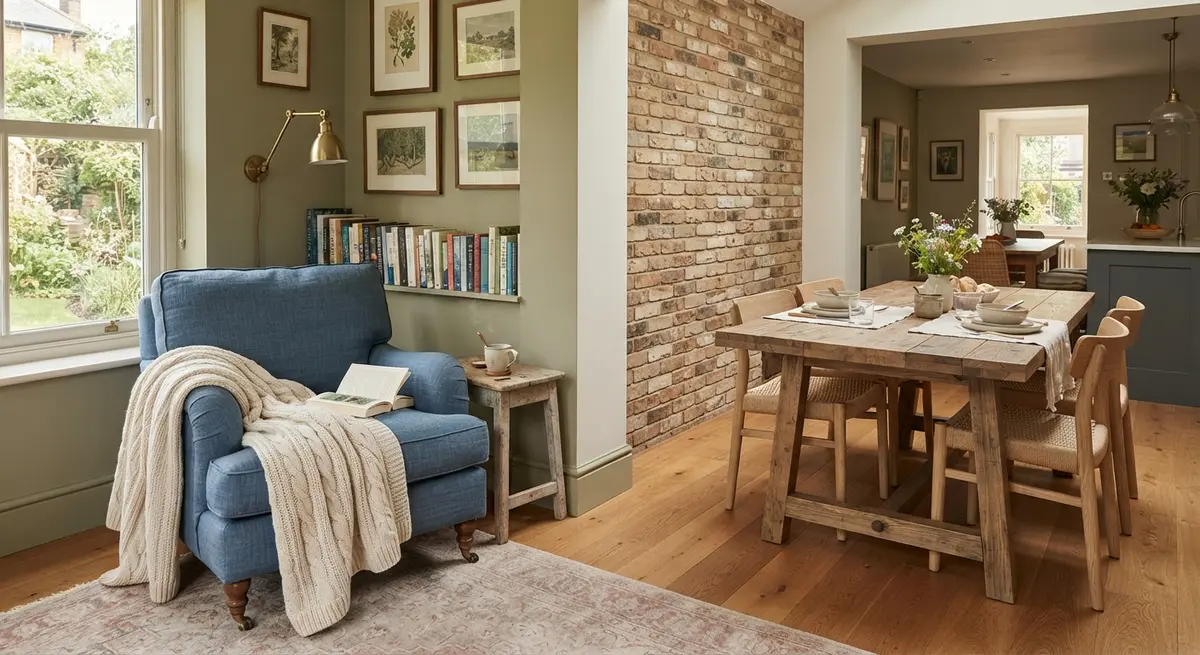
Creating a Cozy Reading Nook Right Next to Your Dining Area
Create a cozy reading nook beside your dining area without a redesign. Find the right corner, lighting, and chair for under $150.
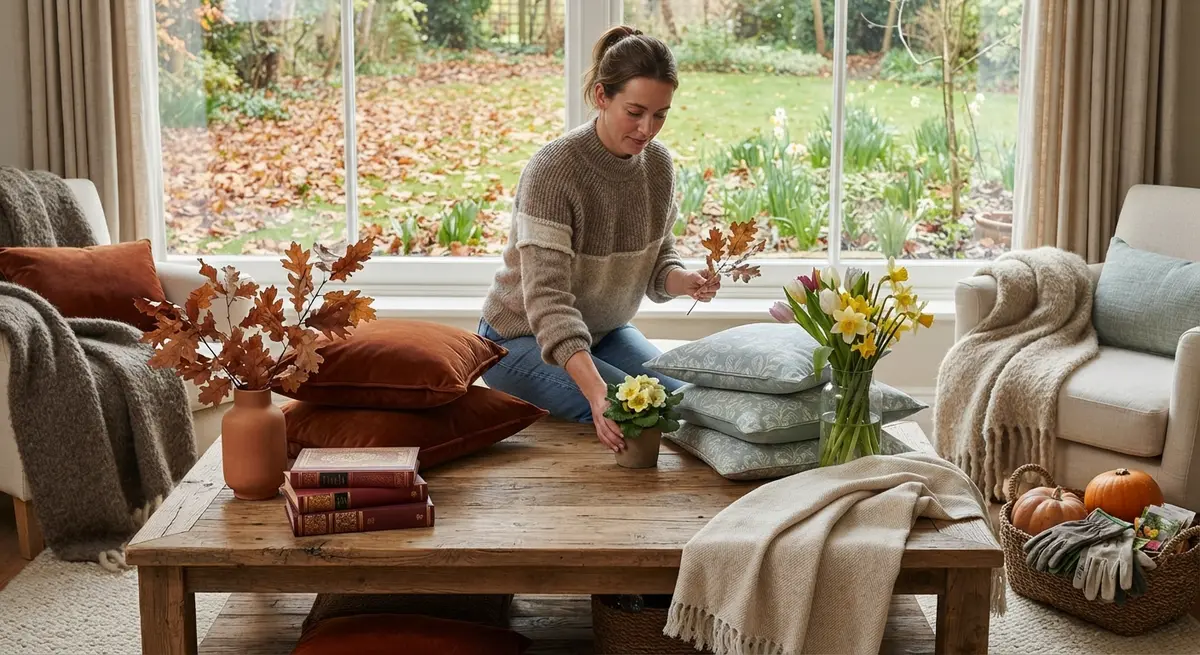
Creating a Seasonal Ritual: How to Refresh Your Living Space Every Spring & Fall
Refresh your living space every spring and fall with a simple two-day seasonal ritual. Rotate decor, deep-clean, and reset your home for under $50.
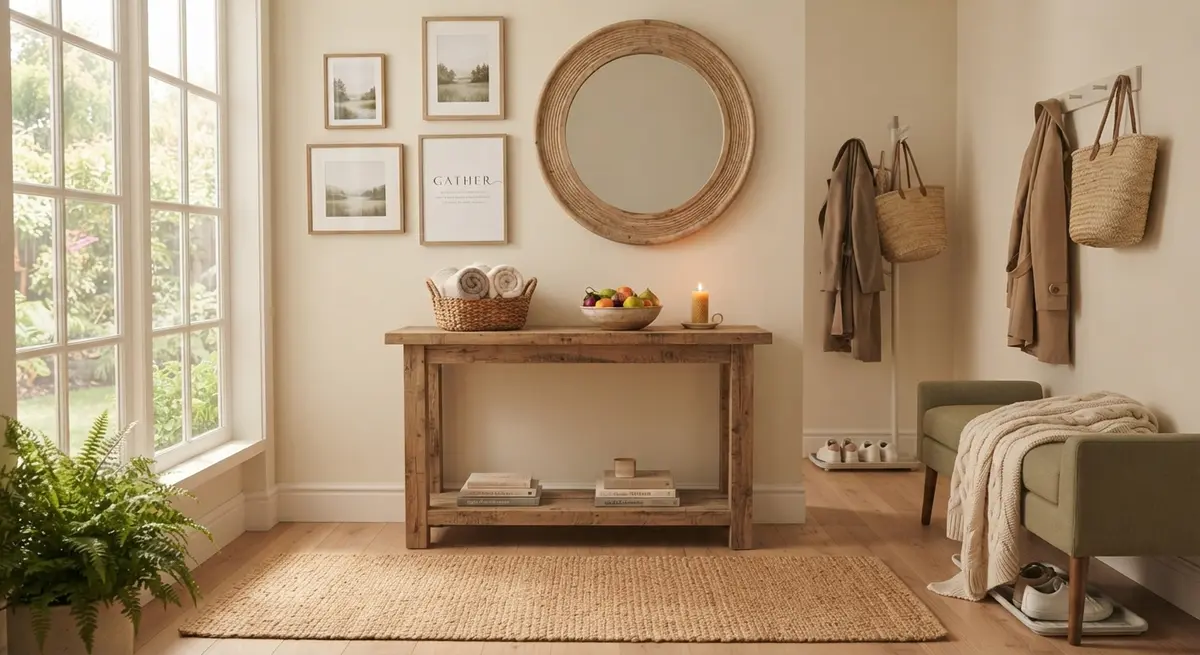
How to Create a Warm and Welcoming Entryway for Guests
Give guests a warm welcome with an entryway that works. Lighting, a catch-all tray, hooks, and scent make a small first impression that lasts.

How to Turn Your Dining Area into a Cozy Space for Family Connection
Make your dining area the heart of your home. Cozy lighting, no phones, and simple rituals that bring everyone back to the table.
About the Authors
This recipe and guide was developed, tested, and approved in our home kitchen and daily life. Jamy is a retired Food Service District Manager and Early Childhood Program Manager who spent his career overseeing multi-site restaurant operations, large-scale culinary production, and daycare menu management. Kaïna brings the ultimate real-world test: making sure it brings ease and joy to our kids on a busy weeknight.
Read more about our professional background and philosophy →