How to Create a Warm and Welcoming Entryway for Guests
By the QuiteRecipes team (Jamy & Kaïna)
Give guests a warm welcome with an entryway that works. Lighting, a catch-all tray, hooks, and scent make a small first impression that lasts.
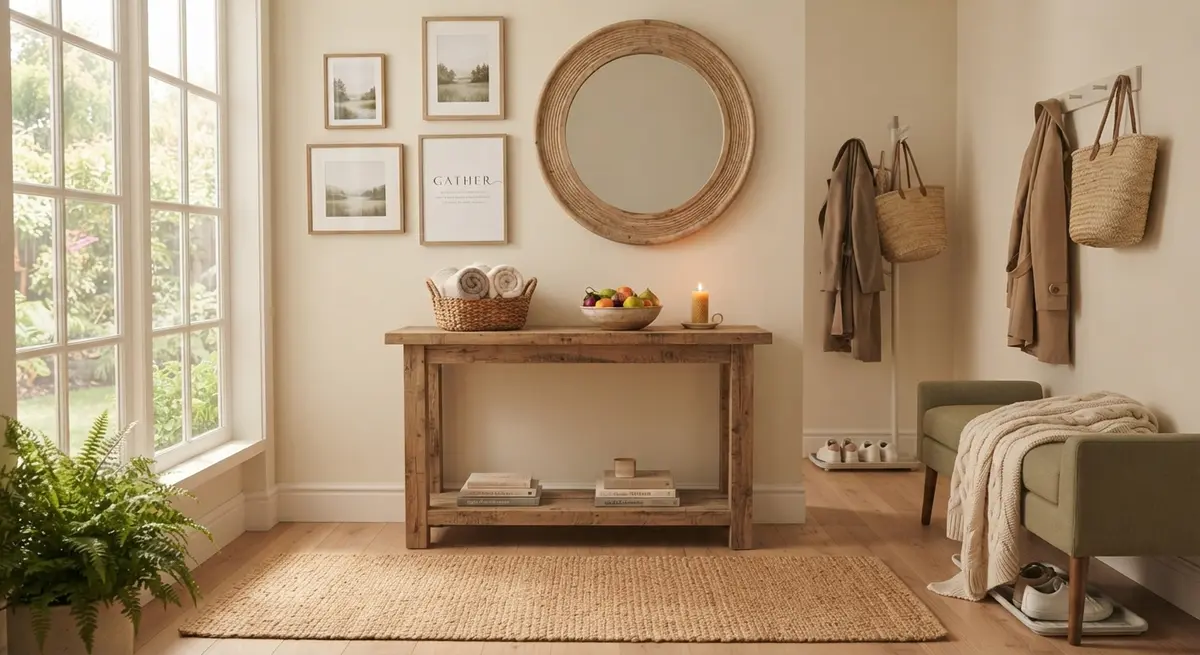
The most honest review I ever received as a host came from my father-in-law, who is not a man who volunteers opinions. After a decade of dinners, he finally said it over coffee one January morning: "You know what I remember about your house? Coming in. Every house has a kitchen. Yours made me want to take my coat off." I laughed, because it was such a strange thing to remember, and then I sat with it, because he was exactly right. The entryway of our small apartment was the one room designed on purpose, and visitors have been stepping into it with a visible easing of their shoulders ever since.
Here's what that entryway used to be: a sad 4 by 6 foot pocket of tile where mail lived in a heap, coats hung three deep off two hooks, and the light was a single naked bulb that made everyone look mid-disaster. Guests would come in, hold their coats uncertainly, step on a pile of flyers, and arrive at the living room with half the warmth I'd built in the kitchen already leaked away. I fixed it over the course of one budget-conscious month, and the change was immediate in the way people arrived.
That's the guide you're holding now: how to turn your entryway into the warmest room of the house, with a lighting fix that costs under twenty-five dollars, a catch-all tray, a hook-and-bench system, and a seasonal rotation.
Why the Entryway Matters More Than You Think
The entryway is the transition room between the world and your home, and it does more of your hospitality work than any other space. When a guest crosses your threshold, their nervous system is briefly scanning three questions: is this a place I can relax? Where do my coat, my shoes, my hands go? A good entryway answers those questions without a word, and a neglected one accidentally sends the message that your home isn't ready for them.
The psychology is real: it takes about seven seconds to form a first impression, and the entryway is where almost all of it happens. A welcoming entryway does four small jobs. It holds the guest's things, coat, bag, wet umbrella. It settles the guest's arrival with a place to sit and take off shoes. It signals the mood of the house with light and scent. And it manages the day-to-day chaos so the entrance never looks accidentally abandoned. Design for those four jobs and the entryway takes care of itself.
The Lighting Fix: The Cheapest Warmth You'll Ever Buy
The single most transformative thing I did was fix the light, and it's the cheapest experiment you'll replicate at home. I swapped the naked overhead bulb for a dimmable warm bulb around 2700K, and added a small wall sconce with a fabric shade at face height. The result was immediate: the entryway stopped looking like a locker room and started looking like a foyer, and every guest arriving at dusk is greeted by a soft golden glow.
The second part of the lighting layer is a candle in a protected holder on the console. A lit candle in an entryway is the oldest welcome trick in the book; it signals hearth, warmth, and calm the moment the door opens. Because entryways are always drafty, a protected votive in a glass holder, or a flickering LED indistinguishable from the real thing, keeps the effect without the flame risk by the door.
The final note is the welcome switch, a habit as much as a fixture: twenty minutes before any guest is due, turn on the entryway light, the candle, and the living room lamp nearest the door.
A guest should arrive to light, not to darkness. You can't call that moment back once the door opens.
The Catch-All Tray and the Art of Containing Chaos
If your entryway ever feels like a lost-and-found, it lacks a designated landing place for the things that arrive with the day: mail, keys, sunglasses, dog leashes, loose change, the grocery receipt. The catch-all tray is the single highest-leverage object in the entryway, and it's almost absurdly cheap. I use a shallow wooden or ceramic tray about ten inches square, and the rule is that anything landing in the entryway goes in the tray, not on the floor and not on the console.
The tray's elegance is that it converts chaos into a contained system. A pile of mail on a console reads as clutter; the same mail in one tray reads as intentional organization, even when the tray is full. Give everyone an assigned spot, sort the mail daily into a standing file slot, and add a second small tray for the season: sunscreen and sunglasses in summer, gloves and a lip-balm dish in winter.
- Two ten-dollar trays did more for my entryway than any piece of furniture.
- An uncluttered threshold instantly reads as calm, before a single word is spoken.
Hooks, a Bench, and the Coat-and-Shoe Problem
The classic entryway failure is the coat crisis: guests arrive, hold their coats uncertainly, and end up draping them over a dining chair because there's nowhere reasonable to put them. The fix is a combination of hooks and a bench, and it solves the same problem for your family's daily exits as it does for visitors. I installed a wall-mounted rack with five hooks at about sixty inches high, and added a narrow bench with a lift-up storage box beneath for hats, scarves, and winter accessories.
The shoe situation deserves its own small system. I keep a low bamboo shoe bench with a woven basket underneath, and the rule is that shoes come off at the bench and go straight into the basket, one pair at a time. The whole shoe corner costs about fifty dollars and ended a decade of sweaters-as-blankets over a dining chair.
For guests, the goal is a frictionless arrival where their needs are anticipated before they ask: hook rack for the coat, bench for the shoes, a standing umbrella holder for the wet weather. When a guest steps in on a rainy November evening and everything has a home within arm's reach, you've said "welcome" in four structural ways without opening your mouth.
The Scent That Welcomes Without Shouting
Scent is the entryway's quietest power, and it's also the easiest to get wrong. The common mistake is a candle or diffuser at full strength right beside the door, which blasts every incoming guest with a wall of fragrance before they've registered the threshold. The right approach is subtle and lives about three feet into the house, so it operates as a gentle note on the air rather than a shout at the door: one soft note, low volume, always at a distance from the threshold.
My system is a single diffuser or candle, changed with the seasons, placed on a console just past the entryway, dialed so you only really register it as you pass. Guests comment on it in the best possible way: not "what's that candle," but "your house always smells like a holiday."
One scent warning I carry is the cooking neighbor. If a strong kitchen aroma leaks toward the door, don't fight it with a competing candle that turns the entryway into a fragrance collision; either let the cooking smell be the welcome, which is honestly the best welcome of all, or neutralize it with something truly light. The goal is to settle, never to overpower.
The Seasonal Rotation and Keeping It Fresh
An entryway that never changes slowly stops being felt, which is why the final layer of my system is a simple seasonal rotation. Four times a year, in the same weekend I change the main living areas, I spend twenty minutes updating the entryway: the candle changes with the season, the tray contents shift, the bench basket rotates, and one small seasonal accent appears on the console. The summer version holds a wooden bowl of lemons; the winter holds a cluster of pine and a small vase of forced paperwhites.
The rotation serves guests as much as the household. A guest arriving in late October to see the entryway wearing the season properly gets a little frisson of rightness, the sense that this is a home actually paying attention to the turning year. The accent doesn't need to be elaborate; a single great element beats a shelf of small ones.
The final element is the reset that protects all the others: a ten-minute daily reset where the tray gets emptied, the shoes get into the basket, the coat hooks get cleared to one per person, and the console gets wiped. A warm entryway isn't a one-time renovation; it's a daily small act of caring, and it's the front door of every good evening you'll ever host.
FAQ
How much does it cost to make an entryway welcoming?
You can transform a small entryway for around a hundred dollars: a warm 2700K bulb and a sconce, a ten-dollar catch-all tray, a five-hook rack and a bench, and a candle or diffuser. The bench and hook rack are the only real spends, and they last for years.
What's the most important thing in an entryway?
Lighting. A warm dimmable bulb and a soft accent light at face height are the cheapest, highest-impact changes, and guests feel them instantly. After lighting, the order of importance is a place for coats, a place for shoes, and a tray that contains the everyday clutter.
How do I keep an entryway from getting cluttered?
Give every category a home: a catch-all tray for daily carry, a file slot for mail, a bench basket for shoes, and one hook per person for coats. The entryway stays clean when the physics of the space force things into their spots, plus a ten-minute daily reset.
Should I add a bench if my entryway is narrow?
Yes, if you can fit one about sixteen to eighteen inches deep. A narrow bench with lift-up storage is the best space-optimizing move, since it gives guests a place to sit for shoes while the storage box hides hats and gloves. If there's truly no room, skip the bench and make the coat hooks and umbrella holder rock solid.
Key Takeaways
- The entryway is the first line of hospitality and primes guests for the whole visit in seconds.
- Warm 2700K lighting plus a soft candle or sconce transforms a naked-bulb foyer for under twenty-five dollars.
- A catch-all tray converts the daily chaos into organization instead of clutter.
- Install five hooks, a storage bench, and a shoe basket to end the coat-and-shoe crisis.
- Keep scent subtle, one note per season, placed feet from the threshold.
- Do a ten-minute daily reset; a warm threshold is a daily act of care, not a one-time design.
A Final Word
My father-in-law's January confession about taking his coat off remains my favorite review I've ever received, because it named the exact thing I'd been building without realizing it: an entryway that makes a guest feel resolved to be inside. It's a four-by-six pocket of tile, a warm bulb, a tray, five hooks, a bench, and a candle, and every time the door opens it does its quiet, perfect job. The rest of the house matters, the food matters, the company matters, but the welcome happens in the first ten seconds, and the entryway is the only room that gets to own them. So take the mail off the console, screw in the warm bulb, hang the hook rack, and put a candle where it flickers at eye level. Then open the door, step back, and watch what happens to every guest who crosses that threshold from now on. They'll remember, even if it takes them a decade to say it out loud.
Published on 2026-08-13 by the QuiteRecipes team (Jamy & Kaïna).
Related Articles
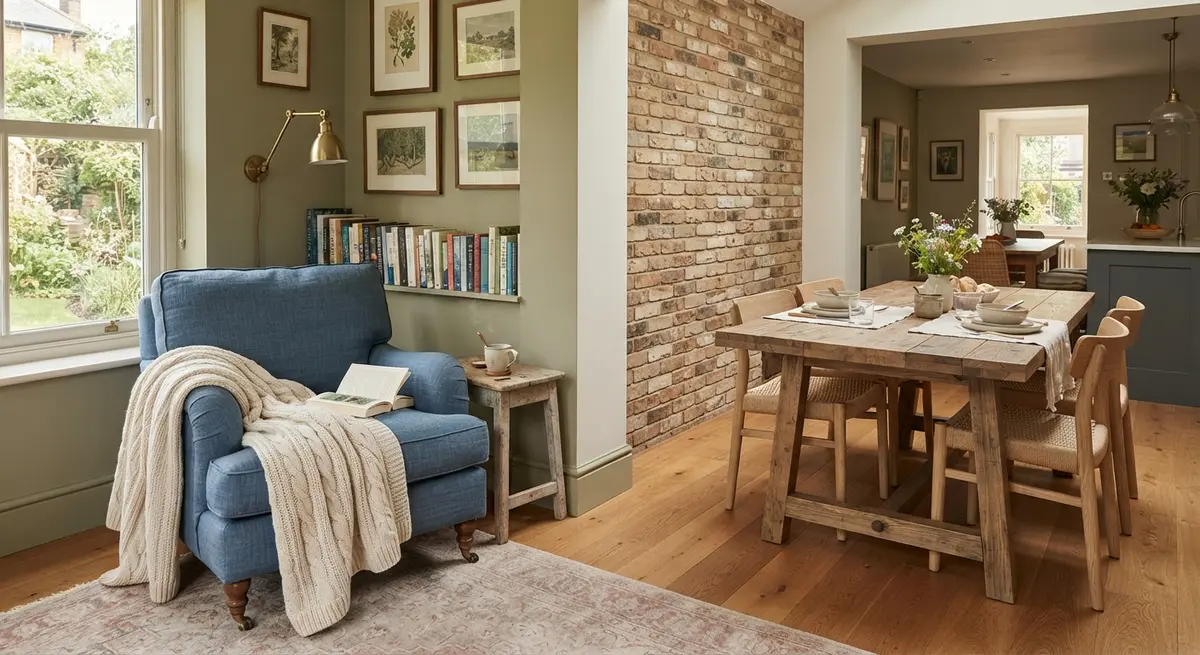
Creating a Cozy Reading Nook Right Next to Your Dining Area
Create a cozy reading nook beside your dining area without a redesign. Find the right corner, lighting, and chair for under $150.
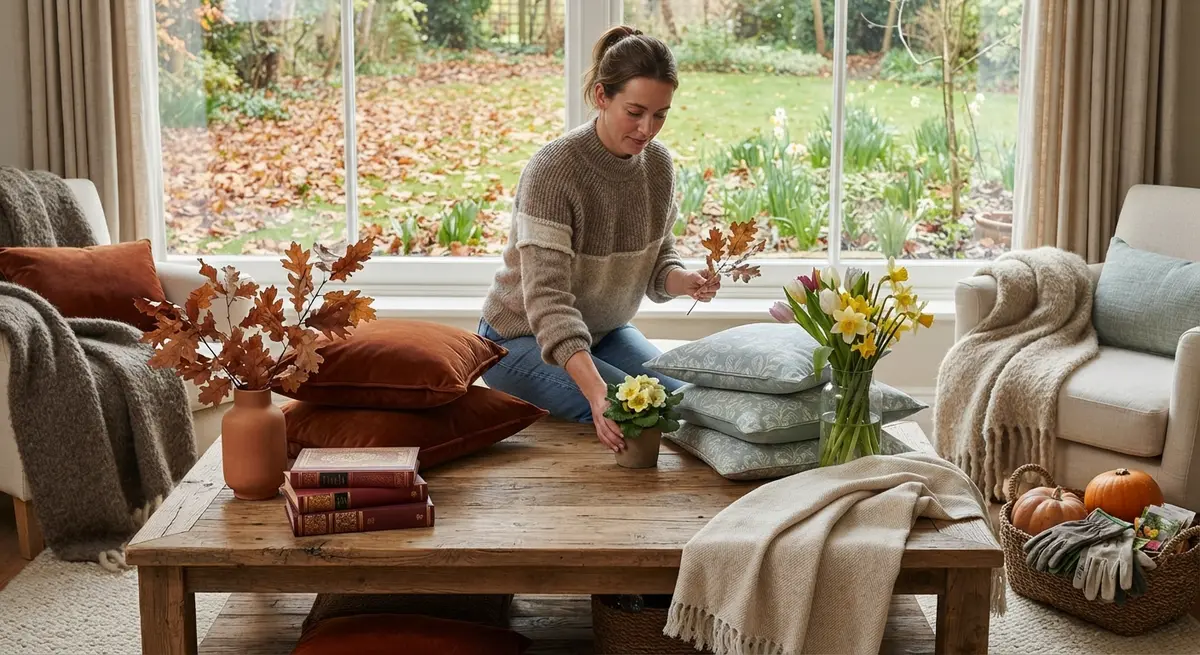
Creating a Seasonal Ritual: How to Refresh Your Living Space Every Spring & Fall
Refresh your living space every spring and fall with a simple two-day seasonal ritual. Rotate decor, deep-clean, and reset your home for under $50.
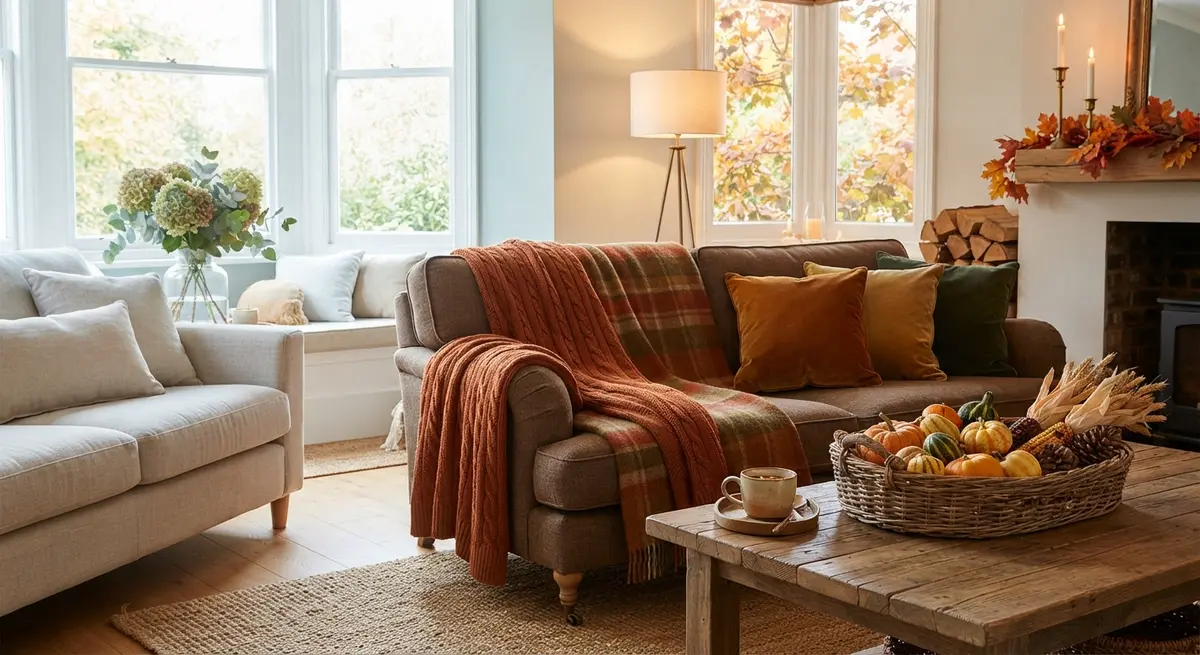
How to Transition Your Home Decor from Summer to Autumn Seamlessly
Switch your home from summer to autumn in one easy weekend without a redesign. Swap textiles, warm up the palette, and layer scent for under $75.
How to Turn Your Dining Area into a Cozy Space for Family Connection
Make your dining area the heart of your home. Cozy lighting, no phones, and simple rituals that bring everyone back to the table.
About the Authors
This recipe and guide was developed, tested, and approved in our home kitchen and daily life. Jamy is a retired Food Service District Manager and Early Childhood Program Manager who spent his career overseeing multi-site restaurant operations, large-scale culinary production, and daycare menu management. Kaïna brings the ultimate real-world test: making sure it brings ease and joy to our kids on a busy weeknight.
Read more about our professional background and philosophy →