How to Eat Like a Local Wherever You Travel
By the QuiteRecipes team (Jamy & Kaïna)
Stop eating where the travel apps point. Here is how to find the tables locals actually queue for, order with confidence, and eat like a local on any trip.
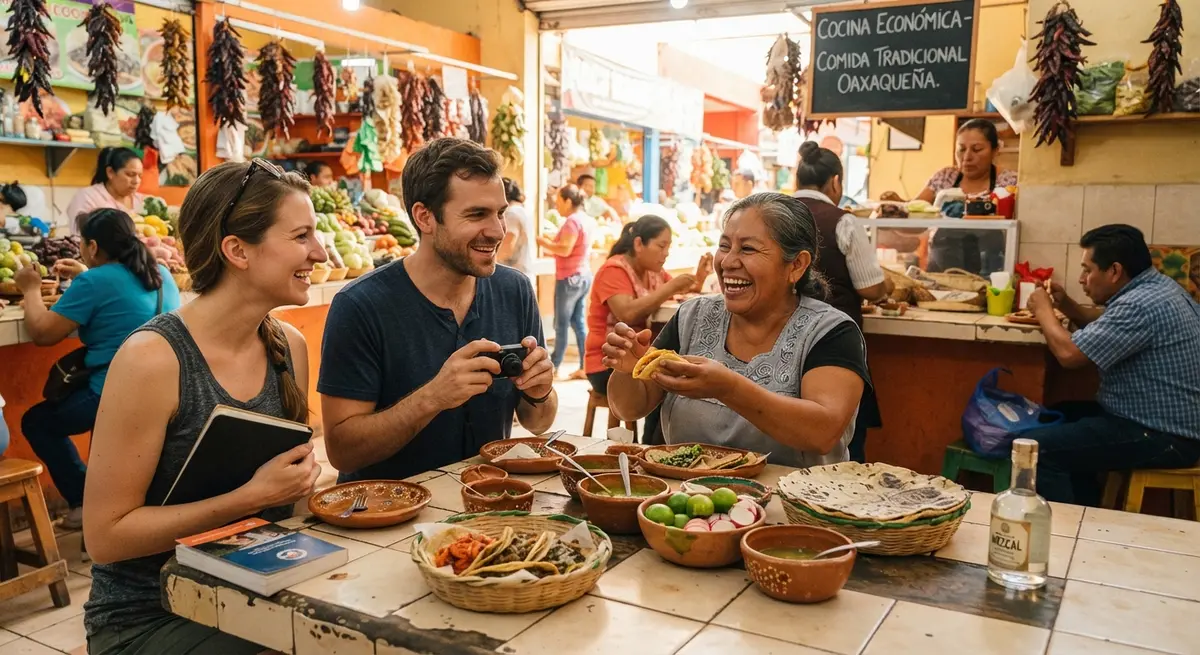
I once spent four days in Taipei eating where a guidebook pointed, and every dish tasted polite — pleasant, competent, forgettable. On day five, a woman selling scallion pancakes waved me over and served something with a charred, blistered edge I could hear snapping across the counter. Six office workers in the same uniform ate it without glancing at a menu. I'd been eating where visitors were expected, not where dinner was lived.
That trip changed how I travel. I stopped asking what to eat and started asking who was eating. The best meals of my life since — cazuelas in Seville, noodles in Hong Kong, standing coffee in Naples — came with no reservation, just that single shift in attention.
This guide is the method I use on every trip: the questions, the hours, the signals, the etiquette. It isn't a list of famous restaurants; it's a system you can run anywhere.
Why Tourist Food Finds You First
Tourist districts follow a predictable formula: menus in several languages offering the same top dishes everywhere, a host smiling a little too hard at the door, glossy photos on every board. None of this means the food is bad; it means it's designed for people who won't come back tomorrow. As Anthony Bourdain liked to say, a place with a menu the size of a phone book has no specialty at all.
Pro tip: Ignore the first kilometer around the main square and the station. Walk until the restaurants stop showing you pictures, then start looking.
Ask Three Specific People
"Where should we eat?" makes anyone give a safe, boring answer. Instead, ask three different people — and name the meal:
- A night-shift hotel worker or newest hire, not the concierge: "If you were off tomorrow, where would you go?"
- A taxi driver or delivery rider. Riders eat on the job and keep automatic lists.
- A shopkeeper in a residential area: ask about breakfast, the most honest meal in any city.
Pro tip: Name the meal out loud — breakfast, lunch, a late snack. A great breakfast place closes at eleven and is useless at dinner.
Follow the Noon Rhythm
Every neighborhood has a pulse, and the most reliable signal is a line of people who live there. Between 12:30 and 2 p.m., watch for tables in the same uniform: drivers, nurses, construction crews. Wherever an electrician's crew goes for lunch, order the same. Then open your delivery app backwards: if the top seller in a coastal city is fried rice rather than the local grilled squid, that menu is aimed at you.
Read the Menu as Evidence
- Length. Eight to twelve items means a kitchen that owns each dish; a laminated novel means it owns nothing.
- Photos. Real neighborhood places rarely photograph their food.
- The handwritten board. One specials board in the local language is your target — point and smile.
- Price logic. If everything costs the same, the kitchen balances burden; price spikes usually mark the dishes it makes best.
Order One Thing First
The most underrated move in local eating is restraint. Order one plate, not three. Eat it, watch the room, then decide. In a Lisbon tasca I ordered grilled sardines and the owner quietly brought out her mother's tinned tuna. One dish builds a relationship; three build a receipt.
FAQ
How do I find where locals eat the fastest?
Use the three-question rule asked about breakfast, then test the best candidate at the local hours with a single dish. That combination beats any app.
How do I spot a tourist trap?
A multilingual menu with photos, a host at the door, and the same dishes on every restaurant on the street. Real spots have short menus and a handwritten board in the local language.
Do I need to speak the local language?
No. Learning five words helps enormously, but pointing at your neighbor's plate and smiling works in every language.
Is eating like a local more expensive?
Usually less — neighborhood food carries local prices. Beware the famous "secret" spots that have learned to charge foreigners more, which is why the lunchtime-locals test matters.
Key Takeaways
- Skip the first kilometer around the square and shop the locals' hours.
- Ask three specific people three questions, always naming the meal.
- Trust delivery riders over concierges; they eat on the job all day.
- A short menu and a handwritten board are the marks of a real kitchen.
- Order one dish first and let the room show you what it's proud of.
- Mirror the etiquette — tipping, coffee, the check, sharing — of the table next to you.
A Final Word
Eating like a local isn't a secret behind a velvet rope; it's a set of small observations anyone can practice. The line of uniformed workers at noon, the handwritten board, the single dish ordered before the feast — each is a door. Ask a taxi driver what he eats on his day off, and the best food in any city will find you.
Published on 2026-08-13 by the QuiteRecipes team (Jamy & Kaïna).
Related Articles
How to Find Hidden Gem Food Spots in Any City You Visit
Hidden-gem food spots are findable everywhere. Here is how to triangulate local sources, read menus, and walk neighborhoods to find the real tables.
Food Souvenirs: The Best Culinary Keepsakes to Bring Back from Your Trips
The best food souvenirs travel well, clear customs easily, and remind you of the trip every time you cook. Here is what to buy, skip, and pack.
Exploring Local Farmers Markets: Tips for Finding the Freshest Produce
Farmers markets reward people who know what to look for. Here are the tactics for finding the freshest produce, talking to growers, and budgeting.
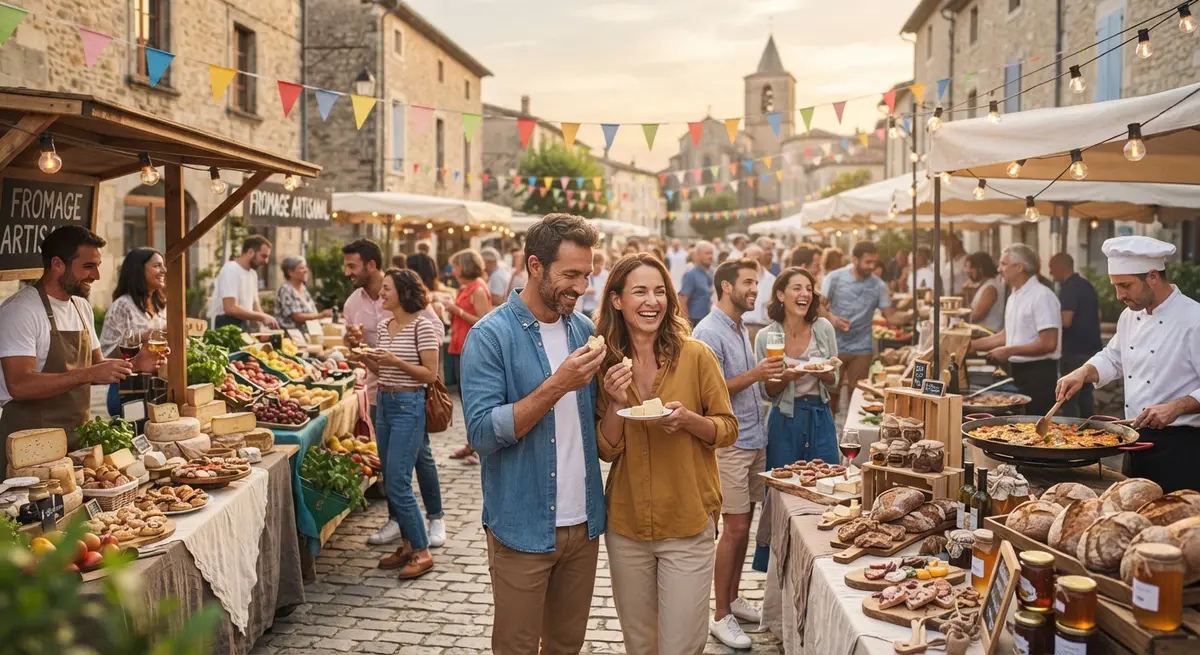
The Best Artisan Food Festivals Worth Traveling For
Some artisan food festivals are worth the flight. Cheese in Bra, chile in Hatch, truffles in Alba: names to know and how to make them pay off.
About the Authors
This recipe and guide was developed, tested, and approved in our home kitchen and daily life. Jamy is a retired Food Service District Manager and Early Childhood Program Manager who spent his career overseeing multi-site restaurant operations, large-scale culinary production, and daycare menu management. Kaïna brings the ultimate real-world test: making sure it brings ease and joy to our kids on a busy weeknight.
Read more about our professional background and philosophy →