How to Create the Perfect Outdoor Dining Space in Your Backyard
By the QuiteRecipes team (Jamy & Kaïna)
A great outdoor dining space needs shade, light, and a table that works. Here's a practical plan to build one on any backyard budget.
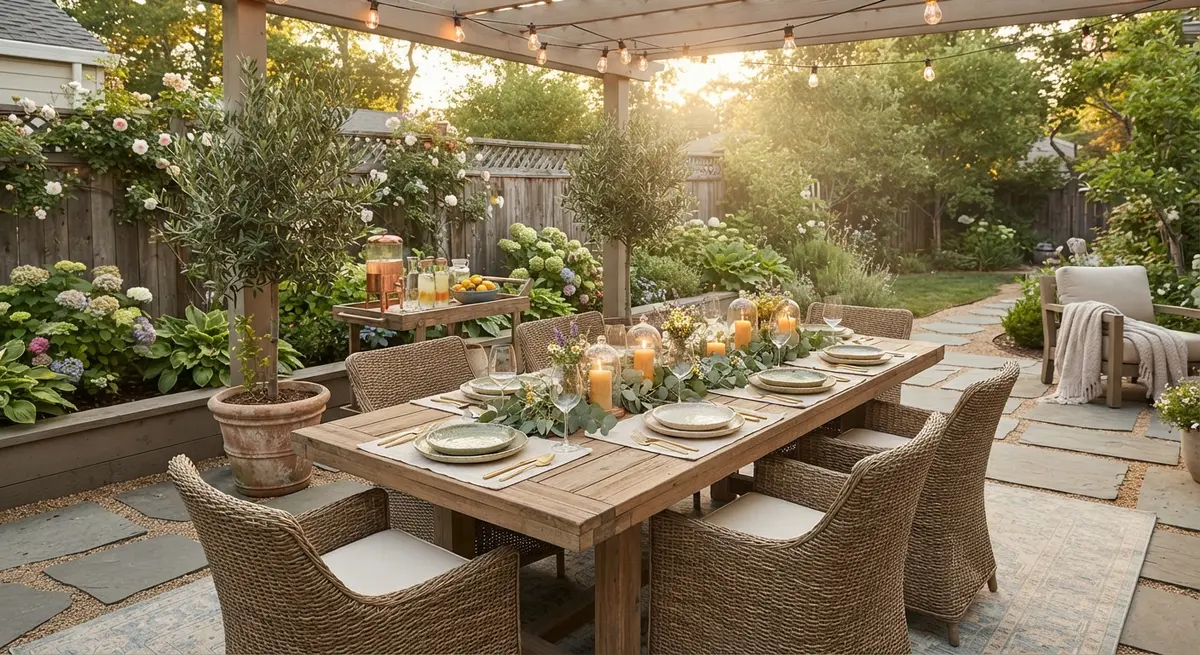
I once hosted a birthday dinner outdoors with a card table, mismatched chairs, and no shade. By the salad course the sun had moved and we were all squinting like sailors. The grilled chicken was great, but nobody remembered it, because everyone remembered the glare, the sweat, and the wobbly table joint that nearly dumped the wine. That night taught me the food was never the problem. The space was.
Since then I've spent summers refining small backyards into outdoor dining rooms, and the transformation is simpler than people think. You don't need a deck remodel or a $3,000 patio set. You need a table that works, comfortable seating, shade where you eat, and light for when dinner runs late. On a 10 by 10 foot patch of grass, I've built dining spaces people refuse to leave until midnight.
Measure the Space and Set the Table First
Everything flows from your table, so decide that first. A 6-foot (180 cm) rectangular table seats six adults comfortably; a 5-foot (150 cm) round seats four to five. Most couples do beautifully with a 4-foot (120 cm) round for two to three.
The numbers that keep dinners comfortable:
- Table width: at least 30 inches (75 cm) for plates, glasses, and a centerpiece.
- Chair clearance: give each chair about 24 inches (60 cm) of pull-out room behind it.
- Walking space: keep a 36-inch (90 cm) path around the table so nobody climbs over anyone.
- Tabletop material: teak, cedar, and stone resin handle weather; powder-coated aluminum won't rust.
Measure your best patch of level ground before shopping, and mark the table footprint with chalk. Nothing kills a dinner plan faster than a table you have to squeeze past with a hot platter.
Prioritize Shade Over Everything Else
The number one reason people abandon outdoor dinners is heat and glare. A table in full sun at 6 p.m. in July is a misery machine, no matter how good the pasta is. Shade isn't a luxury; it's the core feature.
- Patio umbrella: the fastest fix. Choose a 9 to 11 foot (2.7 to 3.4 m) canopy so it covers the whole table, with an offset base so the pole doesn't block a chair.
- Pergola or shade sail: a 10 by 12 foot (3 by 3.7 m) sail costs $150 to $400 and drops the temperature under it by about 10°F (5°C).
- Positioning: place the table where the house or a tree casts afternoon shade between 5 and 8 p.m., when people actually eat.
- Screening: a freestanding privacy screen breaks wind, adds shade, and gives the space a room-like feel.
If I have one rule for anyone building an outdoor dining area, it's this: add shade before you add lighting. A table in full sun is why so many backyard dinners end up eaten indoors.
Light the Space for the Hours That Matter
In summer, dinner moves past sunset, and the right light converts a plain yard into a favorite haunt. Warm-toned light flatters food and faces; bright white makes everything feel like a parking lot.
- String lights: the workhorse. Two strands of 48-foot (14.6 m) wire, hung in a zigzag over the table, cost under $40 and set the whole mood.
- Candle lanterns or hurricane lamps: glass-covered flames survive breezes and add warm flicker at eye level.
- A dimmable LED path light near the stairs: safety first, so nobody trips carrying a casserole dish.
Run fixtures under a canopy or buy damp-location rated lights. And always have bug coverage: citronella torches or a portable propane bug lamp can be the difference between a lovely evening and an early retreat.
Add Comfort That Makes People Stay
Comfort separates a "nice patio" from a real dining destination. Cold chairs, wet cushions, and hovering insects send guests inside by the entree. Solve the small things and people will linger.
- Cushions: 3 to 4 inch (8 to 10 cm) cushions plus padded chair covers make a 90-minute dinner feel like an indulgence.
- A side table within arm's reach of each seat so nobody holds a glass and plate awkwardly.
- Weather-shedding: buy a fitted table cover and cushion storage so a 4 p.m. shower doesn't cancel the 8 p.m. dinner.
- A blanket basket: temperatures drop fast once the sun goes down.
- Bug strategy: a fan on low does double duty, cooling the zone and discouraging mosquitoes.
I also keep a folding cart near the grill. Dinner flows so much better when someone can plate from a heated table next to the cooking area instead of sprinting into the kitchen.
Style It in Layers, Not All at Once
A beautiful space happens in stages. Resist buying everything in one weekend; it protects both your budget and your taste. Start with essentials, then layer the rest over a season.
- Stage one (essential): table, chairs, shade, and basic lighting, roughly $300 to $600 for a modest setup.
- Stage two (comfort): cushions, a side cart, and candles, another $150 to $250.
- Stage three (personality): an outdoor rug, a herb planter on the buffet, a small fountain for white noise.
- Stage four (seasonal): swap pillows and a centerpiece each season so the space never feels stale.
Pick two or three accent colors and repeat them in cushions, planters, and napkins. That repetition does more for a cohesive look than any single expensive purchase.
FAQ
What's the minimum budget for a backyard dining setup?
About $300 to $600 gets you a small table, four chairs, a patio umbrella, and string lights. Add cushions and a cart later for $200 more.
How much shade does a patio umbrella give?
A 10-foot model covers a standard 6-foot table entirely and can lower the temperature under it by 8 to 12°F (4 to 7°C).
What size table fits a small patio?
A 4-foot round in a 10 by 10 foot space works well; a 6-foot rectangle is snug but fine if you keep 36 inches of walking room.
Do I need weatherproof everything?
Yes for upholstery and lighting. Outdoor-rated fabric and damp-location fixtures barely cost more and save you replacing a set after one rainy summer.
How can I make a rented backyard feel permanent?
Use freestanding shade sails, planters, and outdoor rugs you can roll up. It all uninstalls in an afternoon.
Key Takeaways
- Measure your table footprint first, with 36 inches of walkway and 24 inches of chair clearance.
- Prioritize shade before lighting; a big umbrella or shade sail beats any string light for comfort.
- Layer warm light with string lights, lanterns, and a path light for dinners past sunset.
- Comfort means cushions, a side table per seat, weather covers, and a blanket basket for cool nights.
- Build in four budget stages so a $300 starter becomes a styled space in a season or two.
- Repeat two accent colors across cushions and planters for a cohesive look without expensive pieces.
A Final Word
That wobbly card-table dinner taught me that the space makes the memory. A proper outdoor dining room doesn't need to be grand: just a good table under shade, with warm light and comfortable chairs. Get those four things right and your backyard becomes a place where dinner runs long and nobody wants to leave.
Published on 2026-08-13 by the QuiteRecipes team (Jamy & Kaïna).
Related Articles
5 Simple Ways to Be a More Gracious and Relaxed Dinner Host
Gracious hosting isn't about fancy food. It's five repeatable habits that calm the room — and you.
How to Curate the Perfect Dinner Party Playlist for Any Vibe
The dinner party playlist is a hosting skill. Learn volume math, tempo curves, and a no-fail structure.
How to Host a Regional Food Night: A Culinary Trip to Italy
Bring Tuscany or Sicily to your dining room. Here is how to host a regional Italian food night with a real menu, course order, and sourcing.
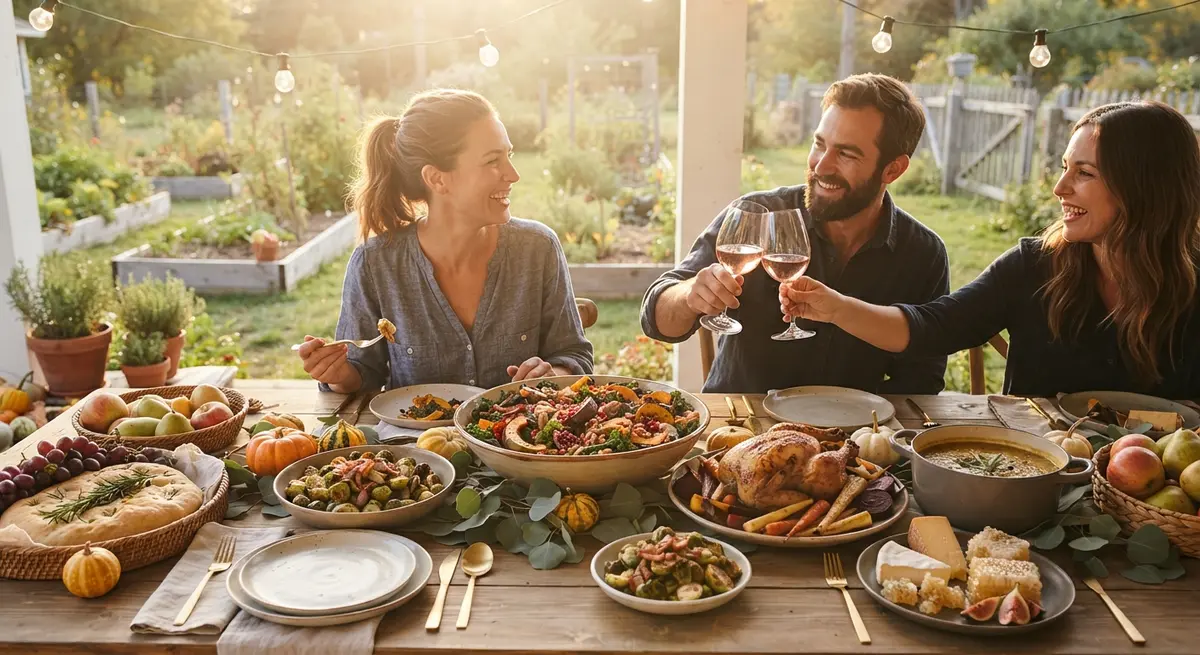
How to Host a Seasonal Harvest Dinner with Local Produce
Host a memorable seasonal harvest dinner with local produce. Plan your menu, shop the farm stand, and cook with autumn's best for under $60.
About the Authors
This recipe and guide was developed, tested, and approved in our home kitchen and daily life. Jamy is a retired Food Service District Manager and Early Childhood Program Manager who spent his career overseeing multi-site restaurant operations, large-scale culinary production, and daycare menu management. Kaïna brings the ultimate real-world test: making sure it brings ease and joy to our kids on a busy weeknight.
Read more about our professional background and philosophy →