Triphala Powder: Flavor Profile, Health Benefits & Culinary Uses
By the QuiteRecipes team (Jamy & Kaïna)
Three dried fruits, one famous Ayurvedic powder: what triphala tastes like, what the tradition claims for it, and why dosing this one calls for real care.
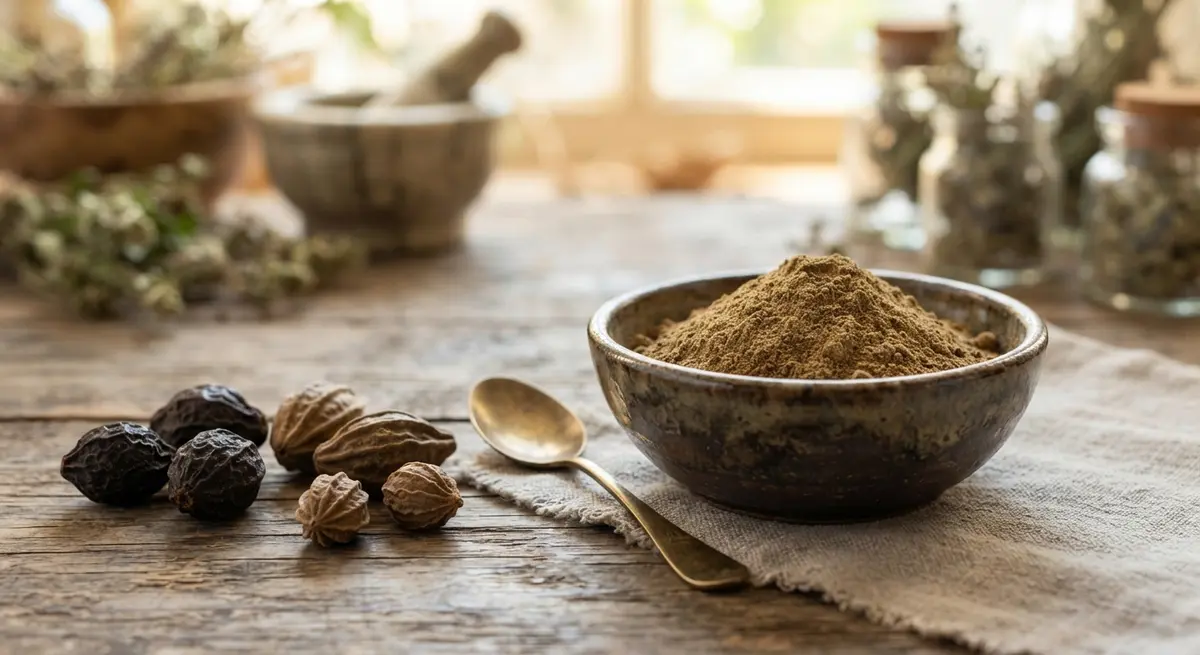
Triphala is not a cooking spice, and it is honest to say so up front. It is an Ayurvedic combination of three dried fruit powders — amla (Indian gooseberry), haritaki (chebulic myrobalan), and bibhitaki (belleric myrobalan) — ground fine and typically taken as a powder stirred into warm water at the start of the day. The name means "three fruits," and the blend is so old and so central to Ayurveda that it is sometimes translated, with respect, as the most-used herbal formula in that tradition. Westerners meeting triphala for the first time usually arrive via wellness shelves, but Indians have known it for thousands of years.
Flavor Profile & Notes
Triphala tastes like nothing you will confuse with dinner: sour, astringent, and earthy, with a bitter green edge that clamps the mouth shut the way unripe fruit does. Amla supplies the sharp sourness, haritaki a deep tannic bitterness, and bibhitaki a gentle, resinous blandness that holds the trio together. People who take it daily describe the flavor as an acquired thing, and the standard way to drink it — a teaspoon in warm water with a little honey — exists partly because the powder needs help going down. Some versions add a touch of ghee, which rounds out the tannic bite about as well as anything does.
Health Benefits & Nutrition
The three fruits are genuinely nutritious: amla is famously rich in vitamin C, and the other two carry tannins, fiber, and antioxidant polyphenols. In Ayurvedic practice triphala is the classic gentle daily digestive tonic, and modern research has looked seriously at its antioxidant activity and its traditional reputation for supporting healthy bowel regularity. This is exactly where to hold the line: triphala is an herbal preparation, dosage matters, it can interact with medications, and the words approved in a wellness blog are weaker than the words from your doctor. It is not a substitute for medical advice — ask a professional if you plan to take it regularly.
Best Culinary Pairings
If you cook with triphala at all, it is in tea and morning drinks rather than main dishes. A half teaspoon in warm water with honey makes the traditional morning glass. Some herbal practice adds it to a pinch of black pepper and ghee for the classic "trio" morning ritual, and a little ginger and lime can disguise its astringency. It occasionally appears in small amounts in traditional digestif mixes. Beyond drinks, it is better to respect it as a complement, not a centerpiece — this is a powder you take, not one you flavor a curry with.
Quick Substitutes
There is no honest cooking substitute, because triphala is not a flavor tool. Amla powder alone gives the sour note in chutneys if you want the gooseberry character; chebulic myrobalan powder is sold separately for herbal teas. In drinks, a squeeze of lemon plus a pinch of ginger approximates the puckery warmth without the tannic depth. For the herbal practice itself, substitution is not the move — the combination is the point.
FAQ / Quick Facts
- What does triphala taste like? Very sour and astringent with a bitter, earthy finish — best mixed with a little honey.
- What is in it? Equal parts dried amla, haritaki, and bibhitaki fruit powder, often taken as a morning drink of a teaspoon in warm water.
- Important note: Triphala is a traditional herbal formula, not food seasoning. Do not take herbal remedies as medicine without telling your doctor — this is not a substitute for medical advice.
Related Articles
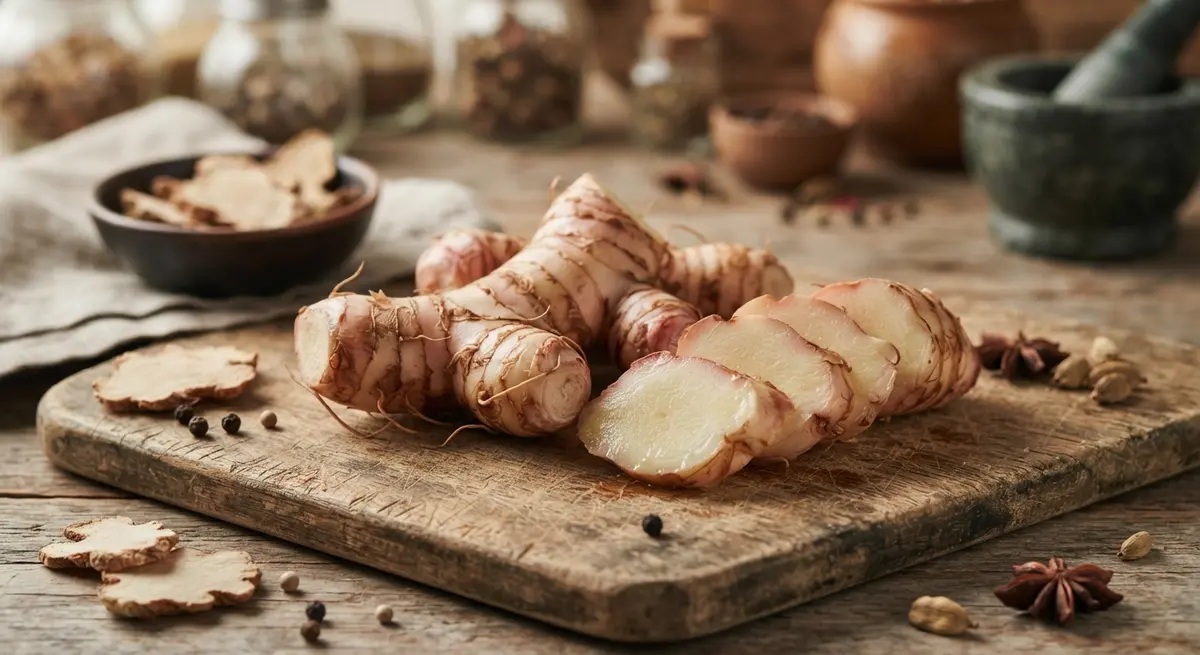
Officinal Galangal: Flavor Profile, Health Benefits & Culinary Uses
The hot-toothed Chinese galangal that apothecaries and tea makers have prized for centuries: what officinal galangal is, how to use a little, and why.
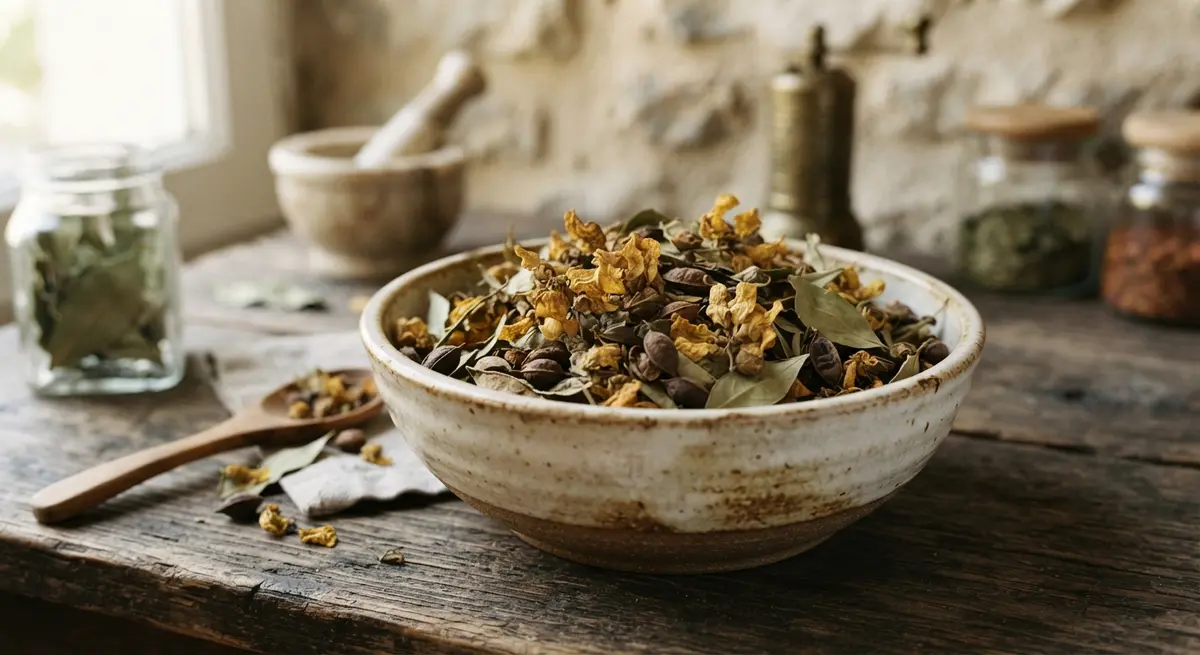
Senna Flower: Flavor Profile, Health Benefits & Culinary Uses
An honest look at senna flower, the traditional laxative herb that is not a kitchen spice: what it tastes like, why food use stays minimal, and the real limits.
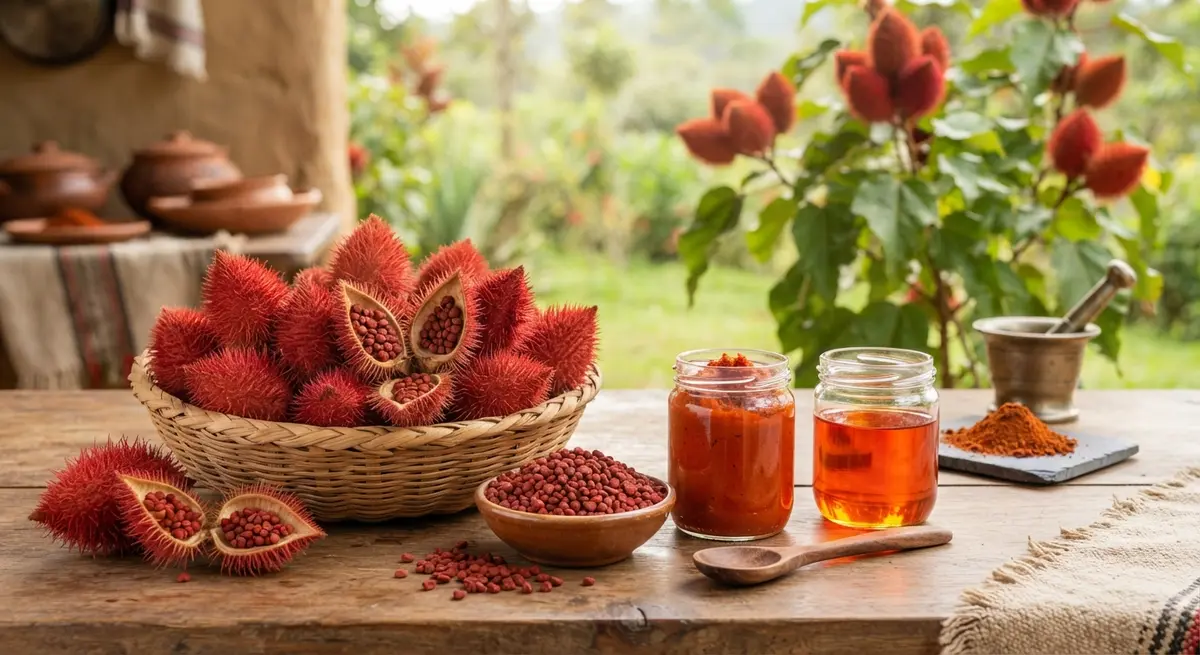
Achiote (Annatto): Flavor Profile, Health Benefits & Culinary Uses
Tiny coral-red seeds that paint food golden: the annatto tree's achiote, how to use the seeds and the Yucatan paste, and honest color substitutes.
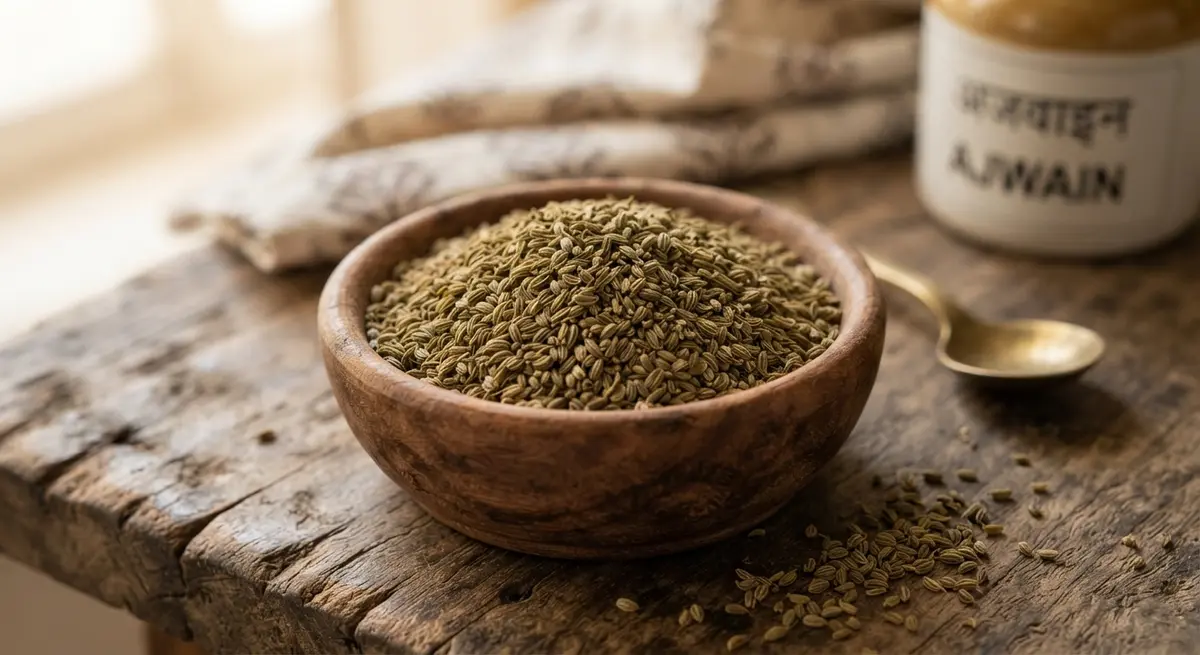
Ajwain (Carom) Seeds: Flavor Profile, Health Benefits & Culinary Uses
A tiny gray-brown seed that tastes like thyme, oregano, and cumin had a baby with a timer fuse. Here is how and why Indian kitchens use ajwain.
About the Authors
This recipe and guide was developed, tested, and approved in our home kitchen and daily life. Jamy is a retired Food Service District Manager and Early Childhood Program Manager who spent his career overseeing multi-site restaurant operations, large-scale culinary production, and daycare menu management. Kaïna brings the ultimate real-world test: making sure it brings ease and joy to our kids on a busy weeknight.
Read more about our professional background and philosophy →