Senna Flower: Flavor Profile, Health Benefits & Culinary Uses
By the QuiteRecipes team (Jamy & Kaïna)
An honest look at senna flower, the traditional laxative herb that is not a kitchen spice: what it tastes like, why food use stays minimal, and the real limits.
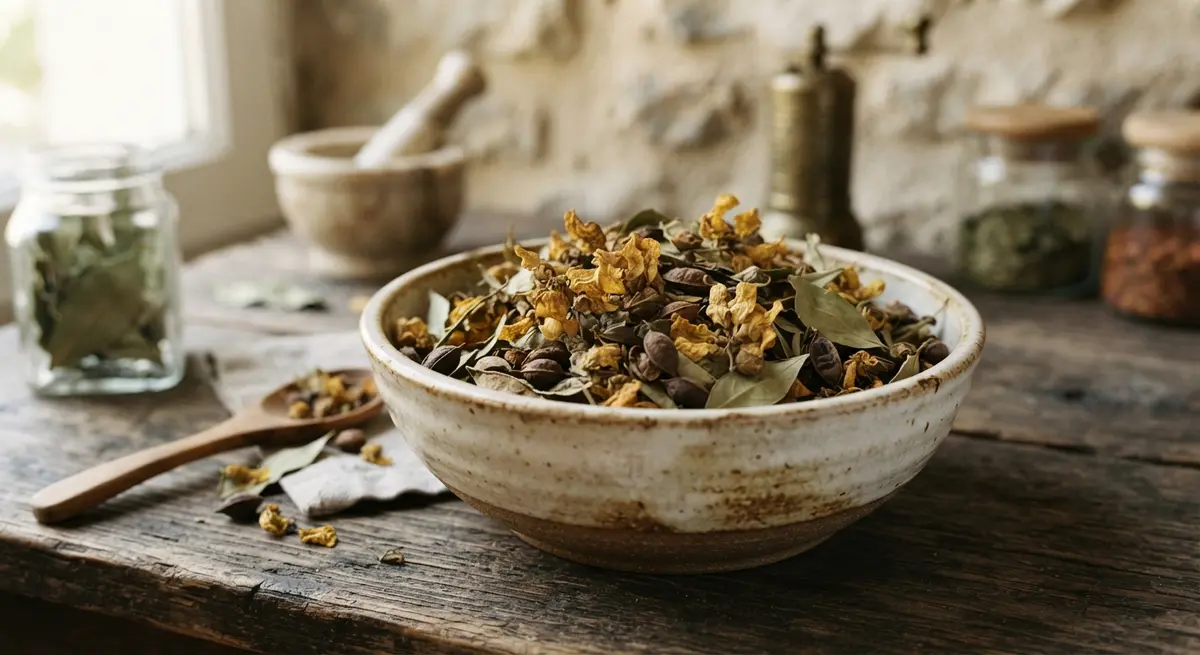
This article is the one where the kitchen and the pharmacy have to have a conversation. Senna flower comes from Senna alexandrina, a legume of the dry regions of Africa and Arabia, used for millennia in traditional medicine not as flavor but as a reliably strong laxative. The flowers are a traditional herbal preparation in parts of south Asia, where they are brewed rather than cooked. So let us be direct with each other: senna is an herb with a real pharmaceutical effect, not a spice to scatter over dinner, and treating it like one would be a mistake. This matters more than fitting it neatly into a perky spice list.
Flavor Profile & Notes
If you do taste senna flower, the honest description is flat: mildly bitter, dry, and faintly hay-like, with nothing to recommend it as food. The trade is all function. In traditional preparations the dried flowers are simmered briefly into a tea, sometimes with ginger and jaggery to soften the bitterness, and the result is a dark, earthy cup with a faint date-like sweetness behind the tannins. Nobody makes it for the taste, and most traditional sources add a sweetener or another aromatic for exactly that reason.
Health Benefits & Nutrition
There is no sugar-coating the pharmacology here: the leaves and flowers contain sennosides, compounds that reliably stimulate the bowel, which is why senna sits on pharmacy shelves as a recognized laxative. Traditional healers knew this effect for centuries, and modern medicine still uses the same chemistry. This is the calm, important warning. Laxatives are medicine — they can cause cramps, dehydration, and dependency, they interact with diuretics and other drugs, and they are dangerous in pregnancy without supervision. Senna is a genuine herbal drug, not a spice, and it is not a substitute for medical advice. If you take it at all, dose it as medication, tell your doctor, and never treat it casually.
Best Culinary Pairings
The honest answer is: there are essentially none. Senna flower belongs in traditional herbal tea preparations in small, deliberate, medication-like doses, generally with warming companions like ginger, cardamom, or fennel seeds to round out the bitterness. It is occasionally combined with triphala or other traditional blends in Ayurvedic herbal practice. In food it has no friendly role, and the responsible advice is to leave it out of cooking entirely and to consult a healthcare professional anytime it is used for its traditional purpose.
Quick Substitutes
You are not substituting senna in a recipe; you are choosing not to take it. For a bitter, gently warming herbal tea without the laxative load, steep dried chamomile and a little dandelion root instead. If a traditional blend calls for senna and you want to skip it, simply omit it — the blend still brews a fine cup, minus the medicine. That is the right trade, every time.
FAQ / Quick Facts
- Can you cook with senna flower? No — it is a traditional laxative herb, not a kitchen spice, and food use should stay minimal.
- Is it safe? As a recognized laxative it can cause cramps and dehydration and interacts with medicines — treat it as medication, tell your doctor, and never take it without real guidance. This is not medical advice; ask a professional.
- What does it taste like? Flat and bitter with a faint hay note — rarely consumed for flavor.
Related Articles
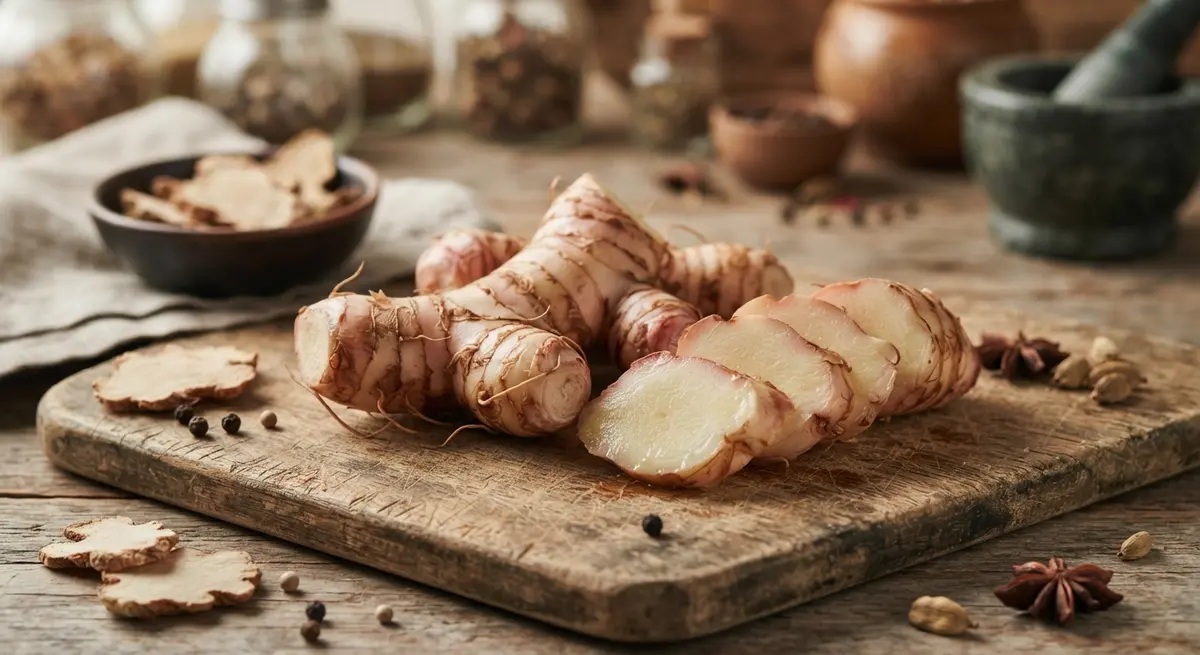
Officinal Galangal: Flavor Profile, Health Benefits & Culinary Uses
The hot-toothed Chinese galangal that apothecaries and tea makers have prized for centuries: what officinal galangal is, how to use a little, and why.
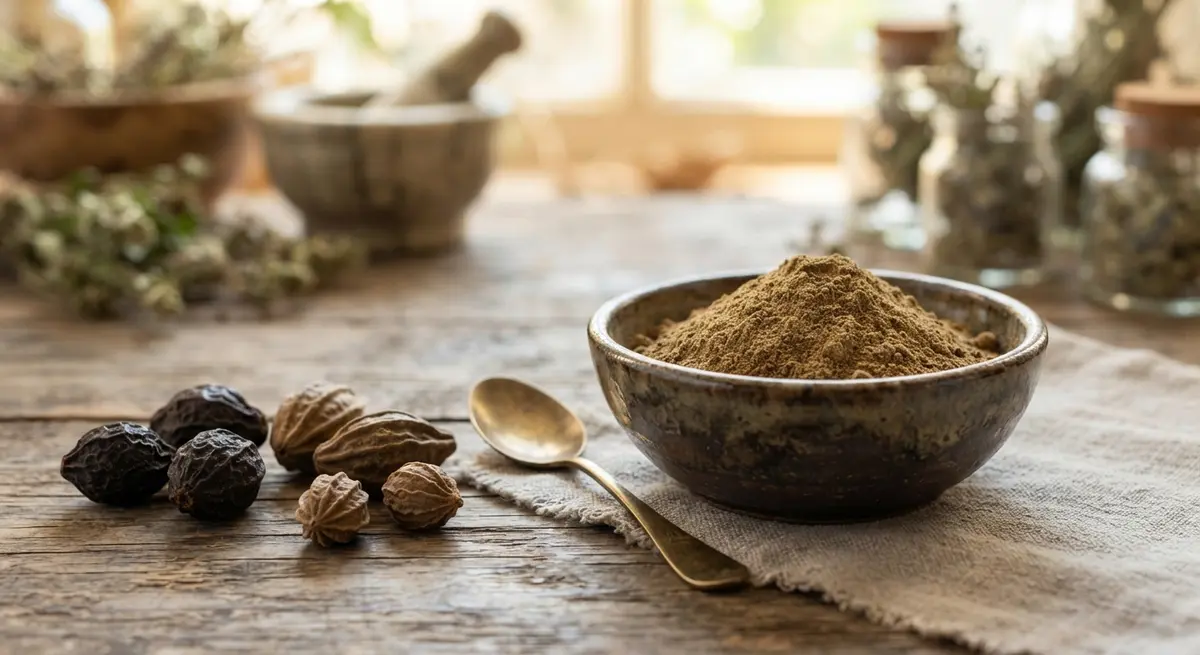
Triphala Powder: Flavor Profile, Health Benefits & Culinary Uses
Three dried fruits, one famous Ayurvedic powder: what triphala tastes like, what the tradition claims for it, and why dosing this one calls for real care.
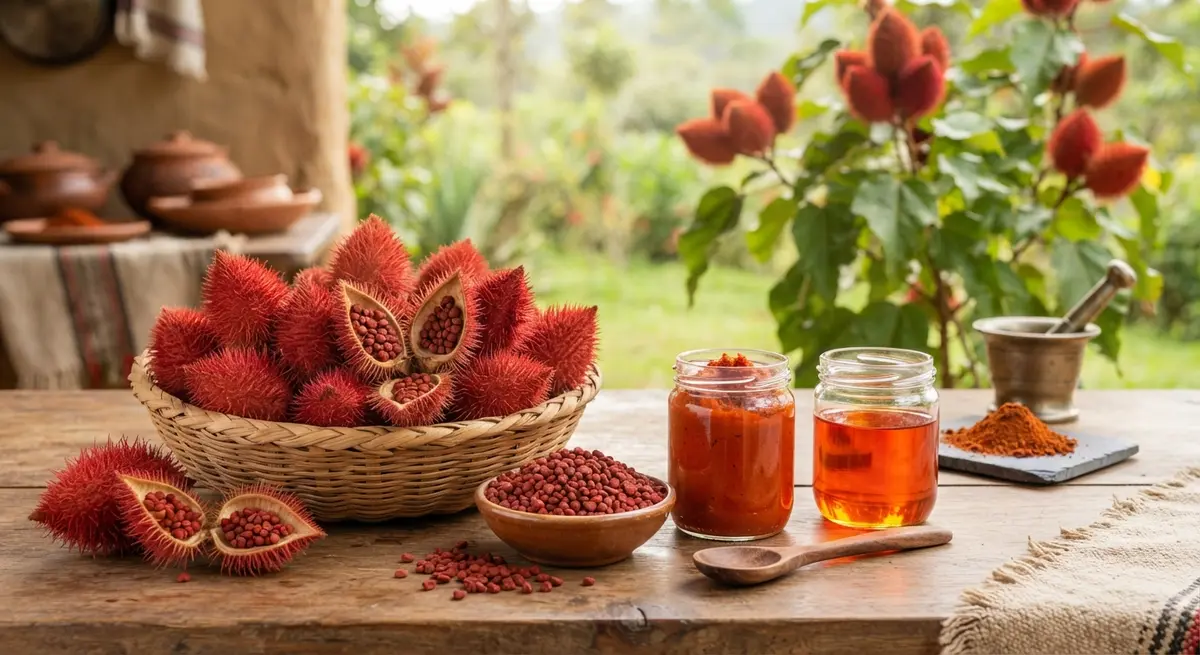
Achiote (Annatto): Flavor Profile, Health Benefits & Culinary Uses
Tiny coral-red seeds that paint food golden: the annatto tree's achiote, how to use the seeds and the Yucatan paste, and honest color substitutes.
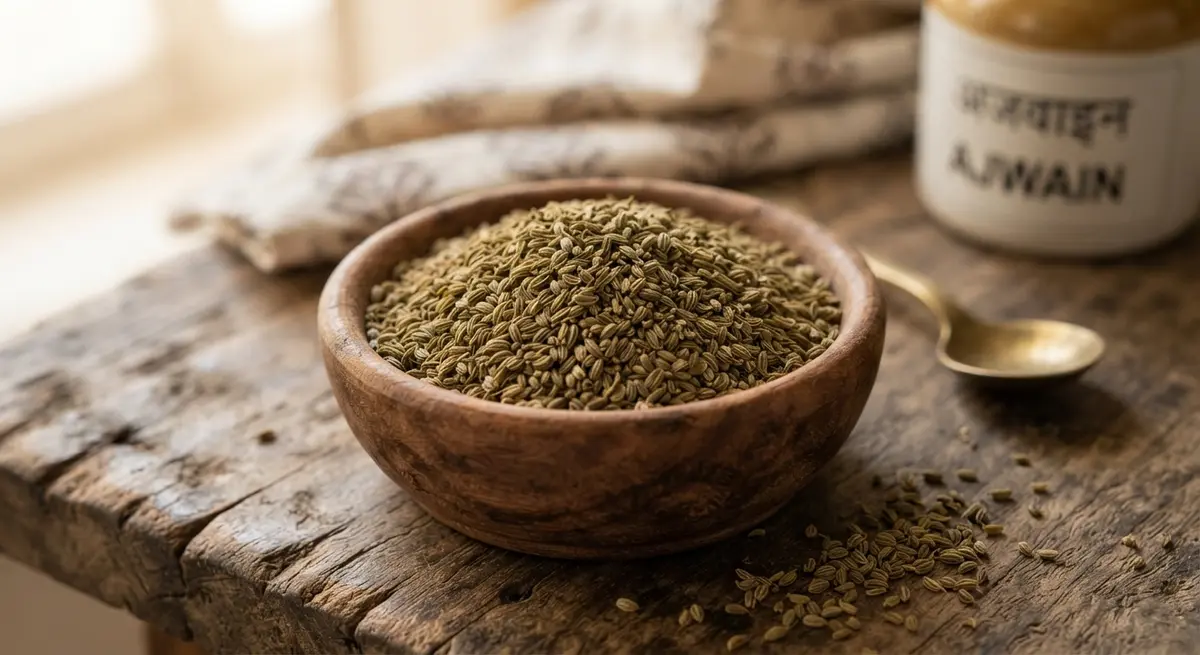
Ajwain (Carom) Seeds: Flavor Profile, Health Benefits & Culinary Uses
A tiny gray-brown seed that tastes like thyme, oregano, and cumin had a baby with a timer fuse. Here is how and why Indian kitchens use ajwain.
About the Authors
This recipe and guide was developed, tested, and approved in our home kitchen and daily life. Jamy is a retired Food Service District Manager and Early Childhood Program Manager who spent his career overseeing multi-site restaurant operations, large-scale culinary production, and daycare menu management. Kaïna brings the ultimate real-world test: making sure it brings ease and joy to our kids on a busy weeknight.
Read more about our professional background and philosophy →