Garlic Powder & Dried Flakes: Flavor Profile, Health Benefits & Culinary Uses
By the QuiteRecipes team (Jamy & Kaïna)
Garlic powder is not lazy fresh garlic — it is a different spice with its own best jobs. Learn the grades and the rubs, breads, and sauces it belongs in.
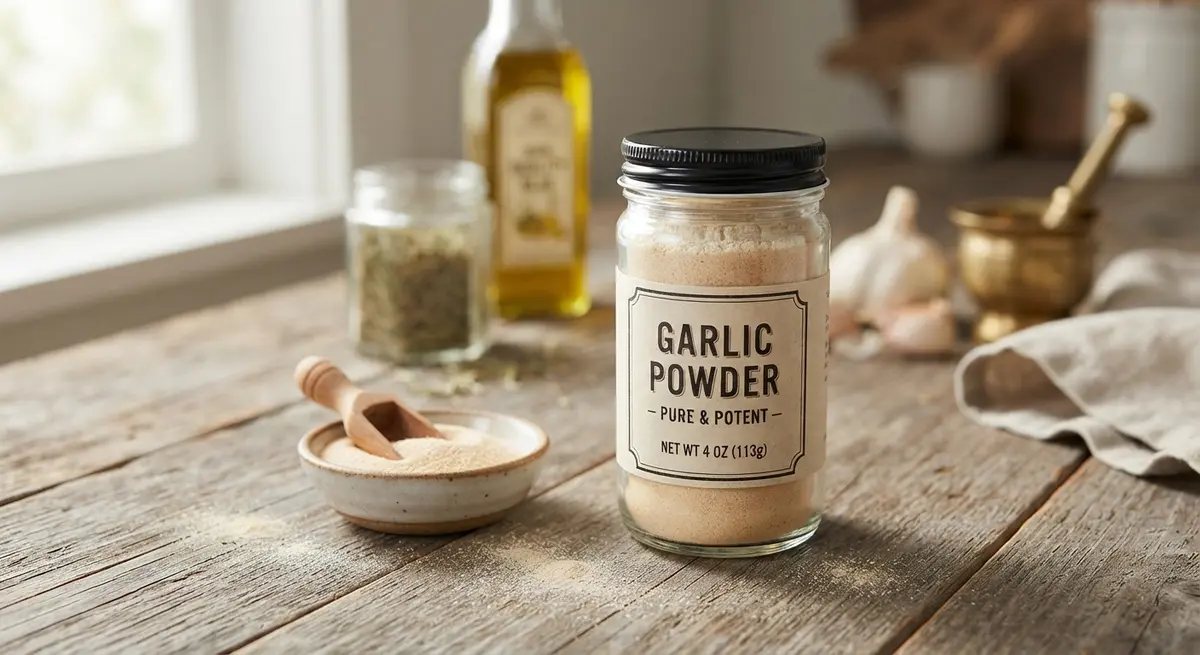
Garlic powder catches flak from foodies who assume it is a sad imitation of the real thing. That is unfair to a perfectly good spice. Garlic powder is dried garlic — cloves slowly dehydrated and milled to a fine, cream-colored dust — and in its best jobs, it genuinely outperforms the fresh clove.
The useful way to think about it: fresh garlic is loud and fast, garlic powder is steady and tireless. It is sweeter, rounder, and gentler than raw garlic, and it never turns bitter in a hot pan. Keep both in the kitchen and they take turns.
Flavor Profile & Notes
Garlic powder tastes of garlic concentrated and softened — savory, mildly sweet, and warm, with a distinct roasted note that fresh garlic does not have. Because it is dried, it behaves completely differently: it does not burn, it dissolves instantly into sauces and rubs, and it blends evenly into any dry mix. It comes in two grades worth knowing — fine powder, which melts quickly, and granulated garlic, coarser and slower, better for rubs and spice blends. Dried garlic flakes keep their shape and add gentle texture plus a milder bite.
Health Benefits & Nutrition
Fresh garlic's most famous health compound, allicin, is largely destroyed by drying, which is the honest answer to the "is powder as healthy" question — it is not, not in the same way. But dried garlic is not a zero: it keeps a share of antioxidant sulfur compounds and some trace minerals, and as a seasoning it reliably adds flavor for almost no calories or sodium. For cooking, garlic powder is a convenience and a flavor asset; for health, eat the fresh stuff when you can and season freely.
Best Culinary Pairings
This is the spice of dry rubs and seasoned mixes: garlic powder plus paprika, black pepper, and a little brown sugar makes the chicken, steak, or roasted-vegetable rub you cannot live without. It belongs in burger patties, meatloaf, compound butter, over popcorn, and in garlic bread when fresh garlic would burn in the broiler. A teaspoon in melted butter for pasta or in salad dressing gives the garlic hum that fresh cloves would need first aid for.
Quick Substitutes
One clove of fresh garlic is about an eighth of a teaspoon of powder, but the swap is not equal — fresh is sharper, so use it earlier in cooking. Granulated garlic swaps directly at equal measure. Garlic salt works only if you cut the recipe's salt, a rule home cooks forget. If the pantry is bare entirely, a pinch of asafoetida (hing) plus onion powder fakes an allium depth for Indian-style dishes.
FAQ / Quick Facts
- How long does it keep? Tightly sealed, a year or more; it clumps and weakens fastest of all the powders, so buy small.
- Is it better than fresh garlic? Different — sweeter, steadier, never bitter in hot pans, but not a nutritional equal.
- Know your spice: Allium family; fine powder, granulated, or flakes; the backbone of dry rubs and seasoned snacks.
Related Articles
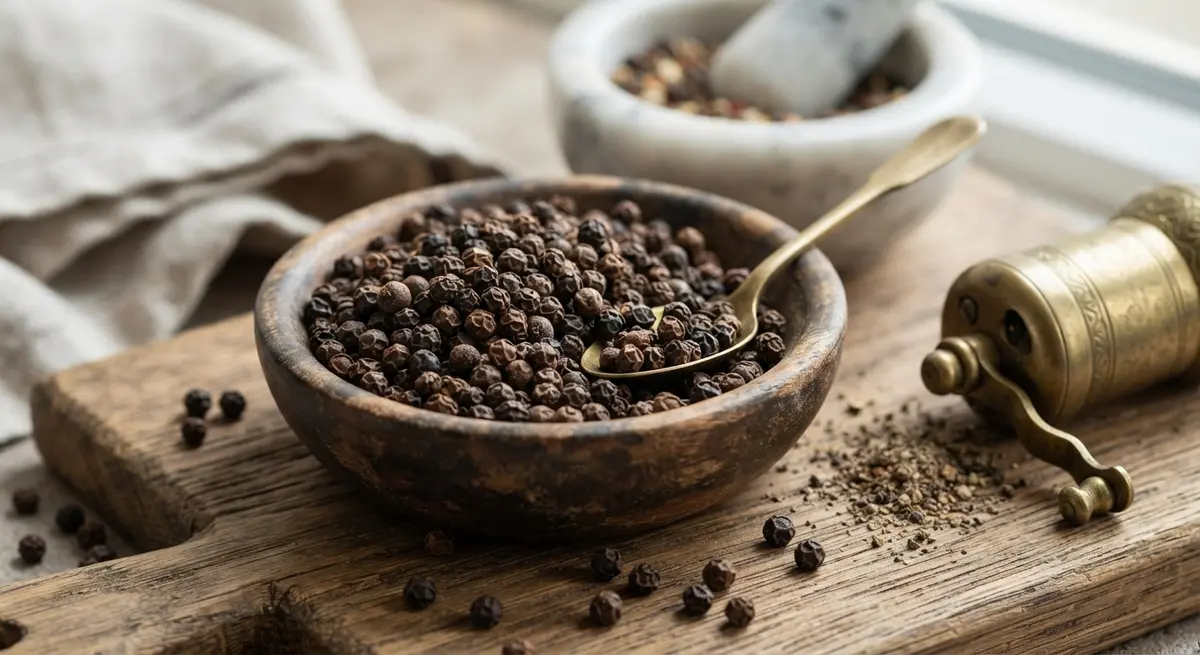
Black Pepper: Flavor Profile, Health Benefits & Culinary Uses
The dusty jar of pre-ground pepper is not the same spice as one you grind at the table. Here is how to get the most from black pepper in every meal you cook.
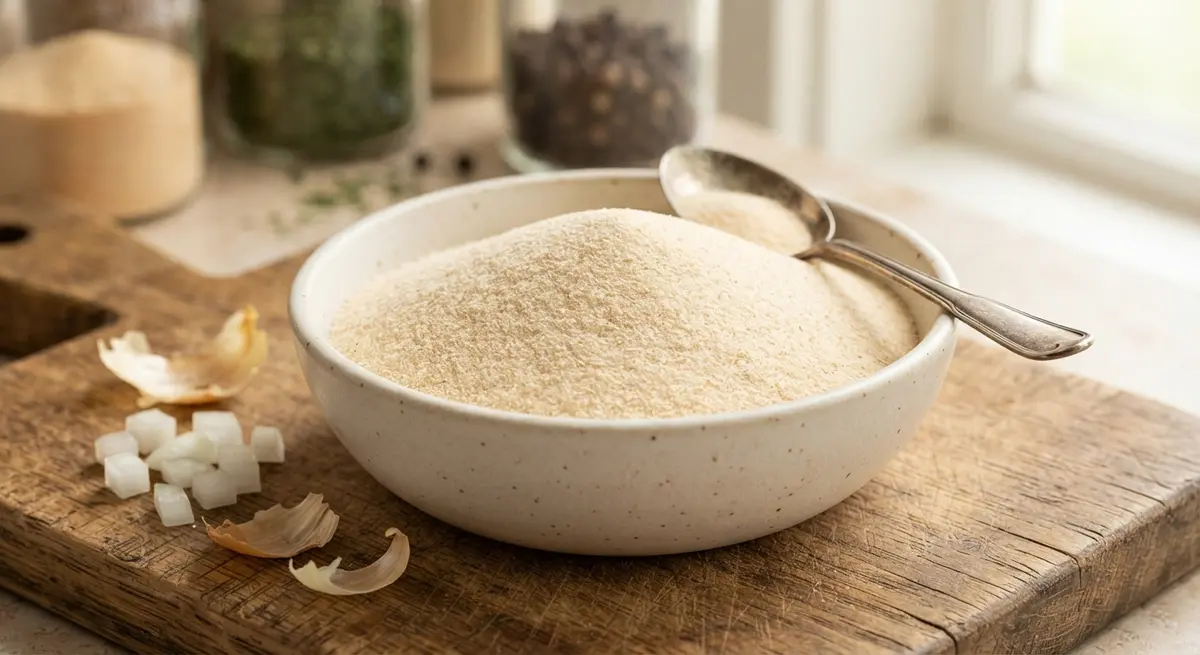
Onion Powder & Dried Flakes: Flavor Profile, Health Benefits & Culinary Uses
Onion powder is sweeter and rounder than raw onion, never makes you cry, and dissolves into anything. Here is how to buy and use each grade well.
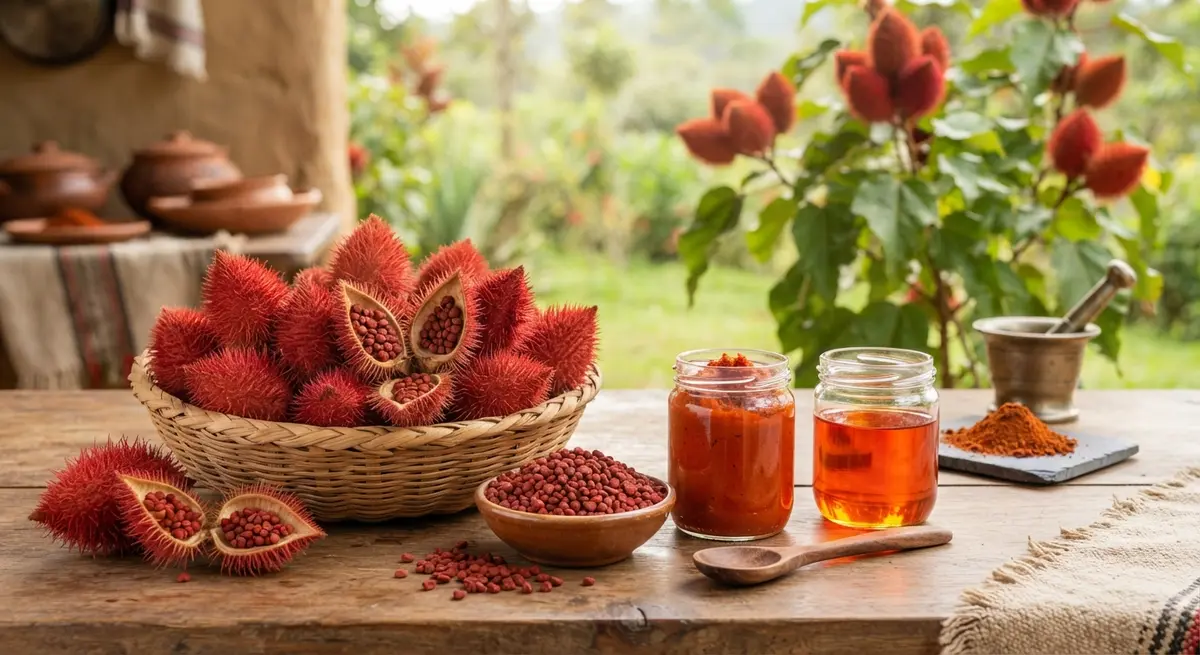
Achiote (Annatto): Flavor Profile, Health Benefits & Culinary Uses
Tiny coral-red seeds that paint food golden: the annatto tree's achiote, how to use the seeds and the Yucatan paste, and honest color substitutes.
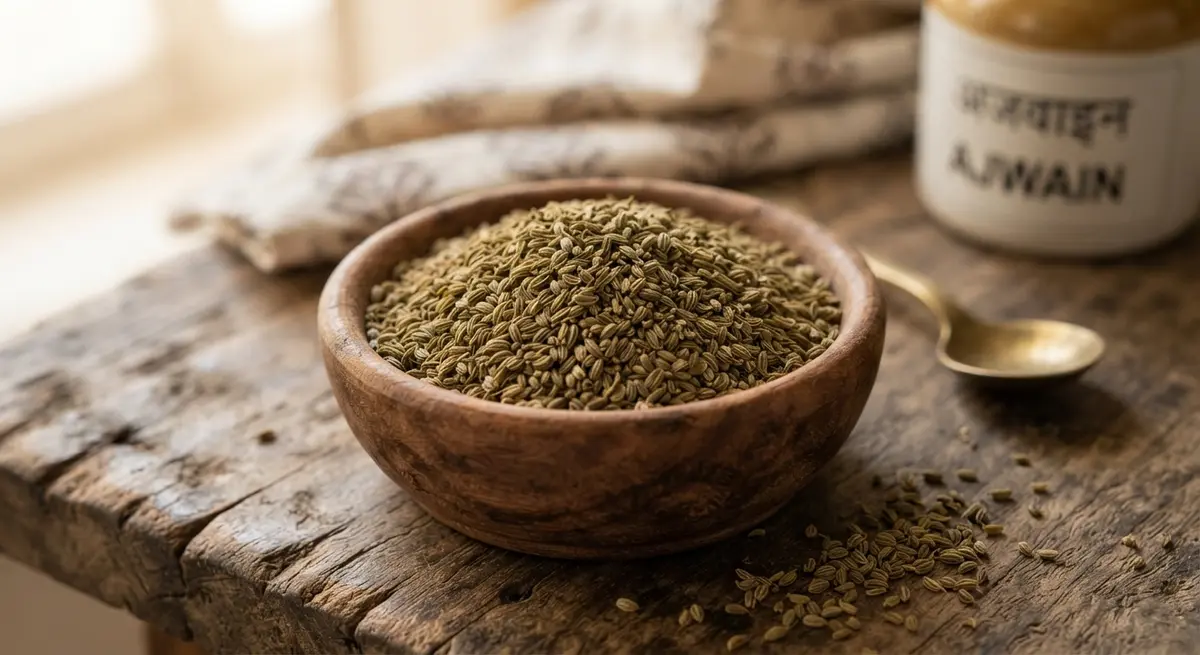
Ajwain (Carom) Seeds: Flavor Profile, Health Benefits & Culinary Uses
A tiny gray-brown seed that tastes like thyme, oregano, and cumin had a baby with a timer fuse. Here is how and why Indian kitchens use ajwain.
About the Authors
This recipe and guide was developed, tested, and approved in our home kitchen and daily life. Jamy is a retired Food Service District Manager and Early Childhood Program Manager who spent his career overseeing multi-site restaurant operations, large-scale culinary production, and daycare menu management. Kaïna brings the ultimate real-world test: making sure it brings ease and joy to our kids on a busy weeknight.
Read more about our professional background and philosophy →