Harissa Spice Blend: Making a Versatile Dry Paste Foundation
By the QuiteRecipes team (Jamy & Kaïna)
I first made harissa on a cold January night with dried chilies from the market. It turned a plain pot of soup into something I still think about.
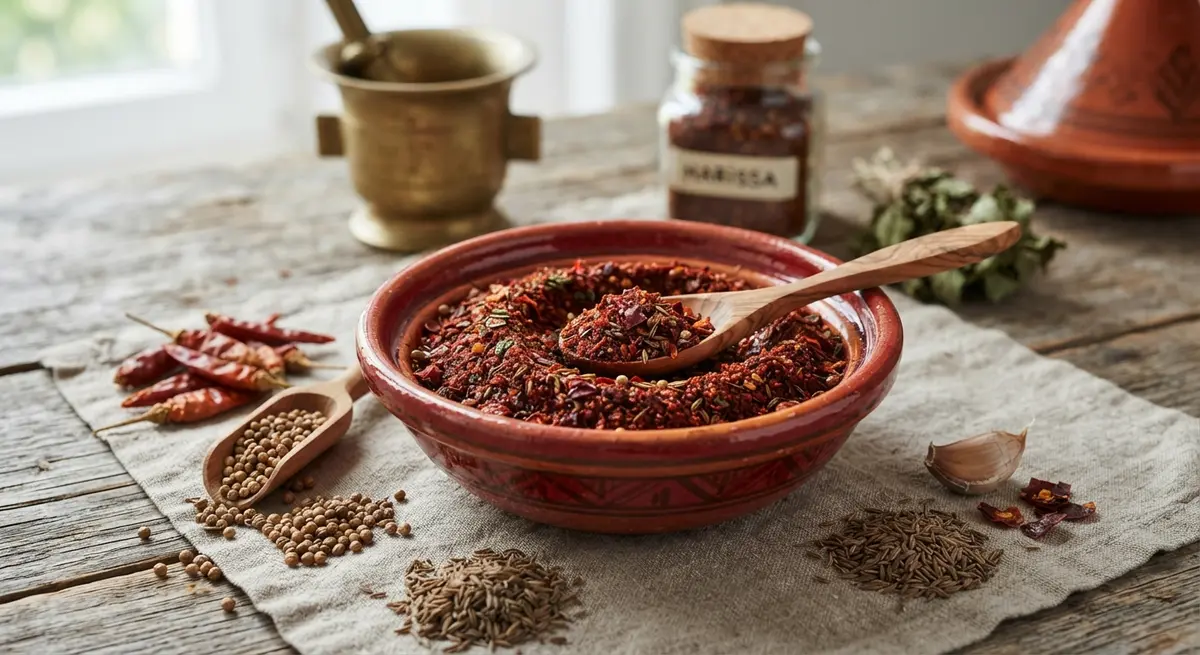
I first made harissa on a cold January night with dried chilies from the market. It turned a plain pot of soup into something I still think about, and now a jar lives in my fridge permanently. This is the North African chili paste that makes everything more interesting.
What It Is & Where It Comes From
Harissa is a North African chili condiment, especially associated with Tunisian cooking. The dry spice foundation is built on dried chilies, often ancho and bird's eye, combined with caraway, coriander, and cumin, plus garlic. That spice base is traditionally mixed with olive oil, and often tomato or citrus, into a thick, spreadable paste. It is used in couscous, grilled meat, eggs, soups, and sauces. In many North African homes it sits on the table the way ketchup sits on an American one.
The Blend: Ratios That Work
This recipe makes about a cup of harissa paste. Start with the dry spice foundation before you add the wet ingredients.
- 8 dried ancho chilies, stemmed and seeded
- 6 dried bird's eye chilies (or 3 if you prefer less heat)
- 1 tablespoon caraway seeds
- 1 tablespoon coriander seeds
- 1 teaspoon cumin seeds
- 4 garlic cloves, peeled
- 1 teaspoon fine sea salt
- 3 to 4 tablespoons olive oil
- 2 tablespoons tomato paste (optional, for body)
Toast the dried anchos and bird's eye chilies in a dry skillet over medium heat for about 30 seconds per side until fragrant and slightly pliable. Toast the caraway, coriander, and cumin in the same skillet for about 2 minutes until aromatic. Let everything cool, then grind the toasted spices to a powder. Rehydrate the chilies in hot water for 15 minutes, drain, then blend them with the garlic, salt, ground spices, olive oil, and tomato paste until you have a thick, spreadable paste. The toasting and rehydrating steps are what give harissa its depth and smooth texture.
How to Use It
Stir a tablespoon into couscous or grain bowls while they are still warm. Swirl it into soups like lentil, chickpea, or tomato for warmth and complexity. Brush it onto chicken, lamb, or fish during the last few minutes of grilling for a smoky, spiced crust.
Spread it on toast with a fried egg for a fast breakfast. Fold a teaspoon into mayonnaise or yogurt for a dipping sauce for roasted vegetables, falafel, or flatbread.
Variations & Storage
For a smokier harissa, use all ancho chilies and add a half teaspoon of smoked paprika. For more heat, increase the bird's eye chilies. If you prefer a brighter, more citrus-leaning version, add the zest of one lemon or a tablespoon of preserved lemon to the paste. Skip the tomato paste for a more purely chili-forward result.
Store in a glass jar in the refrigerator, covered with a thin layer of olive oil, for up to one month. For longer storage, freeze the paste in ice cube trays and transfer the cubes to a freezer bag. The cubes keep well for up to three months.
FAQ / Quick Facts
- Is harissa very spicy? It can be, but you control the heat by adjusting the ratio of mild anchos to hotter bird's eye chilies.
- Can I buy dried chilies for harissa at a regular grocery store? Often yes, though Latin or Middle Eastern markets typically have better selection and fresher stock.
- Does harissa contain tomato? Traditional versions vary. Tomato paste adds body and sweetness, but it is optional.
- How is harissa different from chili paste? Harissa has a specific spice profile with caraway, coriander, and cumin, while generic chili paste is typically just ground chili.
Related Articles
Moroccan Chermoula Spice Blend: Bright, Zesty, and Herbaceous
Cumin, paprika, coriander, garlic, and a hint of chili make a chermoula base you can keep dry and revive with herbs, lemon, and oil.
Advieh: Exploring the Aromatic Spice Blends of Persian Cuisine
Cinnamon, cardamom, turmeric, and rose petals in one jar? That is advieh, the Persian blend that turns plain rice into an occasion.
Baharat: The Warm Middle Eastern Blend That Elevates Any Meat Dish
Baharat simply means spices in Arabic, and once you balance the warm ones, it becomes the perfumed hand that lifts your whole plate of meat and rice.
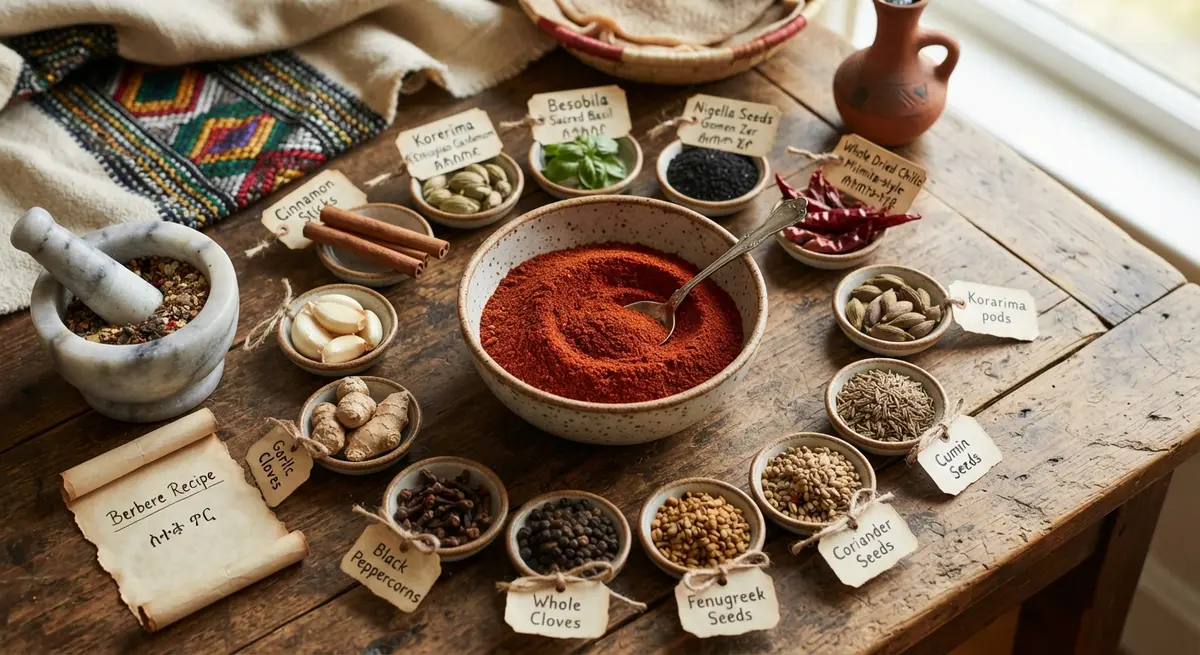
Berbere: The Fiery, Complex Ethiopian Spice Blend Explained
Berbere is the heartbeat of Ethiopian stews like doro wat. Once you blend it, a spoonful of oil turns a plain onion into dinner.
About the Authors
This recipe and guide was developed, tested, and approved in our home kitchen and daily life. Jamy is a retired Food Service District Manager and Early Childhood Program Manager who spent his career overseeing multi-site restaurant operations, large-scale culinary production, and daycare menu management. Kaïna brings the ultimate real-world test: making sure it brings ease and joy to our kids on a busy weeknight.
Read more about our professional background and philosophy →