The Science of Curry Powder: Crafting Your Own Custom Heat Level
By the QuiteRecipes team (Jamy & Kaïna)
Most kitchen curry powder is actually a British invention — and that's freeing. You get to build heat exactly your way.
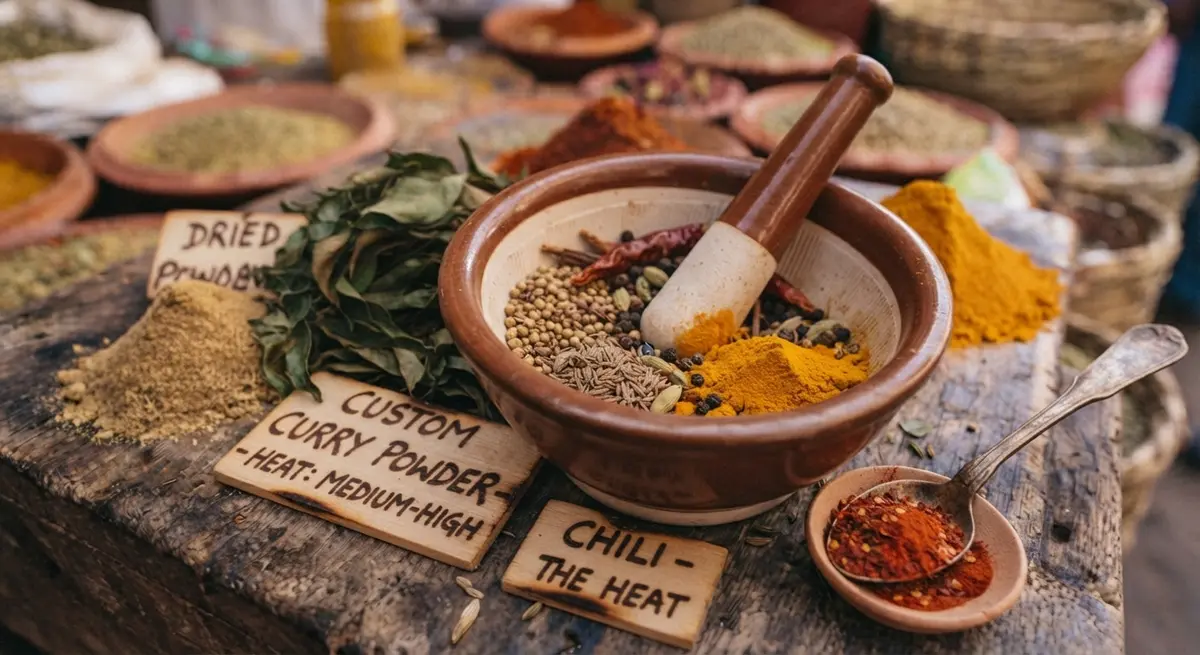
If you've ever wanted your curry a little hotter, or a touch gentler, the fix is mixing your own curry powder. Once I understood what's actually inside the jar, dialing the heat felt like a superpower. Mine now lives in a labeled jar with my heat level written on a bit of tape, and I adjust it for whoever's coming to dinner.
What It Is & Where It Comes From
Here's the surprise: curry powder as a fixed product is largely a British colonial-era invention, not any one canonical Indian blend. In Indian home cooking, spices are blended fresh, dish by dish, family by family. The all-purpose yellow powder we grew up on was an export-friendly shortcut. That's good news for us, because with no single canon to honor, you can build a base that tastes like you and set the heat exactly where you want it.
The Blend: Ratios That Work
Almost every curry powder builds on the same architecture. Start with 2 tablespoons coriander, 1 tablespoon turmeric, 1 tablespoon cumin, and 1 tablespoon fennel — that's the aromatic, gently sweet base. Pungency comes from black pepper or mustard, warmth from cinnamon, cardamom, or cloves, and depth from ground ginger (plus onion or garlic powder if you like). The heat is entirely yours: 1/2 teaspoon of cayenne for mild, 1 to 2 teaspoons for medium, more for serious fire. Toast the cumin and coriander seeds first for extra depth, then grind everything together.
How to Use It
Use your blend anywhere you'd use the jar stuff. A tablespoon in a pot of soup, a teaspoon folded into oil over roasted vegetables, or a generous sprinkle on chicken before searing. Because your powder is freshly ground, start with a little less than you're used to — homemade is noticeably stronger. When in doubt, stir in the base first, then add extra cayenne at the end to fine-tune the heat without overwhelming the dish.
Variations & Storage
Not a fennel person? A little cinnamon or a pinch of cloves can take its place. Add celery seed for savory soups, or extra dried ginger for warmth. Watch out for turmeric's habit of staining everything orange — consider it a badge of honor. Store the blend in an airtight jar in a cool, dark cabinet; ground spices keep about three months, and the cayenne's bite is usually the last thing to fade.
FAQ / Quick Facts
- What's the base of curry powder? Coriander, turmeric, cumin, and fennel — the aromatic foundation everything else builds on.
- Where does the heat come from? Cayenne or other dried chili, with extra bite from black pepper or mustard if you want it.
- Is curry powder authentically Indian? Not as one fixed blend — it's largely a British colonial-era invention, which frees you to customize.
- How do I control heat without wrecking flavor? Add the spicy stuff at the end and taste as you go, rather than dumping it all in at once.
Related Articles
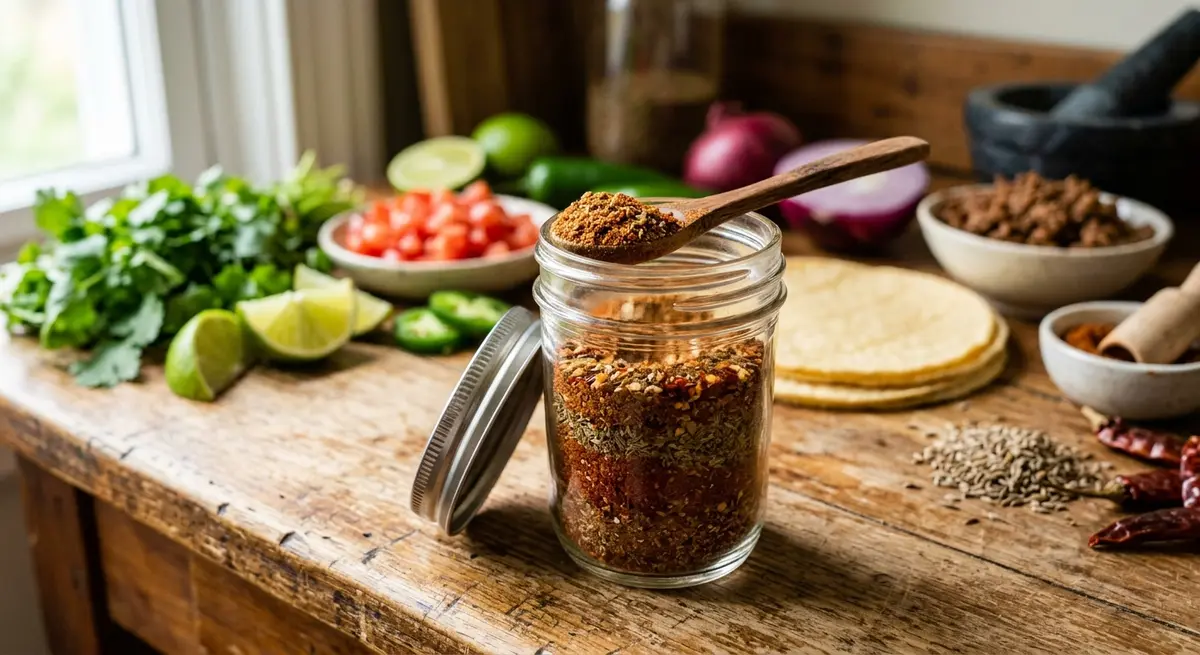
How to Blend the Perfect Low-Sodium Taco Seasoning from Scratch
Taco seasoning from a packet is almost all salt. From scratch, it is bright chili, warm cumin, and garlic you control with your own spoon.
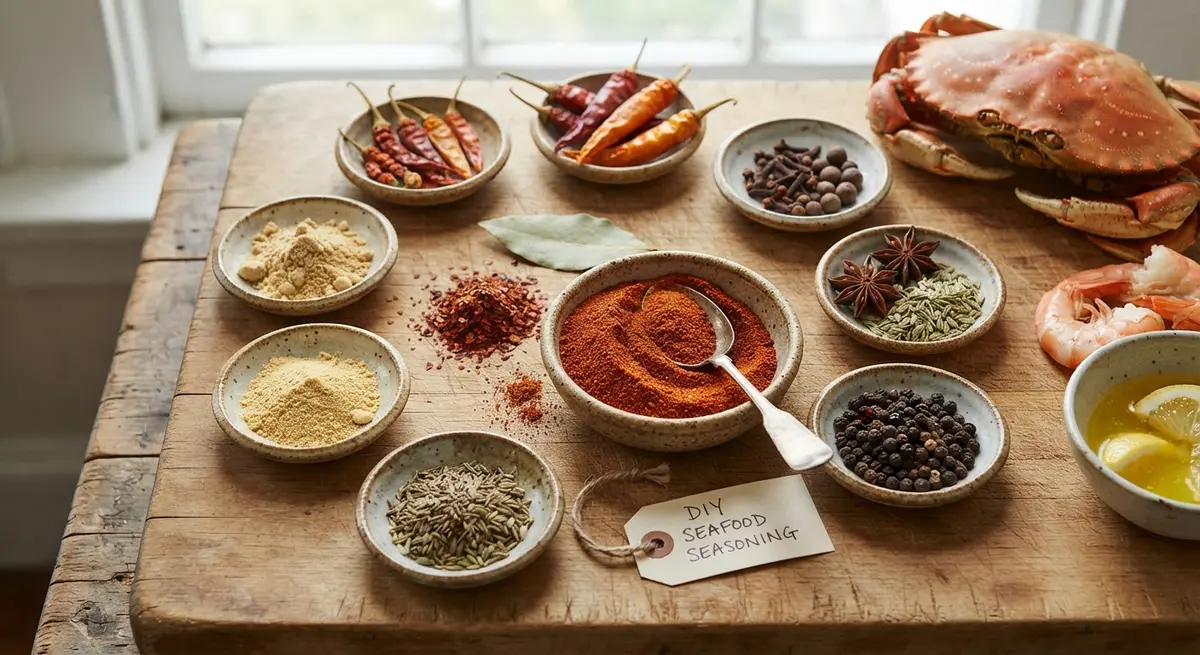
Old Bay Alternative: How to Make Your Own Seafood Spice Mix
Old Bay is iconic, but the label tells a long story. Mix your own and you control the salt, skip the MSG, and still taste the bay.
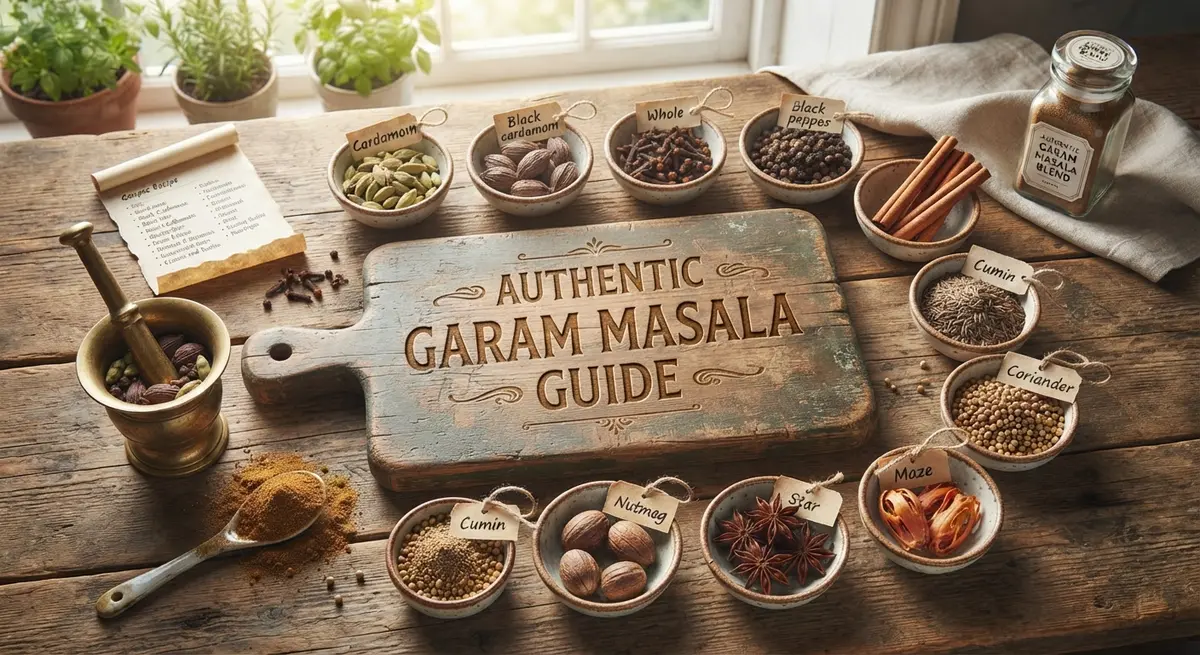
The Ultimate Guide to Making Authentic Garam Masala at Home
Mine lives in a little tin on my counter, and I reach for it more than I reach for salt. Once you taste homemade, you won't go back.
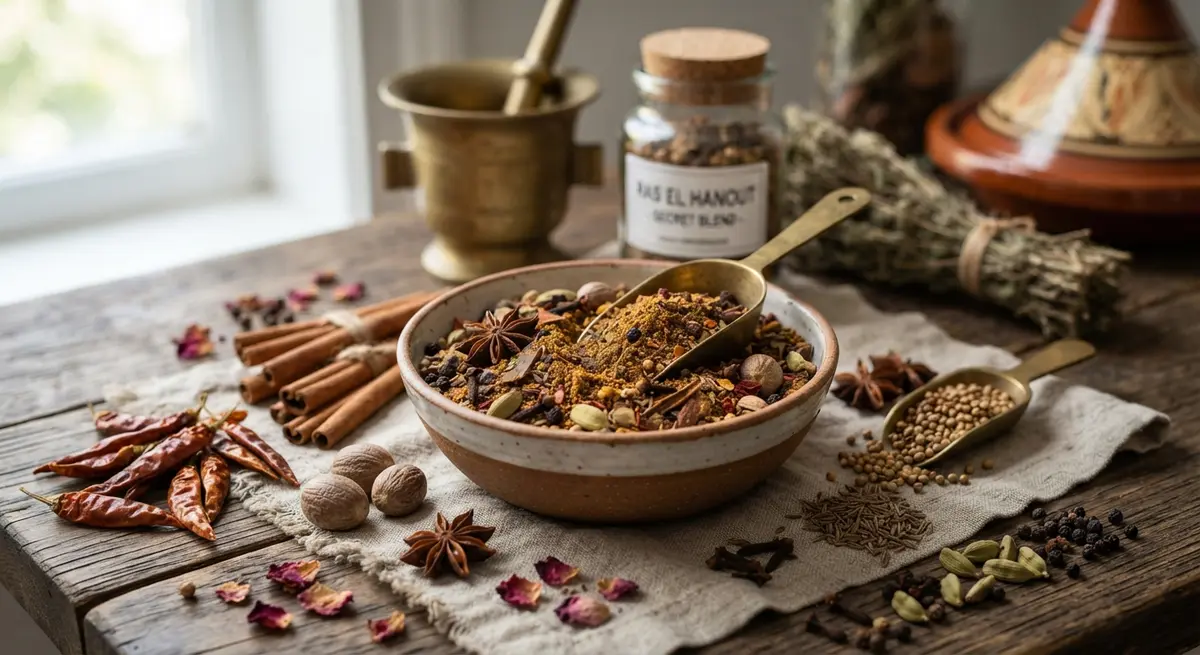
Why Your Homemade Ras el-Hanout Needs These 12 Secret Spices
I didn't really understand ras el-hanout until I ground my own twelve-spice version. It's sweet, warm, and earthy all at once.
About the Authors
This recipe and guide was developed, tested, and approved in our home kitchen and daily life. Jamy is a retired Food Service District Manager and Early Childhood Program Manager who spent his career overseeing multi-site restaurant operations, large-scale culinary production, and daycare menu management. Kaïna brings the ultimate real-world test: making sure it brings ease and joy to our kids on a busy weeknight.
Read more about our professional background and philosophy →