Whole vs. Ground Spices and Why Fresh Grinding Wins
By the QuiteRecipes team (Jamy & Kaïna)
Whole spices are a time capsule, ground spices are a countdown. Grind at home what you can, and you double the flavor overnight.
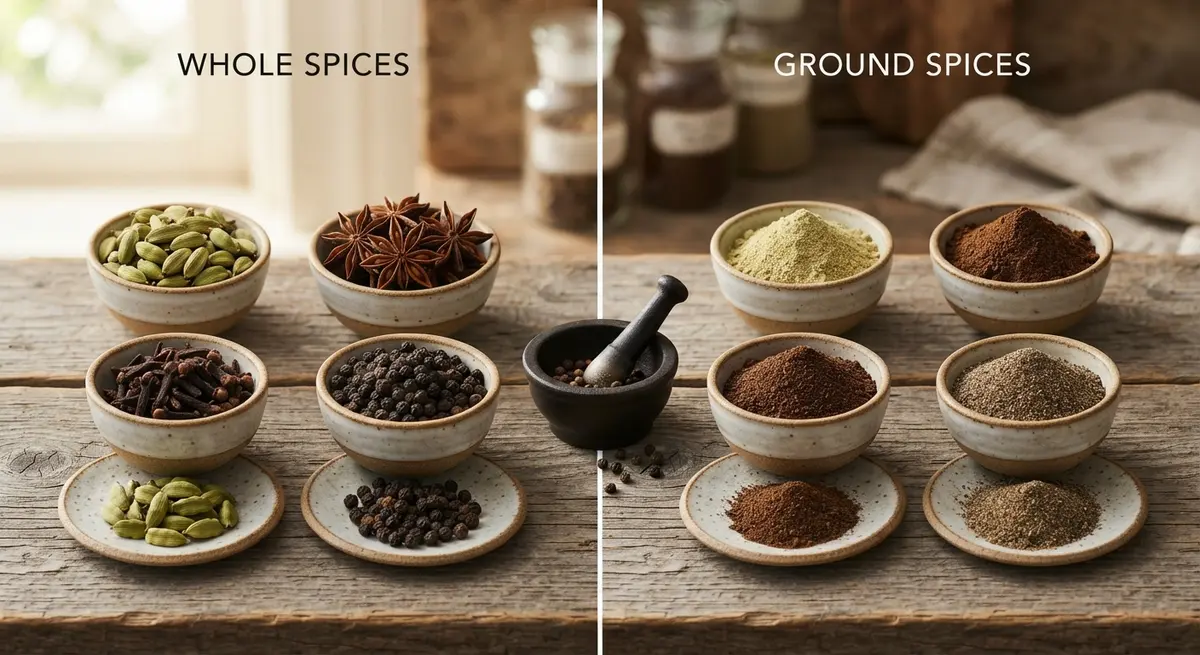
I used to buy every spice pre-ground, because the jars were convenient and the recipes asked for teaspoons anyway. Then I ground a whole nutmeg for the first time, and I understood what the fuss was about. The nutmeg that came out of my grinder smelled like a bakery, while the powder in the jar just smelled like dust. That difference is not imagination, it is chemistry. Whole spices hold their oils; grinding releases them. This guide is how I decided which spices to grind at home and which could keep filling their jars.
Why It Matters
Whole spices are sealed little vaults, holding their volatile oils behind thick husks, which is why they stay vibrant for years. The moment you grind them, those oils reach the air and start fading, which is why pre-ground spices lose their punch within months. Freshly ground spice tastes brighter, sharper, and more alive. Best candidates for home grinding: black pepper, cumin, coriander, cardamom, fennel, cinnamon sticks, and cloves. Few spices are genuinely better as fixed powder, so a quick grind repays most of them.
The Technique, Step by Step
- Start with whole spices that are dry and aromatic: seeds, bark, and berries are ideal.
- Toast whole seeds briefly in a dry pan to deepen the oils, then cool before grinding.
- Grind small batches with a dedicated spice grinder, a clean coffee grinder, or mortar and pestle.
- Pulse in short bursts, never let the spice heat and steam from prolonged milling.
- Sift if you want a finer powder for baking, because ground seed coats can be coarse.
- Use ground spice promptly, ideally within the week, and store any remainder airtight and dark.
Common Mistakes to Avoid
- Grinding everything at once to save time: freshly ground flavor does not keep, grind as you need.
- Using the same grinder for pepper and cardamom without cleaning: every future batch smells like the last one.
- Grinding cinnamon sticks in a cheap blade mill: hard bark beats small motors, crush or shave instead of forcing it.
- Letting the spice heat up during grinding: the warmth steals the oils you just worked to free.
- Buying pre-ground blends and storing them for years: the shelf life of ground spice is measured in months.
Quick Wins & Variations
- Grind fresh black pepper with a spice you love for a signature table seasoning.
- Make a fresh garam masala with toasted whole spices, pulse, and use within a fortnight.
- Grind cardamom pods with a little sugar to perfume your coffee or baking directly.
- Keep one dedicated mill for spices and label it clearly so it stays pure.
- Grind whole coriander and cumin for your next curry, the difference is dessert.
FAQ / Quick Facts
- Why does whole spice last longer? The husk seals the oils in, keeping flavor intact until grinding exposes them to air.
- Which spices are worth buying whole? Pepper, cumin, coriander, cardamom, fennel, cinnamon, and cloves.
- Can I grind oily spices in a dry mill? Yes, but clean the mill after nutmeg and other soft or oily grinds.
- How soon should I use ground spice? Within a week or two for peak flavor, a month at most for acceptable quality.
Related Articles
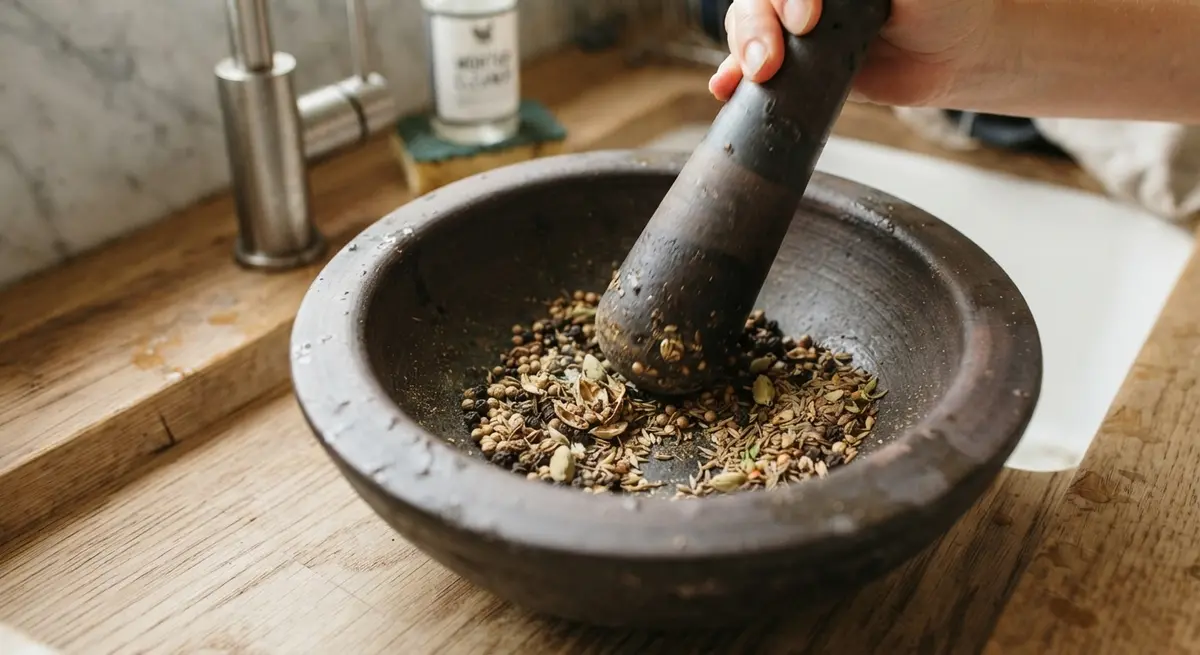
How to Crack Spices Without Making a Mess
Cracking opens a spice's oils without making powder. A few twists, a pan, a towel, and your stews will taste freshly live.
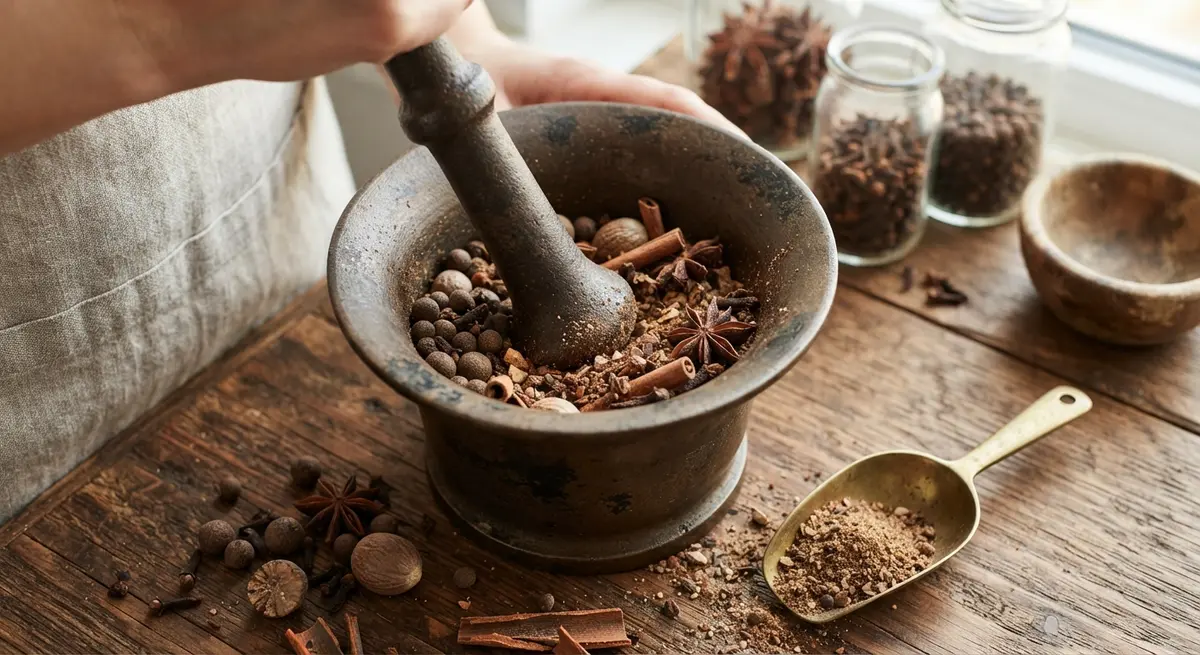
How to Grind the Hard Spices Without Losing Your Mind
Cinnamon bark, nutmeg, and star anise are stubborn. Warm them, break them, wrap them, and even a cheap grinder will surrender fine powder.
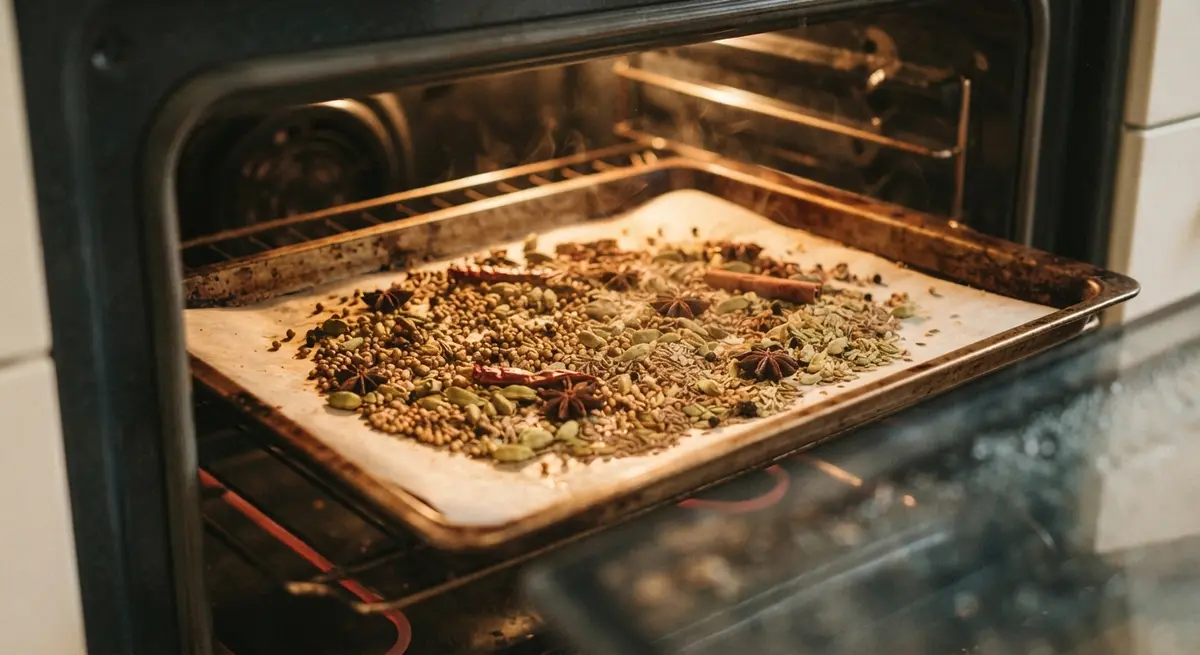
Oven-Roasting Spices for Steady, Gentle Depth
A low oven turns whole spices toasty and even, no shaking required. Perfect for big batches when your wrist and stovetop need a break.
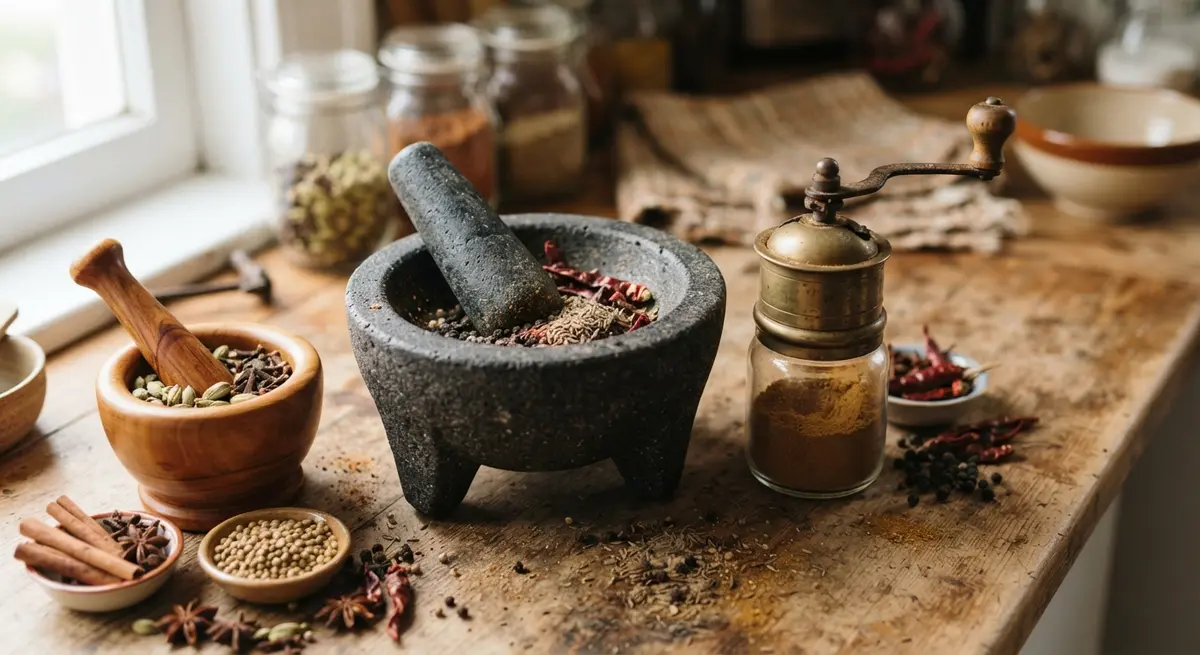
The Best Tools for Grinding Spices at Home
Mortar, blade mill, or burr grinder: each suits a different spice job. Match the tool to the grind and the flavor comes alive instantly.
About the Authors
This recipe and guide was developed, tested, and approved in our home kitchen and daily life. Jamy is a retired Food Service District Manager and Early Childhood Program Manager who spent his career overseeing multi-site restaurant operations, large-scale culinary production, and daycare menu management. Kaïna brings the ultimate real-world test: making sure it brings ease and joy to our kids on a busy weeknight.
Read more about our professional background and philosophy →