The Spice Inventory System: See What You Have, Use What You Buy
By the QuiteRecipes team (Jamy & Kaïna)
A labeled jar, a one-page list, and a monthly sweep keep thirty spices tidy. Track the ten you use, and no jar ever dies in the back.
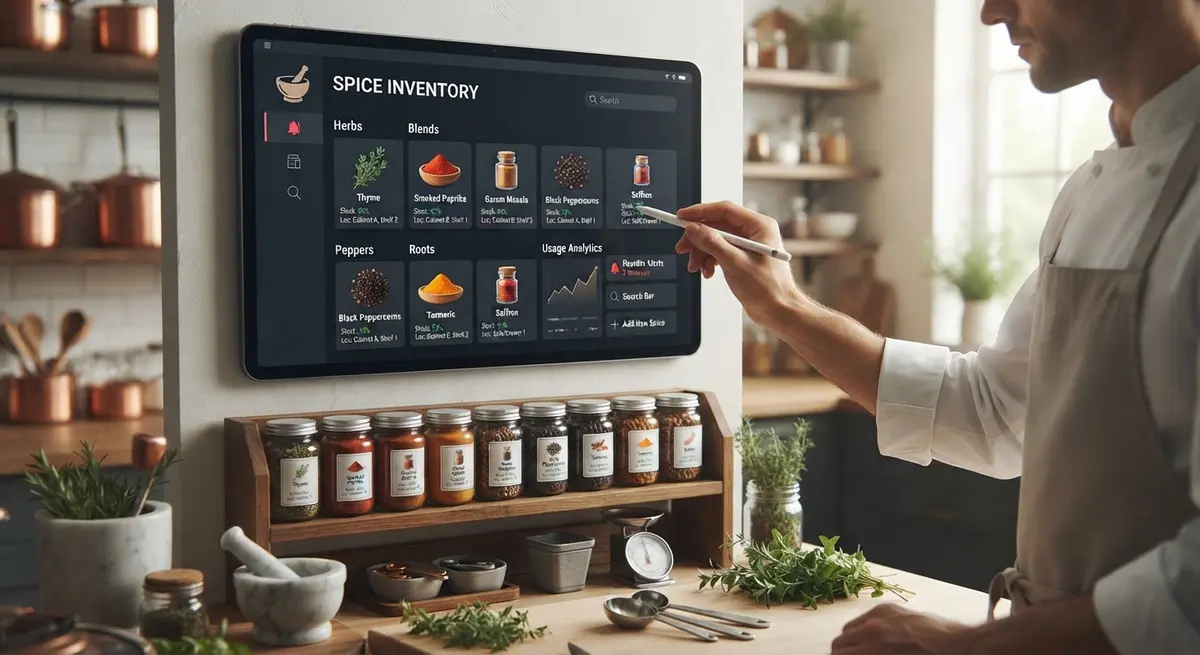
The spice drawer is where kitchen habits slide first, and mine slid right into the canyon of "I have three cumin jars and no idea which is fresh." The fix turned out to be admirably small: a labeled jar, a one-page list, and a monthly sweep. Inventory is not a chore for the overly organized, it is the reason you stop buying dead jars and start using what you actually own. This guide is the system that took thirty minutes to start and has saved me ever since.
Why It Matters
A small inventory cures the three spice-rack plagues: the dead jar you discover mid-recipe, the double-buy of a spice you forgot you owned, and the mystery jar that has lost its label and its flavor. Tracking what you have means you buy only what you need, use what you own before it fades, and know at a glance that tonight's chili is covered. The cost is one labeled list and a month's habit.
The Technique, Step by Step
- Write a simple list: spice name, form, and age for every jar you own.
- Label each jar with name and date when you buy or repack it.
- Keep the list where you cook, on the fridge or in the spice drawer.
- Once a month, run a sniff test and mark any spice that has faded as "replace."
- Update the list when you buy or finish a jar, it takes twenty seconds.
- Buy from a small list, not from habit, and the drawer stops growing mystery jars.
Common Mistakes to Avoid
- Keeping thirty unnamed jars and hoping the eyes sort it out: labels are the map.
- Buying a spice as soon as you think of it, without checking the list: the drawer doubles up.
- Letting the list become a dead document: five minutes monthly keeps it honest.
- Inventory for inventory's sake: the point is cooking with fresher, better-known jars.
- Ignoring the "replace" notes for months: the one fruit you skipped fades into next season.
Quick Wins & Variations
- Photograph the drawer on your phone as a quick visual inventory.
- Keep a "to buy" note next to the list so shopping happens naturally.
- Stock a rotating "use up first" shelf for past-prime jars.
- Name the eight spices you cook weekly and keep those duplicates front and center.
- Make inventory a monthly family reset: five minutes, a label maker, and dinner improved.
FAQ / Quick Facts
- Why bother inventorying spices? It ends surprise dead jars, double-buying, and faded mystery tins.
- How often should I update? Twenty seconds per jar change, a thirty-second monthly sweep keeps it perfect.
- What should the list contain? Spice, form, age, and a freshness note; nothing more.
- Does this really help cooking? Yes, fresher jars, fewer trips, and the confidence that tonight's spices are on the shelf.
Related Articles
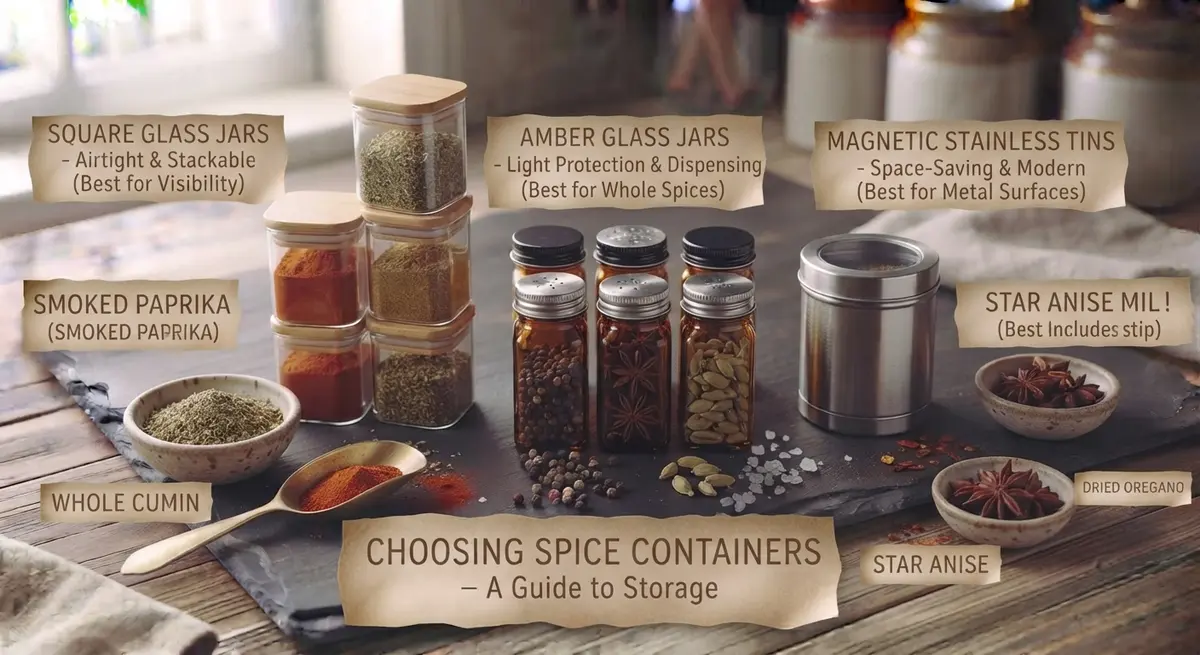
Choosing the Right Containers for Your Spice Stash
Glass, tin, and plastic each suit a different spice job. Match container to use, with little brown jars winning for the everyday shelf.
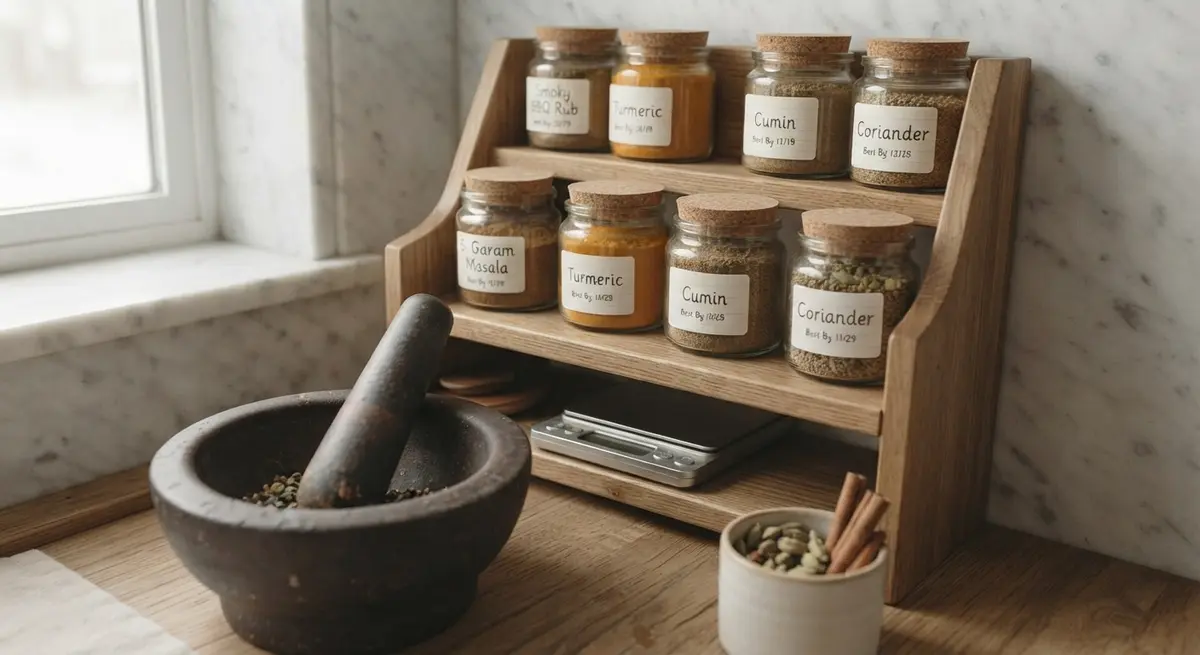
How to Store Spices So They Stay Loud Longer
Air, light, and warmth quietly rob your spices. Put them in a cool, dark drawer in airtight jars and they keep their edge twice as long.
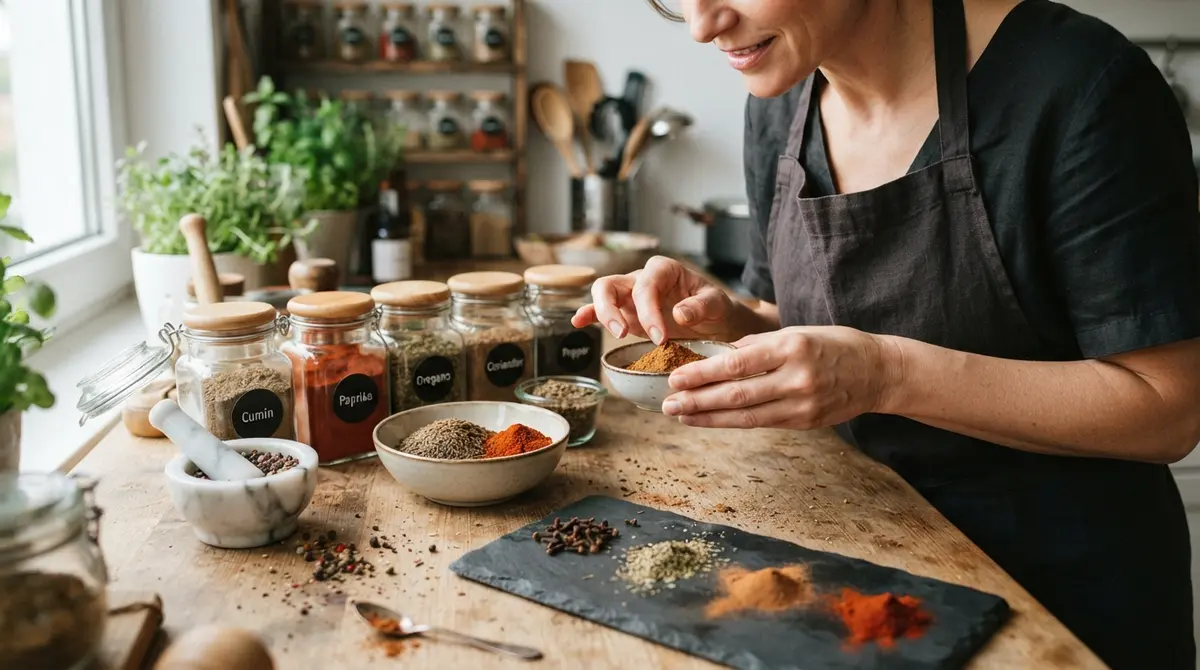
How to Test Whether a Spice Is Still Worth Using
Guessing if a spice is stale costs you the dish. These three quick tests, nose, pinch, and hot oil, settle the question in seconds.
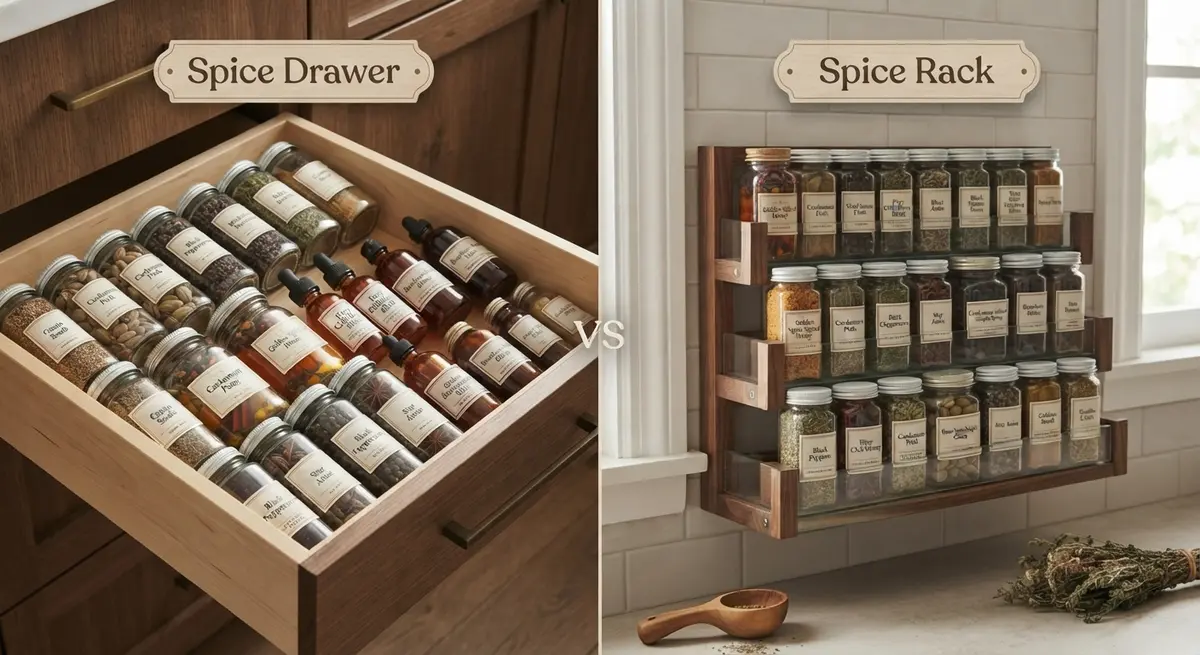
Spice Drawer vs. Rack: Which Setup Is Right for You
A drawer keeps spices cool and tidy; a rack shows everything at a glance. Match the setup to your kitchen, budget, and habits.
About the Authors
This recipe and guide was developed, tested, and approved in our home kitchen and daily life. Jamy is a retired Food Service District Manager and Early Childhood Program Manager who spent his career overseeing multi-site restaurant operations, large-scale culinary production, and daycare menu management. Kaïna brings the ultimate real-world test: making sure it brings ease and joy to our kids on a busy weeknight.
Read more about our professional background and philosophy →