Infusing Oils and Vinegars With Spices, Safely and Deeply
By the QuiteRecipes team (Jamy & Kaïna)
One afternoon of steeping turns oil and vinegar into flavor shortcuts. Warm heat, patience, and the fridge keep it delicious and safe.
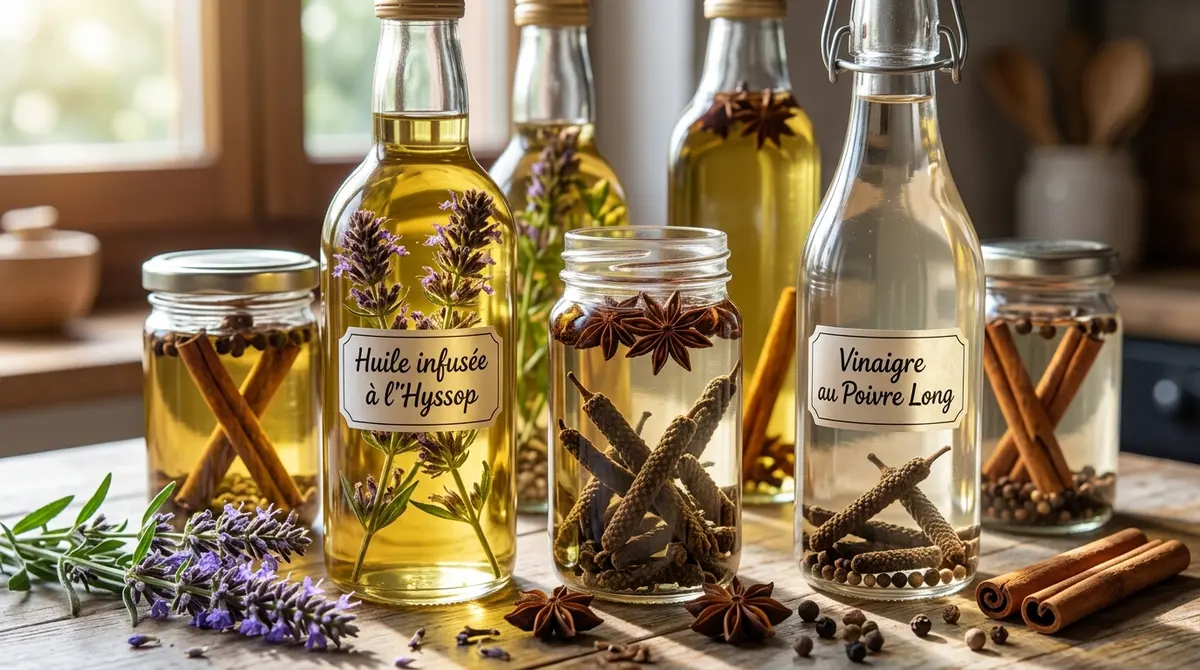
The fastest way to upgrade a salad, a drizzle, or a finishing sauce is a bottle of infused oil or vinegar, and you can make it yourself in an afternoon. I started making a garlic-pepper olive oil and a citrus-herb vinegar years ago, and they became the racks that carried every vinaigrette and drizzle. The method is gentle: warm, not boiling; steeped, not cooked; refrigerated, not saved for a decade. This guide is that method, with the safety rules that keep homemade infusions a joy instead of a gamble.
Why It Matters
Oil and vinegar are excellent carriers for spice flavor, delivering depth in a single spoon to dressings, marinades, roasted vegetables, and grilled meat. Infused products close the flavor gap instantly, and homemade lets you control the exact spices and strength. Gentle warmth extracts aromatic oils and lets them settle, while a hard boil scrambles or dulls the flavor. The right technique, plus the discipline to store it chilled, gives you a flavor arsenal that lasts a season and never disappoints.
The Technique, Step by Step
- Choose your base: olive, canola, or neutral oil for oils, and a decent white, apple cider, or sherry vinegar.
- Warm the base gently, just barely warm, or steep at room temperature for a few days.
- Toast whole spices briefly in a dry pan, then add them to the warmed base with aromatics.
- Steep for hours in a sealed jar, taste as you go; overnight is the sweet spot for most blends.
- Strain through a fine sieve or leave the spices in, and store the jar in the fridge.
- Use within about two weeks for oil with fresh ingredients, longer for purely dried-spice infusions.
Common Mistakes to Avoid
- Boiling the oil for speed: it scorches spices and turns the infusion bitter and cloudy.
- Using fresh garlic in raw oil: dangerous botulism risk without acid or refrigeration, keep it cooked or skip it.
- Bottling a warm infusion: heat invites spoilage and pressure, let it cool first.
- Storing on the counter: unrefrigerated homemade oils can turn off within the week.
- Overstuffing the jar: a heavy spice load muddies flavor, a restrained handful is plenty.
Quick Wins & Variations
- Infuse olive oil with dried chile for a twenty-four-hour drizzle that heats any plate.
- Steep a vanilla bean or cinnamon in vinegar for dark, luscious dressings.
- Warm-steep anise and star anise in apple cider vinegar for a crisp baking-savvy stock.
- Make a rosemary and lemon-peel oil for dipping bread in minutes.
- Label every jar with date and content, so the shelf stays honest.
FAQ / Quick Facts
- How long does homemade infused oil last? Refrigerated, about two weeks with fresh aromatics, a month or more with dried spices only.
- Is it safe to infuse oil with garlic? Only garlic cooked for safety, or acidulated, cold-steeped garlic brings real risk.
- Do I strain the spices out? Most of the time yes, so the flavor cannot keep extracting or cloud the finish.
- Can I heat vinegar to infuse it? Yes, a warm simmer of vinegar is safe, unlike oil, and it speeds the flavor release.
Related Articles
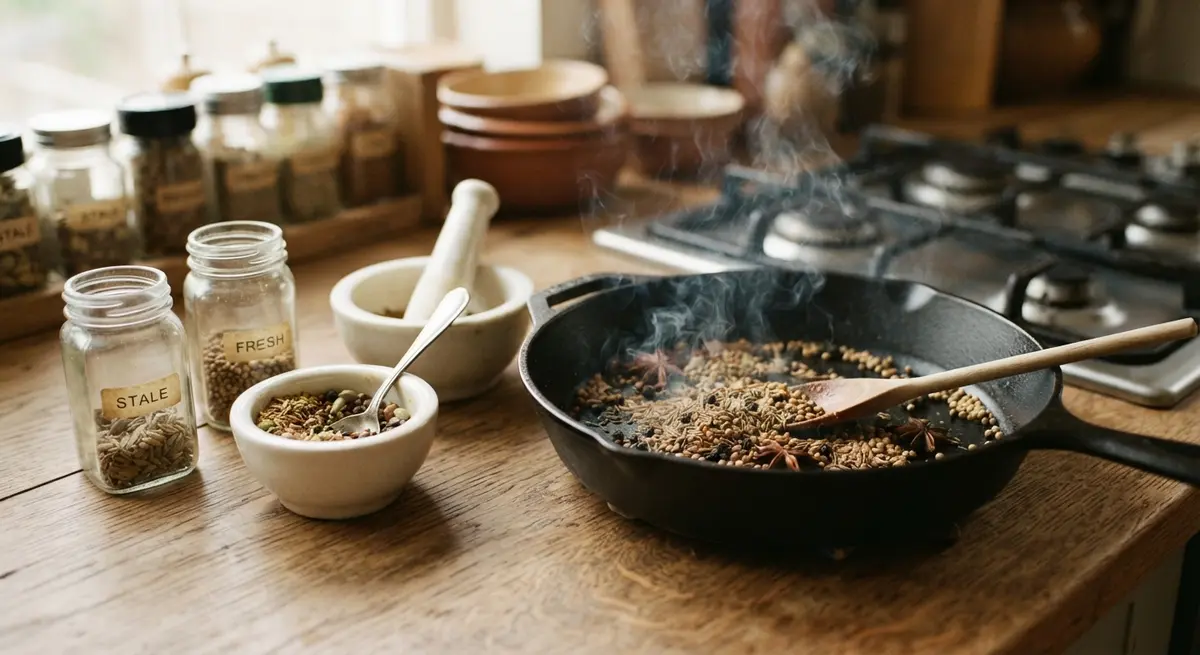
Can You Revive Stale Spices? Mostly No, and Here Is the Fix
Stale spice can be nudged back a little, never fully. Toast, blend, and refresh what you can with restraint; some jars just deserve retirement.
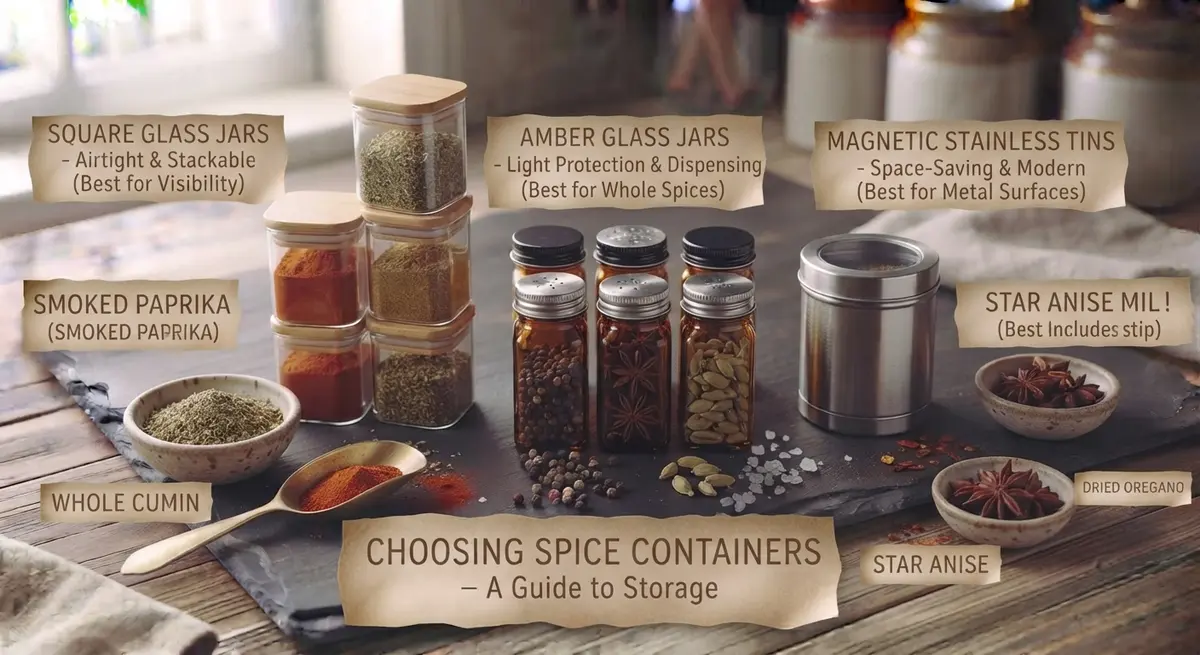
Choosing the Right Containers for Your Spice Stash
Glass, tin, and plastic each suit a different spice job. Match container to use, with little brown jars winning for the everyday shelf.
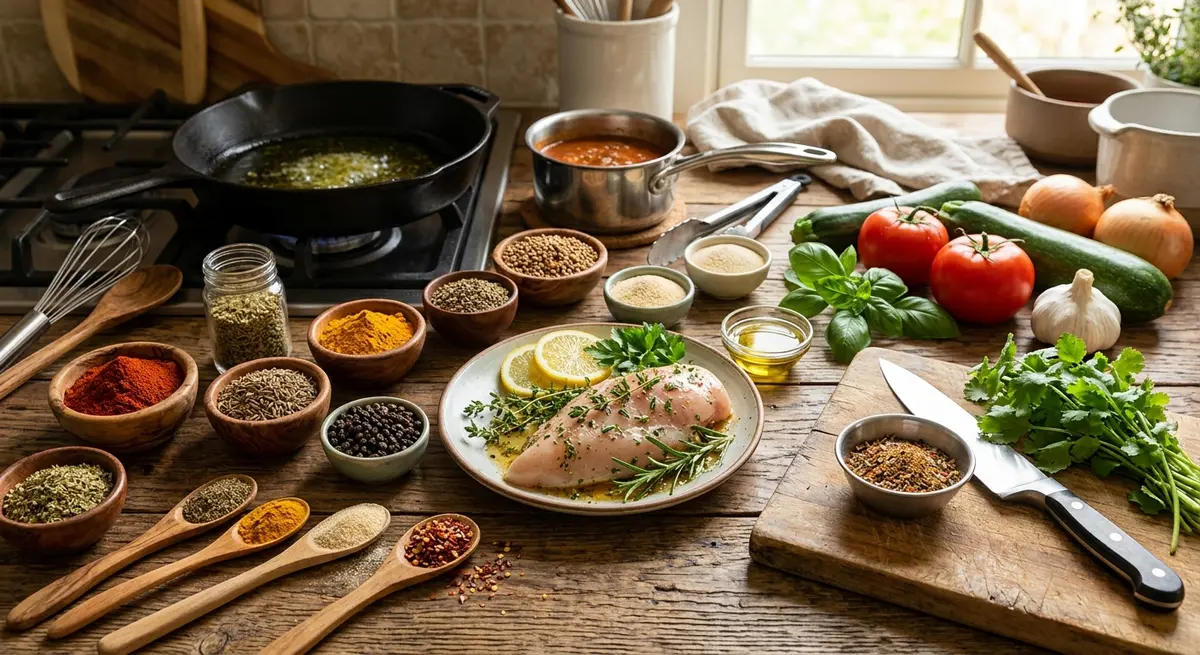
Cooking Low-Sodium With Spices That Carry the Flavor
Cutting sodium is easier when spice, acid, and umami do the heavy lifting. Build low-salt flavor in layers and no one misses the salt.
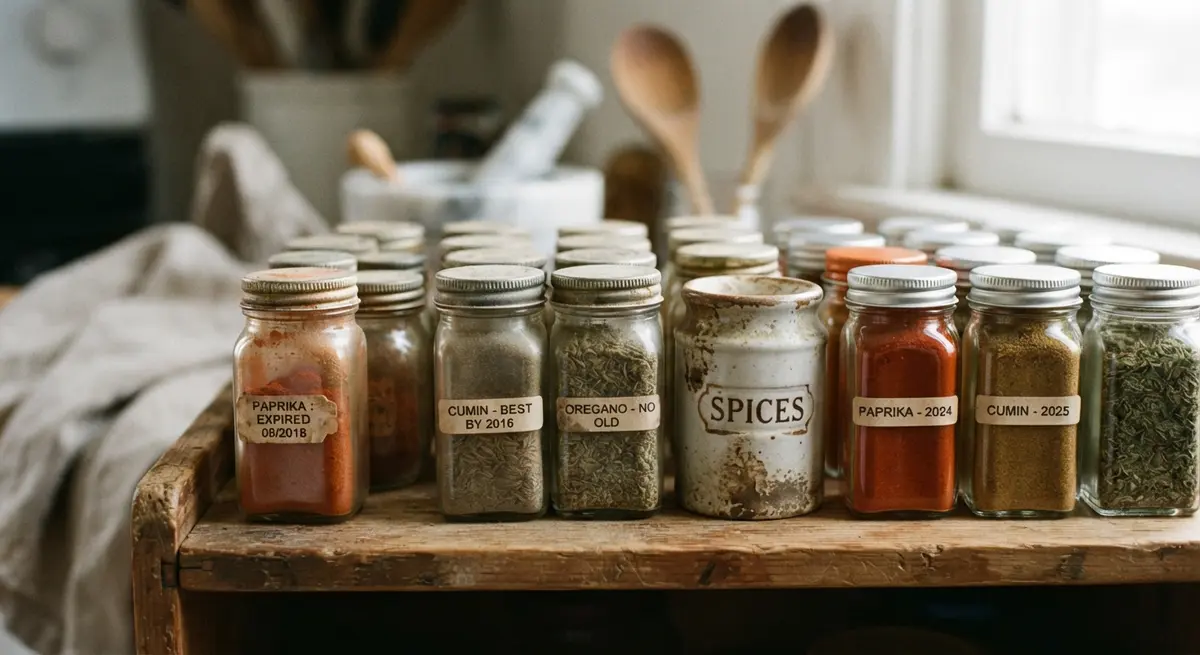
Do Spices Expire? How to Read the Date and Sniff the Truth
Spice dates are about flavor, not food safety. A sniff and a pinch tell you when a jar is past its prime and needs to go.
About the Authors
This recipe and guide was developed, tested, and approved in our home kitchen and daily life. Jamy is a retired Food Service District Manager and Early Childhood Program Manager who spent his career overseeing multi-site restaurant operations, large-scale culinary production, and daycare menu management. Kaïna brings the ultimate real-world test: making sure it brings ease and joy to our kids on a busy weeknight.
Read more about our professional background and philosophy →