How to Toast, Grind, and Store Spices: 10 Techniques That Double the Flavor
By the QuiteRecipes team (Jamy & Kaïna)
The secret to restaurant-flavored food is rarely a secret ingredient. These ten techniques — toast, grind, bloom, store — turn tired jars into real flavor.
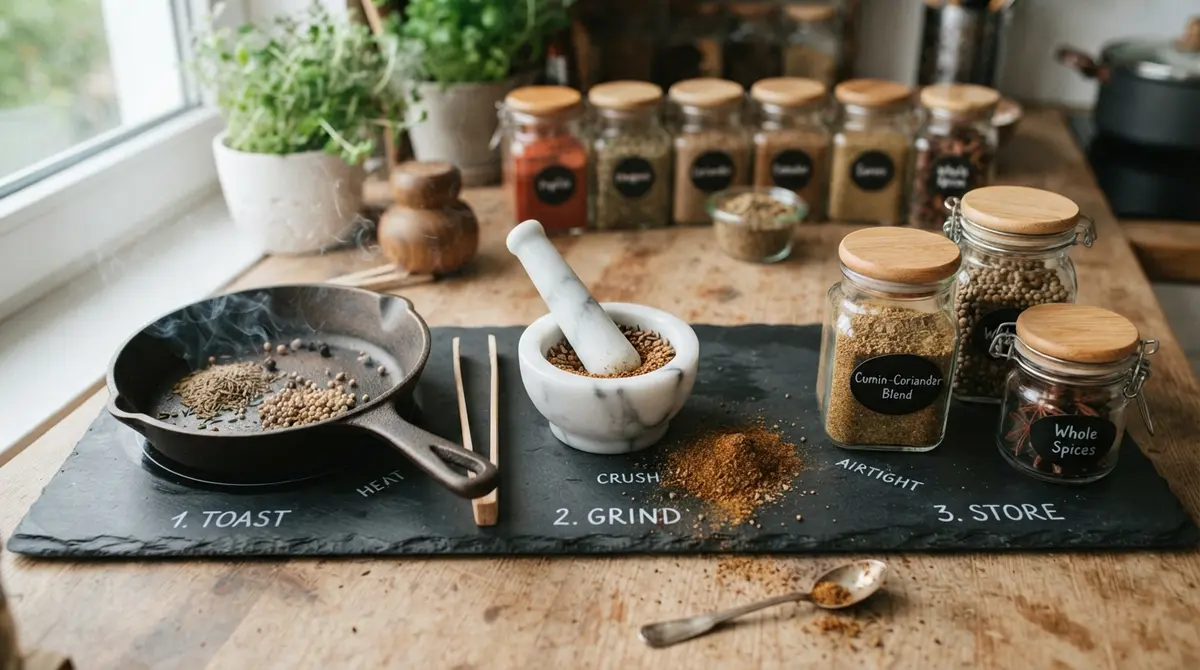
For years, I cooked with dusty grocery-store spices, shaking them into dishes like a lost cause. Then a friend showed me one trick: toast the cumin for forty seconds before adding it to the beans. That single gesture changed how that pot of beans smelled — and how I thought about every spice on my shelf. Not one new ingredient. Not one new recipe. Just attention.
That is the whole secret this page is built on. Most spices are not born bland; they are governed by technique. Spend a minute toasting, buy whole instead of ground, store them away from the light, and the same jar that made you yawn can fill a kitchen. Here are the ten techniques, in the order you will actually use them.
Technique 1: Buy Whole When You Can
Whole spices are the closest thing a home pantry has to a time machine. They hold their oils for years; the moment you grind them, the clock speeds up dramatically.
- Buy whole cumin, coriander, fennel, peppercorns, cardamom, cloves, and cinnamon sticks.
- Store them in jars with the purchase date written on top.
- Grind in small batches — the flavor peak is the first week after grinding, so let the jar stay whole until right before you cook.
Technique 2: Toast Before Grinding
The single technique with the biggest payoff. Dry-toasting whole spices unlocks oils and turns raw aroma into warm, deep flavor.
- Use a dry skillet or pan over medium heat — no oil, no water.
- Shake frequently; whole seeds toast in 60–90 seconds, and ground spices scorch much faster than seeds.
- The moment you smell a strong warm fragrance, pull them off onto a cool plate — they keep toasting off the heat.
Pro tip: for blends you will use over weeks, toast whole seeds once, grind, and store. For a single dinner, toast and grind right then. That same motion, two different results.
Technique 3: Bloom Ground Spices in Oil
Ground spices cannot be toasted safely (they burn in seconds), but they bloom beautifully in warm oil or butter.
- Add ground spices at the start of cooking, into the hot oil, before the liquid goes in.
- Stir for 20–40 seconds until they smell incredible — this pulls flavor out of water-insoluble compounds.
- If a recipe says "add the spices" and the pan is dry, be suspicious. They need a fat to bloom.
Pro tip: the "bloom test" is diagnostic. If your curry-like dish tastes flat no matter the amount of spice, you were probably adding ground spice to liquid without blooming it — toast or bloom it next time.
Technique 4: A Mortar and Pestle Is Enough
You do not need a fancy electric grinder. A mortar and pestle grinds most spices in about a minute and adds no heat, which keeps volatile oils where they belong.
- For seeds with tough skins (coriander), a quick toast first makes them shatter instead of slide.
- For a coarse rub consistency, stop early; for fine powder, keep pounding and don't rush the last seeds.
- Clean between uses with a dry brush or plain rice (grind a spoonful of rice, discard) to avoid flavor ghosts.
Technique 5: The Coffee-Grinder Shortcut
When you cook big batches, a clean electric coffee grinder turns whole spices to powder in ten seconds.
- Grind the spices in the same blend as a batch — cinnamon, cloves, cardamom — so clean-up is barely a thought.
- Do not reuse grinders that are ground-into-the-seams with coffee unless you like subtle mocha notes in your garam masala.
- Grind in short pulses; a long run heats the spice and starts cooking the oils you wanted to keep.
Technique 6: Keep Them Out of the Light
The number one way home spices die is heat and light, slowly eating their oils until the jar holds colored dust.
- Store spices in airtight jars in a cupboard, not on a rack on the counter, not in the wall of sunlight from the window.
- Only display the pepper mill; the rest of the collection prefers the dark.
- The pantry door does not just keep the kitchen tidy — it protects your flavor.
Technique 7: Date Them Like a Restaurant
Professional kitchens label everything, and not just because they are organized. A dated jar is a spice you can trust.
- Write the month and year on the bottom of every jar when you buy it.
- Whole spices: best within 2–3 years. Ground spices: best within 6 months to a year.
- When in doubt, the sniff test decides: if it smells like nothing, it will taste like nothing, and the jar is done.
Technique 8: Whole Nuts and Seeds Go in the Freezer
Not all of a spice collection belongs in the cupboard. The oils in nuts and seeds go rancid at room temperature, and a warm kitchen accelerates the sadness.
- Store sesame seeds, poppy seeds, and nuts in the freezer (they grind beautifully from frozen — no thawing needed).
- Same for spices you buy in bulk during a sale: the freezer pauses the clock until you need one jar at a time.
- Label them and keep a "bulk box" — out of sight, out of heat, out of rancid territory.
Technique 9: Buy Small, Use Often
The most romantic idea in the spice aisle is the jumbo jar of garam masala you will "grow into." The most honest idea is the small jar you will actually finish.
- If a container lasts more than a year at your house, you own more spice than you use.
- For occasionally-wanted spices, buy the smallest size and accept the money-math: one fresh small jar beats one dusty big one.
- Use the date rule from Technique 7 to enforce it — a jar making it to year two without being rebuilt is a spice you do not cook with yet.
Technique 10: A Range of Grinders Is a Superpower
You do not need to choose between fine and coarse. Different dishes ask for different textures.
- A fine powder of smoked paprika for rubs and quick blooms.
- A coarse grind of peppercorns for steak and salads.
- Wild ideas are allowed: a whole toasted coriander seed in a soup adds texture and looks professional.
Pro tip: label grind size on the jar ("fine", "coarse") the day you grind, because you will forget by Thursday. Thursday always forgets.
No single jar holds the key to better food. The key is in how you treat it: buy whole, toast before grind, grind fresh, bloom in oil, keep it dark and dated and small. Do those ten things and the spice shelf stops being a museum of dusty dreams and becomes the quiet engine of every dinner you make.
Related Articles
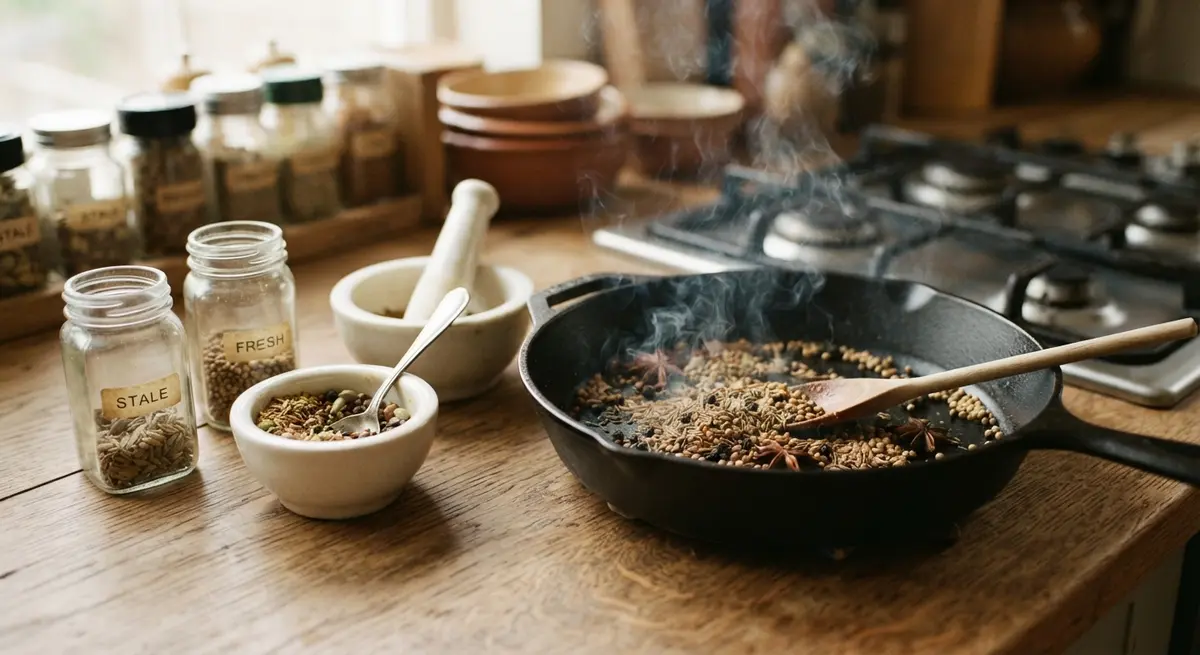
Can You Revive Stale Spices? Mostly No, and Here Is the Fix
Stale spice can be nudged back a little, never fully. Toast, blend, and refresh what you can with restraint; some jars just deserve retirement.
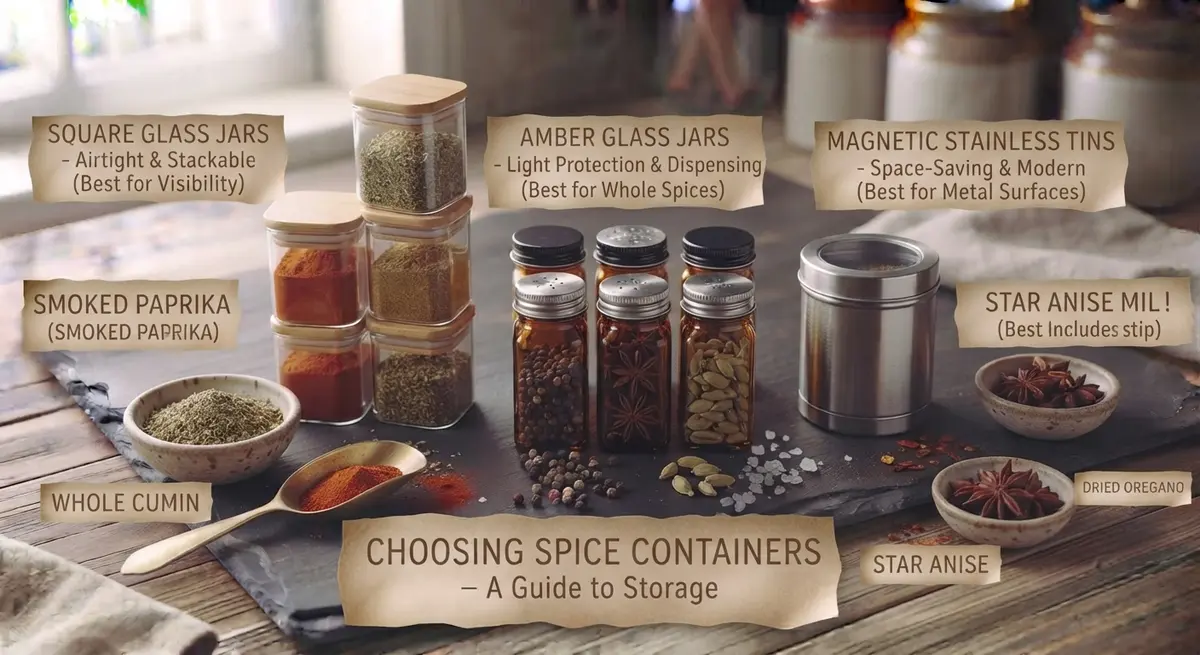
Choosing the Right Containers for Your Spice Stash
Glass, tin, and plastic each suit a different spice job. Match container to use, with little brown jars winning for the everyday shelf.
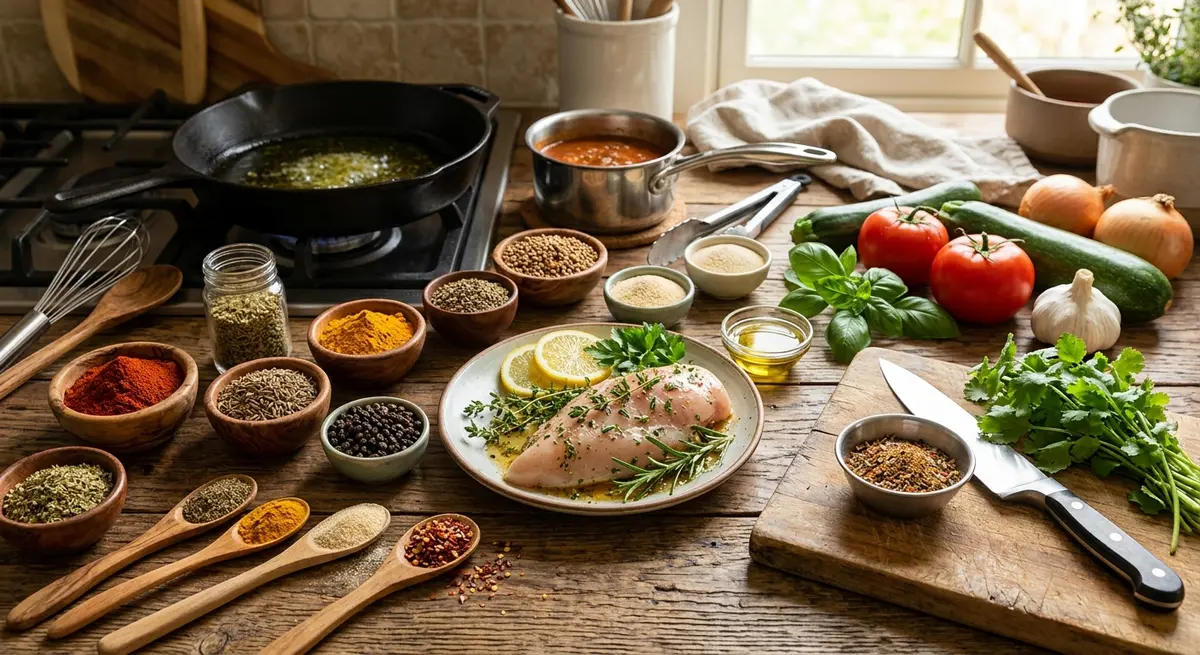
Cooking Low-Sodium With Spices That Carry the Flavor
Cutting sodium is easier when spice, acid, and umami do the heavy lifting. Build low-salt flavor in layers and no one misses the salt.
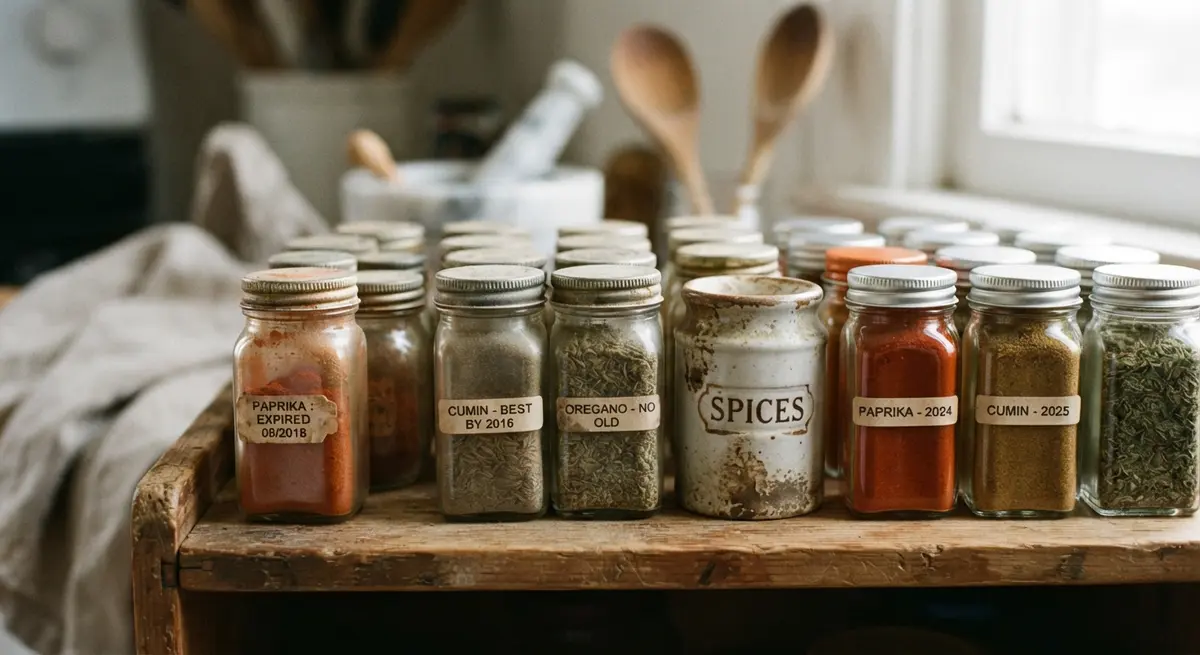
Do Spices Expire? How to Read the Date and Sniff the Truth
Spice dates are about flavor, not food safety. A sniff and a pinch tell you when a jar is past its prime and needs to go.
About the Authors
This recipe and guide was developed, tested, and approved in our home kitchen and daily life. Jamy is a retired Food Service District Manager and Early Childhood Program Manager who spent his career overseeing multi-site restaurant operations, large-scale culinary production, and daycare menu management. Kaïna brings the ultimate real-world test: making sure it brings ease and joy to our kids on a busy weeknight.
Read more about our professional background and philosophy →