How to Dry Your Own Herbs at Home Without Losing Their Soul
By the QuiteRecipes team (Jamy & Kaïna)
Bundles on the windowsill can mold; a low oven or dehydrator dries herbs bright. Learn the gentle method that keeps every leaf fragrant.
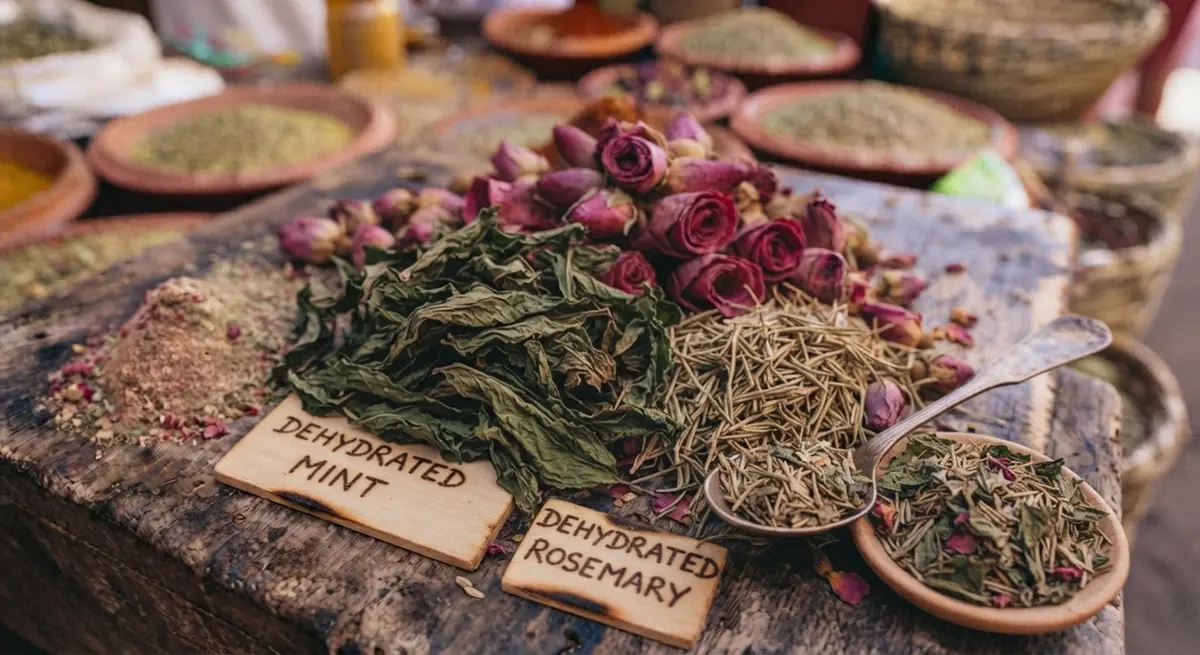
There is a special joy in drying herbs you grew yourself, and a special tragedy when the bundle on the windowsill goes gray and dusty. For years I hung oregano and mint to dry the romantic way, and half of it molded or faded. Then I learned the gentle-art version: low heat, quick enough to beat the mold, gentle enough to keep the color and oils. Now the same handful of garden herbs becomes a rack of bright, fragrant jars that taste fresher than most store-bought tins. This guide is that method.
Why It Matters
Herbs dry best when moisture leaves fast enough to prevent mold but slow enough to keep the oils. Hanging in humid kitchens fails both ways. A low oven or a dehydrator at a modest 95 to 115 degrees works beautifully, drawing moisture out while the leaves keep their green and their scent. Timing matters: overdrying turns leaves brittle and the aroma fades, underdrying invites mold in the jar. Careful herb-drying gives you a season of flavor from a single garden afternoon.
The Technique, Step by Step
- Harvest herbs in the morning after the dew dries, when the oils are at their peak.
- Rinse, shake well, and pat every leaf dry, wet herbs steam instead of dry.
- Spread them in a single layer on a tray, not bunched, so air reaches all sides.
- Dry at 95 to 115 degrees, checking every hour, until leaves crumble without snapping.
- Strip the leaves from the stems and crumble gently into a clean airtight jar.
- Store cool, dark, and dry, out of the light, and use within six months.
Common Mistakes to Avoid
- Drying in the sun: light and warmth rob the color and the oils together.
- Hanging in the humid kitchen: slow drying invites the mold that ruins the batch.
- Stems and leaves mixed: stems take twice as long, separate them cleanly.
- Overdrying until only dust remains: brittle leaves crumble into flavor dust instead of flakes.
- Storing without checking dryness: a hint of residual moisture turns the jar to science experiment.
Quick Wins & Variations
- Dry herbs in the car on a hot day, a trick that beats many ovens.
- Dry lemon balm, mint, and thyme for tea bags that brighten a winter counter.
- Crush herbs with your fingers, not a spice grinder, to keep flakes and not powder.
- Blend your own herb mix: thyme, oregano, rosemary, a gift ready to jar.
- Freeze the most delicate herbs instead of drying, they keep more soul.
FAQ / Quick Facts
- What temperature dries herbs best? Low and slow, 95 to 115 degrees, keeps color and oils instead of baking them.
- How long does drying take? Two to four hours in a low oven or dehydrator, depending on the herb and leaf size.
- Why did my dried herbs lose their color? Too much light or heat during drying, gentle air-flow methods keep them green.
- What is the best way to store dried herbs? Whole leaves in a dark, airtight jar, crumbled at the moment of use.
Related Articles
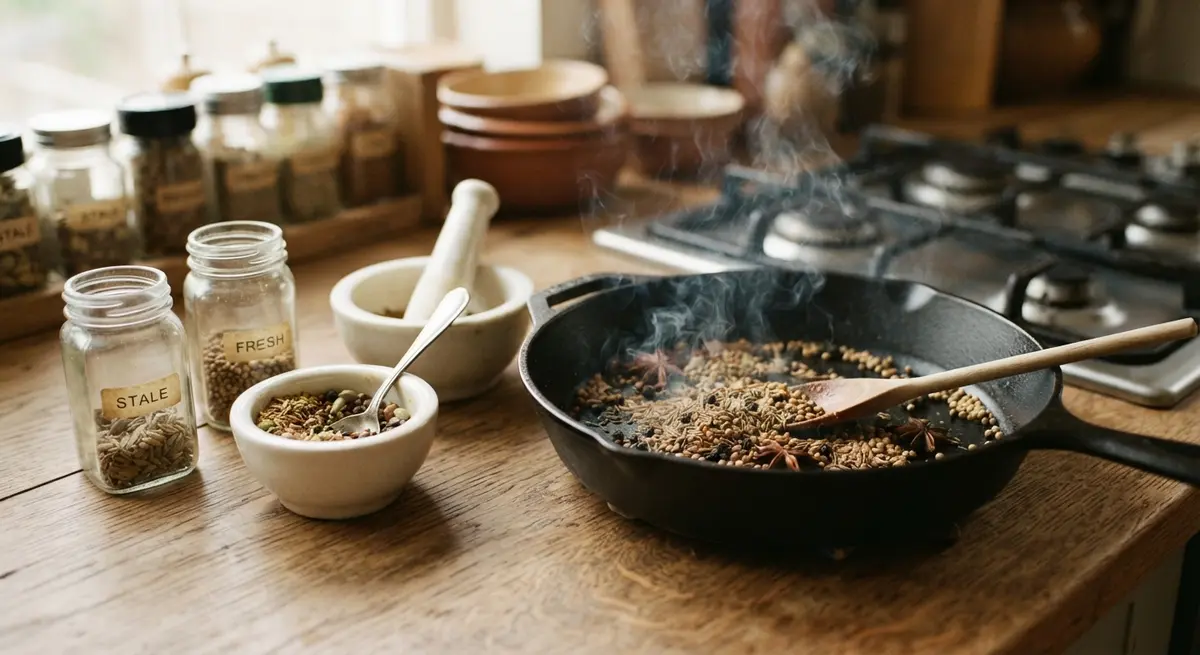
Can You Revive Stale Spices? Mostly No, and Here Is the Fix
Stale spice can be nudged back a little, never fully. Toast, blend, and refresh what you can with restraint; some jars just deserve retirement.
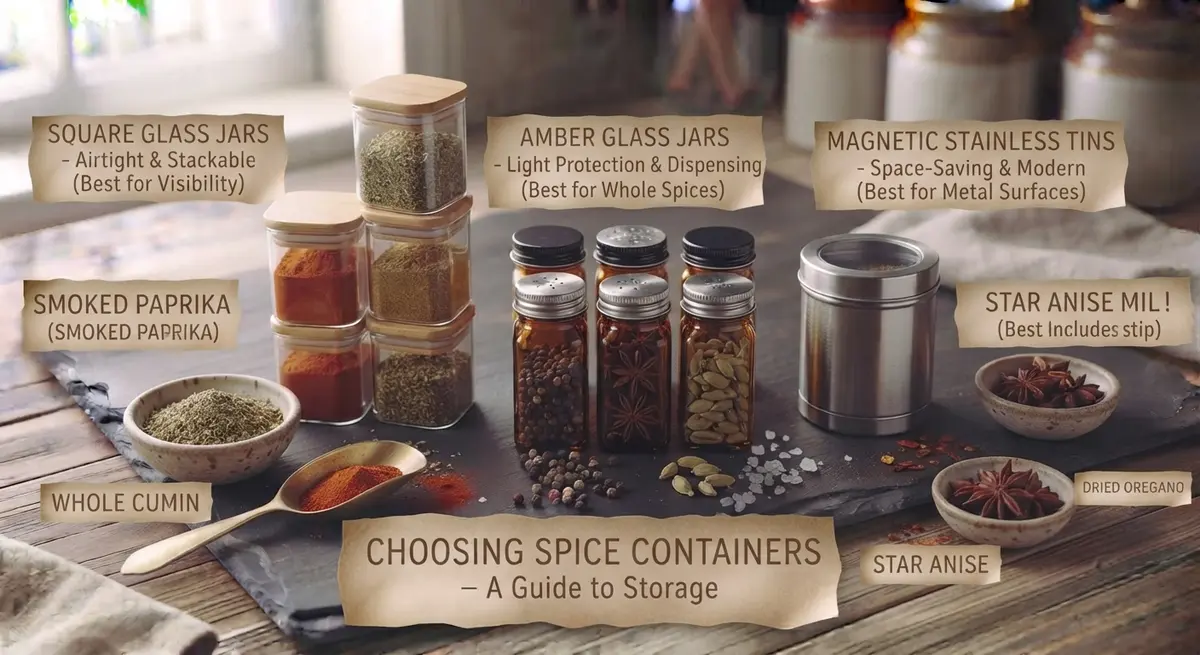
Choosing the Right Containers for Your Spice Stash
Glass, tin, and plastic each suit a different spice job. Match container to use, with little brown jars winning for the everyday shelf.
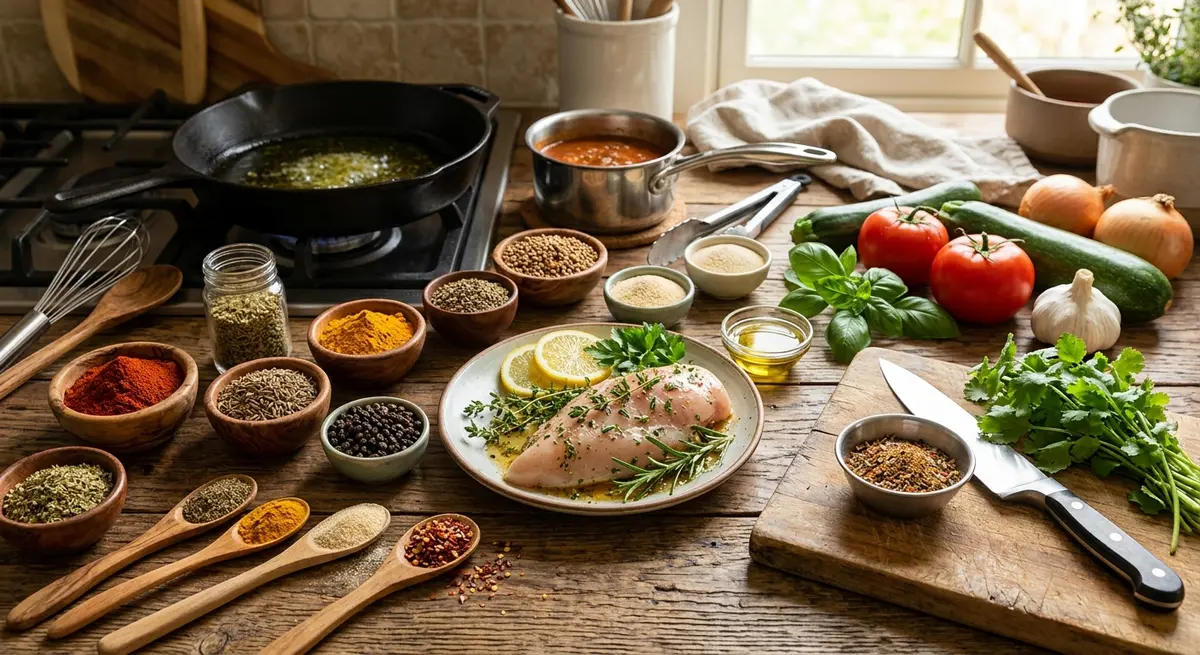
Cooking Low-Sodium With Spices That Carry the Flavor
Cutting sodium is easier when spice, acid, and umami do the heavy lifting. Build low-salt flavor in layers and no one misses the salt.
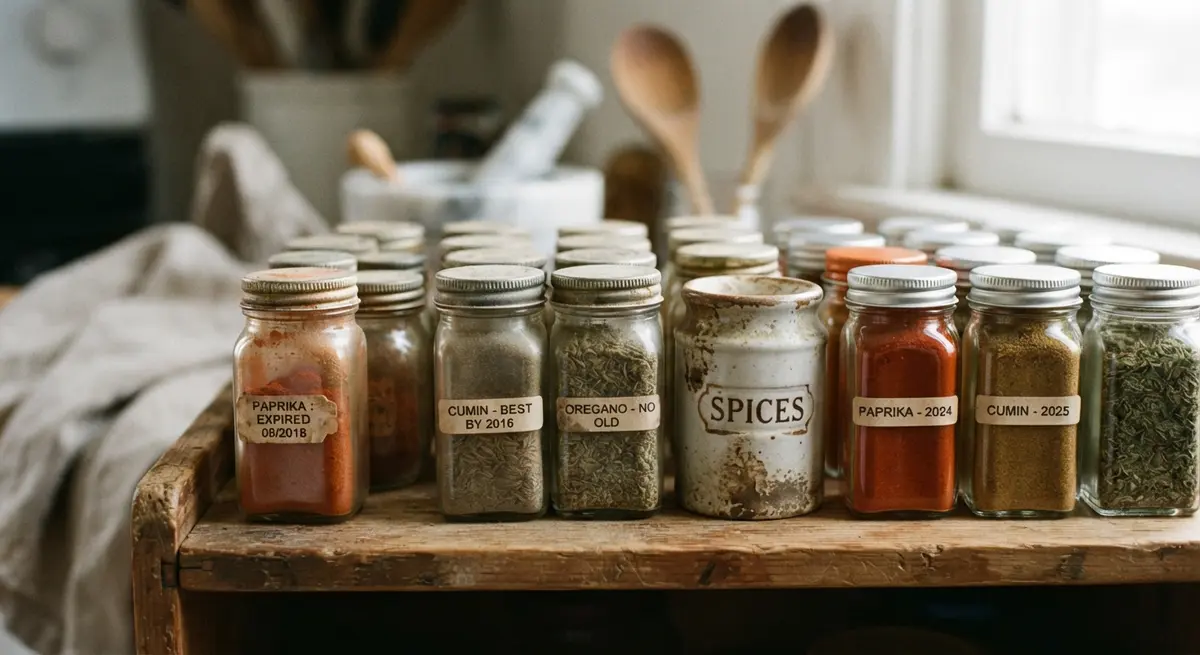
Do Spices Expire? How to Read the Date and Sniff the Truth
Spice dates are about flavor, not food safety. A sniff and a pinch tell you when a jar is past its prime and needs to go.
About the Authors
This recipe and guide was developed, tested, and approved in our home kitchen and daily life. Jamy is a retired Food Service District Manager and Early Childhood Program Manager who spent his career overseeing multi-site restaurant operations, large-scale culinary production, and daycare menu management. Kaïna brings the ultimate real-world test: making sure it brings ease and joy to our kids on a busy weeknight.
Read more about our professional background and philosophy →