Converting Fresh to Dried Herbs: The Triple Rule
By the QuiteRecipes team (Jamy & Kaïna)
One part dried herb can replace three of fresh, but not always. Learn which herbs convert and which insist on staying fresh.

The rule everyone quotes is simple: one part dried for three parts fresh. It is a good starting line, and it is also only half the story. I discovered this the hard way when a tablespoon of fresh basil got replaced with a tablespoon of dried, and the sauce tasted like a backyard. The truth is that some herbs dry beautifully, while others become cardboard no matter what you do. This guide gives you the real conversion logic, the exceptions, and the moments when you should just go to the store for fresh stems.
Why This Spice Is Hard to Replace
Fresh and dried herbs are not the same ingredient in different packaging. Fresh herbs carry water, bright aromas, and soft green texture, perfect for finishing dishes. Drying removes the water and concentrates some flavors, while dulling others, so dried herbs taste earthier and more muted. A teaspoon of dried rosemary genuinely carries more flavor than a teaspoon of chopped fresh rosemary, but a spoonful of dried basil bears no resemblance to real basil. Knowing which herbs are friendly to drying is the entire game.
The Best Substitutes
- Oregano, thyme, rosemary, sage, marjoram, and bay: these dry superbly, use one third of the fresh measure.
- Mint, tarragon, and dill: these dry acceptably, use a third to a half and refresh color at the end.
- Basil, parsley, and cilantro: these lose their soul to drying, swap only with a pinch of dried plus patience.
- Chives: dry leaves are nearly worthless, use the green parts of scallions instead.
- A pinch of dried herbs bloomed in hot oil: for stews and braises, this approaches fresh intensity.
- Herb pastes and frozen cubes: closest to fresh when the herb shelf is bare, thawing beats a stale jar every time.
How to Make the Swap Work
Apply the three-to-one rule to the pleasant converts: one teaspoon dried for one tablespoon fresh. Add dried herbs early so they rehydrate and mellow into the dish, and add fresh herbs late so their brightness survives. Crumble dried herbs between your fingers before measuring, because larger leaves pack unevenly. If a recipe leans on a fresh-only herb like basil or parsley, swap technique, not just measure: add a whisper of dried plus a splash of acid to fake the fresh lift. Smell your dried herbs before using, wood and dust mean the jar is spent.
Substitutions to Avoid
- Dried basil one-for-one with fresh: the dish turns bitter, dusty, and permanently disappointed.
- Fresh herbs simmered all day to match dried: their flavors dissolve and the pot loses the brightness it wanted.
- Believing "dried means stronger, so use less" for every herb: concentrated yes, but some dried herbs are delicate and weak.
- Storing dried herbs next to the stove: heat and light steal their oils faster than anything.
- Pre-ground "dried" mix-it-alls: the combined blend is usually stale old dust by the time it reaches your pan.
FAQ / Quick Facts
- What is the standard fresh-to-dried ratio? One teaspoon of dried herb roughly equals one tablespoon of fresh, chopped.
- Which herbs dry the best? Oregano, thyme, rosemary, sage, and marjoram; they keep their character beautifully.
- Which herbs should stay fresh? Basil, parsley, cilantro, and chives, they fade and turn bitter when dried.
- Should I add dried herbs early or late? Early, so they rehydrate; add fresh herbs at the very end of cooking.
Related Articles
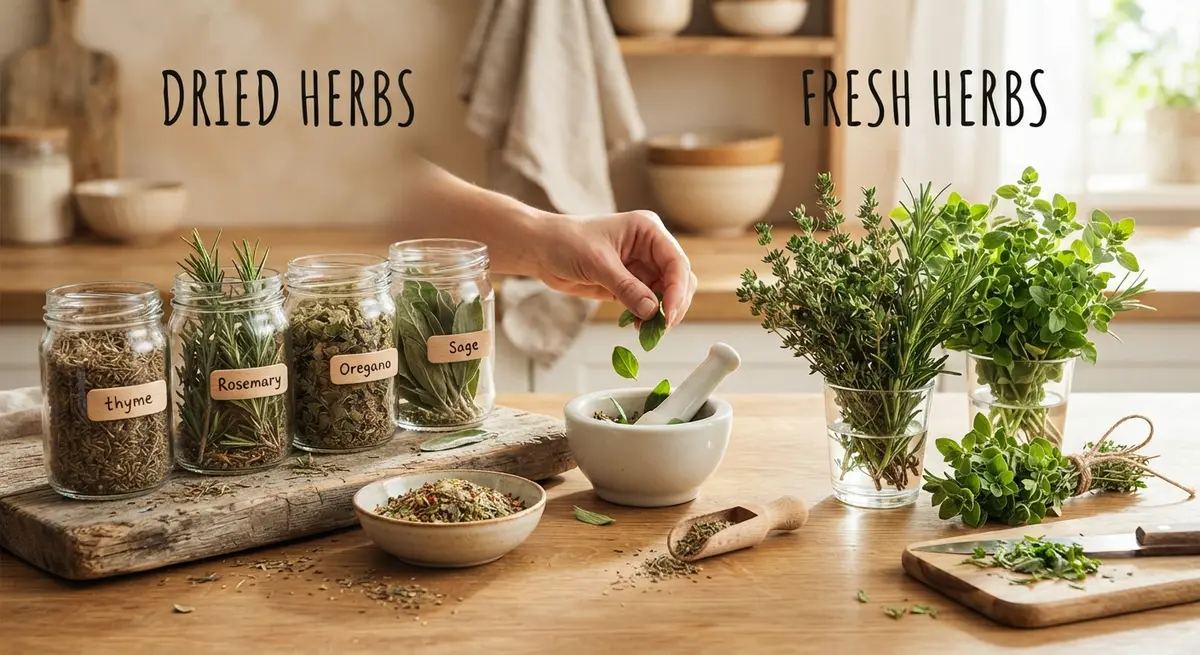
Converting Dried to Fresh Herbs Without Wasting Either
When the market basket has no fresh, the reverse rule applies: one tablespoon fresh for one teaspoon dry, for the right herbs only.
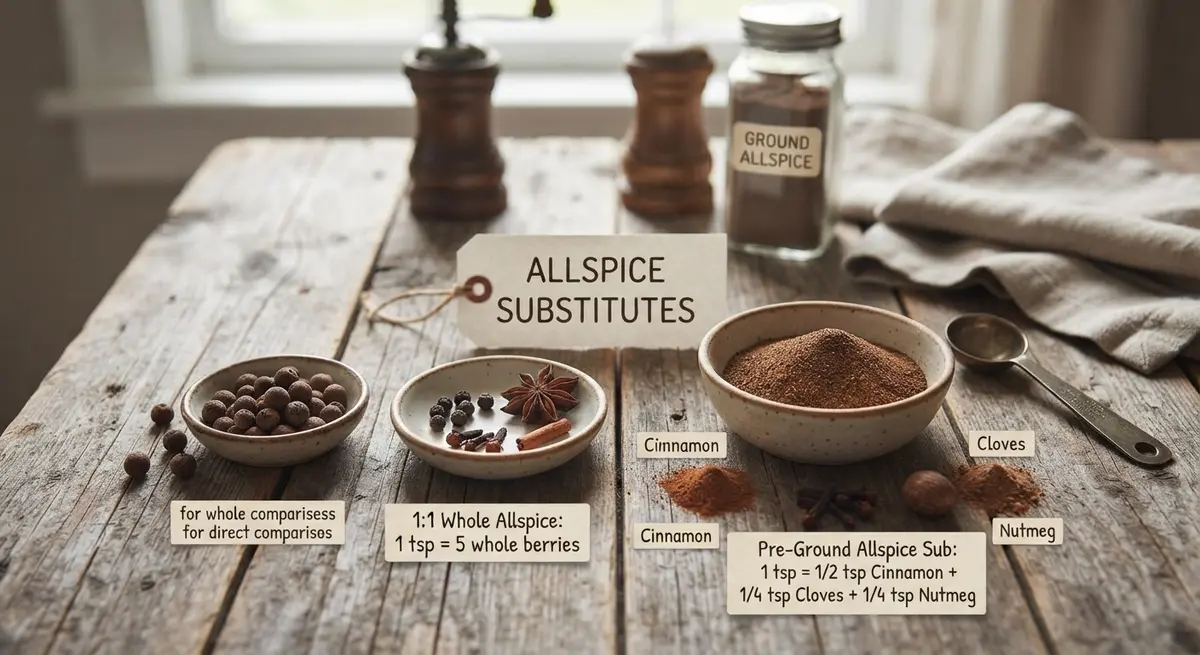
Allspice Substitutes for That One-Jar Warmth
Allspice tastes like cinnamon, clove, and nutmeg had a baby. Rebuild it by blending warm pantry spices for bakes, stews, and holiday jars.
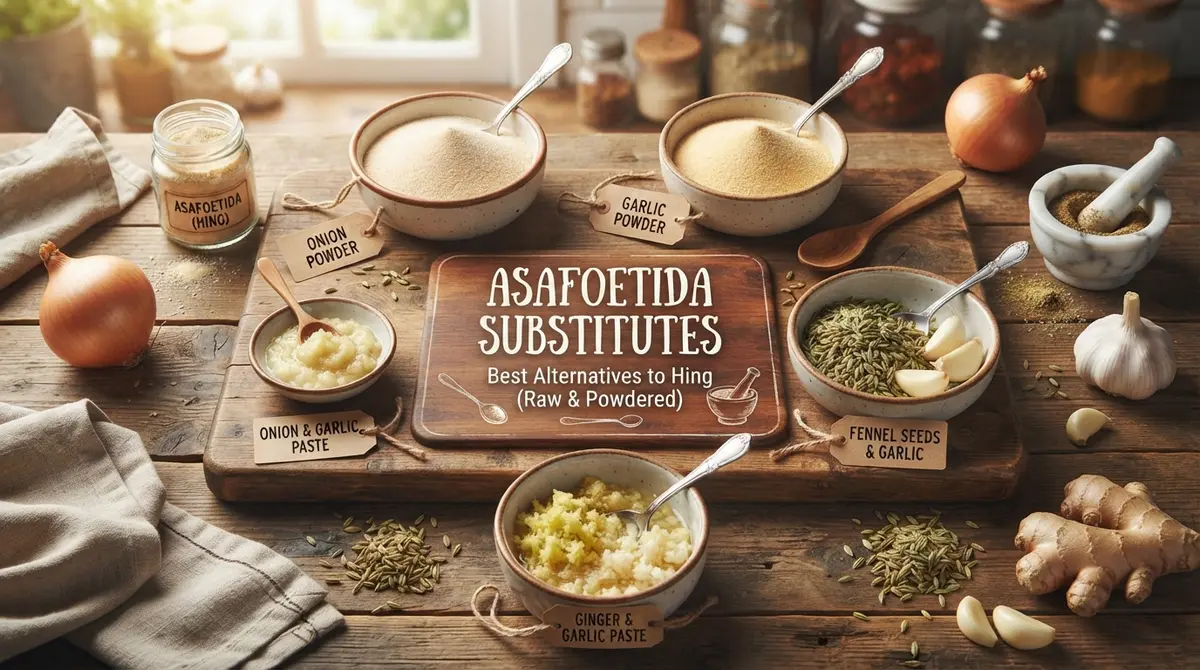
Asafoetida Substitutes for That Garlic-Onion Swing
Asafoetida brings a whisper of garlic and onion to curries without the bulbs. Swap in garlic powder, onion, or a warm pinch per dish.
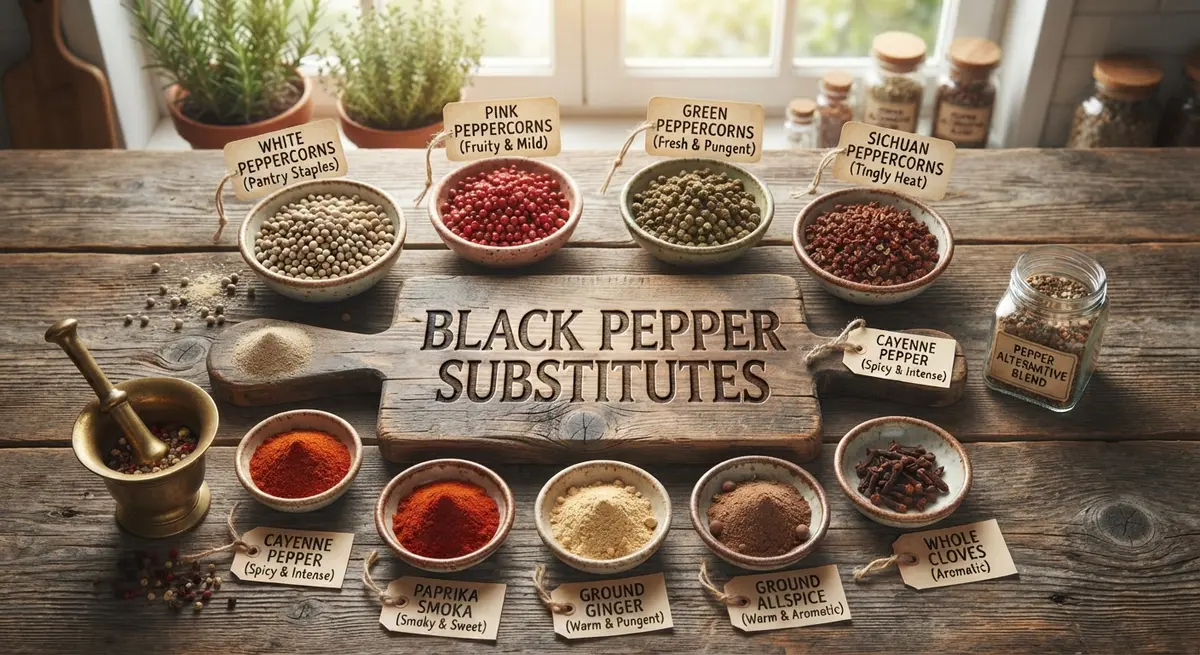
Black Pepper Substitutes for Every Kind of Dish
Black pepper adds a bright, pungent finish more than real heat. Match your swap to the dish: white for light, Sichuan for tingly heat.
About the Authors
This recipe and guide was developed, tested, and approved in our home kitchen and daily life. Jamy is a retired Food Service District Manager and Early Childhood Program Manager who spent his career overseeing multi-site restaurant operations, large-scale culinary production, and daycare menu management. Kaïna brings the ultimate real-world test: making sure it brings ease and joy to our kids on a busy weeknight.
Read more about our professional background and philosophy →