Converting Dried to Fresh Herbs Without Wasting Either
By the QuiteRecipes team (Jamy & Kaïna)
When the market basket has no fresh, the reverse rule applies: one tablespoon fresh for one teaspoon dry, for the right herbs only.
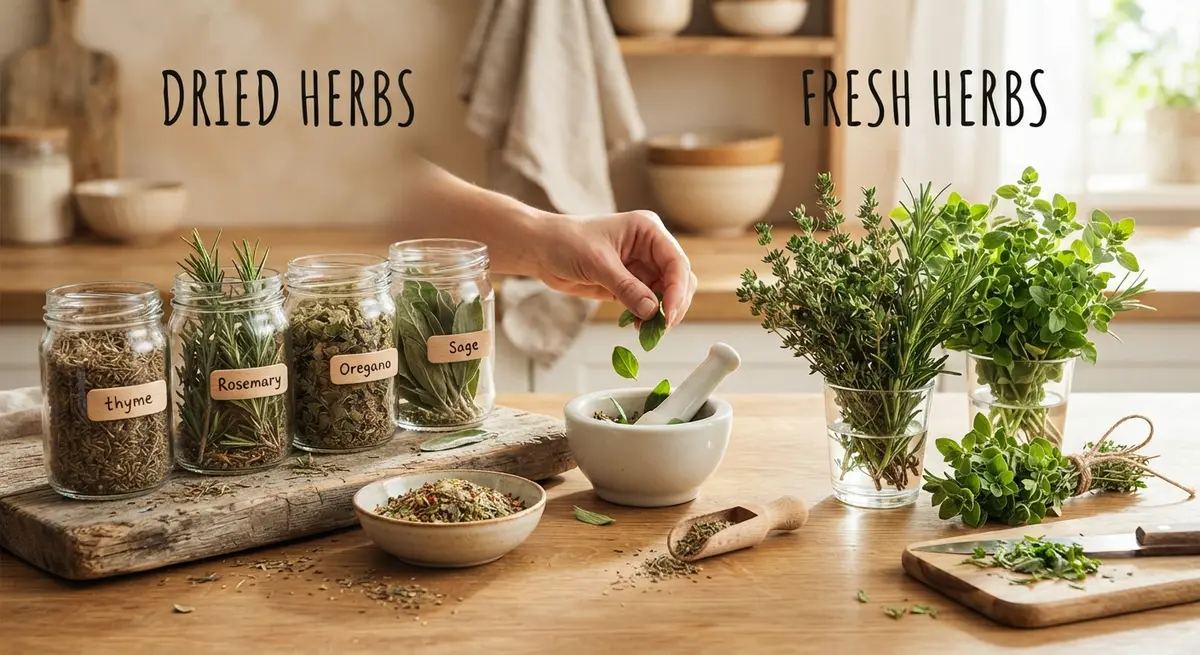
The reverse of the herb rule feels obvious until it is not. I have stood over a stew that asked for two sprigs of fresh thyme, with only the little jar of dry at hand, and I have overcorrected, undercorrected, and finally just added a pinch and hoped. The truth is the conversion both ways rests on the same foundation: understand what fresh and dried each do, then match measure and timing. This guide takes the well-known ratio and turns it into something you can trust without a sprig in sight.
Why This Spice Is Hard to Replace
Dried herbs are the concentrated, mellowed versions of their fresh selves, and they behave differently in the pot. Fresh herbs read bright and green and want to be added late, while dried herbs want to simmer from the start. Using a dry herb for a fresh role means doubling it up on flavor but adding it at the right time, which is why a straight swap fails. The herbs that work best in reverse are the sturdy ones, thyme, oregano, rosemary, sage, and bay, while the delicate ones simply refuse to pretend.
The Best Substitutes
- Fresh thyme or rosemary, a teaspoon of chopped leaves per teaspoon of dried, added in the final minutes.
- Fresh oregano or sage, same reversal, chopped fine and stirred in near the end.
- A fresh basil leaf or two for every pinch of dried, torn just before service.
- Fresh parsley leaves at about three times the dried measure, but only as the finish.
- One bay leaf fresh for a dried leaf, removed before serving.
- Fresh stems, whole, to season braises, then pulled out like a bouquet garni.
- A scatter of microgreens or sprouts when the herb water is only in the garden.
How to Make the Swap Work
Use one tablespoon of fresh herb for every teaspoon of dried, roughly the reverse ratio, and chop it fine so it scatters. Time the swap correctly: with stews, use the sturdy fresh sprigs whole and fish them out late; with final-minute dishes, tear the fresh leaves just before the plate. Taste after ten minutes of resting, since fresh leaves bloom as the dish settles. And remember fresh herbs are mostly water, so if a recipe counted on dried for a dry rub, a swap to fresh changes the whole texture game.
Substitutions to Avoid
- Three tablespoons of fresh basil for one of dried in a dry rub: basil fresco drowns a rub in green water.
- Fresh dill simmered for an hour "like dried": its perfume dissolves and the pot tastes nothing like dill.
- Parsley measured like dried with the same timing: the fresh leaf should be last, not first.
- Chopped fresh mint in a slow braise as if it were dried: mint's lightness is a finish, not a braise.
- Substituting bunches of herbs for the jar in baking: baked goods want dry weight, fresh herbs break the formula.
FAQ / Quick Facts
- How much fresh replaces a teaspoon of dried? About one tablespoon of chopped fresh, proven for the sturdy herbs.
- Which fresh herbs convert best? Thyme, rosemary, oregano, and sage; delicate parsley, basil, and mint need the freshest of treatment.
- Should fresh herbs be added at the same time as dried? No, add fresh near the end and dried from the start.
- Can I freeze fresh herbs for later? Yes, chop and freeze in oil or water, a better "fresh" storage than most jars.
Related Articles
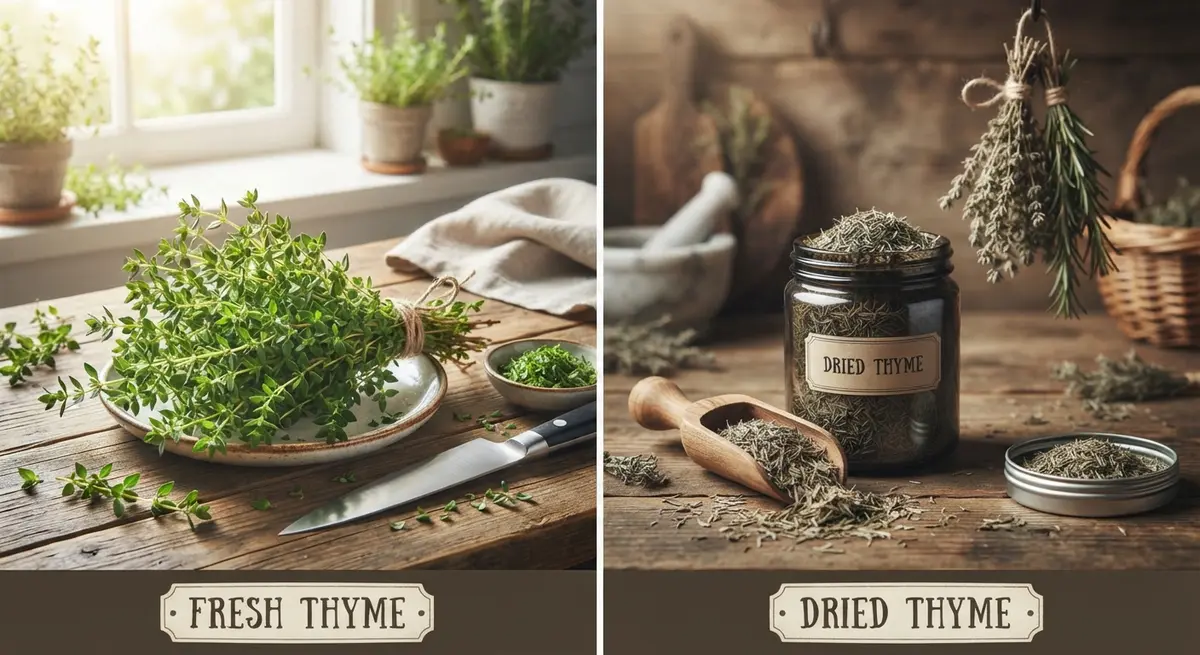
Converting Fresh to Dried Herbs: The Triple Rule
One part dried herb can replace three of fresh, but not always. Learn which herbs convert and which insist on staying fresh.
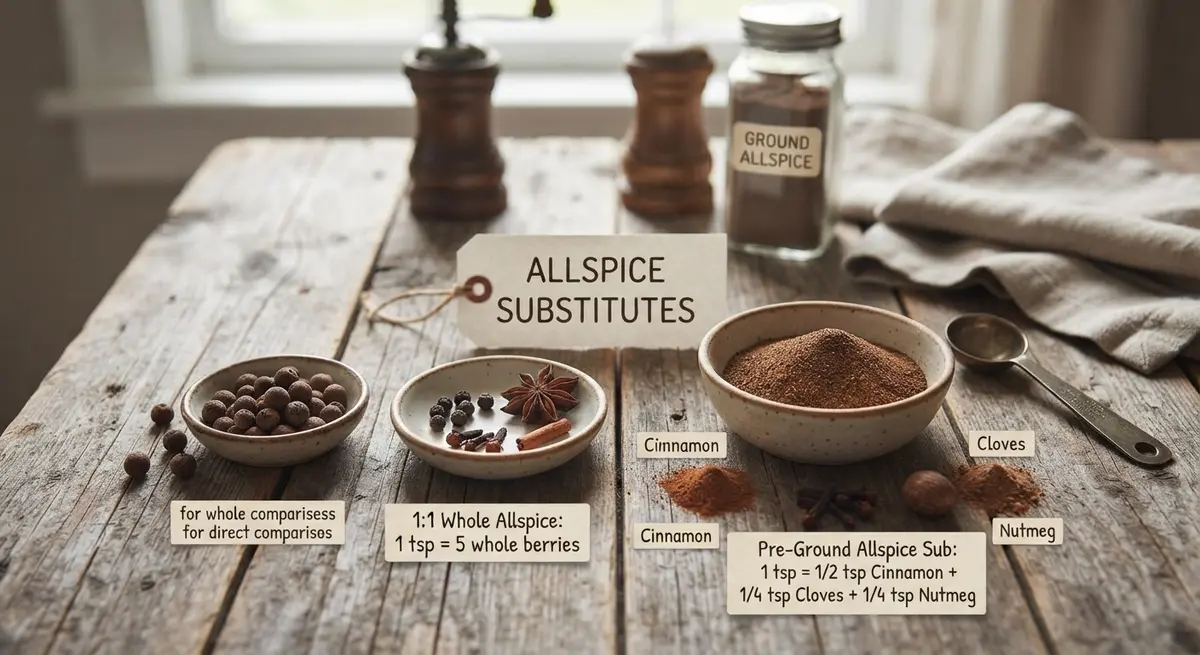
Allspice Substitutes for That One-Jar Warmth
Allspice tastes like cinnamon, clove, and nutmeg had a baby. Rebuild it by blending warm pantry spices for bakes, stews, and holiday jars.
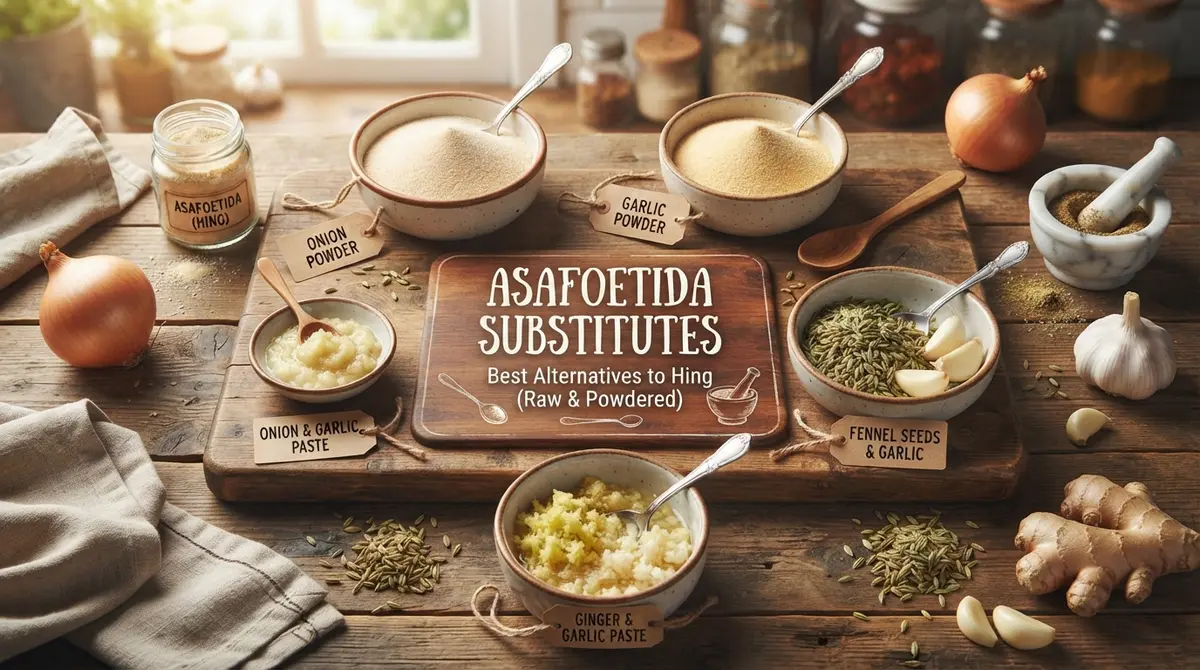
Asafoetida Substitutes for That Garlic-Onion Swing
Asafoetida brings a whisper of garlic and onion to curries without the bulbs. Swap in garlic powder, onion, or a warm pinch per dish.
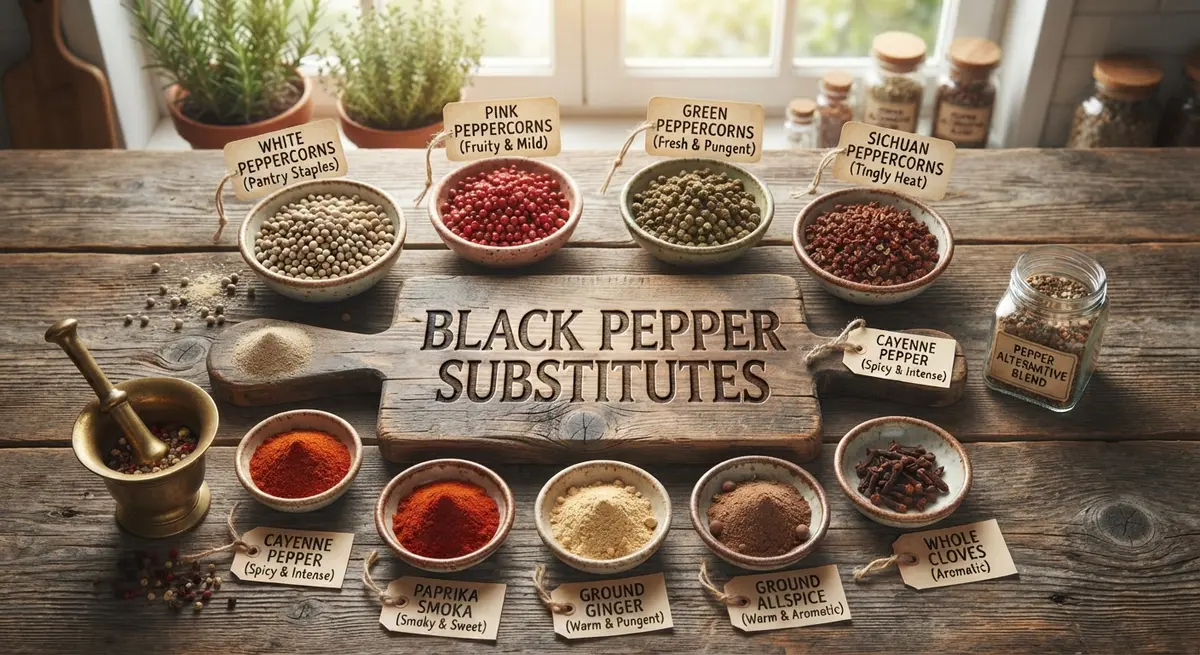
Black Pepper Substitutes for Every Kind of Dish
Black pepper adds a bright, pungent finish more than real heat. Match your swap to the dish: white for light, Sichuan for tingly heat.
About the Authors
This recipe and guide was developed, tested, and approved in our home kitchen and daily life. Jamy is a retired Food Service District Manager and Early Childhood Program Manager who spent his career overseeing multi-site restaurant operations, large-scale culinary production, and daycare menu management. Kaïna brings the ultimate real-world test: making sure it brings ease and joy to our kids on a busy weeknight.
Read more about our professional background and philosophy →