Fresh Ginger vs. Ground Ginger: Swapping Them Without Ruining the Dish
By the QuiteRecipes team (Jamy & Kaïna)
Fresh and ground ginger are not the same spice. Use the right tool for the job and bake and stir-fry everything wins.
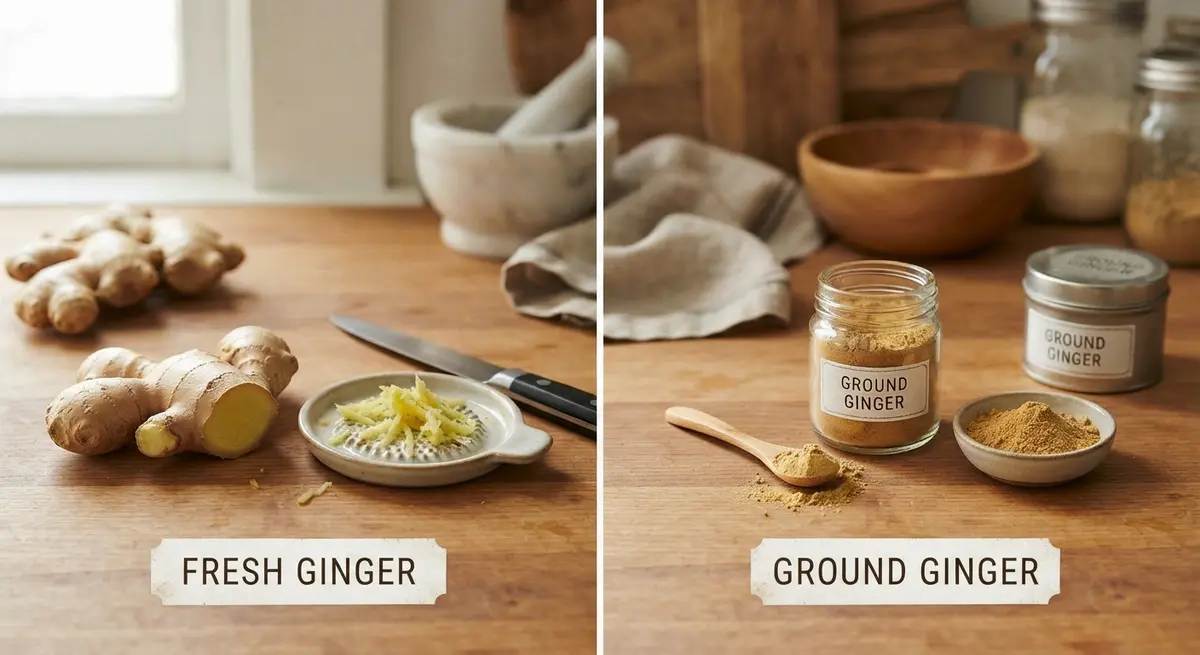
There is a moment every home cook hits: the recipe says fresh ginger, the fridge holds only the powdered jar, and the dish is half assembled. The internet says they are interchangeable, and the internet is wrong. Fresh ginger is bright, juicy, and a little hot, built for stir-fries and teas. Ground ginger is concentrated, woody, and dusty-sweet, built for spice cakes and gingerbread. I learned this the hard way when a curry went bitter because I spooned in powder, and again when cookies came out flat because I grated a whole root. This guide is the rule I wish I had back then.
Why This Spice Is Hard to Replace
Ginger's trouble is that its fresh and dried forms are genuinely different ingredients. Fresh root carries moisture, fiber, and bright, zesty oils that dry ground ginger can never match. Grinding changes the chemistry: the heat dulls, the sweetness deepens, and the texture becomes powdery. That means a direct one-for-one trade ruins texture in dressings and throws off the sugar balance in baking. The fix is not a single ratio, it is understanding what the recipe actually needs from the ginger and picking the right form.
The Best Substitutes
- Ground ginger for fresh: use one quarter teaspoon of ground for every tablespoon of grated fresh, and expect a deeper, less sharp flavor.
- Fresh ginger for ground: use one tablespoon of peeled, grated root for every quarter teaspoon of ground, and know it will be brighter.
- Dried ginger soaked in water: for dishes that need some freshness, soak a coin of dried ginger for an hour, then grate the re-hydrated slice.
- Candied or crystallized ginger, rinsed of sugar: purees clean and brings heat and sweetness to baking when no root exists.
- A blend of cinnamon, nutmeg, and a whisper of allspice: only for sweet baked goods that want ginger's warmth instead of its bite.
- Galangal, when you have it fresh: a cousin with a sharper, spicier kick, good in savory coconut dishes and soups.
How to Make the Swap Work
Match the form to the job first. Sauces, marinades, and stir-fries want fresh ginger; quickbreads, cookies, and spice mixes want ground. When substituting, be conservative with ground ginger, because it is far more potent by volume and can turn a dish rustic and dusty. Grating fresh ginger over its length avoids the tough fibers. Bloom ground ginger briefly in warm fat or liquid before mixing it in, which softens its raw, dusty edge. Taste at each step instead of trusting the recipe's measure at face value.
Substitutions to Avoid
- Using ground ginger in a stir-fry sauce and calling it done: it clumps, turns bitter, and lacks that zing.
- Using fresh ginger in gingerbread: it brings moisture the dry bake never planned for and the flavor turns earthy.
- Doubling a swap "to be safe": ground ginger doubles fast, and one spoon too many ruins the batch.
- Keeping opened jars past a year: ground ginger fades to sawdust, which is nine out of ten "my cookies taste weird" stories.
- Believing "dry" and "fresh" are the same spice with different packaging: one is a root, the other a powder, and they deserve different recipes.
FAQ / Quick Facts
- What is the general substitution ratio? One quarter teaspoon ground equals roughly one tablespoon fresh, grated.
- Can I swap them in tea? No, the fresh root boils into a bright, spicy brew, while ground powder just muddies it.
- How long does fresh ginger last? Peeled and sealed, weeks in the fridge; whole, the root keeps on the counter for a while but dries eventually.
- Is ground ginger good in savory food? In curry powder and spice rubs, yes, but it needs bloomed heat and more liquid than you expect.
Related Articles
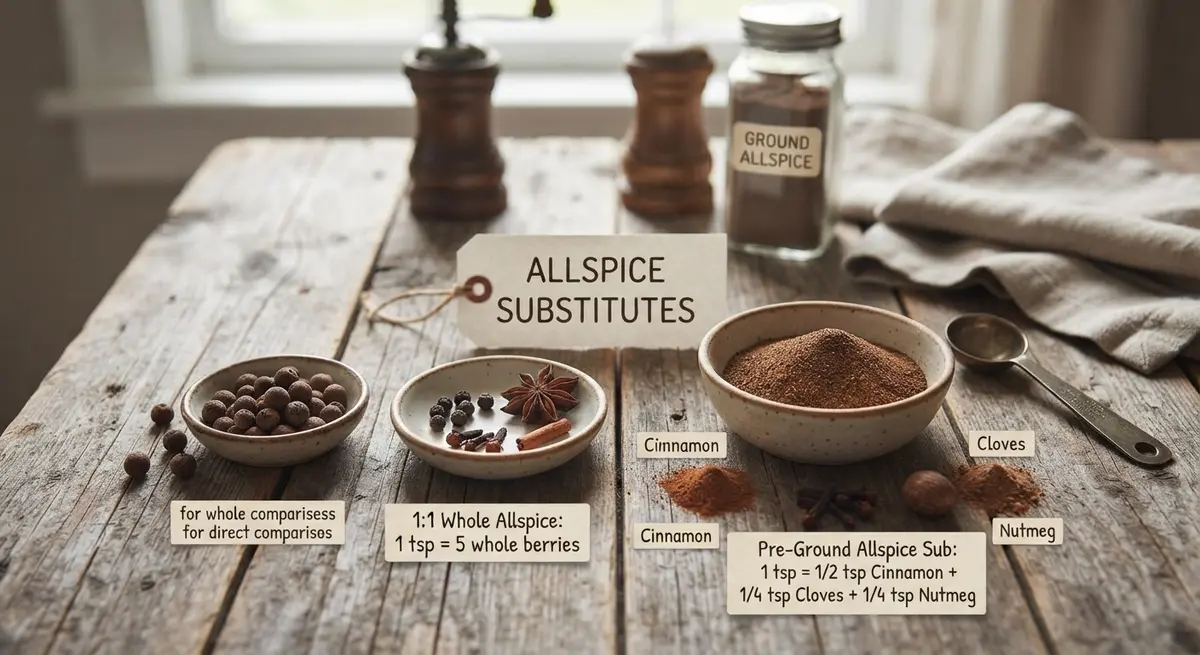
Allspice Substitutes for That One-Jar Warmth
Allspice tastes like cinnamon, clove, and nutmeg had a baby. Rebuild it by blending warm pantry spices for bakes, stews, and holiday jars.
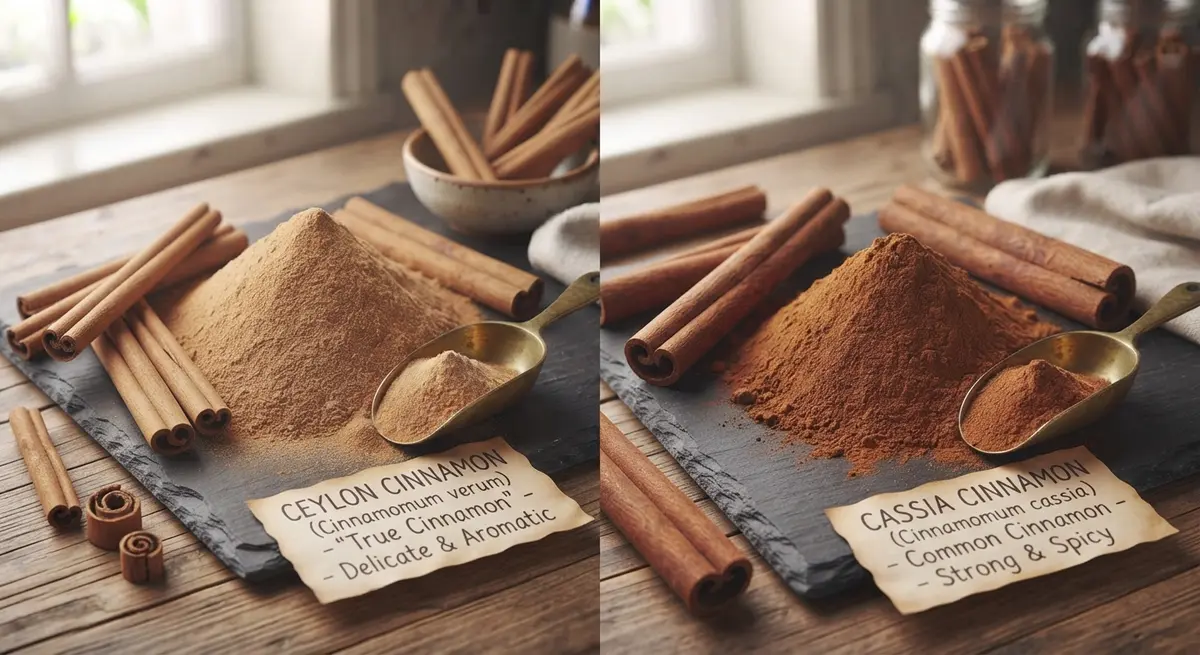
Ceylon vs. Cassia Cinnamon and How to Substitute One for the Other
Most jars labeled cinnamon are actually cassia. Knowing the difference wins baking, curries, and even a small health question.
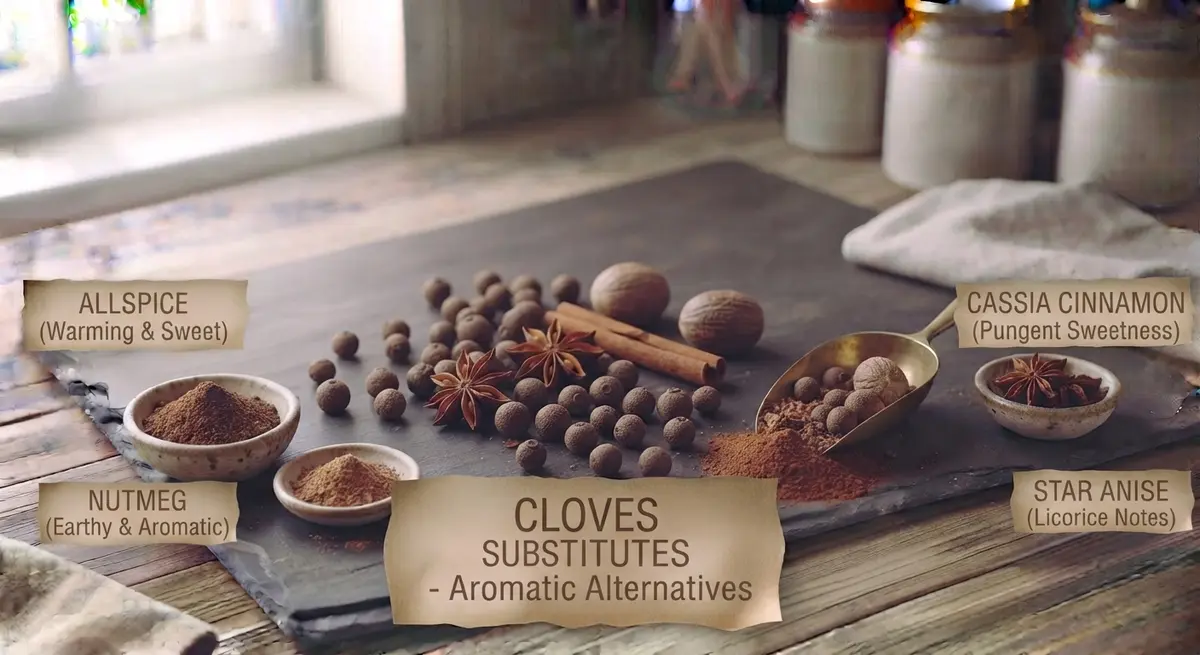
Cloves Substitutes for Baking, Mains, and Mulled Drinks
Cloves bring a potent, perfumed warmth with a sting of heat. Swap in allspice, nutmeg, or a pinch of cinnamon for nearly every use.
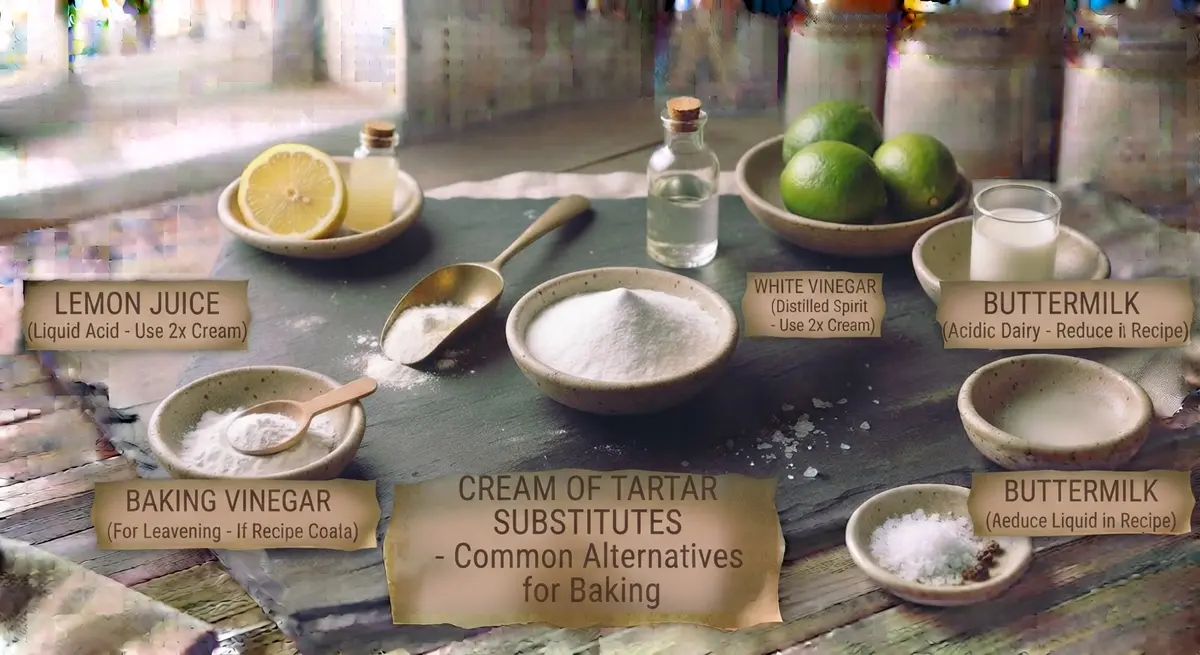
Cream of Tartar Substitutes for Meringues and Baking Science
Cream of tartar is baking chemistry, not flavor. Swap in lemon juice or vinegar for stabilizer duty, or acid alternatives for leavening.
About the Authors
This recipe and guide was developed, tested, and approved in our home kitchen and daily life. Jamy is a retired Food Service District Manager and Early Childhood Program Manager who spent his career overseeing multi-site restaurant operations, large-scale culinary production, and daycare menu management. Kaïna brings the ultimate real-world test: making sure it brings ease and joy to our kids on a busy weeknight.
Read more about our professional background and philosophy →