The Complete Spice Substitution Guide: Swap Ratios and When NOT to Substitute
By the QuiteRecipes team (Jamy & Kaïna)
Halfway through dinner and a spice is missing? Use this swap chart and get back to cooking. Plus the three substitutions that are never worth making.
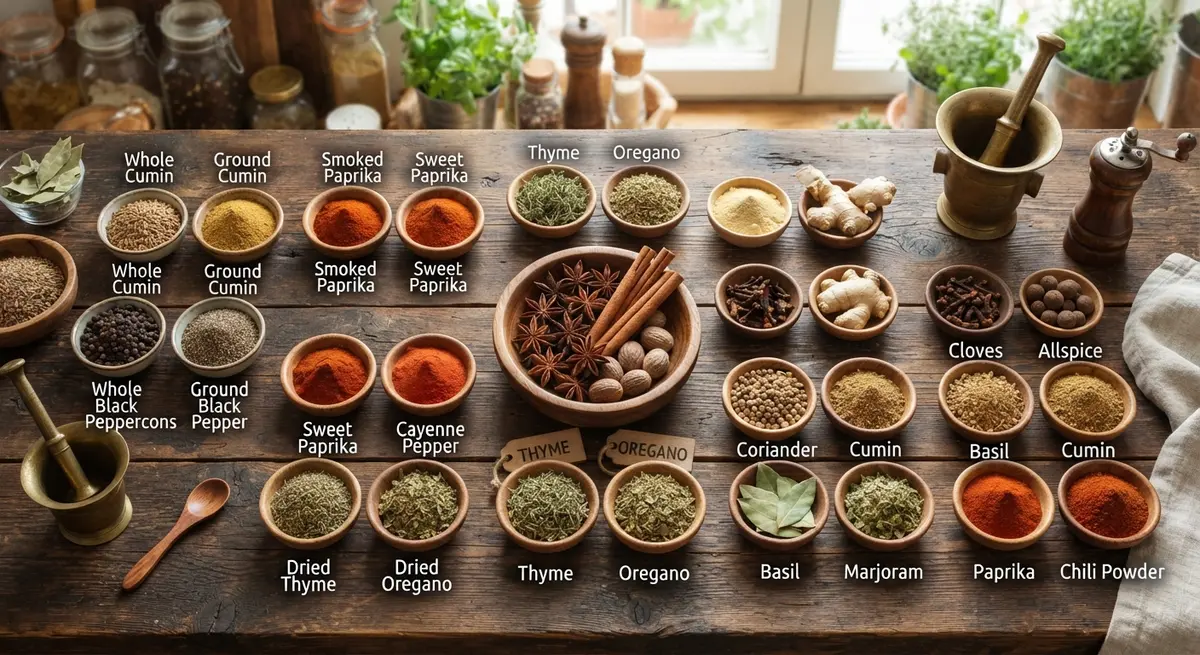
Every cook knows the feeling: the onions are sweating, the recipe says "add a teaspoon of cumin" and the cumin jar is holding exactly one dusty fingerprint at the bottom. In that exact moment, the internet wants you to read an essay. I have been the person who Googled "substitute for cardamom" with a kid on each hip and no time for a lecture — which is exactly why this page exists.
The good news is that most spices are replaceable, and most swaps taste better than the panic mode of "do not add it at all." The chart below is what years of cooking taught me, presented as flatly as possible: what to swap, how much to use, and when you should just move on without it.
The Golden Rule of Substituting
Before the chart, the one rule that saves more dinners than it wastes: substitute within the same flavor family, not the same spice color. Reaching for the jar that looks similar is how dinner goes from "missing cumin" to "mysteriously minty."
- Match the role the spice plays, not its appearance.
- Keep the total amount roughly the same; most swaps are one-to-one or close to it.
- Taste after you swap. Your seasoning senses are the final and best authority.
Pro tip: when a swap feels risky, add half the substitute, taste, then decide. Spices are easier to add than to remove, and "under-substituted" is never a ruined dinner.
The Everyday Substitution Chart
Here are the swaps I actually use, on shelves everyone actually has:
Cumin → Coriander or chili powder (1:1, taste and adjust). Coriander is the mild, warm cousin; chili powder brings smoke and heat to the earty spot cumin usually fills.
Pro tip: if you need cumin for a dry rub, an equal amount of smoked paprika is your best friend. If you needed it for beans or chili, chili powder works beautifully at 1:1.
Paprika → Chili powder + a pinch of sugar (1:1 for the blend). Smoked paprika can swap for regular paprika 1:1. Cayenne adds heat, not depth — so treat it as flavor, not as paprika.
Pro tip: in soups and stews, a tiny spoon of tomato paste gives back some of the color and sweetness that paprika would have contributed.
Garlic powder → Onion powder or minced fresh garlic. If you have fresh garlic, use one clove per quarter teaspoon of powder. Onion powder offers a mellow, sweet background that fills the savory gap.
Pro tip: be careful doubling a recipe that asks for both garlic and onion powder — you may find yourself with onion-forward pasta and mixed feelings.
Cinnamon → Allspice or nutmeg (1:1 in sweet dishes; half the allspice if the recipe is delicate). If you have cardamom, a third of the amount adds a bright, complex lift.
Pro tip: for savory dishes like a pinch of cinnamon in chili, a dash of allspice is the closest kin.
Oregano → Italian seasoning or marjoram (1:1). If you have neither, thyme — at half amount — keeps the herb family present without shouting "pizza."
Rosemary → Thyme (at about three-quarters amount). Both are woodsy evergreen-ish herbs. Avoid the "herbes de Provence" blending all herbs into one generic voice.
Nutmeg → Allspice or cinnamon (1:1 for baked goods, half the allspice is the whisper you usually want).
Smoked paprika → Regular paprika + a few drops of liquid smoke (if you keep liquid smoke), or ancho chili powder (1:1).
Ginger → Allspice, cinnamon, nutmeg, or cardamom, at about half to two-thirds the amount. Nothing captures fresh ginger's exact bite, so lean toward the spice that plays the same role in the dish.
Cayenne or red pepper flakes → Chili powder (two parts chili powder per one part cayenne; the heat drops but the flavor fills in). Can't do heat at all? Add a pinch of paprika for color and a pinch of sugar to keep the dish from turning flat.
Mint → Parsley + a touch of lemon if you need the green spirit more than the cold freshness. Double-check that this swap matches the role the mint was playing.
When You Should NOT Substitute
The honest part: some spices are the dish, not a guest. These are the cases where swapping cheats the plate:
- Saffron. There is no real swap. A pinch of turmeric adds color but none of the honeyed, floral complexity. If a recipe calls for saffron, either commit to it, or change the recipe entirely and enjoy it as its own dish.
- Fresh herbs for dried in the wrong direction. Substituting when a recipe truly needs fresh (pesto, finishing a salad) does a different thing. If the recipe relies on fresh basil's brightness, dried basil in a cold dish will taste dusty.
- Cardamom. Its closest swap is a blend — cinnamon + cloves + a pinch of nutmeg — at half amount, which is honest but never identical. If cardamom is the hero, sub the whole concept, not the jar.
The Substitution Math: How Much Actually Goes In
The swap ratio is only half the equation; the other half is how much. Most people use the same spoonful for the wrong spice and then blame the swap when the dish goes sideways.
- 1:1 swaps — same spice shape, same amount: coriander for cumin, thyme for rosemary, allspice for an equal pinch of nutmeg.
- Half-amount swaps — when the substitute is stronger or more fragrant: cardamom or cloves for a warm spice, marjoram for oregano if you want it subtle.
- Double the amount only when the substitute is milder — dried herbs for a dish that needed fresh, or sweet paprika for hot paprika that you do not keep.
Pro tip: when a recipe measures a spice by "teaspoon" but you are using a stronger swap, add half, taste, and add again. Spices are the rare ingredient where the last pinch matters more than the first surprise.
The Rescue Sequence for the Second Half of Dinner
When the jar is empty and the food is mid-cook, run this order and you will save most evenings:
- Check your blends and rubs — an all-purpose seasoning or taco mix often contains the missing spice (paprika, cumin, chili).
- Search for its cousin in the same family — the chart above is that family sorted by the jars most kitchens own.
- Consider dropping the spice gracefully. Some dishes lose a spice without losing their soul; if the erase-test sounds ok, erase and add a bright note (lemon, pepper) instead of a wrong jar.
Pro tip: assemble the swap in a small bowl first, taste it off the dinner, and only then add it to the pot. A single wrong jar is forgiven; a whole ruined pot is not.
Next time a spice runs out in the middle of dinner, you have two rational options: follow the chart and carry on like a chef, or confidently leave it out and add the bright note. Both are permitted. Panic in front of a sweating pan of onions is not.
Related Articles
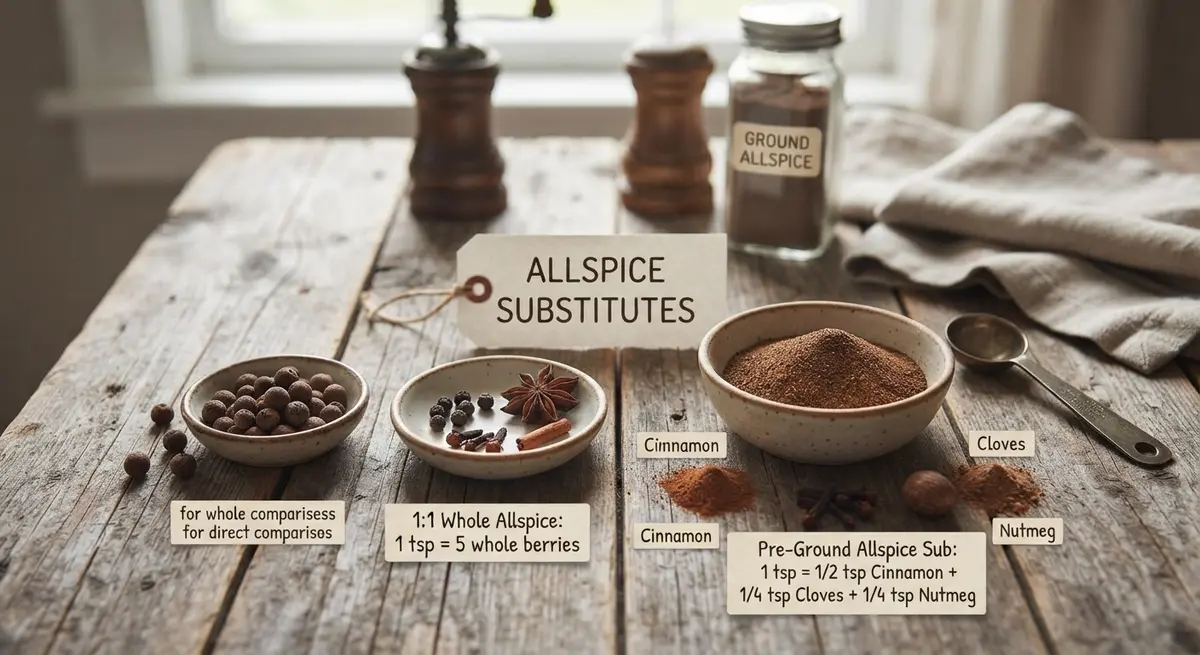
Allspice Substitutes for That One-Jar Warmth
Allspice tastes like cinnamon, clove, and nutmeg had a baby. Rebuild it by blending warm pantry spices for bakes, stews, and holiday jars.
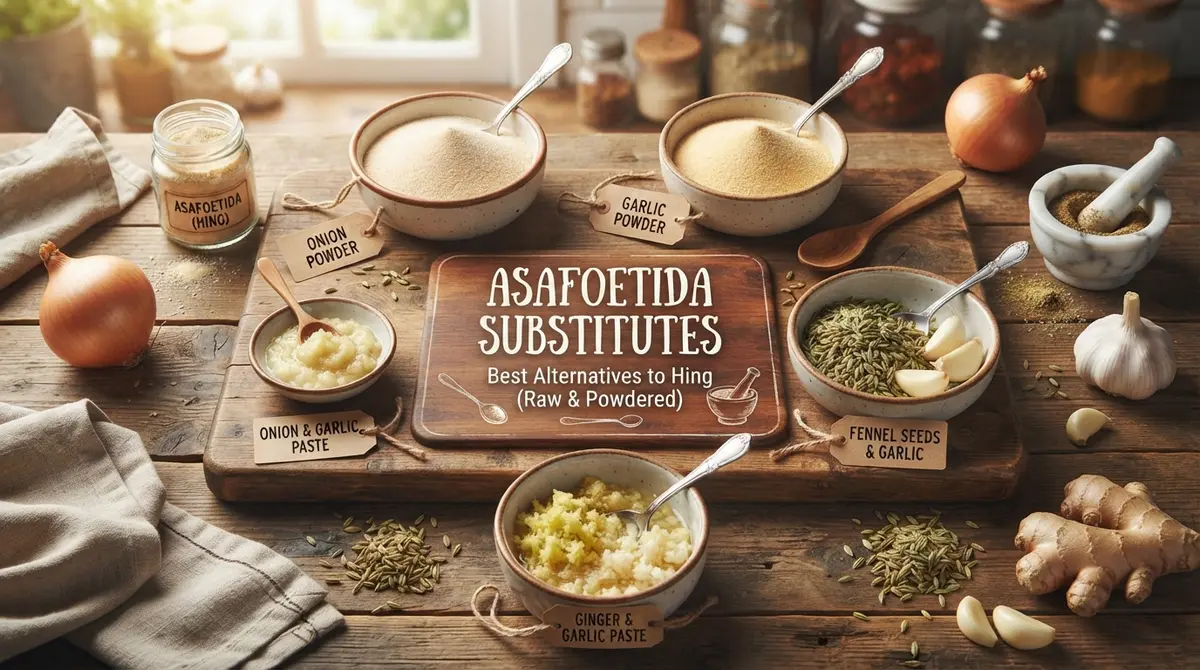
Asafoetida Substitutes for That Garlic-Onion Swing
Asafoetida brings a whisper of garlic and onion to curries without the bulbs. Swap in garlic powder, onion, or a warm pinch per dish.
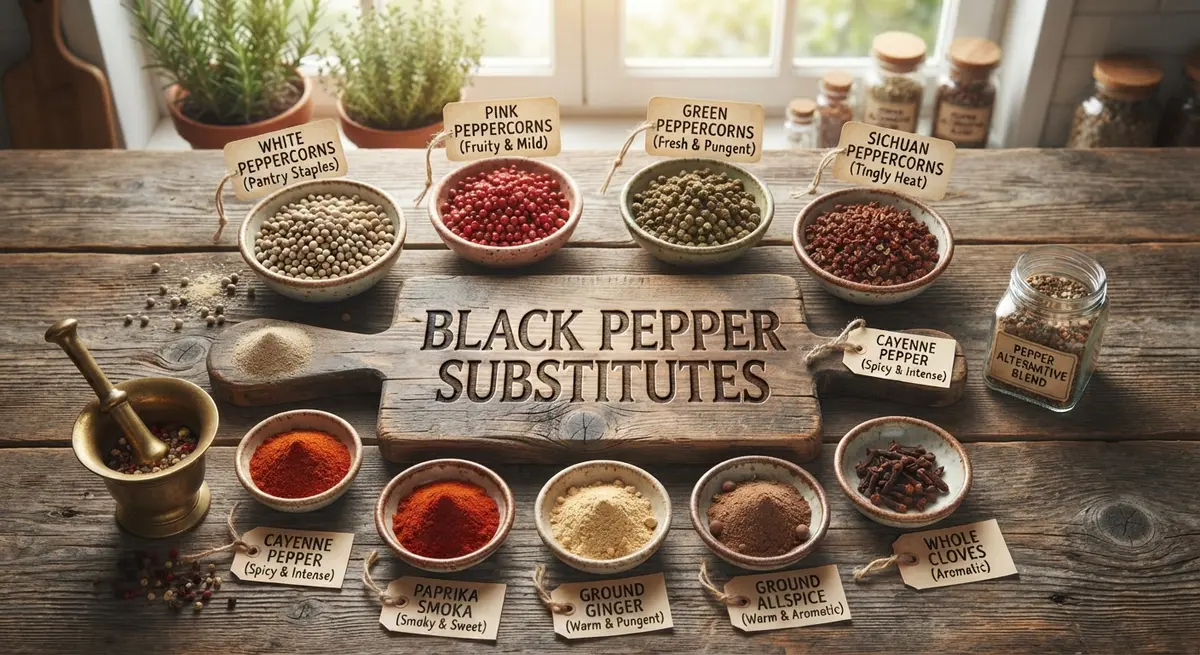
Black Pepper Substitutes for Every Kind of Dish
Black pepper adds a bright, pungent finish more than real heat. Match your swap to the dish: white for light, Sichuan for tingly heat.
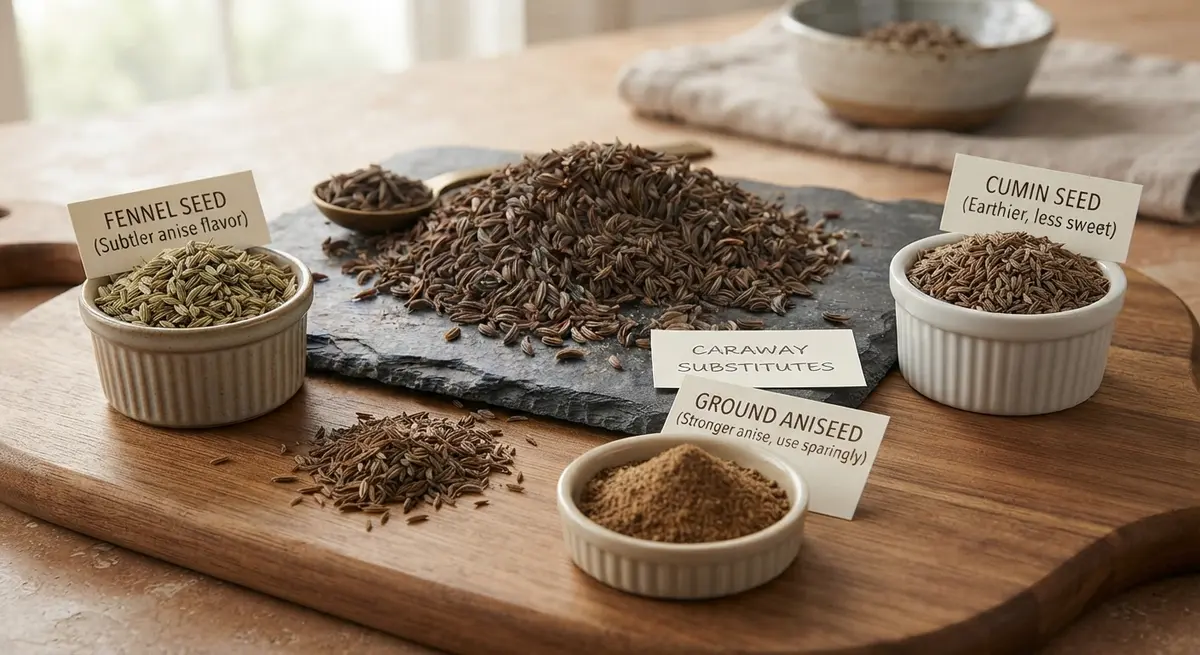
Caraway Substitutes for That Rye-Bread Warmth
Caraway is rye bread's signature and sauerkraut's best friend. Swap in fennel, anise, or cumin to bring warmth and aroma to the pot.
About the Authors
This recipe and guide was developed, tested, and approved in our home kitchen and daily life. Jamy is a retired Food Service District Manager and Early Childhood Program Manager who spent his career overseeing multi-site restaurant operations, large-scale culinary production, and daycare menu management. Kaïna brings the ultimate real-world test: making sure it brings ease and joy to our kids on a busy weeknight.
Read more about our professional background and philosophy →