Which Spices Go Together? A Simple Pairing Chart for Everyday Cooking
By the QuiteRecipes team (Jamy & Kaïna)
The fastest way to cook with confidence is knowing which spices smile at each other. A no-lesson pairing chart for chicken, vegetables, rice, and more.
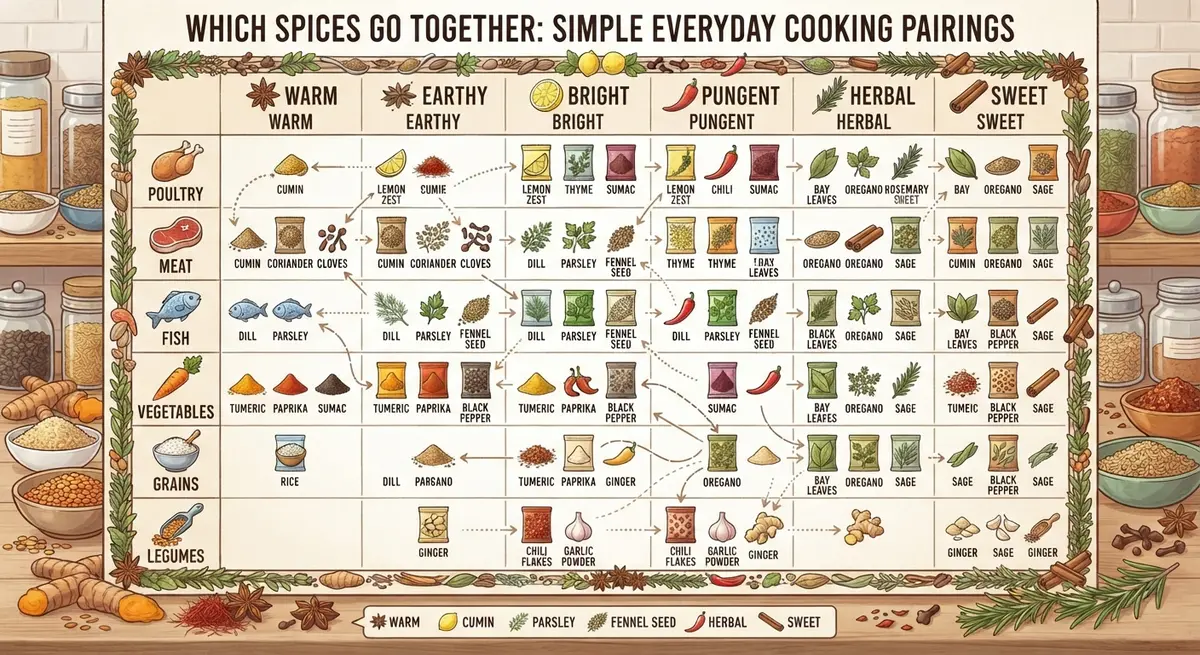
I stood in front of my spice shelf with two chicken breasts and absolutely no idea what to put on them. That feeling — open jar, frozen hands, "do these even go together?" — has ended more home dinners than running out of butter. The internet told me there were theories and charts and infographics, most of them too complicated to help on a Tuesday.
Here is what years in a real kitchen taught me instead. Spice pairing does not require a taste-of-fairy-tale education. It requires pattern recognition. Certain spices clearly like each other, certain foods invite certain spice families, and once you can see those patterns you stop guessing and start seasoning. This is that pattern, laid out as plainly as a chart.
The Five Classic Spice Families
Almost every great combination in the world belongs to one of five families. Learn these and you have a cheat code:
- The Warm Family — cinnamon, clove, nutmeg, cardamom, allspice. Think baking and slow winter meals.
- The Earthy Family — cumin, coriander, turmeric, smoked paprika. Think stews, beans, root vegetables.
- The Bright Family — black pepper, lemon zest flavors, ginger, fresh herbs. The lift that keeps a dish from feeling heavy.
- The Spicy Family — chili powder, cayenne, red pepper flakes, paprika. Heat is a flavor family, not an optional extra.
- The Savory Family — garlic, onion, celery, sage, thyme, oregano. The background crew that makes everything taste "dinner-y."
Pro tip: when a dish tastes flat, you are usually missing a Bright Family note, not more salt or more heat. A last-minute crack of black pepper or a curl of fresh ginger fixes more dinners than any spice import.
Foolproof Pairs to Cook From Memory
These are the combinations I reach for without thinking. Each one is a complete thought — base, warmth, lift — sized for one main ingredient.
- For chicken: smoked paprika + garlic + thyme, or a warmer duo of cumin + coriander.
- For beef: black pepper + smoked paprika + a tiny bit of brown sugar, or oregano + garlic when you want it cleaner.
- For pork: fennel + black pepper + a pinch of chili, or sage + thyme for the classic roast.
- For fish: coriander + ginger + white pepper, or dill + lemon (lemon is a spice when it behaves like one).
- For eggs: paprika + black pepper, or cumin + chili when you want breakfast to taste like a truck stop that means well.
- For potatoes: rosemary + garlic + a pinch of paprika, or smoked paprika + black pepper for crisp edges.
- For roasted vegetables: cumin + coriander + turmeric, the earthy trio you can do blindfolded.
Pro tip: keep a "default per protein" written on the inside of your spice cupboard. When the frozen brain hits, the answer is already written on a post-it, not trapped in a memory you cannot reach at 6 p.m.
Pairing Spices by What You Are Cooking
Beyond shortcuts, here is how to think. Each protein and pantry staple has an accent: a flavor direction it naturally welcomes.
- Chicken and turkey are blank canvases — they take almost anything, which makes them the best place to rehearse. Try a new spice on one single piece before rolling out a whole plate with it.
- Beef likes bold: pepper, chili, smoked things, a touch of sweet to balance. It can hold smoky flavors that would bully a chicken breast.
- Fish and shrimp want delicate, bright company: ginger, coriander, white pepper, citrus, dill. Go gentle and lean bright.
- Beans and lentils adore the earthy family: cumin, coriander, turmeric, smoked paprika, garlic. The earthier the bean, the earthier the welcome.
- Rice and grains take color and aroma: turmeric for gold, cardamom for sweet, cumin for warm hummus-hour vibes.
- Eggs are a morning stage for almost everything, but they shine with paprika, cumin, chili, and fresh herbs more than big sweet spices.
Quick Reference: The Pairing Chart at a Glance
When the cooking brain is tired, this is the list to glance at — no lessons, just the combination and the dish it belongs to:
- Cumin + coriander + turmeric → roasted vegetables, beans, lentils.
- Smoked paprika + garlic + black pepper → chicken, potatoes, anything grilled.
- Cinnamon + nutmeg + a hint of allspice → oatmeal, baked apples, warm desserts.
- Oregano + thyme + garlic → tomato sauces, roasted mushrooms, white beans.
- Ginger + coriander + white pepper → fish, shrimp, and Thursday stir-fries.
- Chili + cumin + a pinch of sugar → taco-style anything, chilis, stews.
That is the entire chart in practice. Write it on an index card, tape it to the inside of the spice cupboard, and let your tired brain have the win.
The No-Regret Formula for Any New Dish
When you look at a recipe with spices that intimidate you, rebuild it with the formula instead of the fear. Ask one question: what family does this dish belong to? Then pick one note from the warm, one from the earthy (or spicy), and finish with a bright pinch. Taste after each addition. That single habit removes more spice anxiety than anything else I know.
Most of all, remember the lesson the chart is really teaching: spices are not soloists. They are a conversation. Build a warm base, invite an earthy friend, and let a bright note say the final word. The rest of us are just at the table enjoying it.
Related Articles
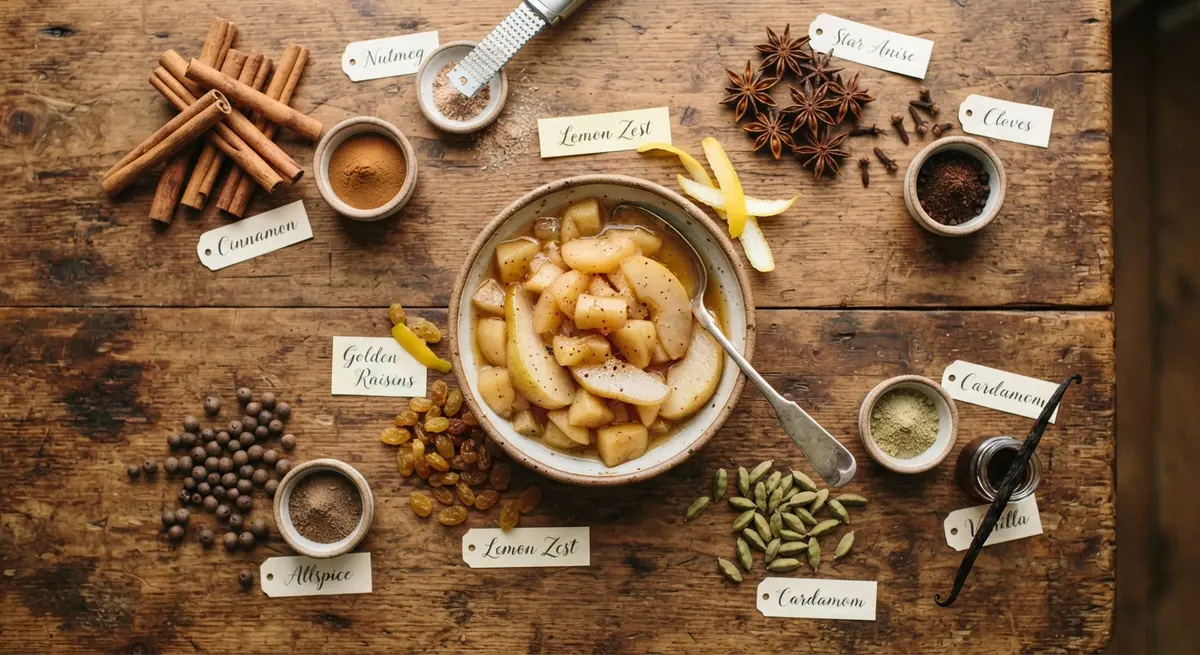
Apple and Pear Spice Pairings: Elevating Simple Fruit Compotes
Simmer a few apples and pears with a pinch of the right spice, and you have a compote that belongs on everything.
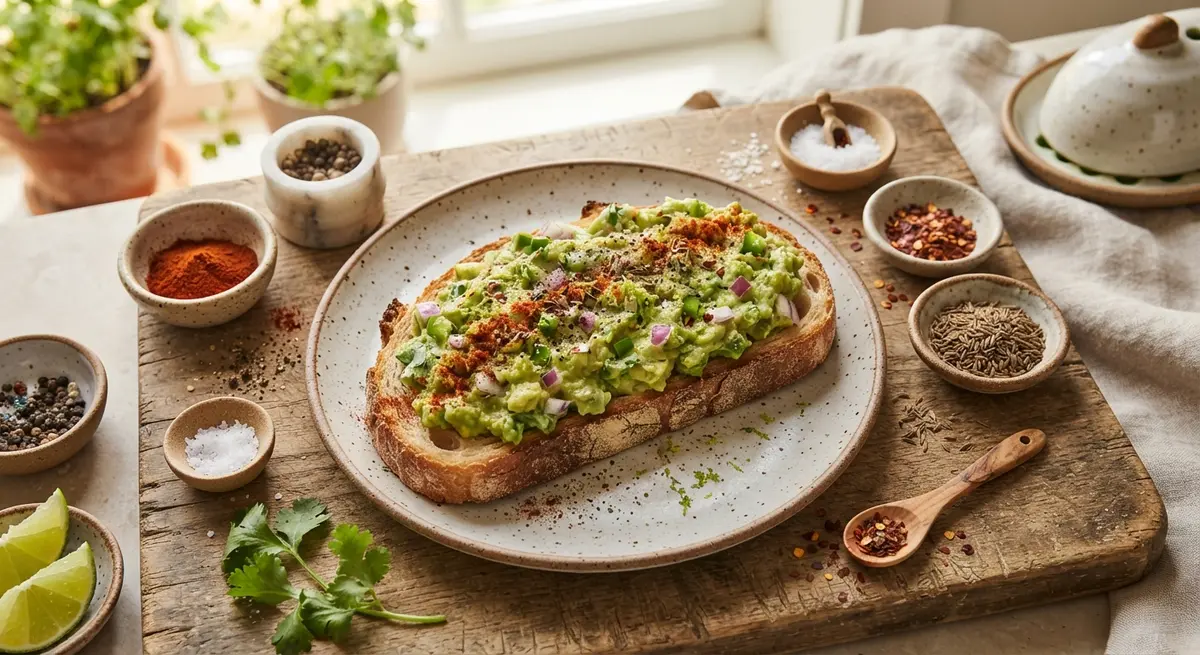
Avocado and Spice: Elevating Guacamole and Toasts Beyond Salt and Pepper
Avocado is rich and fatty, so a little acid and a few warm spices make it taste bigger. Here is the guacamole and toast upgrade.
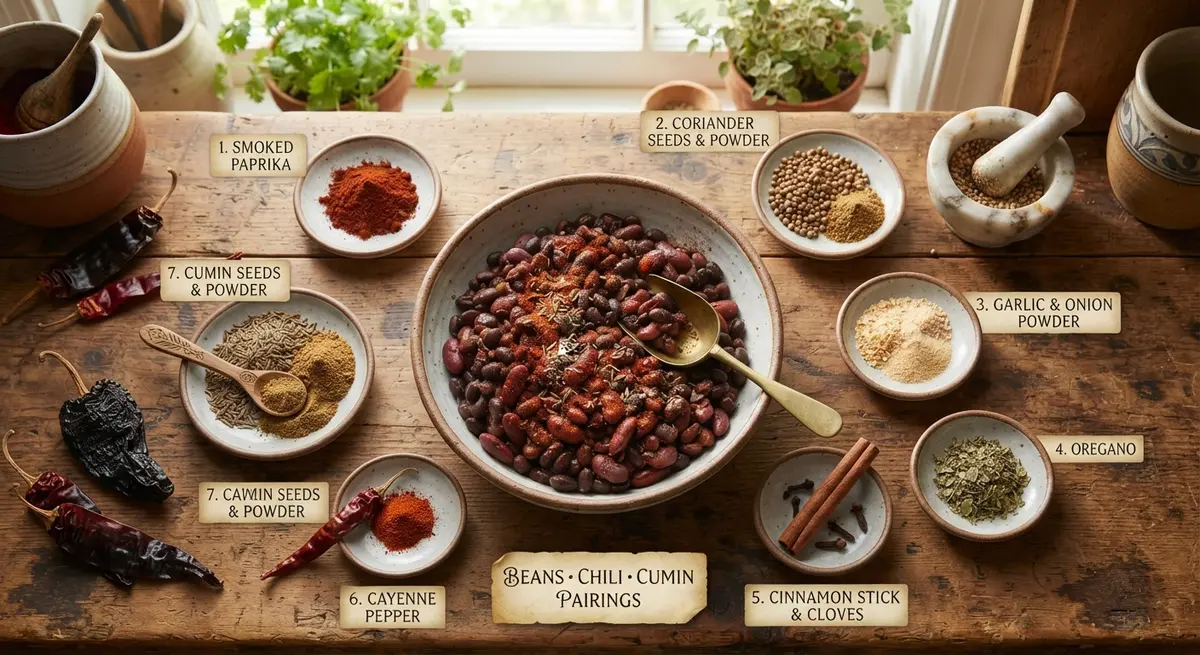
Beans, Chili, and Cumin: The Spice Trio That Turns a Pot Into a Feast
Beans accept almost any spice, but chili, cumin, and paprika make them taste like the pot cooked for hours. Let them bloom and your shortcut dinner wins.
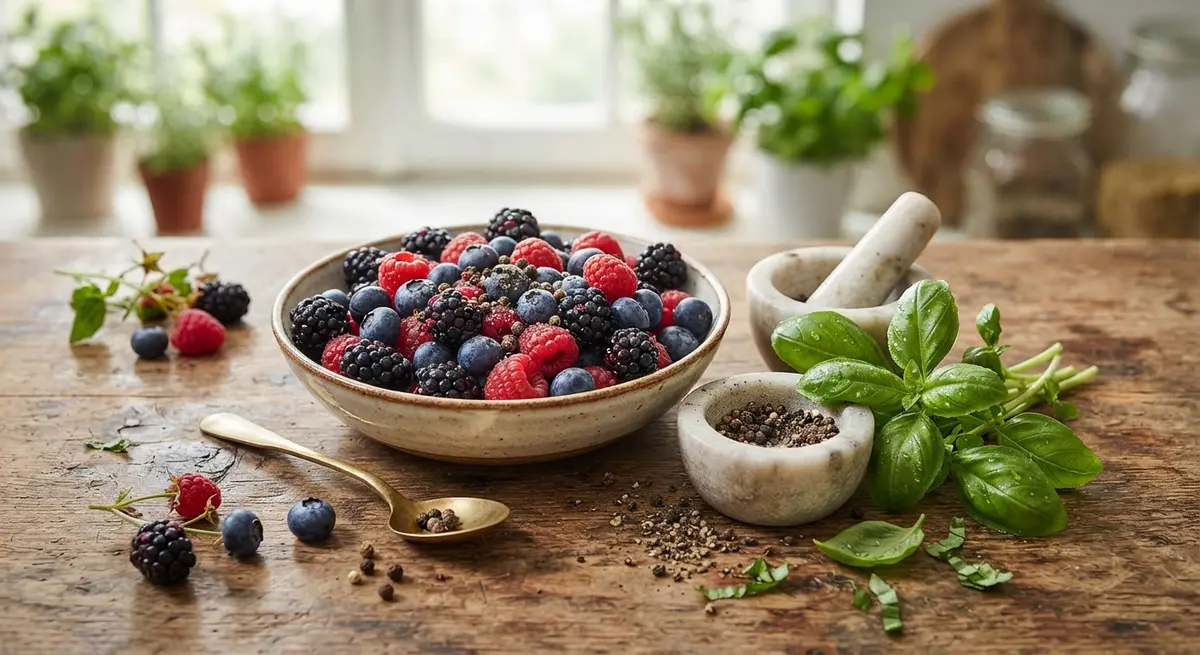
Berry and Spice: Pairing Fresh Berries with Black Pepper and Basil
Berries love black pepper, and the plain version starts to seem unfinished. Here is how to macerate and spice strawberries, raspberries, and blueberries.
About the Authors
This recipe and guide was developed, tested, and approved in our home kitchen and daily life. Jamy is a retired Food Service District Manager and Early Childhood Program Manager who spent his career overseeing multi-site restaurant operations, large-scale culinary production, and daycare menu management. Kaïna brings the ultimate real-world test: making sure it brings ease and joy to our kids on a busy weeknight.
Read more about our professional background and philosophy →