Lemon and Spice: The Bright Chemistry of Sumac, Citrus, and Pepper
By the QuiteRecipes team (Jamy & Kaïna)
Sumac, lemon zest, and black pepper stack into a bright, dry finish. Here is how to use them on vegetables, proteins, and salads.
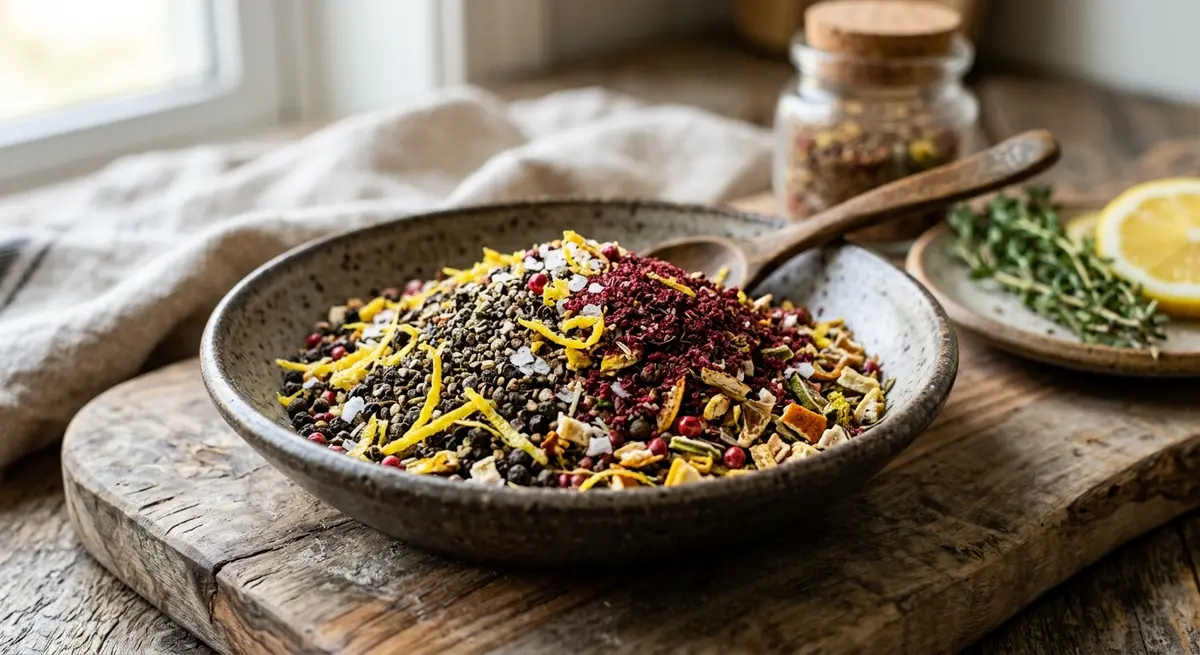
I guard a little jar of sumac the way other people hoard fancy salt, because it fixes almost anything lemon runs out of. Sumac gives you dry, sour brightness; lemon zest brings aromatic oils; black pepper adds warmth. Stacked together, they finish roasted vegetables, proteins, and salads without a single splash of liquid acid. For a while I treated it as a niche trick; now the jar earns its place next to the pepper mill.
Why This Pairing Matters
Liquid lemon juice is not always welcome, especially on crispy roasted things where extra moisture kills texture. Sumac is the dried, ground berry that delivers sourness as a powder, so roasted vegetables stay crisp while still tasting zippy. Layer in lemon zest for its fragrant oils and black pepper for warmth, and you have a bright finish that clings to food instead of running off it. It is the bright note I reach for more and more since discovering it.
The Best Spices for It
These suit a large tray of vegetables or a couple of servings of fish.
- Sumac: 2 tsp, scattered over roasted vegetables or salads.
- Lemon zest: 1 tsp, grated fine, as the aromatic top note.
- Black pepper: 1/2 tsp, freshly ground, for warmth.
- Ground coriander: 1 tsp, stirred into lemon zest for a fish or chicken rub.
- Chili flakes: a small pinch, optional, for a gentle heat.
How to Use Them Together
For a crisp finish on roasted vegetables, roast them normally with salt, then hit the warm tray with sumac, lemon zest, and a grind of black pepper while everything is still steaming. For fish or chicken, mix lemon zest with ground coriander and pepper as a dry rub before cooking, then dust sumac over the plate at the end. Sumac is at its best standing in for lemon when you want the sourness without the added moisture — think salads, yogurt, and grilled meats.
Quick Fixes & Variations
No sumac on hand? Extra lemon zest plus a pinch of citric acid gets you close. Stir sumac into yogurt with a little salt for a two-minute dip. A spoonful of sumac in sparkling water is a near-instant lemonade. And once you open the jar, keep it tightly sealed and away from bright light, because its color and punch fade.
FAQ / Quick Facts
- Is sumac spicy? Not a bit — it tastes sour and citrusy, not hot; chili brings the heat separately.
- Can I substitute sumac for lemon juice? In finished dry dishes, yes; in dressings and baking, keep the liquid lemon too.
- Which sumac should I buy? Look for a deep red, fragrant powder; the common ground sumac at the grocery store is a fine everyday choice.
Related Articles
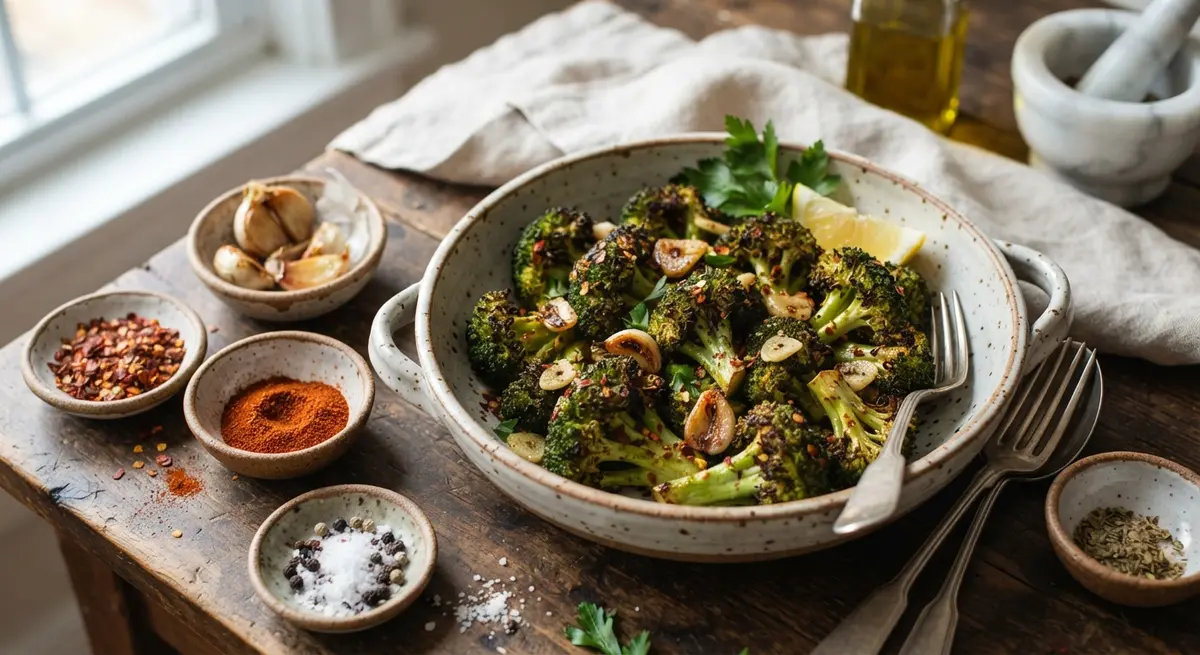
Roasted Broccoli With Garlic and Chili Flakes: The Rule-Turning Side
Steamed broccoli is a chore. Roasted broccoli with garlic and chili flakes is a reason to cook. The difference is all in the pan and the spices.

Roasted Carrots With Cumin and Honey: Sweet Meets Earthy
Carrots are naturally sweet, so they love spices that stay grounded. Cumin's earthy warmth with a touch of honey makes them taste like a roast.

Spice Pairings for Cauliflower: From Mild Mash to Bold Spiced Steaks
Cauliflower tastes like almost nothing, which is exactly its superpower. Here is how to roast, mash, and steak it with bold warm spices.

Spices for Salads: How to Pair Warm Spices with Cold, Crisp Vegetables
Crisp salads meet warm toasted spices through the dressing and the crunch; cumin, paprika, garam masala, dukkah, and sumac do the work.
About the Authors
This recipe and guide was developed, tested, and approved in our home kitchen and daily life. Jamy is a retired Food Service District Manager and Early Childhood Program Manager who spent his career overseeing multi-site restaurant operations, large-scale culinary production, and daycare menu management. Kaïna brings the ultimate real-world test: making sure it brings ease and joy to our kids on a busy weeknight.
Read more about our professional background and philosophy →