Traditional Miso Soup with Silken Tofu, Wakame & Udon Noodles (Probiotics and minerals)
By the QuiteRecipes team (Jamy & Kaïna) | Food Service Professional, Early Childhood Expert & Parents
A gentle Japanese broth with silken tofu, softened wakame and udon noodles — probiotics and minerals in a warm, easy-sipping bowl.
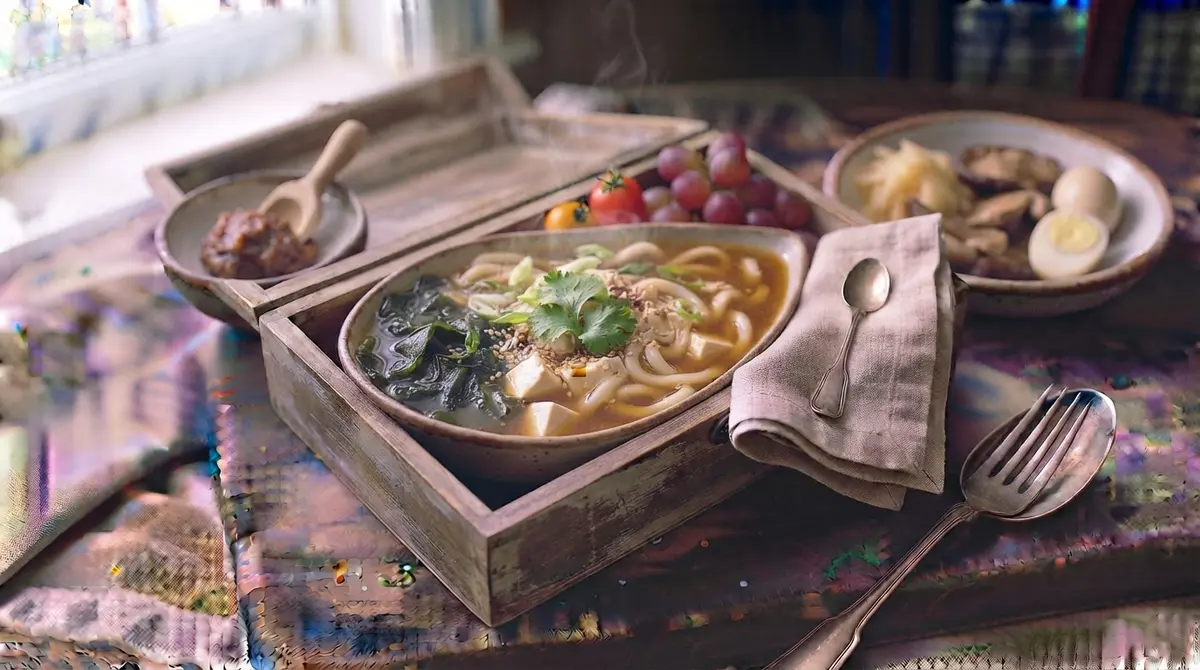
Miso soup is quietly one of the most nourishing bowls in the world — a warm dashi broth carrying live, gut-friendly cultures from the miso, soft cubes of silken tofu for protein, and rehydrated wakame for minerals like iodine and magnesium. Softened udon turns it into a gentle, slurpable meal. Just mind the portions: miso is naturally salty, so this is a small, brothy bowl by design.
🥄 Ingredients
- 🫗 4 cups (1 liter) dashi stock, or low-sodium vegetable broth
- 🫗 3 tablespoons white (shiro) miso paste (about 45g)
- 🫗 200g (7 oz) silken tofu, cut into small cubes
- 🫗 4g (about 2 teaspoons) dried wakame
- 🫗 60g (2 oz) dry udon noodles
- 🫗 2 spring onions, finely sliced
- 🫗 1/2 sheet nori, torn into strips (optional)
- 🫗 1 teaspoon grated fresh ginger
Nutrition Facts*
*Nutritional information is an estimate and may vary based on ingredients, brands and portion sizes. Values are provided per serving.
👨🍳 Instructions
Bring the dashi to a gentle simmer in a medium pot — never let it boil hard.
Add the udon noodles and cook per package directions until soft.
Stir the dried wakame into the pot and let it rehydrate for 2 minutes.
Turn the heat right down, ladle a cup of hot broth into a bowl, and whisk in the miso paste until fully dissolved.
Stir the miso mixture gently back into the pot, keeping it off the boil.
Add the silken tofu cubes and grated ginger; warm through for a minute without stirring hard, so the tofu stays in cubes.
Ladle into four small bowls and float the spring onions and nori on top.
⚠️ Common Mistakes
- ✕
Boiling the soup after adding miso, which dulls both its flavor and its probiotic gifts.
- ✕
Over-stirring the tofu until it crumbles into mush.
- ✕
Overcooking the noodles into a pasty mass — respect the package timing.
🔄 Variations
Use soba or fine rice noodles instead of udon.
Add a handful of baby spinach at the end to wilt.
Float a fully cooked, hard-poached egg on top for extra protein.
🧊 Storage
- 📦
Best enjoyed the day it's made, as miso soup loses its charm overnight.
- 📦
The miso base keeps 2 days chilled — store it separately from the noodles.
💡 Chef Tips
Tip 1: Never boil the soup once the miso is in — gentle warmth is what protects its live cultures.
Tip 2: Dissolve the miso in a little hot broth first; it blends without ever lumping.
Tip 3: Slip the tofu in last and stir very softly so the cubes stay whole and pretty.
Tip 4: Miso brings real sodium, so keep the portions brothy and skip any added salt entirely.
❓ FAQ
Q
Is miso okay on a low-sodium plan? It is naturally salty, so keep the serving small and brothy; one light bowl fits carefully into a balanced day.
Q
Does cooking kill the probiotics? Boiling them, yes — so stir the miso in off the boil and only warm it gently.
Q
Can I skip the udon? Yes, extra broth and tofu alone make a lighter, even softer soup.
🔗 Related Recipes


.webp)

About the Authors
This recipe and guide was developed, tested, and approved in our home kitchen and daily life. Jamy is a retired Food Service District Manager and Early Childhood Program Manager who spent his career overseeing multi-site restaurant operations, large-scale culinary production, and daycare menu management. Kaïna brings the ultimate real-world test: making sure it brings ease and joy to our kids on a busy weeknight.
Read more about our professional background and philosophy →