Mango Puree
By the QuiteRecipes team (Jamy & Kaïna) | Food Service Professional, Early Childhood Expert & Parents
Learn how to make a vibrant, silky mango puree for your baby. A naturally sweet and nutrient-packed first food rich in Vitamin A and C.
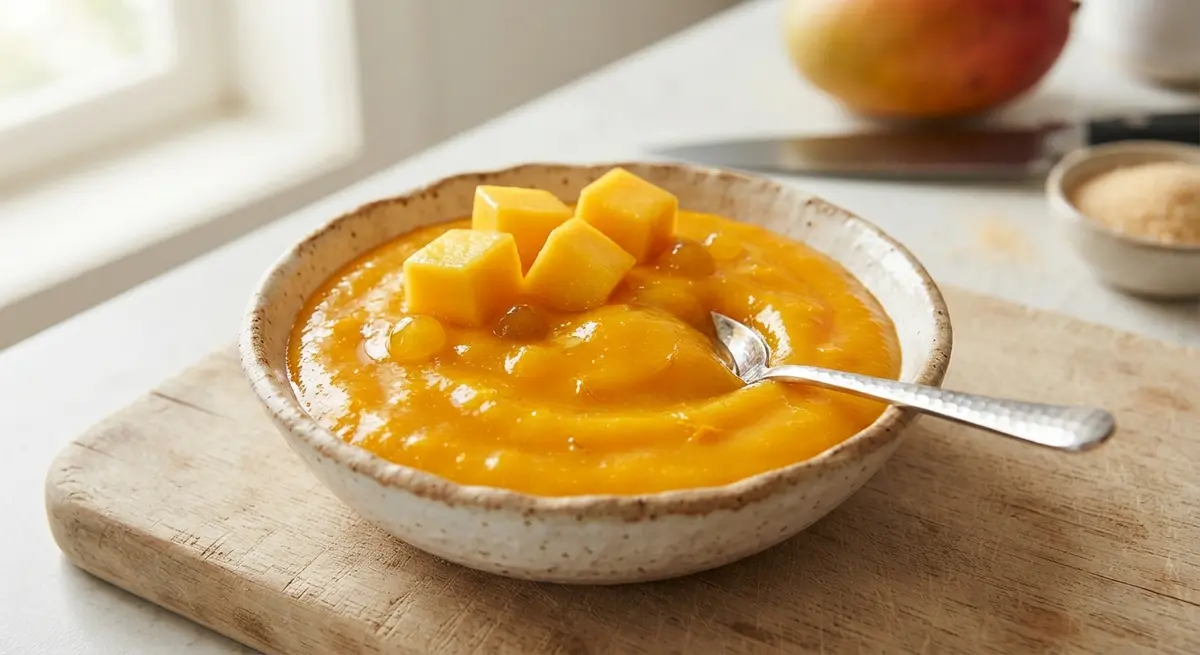
Silky, vividly orange mango puree, one of the first foods babies genuinely light up for. A ripe mango needs no sweetener, just a spin in the blender and a spoon. A weaning win in under five minutes.
🥄 Ingredients
- 🫗 1 very ripe mango (should yield to gentle pressure and smell sweet)
- 🫗 1 to 2 tsp breast milk, formula, or filtered water (if thinning is needed)
Nutrition Facts*
*Nutritional information is an estimate and may vary based on ingredients, brands and portion sizes. Values are provided per serving.
👨🍳 Instructions
Wash the mango thoroughly. Peel the skin and cut the flesh away from the flat central pit.
Chop the mango flesh into small, uniform chunks.
Place the chunks into a blender or food processor. Blend until the mixture is completely smooth and free of any fibrous strings.
If the puree is too thick, add a small amount of breast milk, formula, or water and blend again until you reach your desired consistency.
Serve fresh at room temperature.
⚠️ Common Mistakes
- ✕
Using an underripe mango, which will be tart, firm, and difficult to blend into a smooth puree.
- ✕
Serving the puree cold; let it sit at room temperature for a few minutes so it is more palatable for a young infant.
🔄 Variations
Mango-Banana Fusion: Blend equal parts mango and banana for a creamier, more filling meal.
Tropical Yogurt Mix: Stir a spoonful of mango puree into plain whole-milk yogurt for a quick, nutritious breakfast.
🧊 Storage
- 📦
Fridge: Store in an airtight container in the refrigerator for up to 24 hours.
- 📦
Freezer: Portions can be frozen in silicone trays for up to 1 month. Thaw in the refrigerator before serving.
💡 Chef Tips
Always inspect the puree for any fibrous "strings" that can sometimes be found near the pit of the mango; if you spot any, pass the puree through a fine-mesh sieve to ensure it is perfectly silky for your baby.
Mango is a great "base" flavor to mix with other foods like oatmeal or plain yogurt.
❓ FAQ
Is mango a common allergen? Mango is generally low-risk, but it is related to cashews and pistachios. If your baby has a known tree nut allergy, consult your pediatrician first.
Why is my mango puree stringy? Some mango varieties are more fibrous. Passing the final puree through a fine-mesh sieve is the best way to remove any fibers that might irritate your baby's throat.
Can I steam the mango? It is not necessary to cook mango if it is very ripe and soft, but if you have a slightly firmer mango, you can steam it for 5 minutes before blending to help it soften.
🔗 Related Recipes

About the Authors
This recipe and guide was developed, tested, and approved in our home kitchen and daily life. Jamy is a retired Food Service District Manager and Early Childhood Program Manager who spent his career overseeing multi-site restaurant operations, large-scale culinary production, and daycare menu management. Kaïna brings the ultimate real-world test: making sure it brings ease and joy to our kids on a busy weeknight.
Read more about our professional background and philosophy →