Citrus and Arugula Salad with Pomegranate Molasses Dressing
By the QuiteRecipes team (Jamy & Kaïna) | Food Service Professional, Early Childhood Expert & Parents
Blood orange, pomegranate arils, toasted pine nuts and wild arugula under a pomegranate-molasses dressing — vitamin C, folate and nitrates for cells and micro-circulation.
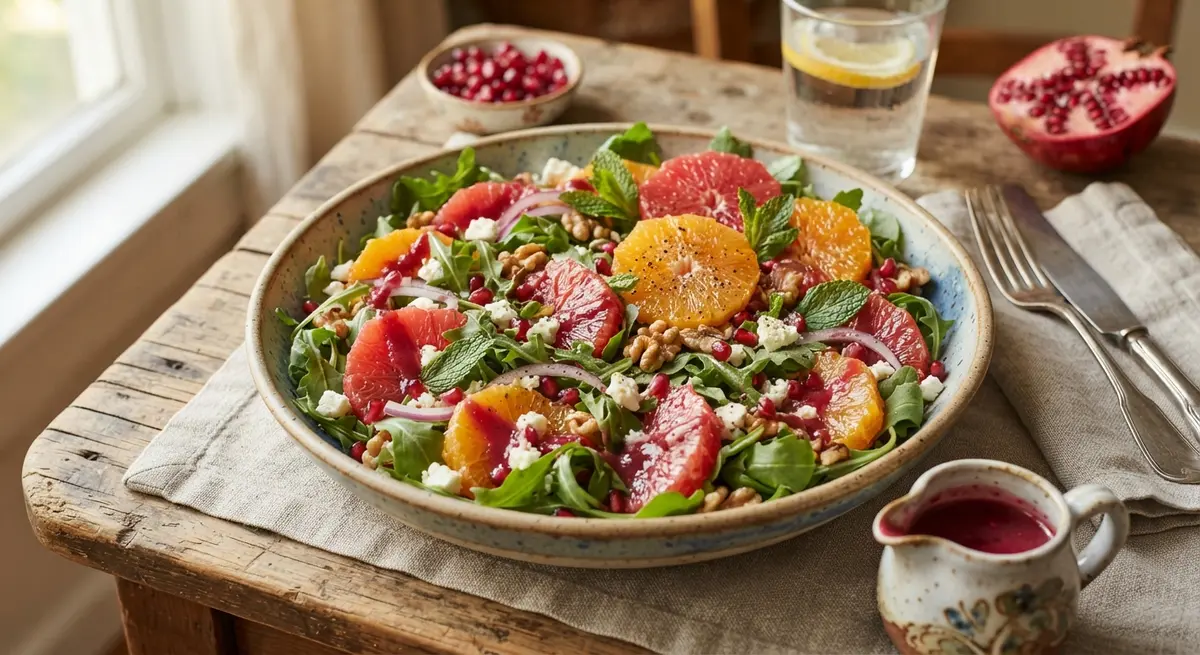
There's a reason the brightest salads feel like little celebrations — they're also doing quiet circulatory work. Wild arugula contributes dietary nitrates and folate, blood orange is a vitamin C heavyweight, and pomegranate's concentrated essence (pomegranate molasses, from the Punica granatum fruit) ties the whole thing together with sweet-tart depth. Toasted pine nuts give texture and vitamin E. Fifteen minutes, no oven, and a plate that belongs beside anything grilled — or on its own as the light meal your cells were asking for.
🥄 Ingredients
- 🫗 4 cups wild arugula, washed and dried
- 🫗 2 blood oranges (or regular oranges), peeled and segmented
- 🫗 1/2 cup pomegranate seeds
- 🫗 1/4 cup pine nuts, toasted
- 🫗 1 tablespoon pomegranate molasses
- 🫗 3 tablespoons extra virgin olive oil
- 🫗 1 teaspoon honey (optional)
- 🫗 Flaky sea salt and cracked black pepper
Nutrition Facts*
*Nutritional information is an estimate and may vary based on ingredients, brands and portion sizes. Values are provided per serving.
👨🍳 Instructions
Toast the pine nuts in a dry pan for 90 seconds, shaking until fragrant and golden; set aside.
Whisk the pomegranate molasses, olive oil, honey (if using), and a pinch of salt into a pourable dressing.
Gently toss the arugula with half the dressing in a large bowl.
Lay the orange segments and pomegranate seeds over the greens, scatter the pine nuts, and finish with the remaining dressing and pepper. Serve immediately.
⚠️ Common Mistakes
- ✕
Dressing the salad ten minutes early and watching the arugula wilt into a hot tub of oil.
- ✕
Using cold molasses straight from the jar — warm it five seconds in the microwave so it whisks clear.
- ✕
Toasting pine nuts unattended; they go from golden to burnt in about ten seconds.
🔄 Variations
Add shaved parmesan or crumbled feta for a fuller lunch.
Use grapefruit or clementine when blood oranges are out of season.
Top with grilled chicken or seared salmon to make it a complete meal.
Swap pine nuts for pistachios for an extra vitamin E and plant-zinc note.
🧊 Storage
- 📦
Best assembled and eaten within 20 minutes.
- 📦
Component parts — segmented oranges, seeds, toasted nuts, and dressing — each keep a full day separately in the fridge.
💡 Chef Tips
Tip 1: Supreme the oranges — cut away peel and pith, then slice between the membranes — so no bitter white pith joins the party.
Tip 2: Dress the leaves only, then crown with fruit; wet fruit oils the leaves and the dressing slides off.
Tip 3: A single segment of orange squeezed into the dressing replaces the honey for a sharper, more honest acid.
❓ FAQ
Q
Why "Pomegranate Molasses" in the name? It's a nod to the pomegranate's botanical name, Punica granatum — the same fruit concentrated into the molasses dressing that gives this salad its character.
Q
Can I use navel oranges instead of blood oranges? Absolutely; you lose a little anthocyanin color but keep the vitamin C and the same bright bite.
Q
Where do the nitrates fit in? Arugula is one of the richest leafy greens in dietary nitrates, which help blood vessels relax — the same family of helper that beets and watermelon appear in elsewhere on this site.
🔗 Related Recipes

About the Authors
This recipe and guide was developed, tested, and approved in our home kitchen and daily life. Jamy is a retired Food Service District Manager and Early Childhood Program Manager who spent his career overseeing multi-site restaurant operations, large-scale culinary production, and daycare menu management. Kaïna brings the ultimate real-world test: making sure it brings ease and joy to our kids on a busy weeknight.
Read more about our professional background and philosophy →