Banana Puree
By the QuiteRecipes team (Jamy & Kaïna) | Food Service Professional, Early Childhood Expert & Parents
Learn how to make a quick, no-cook banana puree for your baby. A naturally sweet, potassium-rich first food that requires zero cooking.
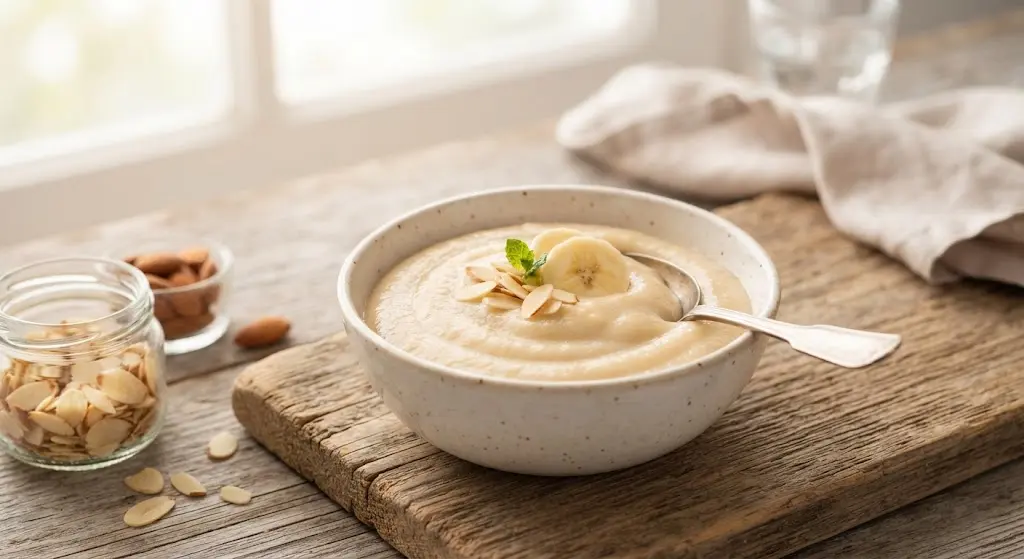
The gateway to solid food, and the least stressful one there is. Ripe banana needs zero cooking — just peel, mash, and serve — with potassium, natural sweetness, and a texture babies take to right away.
🥄 Ingredients
- 🫗 1 ripe banana (with some brown speckles on the peel for optimal sweetness and softness)
- 🫗 1 to 2 tsp breast milk, formula, or water (optional, for thinning)
Nutrition Facts*
*Nutritional information is an estimate and may vary based on ingredients, brands and portion sizes. Values are provided per serving.
👨🍳 Instructions
Peel a ripe banana and break it into smaller chunks inside a clean bowl.
Mash the banana thoroughly using a fork until completely smooth and free of large lumps. (If you prefer an ultra-silky puree, you can blend it briefly).
If the mash is too thick, stir in a small splash of breast milk, formula, or water to reach a smooth, pourable consistency.
Serve immediately at room temperature.
⚠️ Common Mistakes
- ✕
Using underripe bananas, which can cause tummy aches or constipation in infants due to high resistant starch content.
- ✕
Leaving large chunks that could catch unpracticed gums; ensure it is thoroughly mashed for beginners.
🔄 Variations
Avocado Banana Blend: Mix equal parts mashed banana and ripe avocado for a creamy, calorie-dense, healthy-fat treat.
Cereal Boost: Stir banana puree into a bowl of warm infant oat cereal for added natural sweetness.
🧊 Storage
- 📦
Fridge: Store leftover banana puree in an airtight container in the refrigerator for up to 24 hours (expect some browning, which is harmless).
- 📦
Freezer: Bananas can be frozen, but they turn quite dark and watery upon thawing; fresh preparation is strongly recommended.
💡 Chef Tips
Always choose a ripe banana with brown speckles on the skin. Unripe green or yellow bananas are starchy, difficult to digest, and very bitter for a baby.
Bananas brown quickly when exposed to air due to natural oxidation; prepare them right before serving, or add a tiny drop of lemon juice if saving for a short while.
❓ FAQ
Do I need to cook bananas for a baby? No, unlike hard fruits, ripe bananas are naturally soft and safe to mash raw for babies.
Can bananas cause constipation? In some babies, underripe bananas can cause constipation, but perfectly ripe bananas with brown spots are generally very easy on digestion.
Is banana good for energy? Yes, they are an excellent source of natural carbohydrates, making them a fantastic energy booster for growing infants.
🔗 Related Recipes
About the Authors
This recipe and guide was developed, tested, and approved in our home kitchen and daily life. Jamy is a retired Food Service District Manager and Early Childhood Program Manager who spent his career overseeing multi-site restaurant operations, large-scale culinary production, and daycare menu management. Kaïna brings the ultimate real-world test: making sure it brings ease and joy to our kids on a busy weeknight.
Read more about our professional background and philosophy →