Banana Almond Puree
By the QuiteRecipes team (Jamy & Kaïna) | Food Service Professional, Early Childhood Expert & Parents
Learn how to make a creamy banana almond puree for babies. A nutritious, allergen-safe recipe packed with healthy fats and natural sweetness.
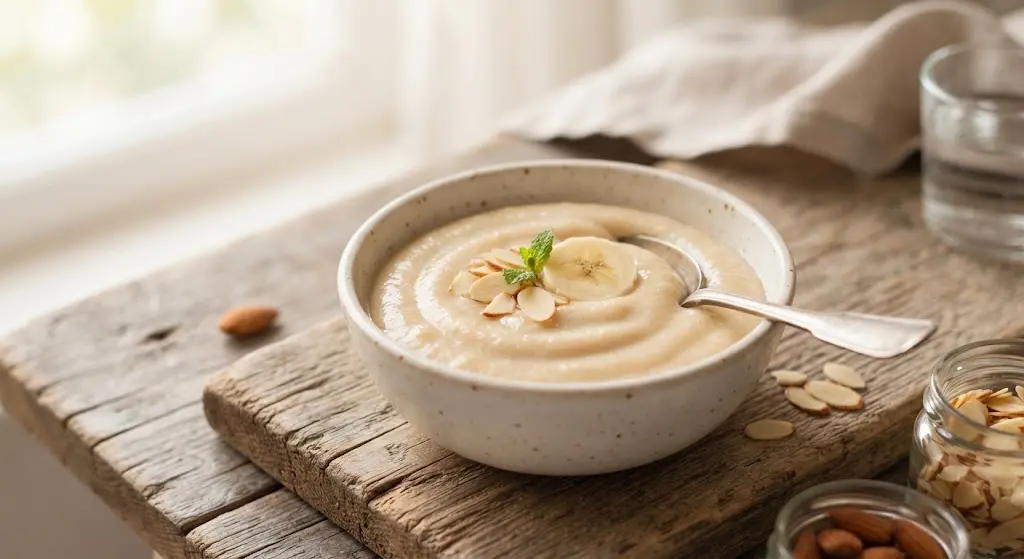
Two ingredients, one very soft landing into solid foods. Ripe banana and a spoonful of completely smooth almond butter become a naturally sweet, creamy puree that introduces good plant fats — and safely familiarizes little ones with tree nuts early.
🥄 Ingredients
- 🫗 1 ripe banana (with brown speckled spots for natural sweetness and softness)
- 🫗 1 tsp 100% smooth, natural almond butter (no added salt, sugar, or crunchy pieces)
- 🫗 1 to 2 tbsp warm water, breast milk, or formula for thinning
Nutrition Facts*
*Nutritional information is an estimate and may vary based on ingredients, brands and portion sizes. Values are provided per serving.
👨🍳 Instructions
Peel the ripe banana and break it into chunks inside a clean mixing bowl.
Mash the banana thoroughly with a fork until smooth and completely free of large lumps.
In a small cup, thoroughly dilute the smooth almond butter with a splash of warm water, breast milk, or formula until it becomes a runny, liquid consistency.
Stir the diluted almond butter into the mashed banana until fully combined and uniform.
Check the temperature of the puree to ensure it is lukewarm or at room temperature before serving to your baby.
⚠️ Common Mistakes
- ✕
Using chunky almond butter or whole pieces of almonds, which present severe choking hazards.
- ✕
Failing to dilute the nut butter properly before mixing it into the puree.
🔄 Variations
Banana Oat Almond Blend: Mix in a tablespoon of cooked, soft ground oatmeal to give the puree a heartier, thicker texture.
Apple & Almond: Swap out half the banana for a smooth, cooked apple puree.
🧊 Storage
- 📦
Fridge: Store leftovers in an airtight container in the refrigerator for up to 24 hours.
- 📦
Freezer: Not recommended due to texture separation of the banana upon thawing.
💡 Chef Tips
⚠️ Allergen label — contains tree nuts (almond). Serve it well-thinned and never as a thick glob; watch for any reaction when first introduced.
Always use 100% smooth almond butter and ensure it is thinned down completely; thick nut butter can be sticky and pose a choking hazard for young infants.
Early introduction of allergens like tree nuts, when done in smooth, diluted forms, is currently recommended by pediatric guidelines to reduce allergy risks.
❓ FAQ
When can I introduce almond butter to my baby? Almond butter can be introduced as soon as your baby starts solid foods (around 6 months), provided it is thinned down completely and served in small amounts.
Can I use roasted almond butter? Yes, as long as it contains 100% nuts with no added sugars, hydrogenated oils, or excessive sodium.
What should I do if my baby shows signs of a reaction? Stop feeding immediately and consult your pediatrician if you notice any hives, swelling, or digestive distress during or after the introduction of a new allergen.
🔗 Related Recipes


About the Authors
This recipe and guide was developed, tested, and approved in our home kitchen and daily life. Jamy is a retired Food Service District Manager and Early Childhood Program Manager who spent his career overseeing multi-site restaurant operations, large-scale culinary production, and daycare menu management. Kaïna brings the ultimate real-world test: making sure it brings ease and joy to our kids on a busy weeknight.
Read more about our professional background and philosophy →